Semtech Corporation LR1110TRK1CKS
- Part No.:
- LR1110TRK1CKS
- Manufacturer:
- Semtech Corporation
- Category:
- RF, RFID, Wireless Evaluation Boards
- Package:
- Datasheet:
-
LR1110TRK1CKS.pdf
- Description:
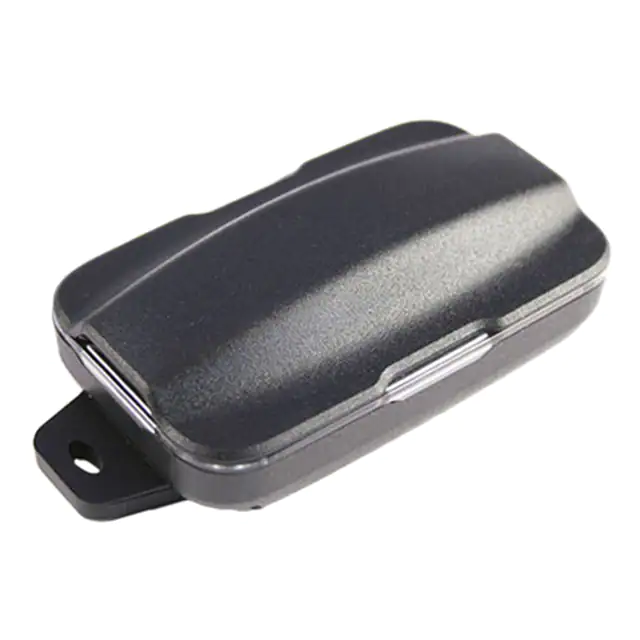
- LORA EDGE TRACKER 915MHZ NA
- Quantity:
- Payment:

- Shipping:

Inventory:2,560
Please send an inquiry. Send us your inquiry, and we will respond immediately.
Product details
Overview
LR1110TRK1CKS from Semtech is a multi-technology SoC for battery-powered IoT asset tracking, integrating GNSS (GPS/BeiDou) sniffing, Wi-Fi passive scanning, and a LoRa®/(G)FSK transceiver operating from 150–960 MHz with +22 dBm PA output. It supports LoRaWAN® compliance and hardware AES-128 encryption for secure device onboarding in logistics and industrial asset management.
For engineers reviewing the LR1110TRK1CKS datasheet, pinout, applications, or equivalent options, key selection criteria include integrated multi-RF front-end coverage (150–2700 MHz), sub-μA deep-sleep current, GNSS/Wi-Fi scan-assisted geolocation, LoRaWAN® Class A/B/C support, and embedded cryptographic key storage compliant with LoRaWAN security architecture.
Technical Context
The LR1110TRK1CKS implements a single-die multi-RF architecture combining three independent radio subsystems: a wideband (150–2700 MHz) GNSS/Wi-Fi scanner, a LoRa®/(G)FSK transceiver (150–960 MHz), and a dedicated cryptographic engine. Each subsystem operates under shared low-power control logic with synchronized wake-up scheduling.
Its RF front-end integrates dual PA paths (+22 dBm high-power and +15 dBm high-efficiency), enabling adaptive transmission based on link budget and battery constraints. The GNSS/Wi-Fi scanning engine performs time-domain correlation without baseband processing, offloading location computation to LoRa Cloud™ services.
Key Specifications
| Parameter | Value and Actual Design Meaning |
|---|---|
| Frequency Range | 150–2700 MHz continuous synthesizer for GNSS/Wi-Fi scanning; 150–960 MHz for LoRa®/(G)FSK transceiver |
| Output Power | +22 dBm (high-power PA path) and +15 dBm (high-efficiency PA path) - enables long-range LoRa links or power-constrained indoor operation |
| GNSS Support | GPS & BeiDou satellite signal sniffing only - no standalone positioning; requires cloud-based correlation via LoRa Cloud™ |
| Wi-Fi Scanning | Passive 2.4 GHz Wi-Fi AP MAC address collection - no association or data exchange; used for hybrid geolocation |
| Cryptographic Engine | AES-128 hardware accelerator with secure NwkKey/AppKey storage - eliminates need for external secure element in LoRaWAN® end-devices |
| Deep-Sleep Current | <1.2 μA - extends battery life to years in periodic scan-and-report asset tracking deployments |
Pinout & Package
LR1110TRK1CKS is housed in a 5 mm × 5 mm, 40-pin QFN package with exposed thermal pad (EP). Pin functions are defined per Semtech's LR1110 Datasheet Rev. 3.0 (2022), including dedicated RF_IO, GNSS_IN, WIFI_IN, VBAT, VDD_IO, and CRYSTAL_IN/OUT terminals.
| Pin/Terminal | Circuit Role | Design Meaning |
|---|---|---|
| RF_IO | Transceiver antenna interface | Single-pin RF I/O for LoRa®/(G)FSK; requires external switch for dual-band (sub-GHz + 2.4 GHz) operation |
| GNSS_IN | GNSS frontend input | Dedicated 1.575 GHz L1/GPS & 1.561 GHz B1/BeiDou receive path - DC-coupled, 50 Ω matched |
| WIFI_IN | Wi-Fi frontend input | 2.4 GHz band passive scan input - no transmit capability; internal correlator processes MAC beacons only |
| VDD_IO | Digital I/O supply | 1.7–3.6 V tolerant; powers SPI, GPIO, and interrupt logic - decoupling required per layout guidelines |
| CRYSTAL_IN / CRYSTAL_OUT | Reference clock oscillator | Supports 32 MHz fundamental-mode crystal for RF synthesizer and digital timing - no internal oscillator |
Key Features
| Feature | Design Value |
|---|---|
| Integrated GNSS + Wi-Fi + LoRa® front-end | Reduces BOM by eliminating separate GNSS receiver, Wi-Fi scanner, and LoRa transceiver ICs - single-chip solution for hybrid geolocation |
| LoRaWAN® Class A/B/C compliance | Enables seamless integration into public/private LoRaWAN networks without protocol stack modification - certified by LoRa Alliance |
| Hardware AES-128 crypto engine | Stores LoRaWAN-defined NwkKey and AppKey in tamper-resistant memory - prevents firmware-level key extraction during OTA updates |
| Sub-μA deep-sleep mode | Permits 10+ year battery life in asset trackers scanning GNSS/Wi-Fi once per hour and transmitting via LoRa every 6 hours |
| Multi-band RF synthesizer (150–2700 MHz) | Eliminates need for multiple VCOs or external filters - supports GPS L1, BeiDou B1, Wi-Fi 2.4 GHz, and global LoRa bands in one PLL |
Applications
| Logistics Asset Tracking | Industrial Equipment Monitoring |
|---|---|
Use Scenario: Real-time location of shipping containers across port yards and intermodal rail hubs using hybrid GNSS/Wi-Fi/LoRa geolocation. IC Role / Device Role / Timing Role: LR1110TRK1CKS acts as the sole RF and security engine - performing scheduled GNSS scans, passive Wi-Fi beacon collection, and LoRa uplink transmission of encrypted location metadata. Use Value: Achieves median accuracy of 15 m outdoors and 30 m indoors with 5-year coin-cell battery life - eliminating manual GPS log retrieval and reducing cellular data costs. | Use Scenario: Battery-powered monitoring of construction machinery movement within fenced job sites using geofence-triggered LoRa alerts. IC Role / Device Role / Timing Role: LR1110TRK1CKS executes autonomous GNSS position verification every 15 minutes and initiates LoRa transmission only upon crossing predefined coordinates. Use Value: Reduces average power consumption to 2.1 μA over 24-hour cycle - enabling use of non-rechargeable Li-SOCl₂ cells without service visits. |
| Smart Agriculture Inventory | Healthcare Equipment Locators |
Use Scenario: Tracking mobile veterinary equipment across large rural farms where GPS signal is intermittent and cellular coverage is absent. IC Role / Device Role / Timing Role: LR1110TRK1CKS combines sporadic GPS fixes with nearby Wi-Fi AP fingerprinting to maintain coarse location when satellite visibility drops below 3 satellites. Use Value: Delivers consistent 25–40 m accuracy across open fields and barn interiors - avoiding reliance on costly satellite-assisted RTK or LTE-M fallback. | Use Scenario: Locating infusion pumps and portable ultrasound units inside multi-floor hospitals using Wi-Fi AP density mapping and LoRa backhaul to central nursing station. IC Role / Device Role / Timing Role: LR1110TRK1CKS performs rapid 2.4 GHz Wi-Fi scan (≤120 ms) upon motion detection, then transmits AP list + RSSI via LoRa to cloud for triangulation. Use Value: Enables room-level (5–8 m) indoor positioning without deploying BLE beacons or upgrading hospital Wi-Fi infrastructure. |
Equivalent & Alternatives
The following parts are listed as comparable options for similar multi-technology IoT geolocation applications.
| Alternative Part | Technical Difference | Application Difference | Selection Advice |
|---|---|---|---|
| u-blox NINA-B406 | Bluetooth 5.0 + IEEE 802.15.4 (Thread/Zigbee) only - no GNSS, no Wi-Fi, no LoRa support | Designed for short-range mesh networking in smart buildings - lacks outdoor geolocation capability | Select when Bluetooth/Thread-based proximity sensing suffices and GNSS/Wi-Fi/LoRa integration is unnecessary |
| Quectel BG96 | LTE Cat M1 + GNSS (GPS/GLONASS/BeiDou) - no Wi-Fi scanning, no LoRa, higher power draw (>25 mA active) | Targets cellular-connected assets with continuous cloud telemetry - unsuitable for ultra-low-power battery-only deployments | Select when licensed spectrum access, high-throughput telemetry, and real-time TCP/IP are required over multi-year battery life |
Compared with u-blox NINA-B406 and Quectel BG96, LR1110TRK1CKS uniquely delivers integrated GNSS/Wi-Fi sniffing and LoRa transceivers in one die with sub-μA sleep, enabling cost-optimized, license-free, long-life asset tracking where cellular or Bluetooth-only solutions fall short in coverage, power, or infrastructure dependency.
Availability
LR1110TRK1CKS is available at Aetrix Electronics and suitable for logistics asset tracking, industrial equipment monitoring, smart agriculture inventory, healthcare equipment locators, and battery-constrained IoT deployments requiring stable component supply and long-term lifecycle assurance.
Supply support for LR1110TRK1CKS includes scheduled delivery planning, volume procurement assistance, BOM continuity management, traceable sourcing, and lifecycle availability coordination for OEM customers, industrial embedded developers, connected-device designers, and electronics production programs.
Manufacturer
Semtech Corporation is a U.S.-based semiconductor company specializing in analog and mixed-signal semiconductors for infrastructure, IoT, and protection markets.
The LR1110TRK1CKS belongs to Semtech's LoRa Edge™ platform - designed specifically to simplify and lower the cost of battery-operated asset tracking by unifying GNSS, Wi-Fi, and LoRa technologies into a single secure SoC.
FAQ
Does LR1110TRK1CKS support standalone GPS positioning without cloud services?
No. LR1110TRK1CKS performs GNSS signal sniffing only - it captures raw GPS/BeiDou RF samples but does not compute position internally. Location calculation requires LoRa Cloud™ or third-party correlation engines. The LR1110TRK1CKS itself contains no PVT (position-velocity-time) engine or ephemeris storage.
What Wi-Fi standards does LR1110TRK1CKS support for passive scanning?
LR1110TRK1CKS supports passive scanning of IEEE 802.11b/g/n 2.4 GHz beacon frames only - it detects and reports AP MAC addresses and RSSI values without associating, authenticating, or receiving payload data. It does not support 5 GHz Wi-Fi, WPA3 handshake analysis, or probe request/response capture.
Is LR1110TRK1CKS pin-compatible with earlier Semtech LoRa transceivers like SX1276?
No. LR1110TRK1CKS uses a 40-pin QFN package with distinct pin assignments for GNSS_IN, WIFI_IN, and dual PA control - it is not pin-compatible with SX1276 (24-pin TSSOP) or SX1262 (24-pin QFN). Migration requires PCB redesign and firmware adaptation to the LR1110TRK1CKS register map and multi-RF sequencing.
How is cryptographic key provisioning handled on LR1110TRK1CKS?
LR1110TRK1CKS ships pre-provisioned with unique DevEUI, JoinEUI, NwkKey, and AppKey stored in one-time-programmable (OTP) memory within its hardware security module. Keys are injected during semiconductor testing and cannot be read out - ensuring LoRaWAN® root-of-trust without customer-side secure programming infrastructure.
Can LR1110TRK1CKS operate in regions outside the 150–960 MHz LoRa band, such as 2.4 GHz ISM?
No. While the LR1110TRK1CKS synthesizer covers 150–2700 MHz for GNSS/Wi-Fi reception, its LoRa®/(G)FSK transceiver is limited to 150–960 MHz. It does not support 2.4 GHz LoRa modulation or direct 2.4 GHz packet transmission - Wi-Fi scanning is receive-only and LoRa operation remains sub-GHz only.
LR1110TRK1CKS Specifications
- Product attributes
- Attribute value
- Manufacturer:
- Semtech Corporation
- Series:
- LORA Edge™
- Packaging:
- Box
- Product Status:
- Active
- Type:
- Transceiver; LoRa®
- Frequency:
- 150MHz ~ 2.7GHz
- Contents:
- Board(s)
- Utilized IC / Part:
- LR1110
LR1110TRK1CKS FAQ
1.How can I place an order for LR1110TRK1CKS through Aetrix?
Please submit a Request for Quotation (RFQ) for LR1110TRK1CKS on Aetrix. Our sales agent will provide a competitive quotation and guide you through the order confirmation once you accept the terms.
2.Are the price and stock information for LR1110TRK1CKS reliable?
The price and inventory of LR1110TRK1CKS are updated periodically and may fluctuate due to market conditions. Stock and pricing data are typically refreshed every 24 hours. Quotation validity for LR1110TRK1CKS is usually 5 days.
3.What payment methods are accepted for LR1110TRK1CKS?
We accept Wire Transfer, PayPal, Credit Card, Western Union, MoneyGram, and Escrow for LR1110TRK1CKS transactions.
Note: Certain payment methods may incur a processing fee.
4.How is shipping managed for LR1110TRK1CKS?
LR1110TRK1CKS orders can be shipped via leading logistics carriers, including DHL, UPS, FedEx, TNT, or Registered Mail.
Once your LR1110TRK1CKS order is processed, you will receive an email with the shipment details and tracking number.
Note: Tracking information may take up to 24 hours to appear. Express delivery typically takes 3–5 business days.
5.How can I obtain technical support or documentation for LR1110TRK1CKS?
For technical support, including LR1110TRK1CKS datasheets, pinout diagrams, or application guidance, please contact our engineering support team. They can provide detailed documentation and assistance for your LR1110TRK1CKS requirements.
6.How does Aetrix verify that LR1110TRK1CKS is sourced from the original manufacturer or authorized distributors?
All LR1110TRK1CKS products on Aetrix are procured from qualified distributors and authorized channels. Our dedicated quality assurance team conducts strict verification, including traceability checks and, if necessary, third-party testing. This ensures that LR1110TRK1CKS meets industry standards.
7.What is the process for return or replacement of LR1110TRK1CKS?
All LR1110TRK1CKS units undergo pre-shipment inspection (PSI). If there is an issue with LR1110TRK1CKS, returns or replacements are accepted under the following conditions:
1.Quantity discrepancies, incorrect items, or visible external defects (such as breakage or corrosion), acknowledged by Aetrix.
2.The issue is reported within 90 days of delivery.
3.The LR1110TRK1CKS part is unused and in its original packaging.
Return procedure for LR1110TRK1CKS:
1.Submit a request within 90 days.
2.Obtain a Return Material Authorization (RMA) from Aetrix.
LR1110TRK1CKS Tags
-
113991054
Seeed Technology Co., Ltd
-
SC0918
Raspberry Pi

-
113991114
Seeed Technology Co., Ltd

-
ESP32-C6-DEVKITM-1-N4
Espressif Systems
-
ESP32-DEVKITM-1
Espressif Systems
-
C008
M5Stack Technology Co., Ltd.
-
ESP32-C3-DEVKITC-02
Espressif Systems

-
ESP32-C6-DEVKITC-1-N8
Espressif Systems
-
DFR0478
DFRobot
-
102010448
Seeed Technology Co., Ltd
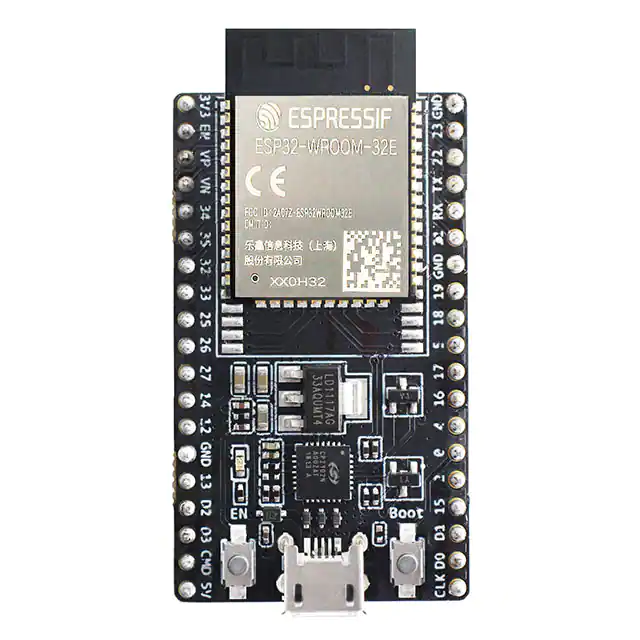
-
ESP32-DEVKITC-32E
Espressif Systems
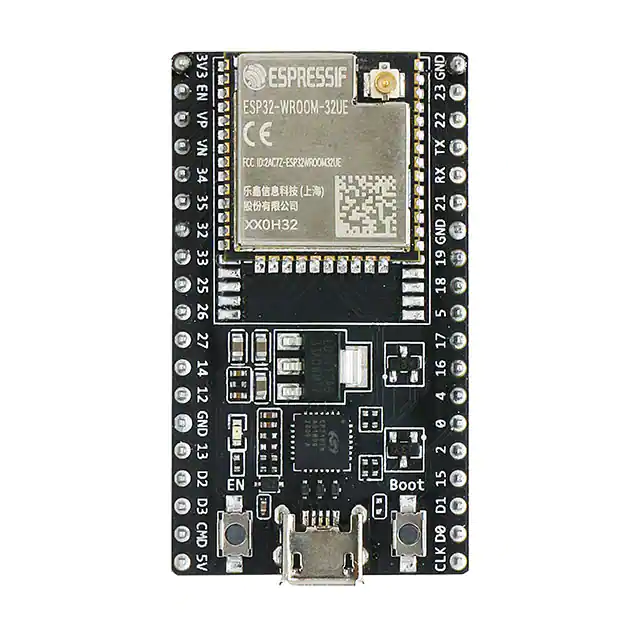
-
ESP32-DEVKITC-32UE
Espressif Systems
Tech Hub
Comparator circuit design covering voltage thresholds, input limits, open-collector outputs, LM393 wiring, op-amp differences, hysteresis, timing, window detection and practical fault diagnosis.
Schmitt triggers use separate rising and falling thresholds to stabilize slow or noisy signals. This guide covers hysteresis, 74HC14 and 74HCT14 selection, comparator calculations, RC oscillators and p…
Counterfeit components can hide behind convincing markings and passing basic function tests. This engineering reference covers source traceability, external inspection, X-ray, XRF, electrical testing, …
A practical engineering and sourcing framework covering lifecycle verification, lifetime-buy calculations, replacement qualification, supplier checks and counterfeit-risk controls.
TTL and CMOS logic families differ in thresholds, loading, output drive, power and timing. This engineering guide compares 74HC and 74HCT, calculates noise margins and checks 3.3 V/5 V compatibility.
A practical engineering guide to 3.3V and 5V logic compatibility, input thresholds, resistor dividers, translator ICs, MOSFET level shifting, I2C pull-ups, timing limits and power-sequencing risks.
The 74HC595 uses push-pull logic outputs, while the TPIC6B595 uses 50 V open-drain DMOS sinks for higher-power loads. This guide compares timing, current limits, 3.3 V interfacing, load wiring, thermal…
The 74HC595 converts serial data into eight stable parallel outputs. This guide covers pin functions, shift and storage timing, OE and MR behavior, drive-current limits, cascading, voltage compatibilit…
A technical comparison of level-sensitive latches and edge-triggered flip-flops, covering timing windows, setup and hold limits, master–slave operation, time borrowing, race-through, HDL inference and…
A D latch stores one bit while Enable controls when data can pass. This reference covers gate-level operation, truth tables, transparency, setup and hold timing, LE versus OE, common ICs and practical …