
 My Inquiry
 My Account


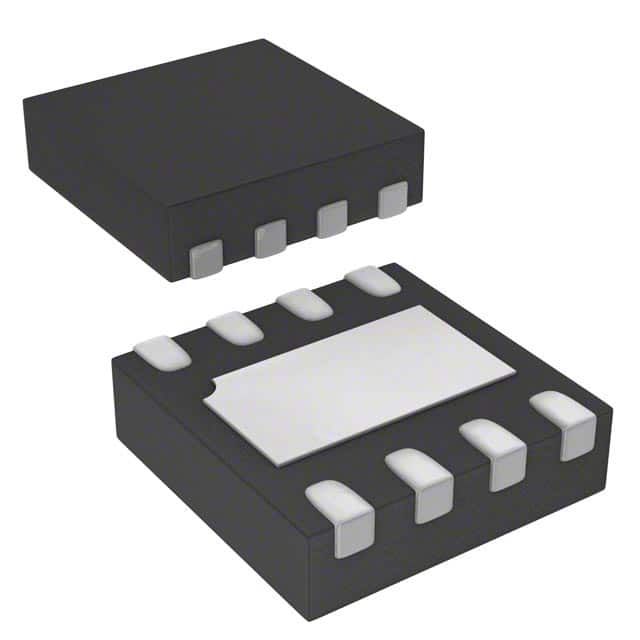
STMicroelectronics M95020-RMB6TG
- Part No.:
- M95020-RMB6TG
- Manufacturer:
- STMicroelectronics
- Category:
- Memory
- Package:
- 8-UFDFN Exposed Pad
- Datasheet:
-
 M95020-RMB6TG.pdf
- Description:
- IC EEPROM 2KBIT SPI 8UFDFPN
- Quantity:
- Payment:

- Shipping:

Inventory:997
Please send an inquiry. Send us your inquiry, and we will respond immediately.
Product details
Overview
M95020-RMB6TG from STMicroelectronics is a 2-Kbit (256-byte) serial SPI bus EEPROM with 1.8 V to 5.5 V single-supply operation, 20 MHz max clock frequency, and industrial temperature range (−40 °C to +85 °C). It features page-write capability (16-byte pages), >4 million write cycles, and 200-year data retention - deployed in embedded systems for firmware parameter storage, calibration data logging, and configuration backup.
For engineers reviewing the M95020-RMB6TG datasheet, M95020-RMB6TG pinout, M95020-RMB6TG application, or M95020-RMB6TG equivalent, key selection criteria include supply voltage compatibility (1.8–5.5 V), SPI mode support (CPOL/CPHA = 0/0 or 1/1), hardware/software write protection granularity, ECC-enabled read reliability, and TSSOP8 package suitability for space-constrained PCB layouts.
Technical Context
This device implements a standard SPI interface with dedicated HOLD and WRITE PROTECT inputs for real-time communication suspension and memory region locking. Its internal architecture includes an ECC x1 logic block per byte, transparently correcting single-bit errors during read operations without software intervention.
The status register contains non-volatile BP1/BP0 bits controlling quarter/half/whole-array write protection, plus volatile WEL and WIP bits for dynamic write enable state and in-progress cycle monitoring - all accessible via RDSR/WRSR instructions with strict timing requirements on chip select edge alignment.
Key Specifications
| Parameter | Value and Actual Design Meaning |
|---|---|
| Memory size | 2 Kbit (256 × 8-bit array) - supports compact configuration storage without over-provisioning. |
| Supply voltage | 1.8 V to 5.5 V - enables direct interfacing with 1.8 V, 3.3 V, and 5 V microcontrollers without level-shifting. |
| Max SPI clock | 20 MHz - allows high-throughput parameter updates (e.g., <5 ms page writes) in time-critical boot sequences. |
| Write endurance | >4 million cycles - ensures reliable field recalibration across product lifetime in industrial sensor nodes. |
| Data retention | >200 years at +25 °C - guarantees long-term integrity of factory-trimmed coefficients and security keys. |
| Operating temp | −40 °C to +85 °C - qualified for under-hood automotive modules and outdoor industrial gateways. |
| ECC support | Single-bit error correction per byte - eliminates need for external CRC checks in safety-critical configuration reads. |
Pinout & Package
Supplied in RoHS-compliant, halogen-free TSSOP8 (169 mil width) package - optimized for automated SMT assembly and thermal performance in dense control boards.
| Pin/Terminal | Circuit Role | Design Meaning |
|---|---|---|
| S | Chip select | Active-low enable signal; falling edge required before first instruction; deselects device and places Q in high-impedance state. |
| C | Serial clock | Input timing reference; latches D on rising edge, drives Q on falling edge; supports CPOL=0/CPHA=0 and CPOL=1/CPHA=1 modes. |
| D | Serial data input | MSB-first input for instructions, addresses, and write data; sampled on rising edge of C. |
| Q | Serial data output | MSB-first output for memory/status/ID data; driven only when S is low; high-impedance when S is high or HOLD is active. |
| W | Write protect | Hardware-level lock: held low to disable all write operations regardless of WEL or BP bits - used for fail-safe configuration lockdown. |
| HOLD | Communication hold | Pauses ongoing SPI transfer without resetting internal state; requires S low and C low for valid assertion/deassertion. |
| VCC | Supply voltage | 1.8–5.5 V power rail; must be stable before any instruction; decoupling capacitor (10–100 nF) required near pins. |
| VSS | Ground | Reference for all I/O and internal circuitry; must be connected directly to system ground plane. |
Key Features
| Feature | Design Value |
|---|---|
| Page-write architecture | 16-byte pages enable efficient bulk updates (e.g., full calibration table) within ≤5 ms, reducing MCU wait time vs. byte-write. |
| Software block protection | BP1/BP0 bits in status register allow runtime-selectable write lock of upper quarter, half, or entire array - ideal for preserving bootloader settings. |
| Hold function | Enables deterministic pause/resume of SPI transfers during interrupt servicing - avoids reinitialization overhead in RTOS environments. |
| Power-on reset (POR) | Guarantees WEL=0 and WIP=0 at startup, preventing spurious writes during voltage ramp-up - critical for unattended field deployments. |
| Enhanced ESD protection | Withstands >4 kV HBM - improves robustness in handling-sensitive manufacturing and repair workflows. |
Applications
| Industrial PLC Configuration Storage | Automotive Body Control Module (BCM) |
|---|---|
Use Scenario: Storing user-defined I/O mapping, PID tuning parameters, and alarm thresholds in programmable logic controllers. IC Role / Device Role / Timing Role: Non-volatile configuration register accessed during boot and runtime via SPI; ECC ensures integrity of safety-critical setpoints. Use Value: Eliminates need for external checksum validation and extends field recalibration interval beyond 10 years due to >200-year retention. | Use Scenario: Retaining door lock programming, mirror position presets, and lighting profiles across vehicle ignition cycles. IC Role / Device Role / Timing Role: SPI-connected parameter vault; powered from 3.3 V domain; withstands −40 °C cold cranking and +85 °C under-dash thermal stress. Use Value: Hardware W pin provides fail-safe lock against accidental overwrites during CAN firmware updates, meeting ISO 16750-4 requirements. |
| Medical Infusion Pump Calibration | Smart Energy Meter Firmware Backup |
Use Scenario: Holding flow-rate calibration coefficients, motor step compensation tables, and regulatory audit logs. IC Role / Device Role / Timing Role: Secure, tamper-resistant storage accessed only by trusted MCU firmware; BP bits prevent unauthorized modification of dose algorithms. Use Value: ECC x1 corrects bit flips induced by ambient radiation in hospital environments - certified to IEC 62304 Class B SW safety requirements. | Use Scenario: Backing up metering firmware patches, tariff schedules, and cryptographic keys during power loss events. IC Role / Device Role / Timing Role: Low-voltage (1.8 V) compatible EEPROM enabling direct connection to energy harvesting PMUs; fast 5 ms page writes minimize brownout window. Use Value: >4 million write cycles support daily firmware delta updates over 10+ year meter lifetime without wear-out risk. |
Equivalent & Alternatives
The following parts are listed as comparable options for similar serial SPI EEPROM applications.
| Alternative Part | Technical Difference | Application Difference | Selection Advice |
|---|---|---|---|
| AT25DF021A-SSH-T | 2 Mbit density, 85 MHz max clock, no built-in ECC, requires external VP for sector erase | Targeted at firmware code storage, not parameter EEPROM use; lacks hardware W pin and BP granularity | Select only if higher density and faster clock are mandatory and ECC can be implemented in firmware. |
| BR24G02FJ-3GE2 | I²C interface (not SPI), 1.7–5.5 V, 1 MHz max clock, no HOLD pin, no identification page | Used where board space permits larger pitch packages and MCU has limited SPI peripherals but available I²C lines | Choose only when SPI bus is fully allocated and I²C timing budget allows slower 1 ms writes. |
Compared with AT25DF021A-SSH-T and BR24G02FJ-3GE2, M95020-RMB6TG delivers optimal balance of SPI compatibility, hardware-assisted write protection, ECC reliability, and industrial-grade voltage/temperature margin - making it the preferred choice for parameter-critical embedded control applications.
Availability
M95020-RMB6TG is available at Aetrix Electronics and suitable for industrial PLCs, automotive body control modules, medical infusion pumps, and smart energy meters requiring stable component supply across multi-year production cycles.
Supply support for M95020-RMB6TG includes scheduled delivery planning, volume procurement assistance, BOM continuity management, traceable sourcing, and lifecycle availability coordination for OEM customers, industrial embedded developers, connected-device designers, and electronics production programs.
Manufacturer
STMicroelectronics is a global semiconductor leader headquartered in Geneva, Switzerland, designing and manufacturing microcontrollers, power ICs, sensors, and memory solutions for industrial, automotive, and consumer markets.
The M950x0 series targets cost-sensitive, space-constrained embedded systems needing robust, low-power serial EEPROM with enhanced reliability features - specifically engineered for configuration, calibration, and security-critical data storage.
FAQ
Does M95020-RMB6TG support both SPI Mode 0 and Mode 3?
Yes - it operates in CPOL=0/CPHA=0 (Mode 0) and CPOL=1/CPHA=1 (Mode 3), with input data latched on the rising edge of C and output data valid on the falling edge. The device ignores invalid clock polarity/phase combinations and enters wait state until deselected.
What happens if the HOLD pin is asserted mid-transfer?
When HOLD is driven low while S is low and C is low, the device immediately places Q in high-impedance state and ignores further D and C transitions. Communication resumes from the exact bit position upon HOLD deassertion - no re-synchronization or restart is needed.
Can the identification page be used on M95020-RMB6TG?
No - the identification page (RDID/WRID/LID instructions) is exclusive to M95040-DF order codes. M95020-RMB6TG implements only the standard 256-byte memory array and status register; its instruction set excludes identification-page-specific opcodes.
How is write protection enforced when both W pin and BP bits are active?
Hardware write protection via the W pin takes precedence: if W is low, all write operations (WRITE, WRSR, etc.) are blocked regardless of BP1/BP0 state or WEL status. BP bits only apply when W is high and WEL is set - enabling selective software-based locking of memory regions.
M95020-RMB6TG Specifications
- Product attributes
- Attribute value
- Manufacturer:
- STMicroelectronics
- Series:
- -
- Package/Case:
- 8-UFDFN Exposed Pad
- Packaging:
- Tape & Reel (TR)
- Product Status:
- Obsolete
- Programmable:
- Not Verified
- Memory Type:
- Non-Volatile
- Memory Format:
- EEPROM
- Technology:
- EEPROM
- Memory Size:
- 2Kbit
- Memory Organization:
- 256 x 8
- Memory Interface:
- SPI
- Clock Frequency:
- 20 MHz
- Write Cycle Time - Word, Page:
- 5ms
- Access Time:
- -
- Voltage - Supply:
- 1.8V ~ 5.5V
- Operating Temperature:
- -40°C ~ 85°C (TA)
- Grade:
- -
- Qualification:
- -
- Mounting Type:
- Surface Mount
- Supplier Device Package:
- 8-UFDFPN (2x3)
M95020-RMB6TG FAQ
1.How can I place an order for M95020-RMB6TG through Aetrix?
Please submit a Request for Quotation (RFQ) for M95020-RMB6TG on Aetrix. Our sales agent will provide a competitive quotation and guide you through the order confirmation once you accept the terms.
2.Are the price and stock information for M95020-RMB6TG reliable?
The price and inventory of M95020-RMB6TG are updated periodically and may fluctuate due to market conditions. Stock and pricing data are typically refreshed every 24 hours. Quotation validity for M95020-RMB6TG is usually 5 days.
3.What payment methods are accepted for M95020-RMB6TG?
We accept Wire Transfer, PayPal, Credit Card, Western Union, MoneyGram, and Escrow for M95020-RMB6TG transactions.
Note: Certain payment methods may incur a processing fee.
4.How is shipping managed for M95020-RMB6TG?
M95020-RMB6TG orders can be shipped via leading logistics carriers, including DHL, UPS, FedEx, TNT, or Registered Mail.
Once your M95020-RMB6TG order is processed, you will receive an email with the shipment details and tracking number.
Note: Tracking information may take up to 24 hours to appear. Express delivery typically takes 3–5 business days.
5.How can I obtain technical support or documentation for M95020-RMB6TG?
For technical support, including M95020-RMB6TG datasheets, pinout diagrams, or application guidance, please contact our engineering support team. They can provide detailed documentation and assistance for your M95020-RMB6TG requirements.
6.How does Aetrix verify that M95020-RMB6TG is sourced from the original manufacturer or authorized distributors?
All M95020-RMB6TG products on Aetrix are procured from qualified distributors and authorized channels. Our dedicated quality assurance team conducts strict verification, including traceability checks and, if necessary, third-party testing. This ensures that M95020-RMB6TG meets industry standards.
7.What is the process for return or replacement of M95020-RMB6TG?
All M95020-RMB6TG units undergo pre-shipment inspection (PSI). If there is an issue with M95020-RMB6TG, returns or replacements are accepted under the following conditions:
1.Quantity discrepancies, incorrect items, or visible external defects (such as breakage or corrosion), acknowledged by Aetrix.
2.The issue is reported within 90 days of delivery.
3.The M95020-RMB6TG part is unused and in its original packaging.
Return procedure for M95020-RMB6TG:
1.Submit a request within 90 days.
2.Obtain a Return Material Authorization (RMA) from Aetrix.
M95020-RMB6TG Tags
-
M24C02-WMN6TP
STMicroelectronics
-
AT24C02C-XHM-T
Microchip Technology
-
AT21CS01-STUM10-T
Microchip Technology

-
AT24C02C-SSHM-T
Microchip Technology
-
24LC01BT-I/OT
Microchip Technology
-
M24C02-FMC6TG
STMicroelectronics
-
AT24CS02-SSHM-T
Microchip Technology

-
93LC46BT-I/OT
Microchip Technology
-
AT24C04C-SSHM-T
Microchip Technology

-
24LC01BT-I/SN
Microchip Technology
-
24AA02UIDT-I/OT
Microchip Technology
-
AT24C08C-STUM-T
Microchip Technology
Tech Hub

LDO regulator guide covering low dropout voltage, power dissipation, thermal design, PSRR, output noise, capacitor stability, adjustable LDO circuits, LDO vs buck converter and datasheet selection chec…

Conditional Access Module guide covering CAM meaning, CI/CI+ interface, smart card authorization, DVB security workflow, TV and set-top box compatibility, internal electronics, ESD protection, connecto…

Guide to electronic component obsolescence covering EOL risk, PCN/PDN notices, last-time buy planning, replacement options, form-fit-function validation, counterfeit risk and BOM lifecycle management.

18650 battery guide covering lithium-ion cell basics, 3.6V/3.7V voltage, 4.2V charging, mAh and Wh capacity, protected cells, chargers, BMS, series-parallel packs, holders, welding and sourcing checks.…

Hall effect sensor guide covering working principle, linear and digital sensors, Arduino circuits, current sensing, speed detection, automotive applications, A3144 examples, signal filtering and datash…

Product Change Notification guide for electronic components, covering PCN meaning, PCN vs PDN/EOL, common change types, risk levels, form-fit-function review, engineering validation, BOM control, LTB/L…

A practical guide to blend door actuators, covering HVAC function, symptoms, location, AC and heater issues, reset and calibration, replacement cost, electrical diagnosis, compatibility checks, and rep…

Engineering guide to Raspberry Pi alternatives, covering chip-level differences, Orange Pi, ROCK, Jetson, Banana Pi, NanoPi, Compute Module, Pico, GPIO, camera, HAT compatibility, and replacement risks…

Engineering guide to dynamic load response testing for high-current buck converters, covering load step setup, slew rate, Vcore undershoot, overshoot, recovery time, probe location, output capacitors a…
Engineering guide to output capacitor selection for ASIC Vcore rails, covering bulk capacitors, polymer capacitors, MLCC decoupling, DC bias, ESR, ESL, placement, transient response and substitution ri…


