
 My Inquiry
 My Account


STMicroelectronics M95320-DRMF3TG/K
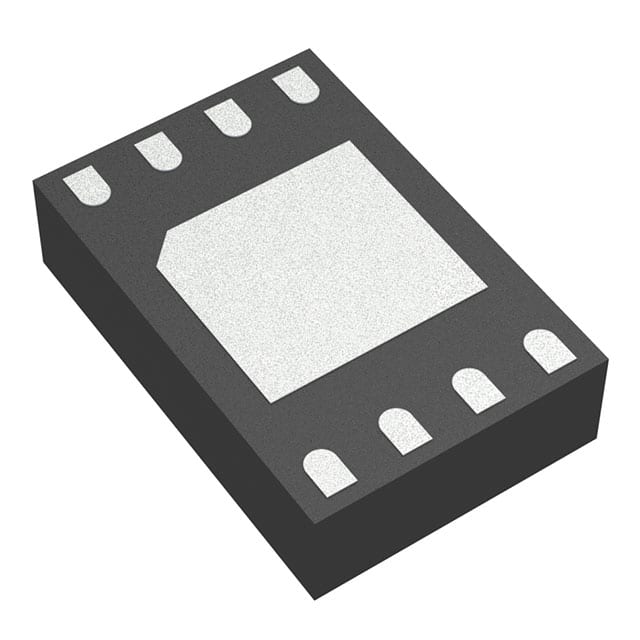
- Part No.:
- M95320-DRMF3TG/K
- Manufacturer:
- STMicroelectronics
- Category:
- Memory
- Package:
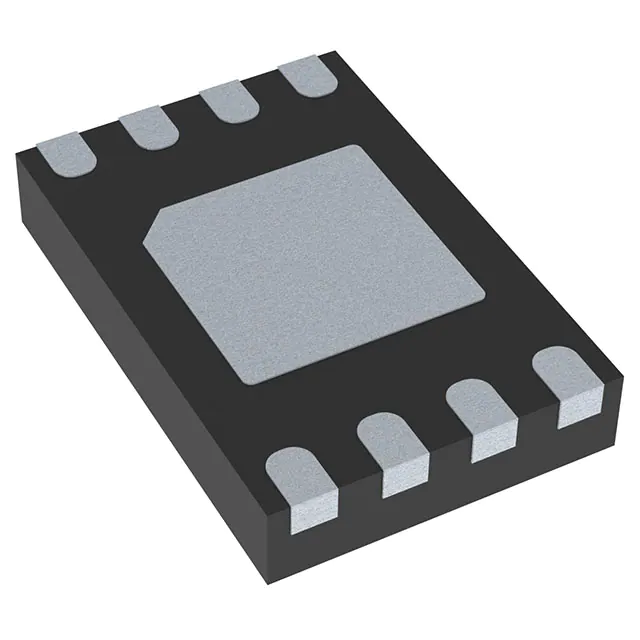
- 8-WFDFN Exposed Pad
- Datasheet:
-
 M95320-DRMF3TG/K.pdf
- Description:
- IC EEPROM 32KBIT SPI 20MHZ 8MLP
- Quantity:
- Payment:

- Shipping:

Inventory:2,850
Please send an inquiry. Send us your inquiry, and we will respond immediately.
Product details
Overview
M95320-DRMF3TG/K from STMicroelectronics is an AEC-Q100 Grade 0 automotive serial SPI EEPROM with 32-Kbit (4-Kbyte) capacity, 32-byte page size, and extended temperature operation up to +145°C. It features Schmitt-trigger inputs, software/hardware write protection, embedded ECC, and a lockable 32-byte identification page - deployed in engine control units, battery management systems, and ADAS sensor modules.
For engineers reviewing the M95320-DRMF3TG/K datasheet, M95320-DRMF3TG/K pinout, M95320-DRMF3TG/K application, or M95320-DRMF3TG/K equivalent, key selection criteria include high-temp endurance (≥0.4M write cycles at 145°C), 20 MHz SPI clock support, ECOPACK2-compliant WFDFPN8 package, and status register-controlled block protection.
Technical Context
This device implements a true EEPROM array organized as 128 pages × 32 bytes (4096 × 8 bits), with dedicated ECC logic for enhanced data integrity during read/write operations. The identification page (32 bytes) supports permanent locking via LID instruction and stores ST-manufactured ID codes (0x20, 0x00, 0x0C) plus user-defined parameters.
It operates in standard SPI modes CPOL=0/CPHA=0 and CPOL=1/CPHA=1, with input latching on rising C edge and output shifting on falling C edge. Hold mode pauses communication without resetting the clock sequence, requiring HOLD low and C low to activate, and supports seamless resumption after release.
Key Specifications
| Parameter | Value and Actual Design Meaning |
|---|---|
| Memory size | 32-Kbit (4-Kbyte), byte-alterable, organized as 128 × 32-byte pages |
| Supply voltage | 1.7 V to 5.5 V - enables direct interface with 1.8 V, 3.3 V, and 5 V microcontrollers |
| Operating temperature | −40°C to +145°C - qualified per AEC-Q100 Grade 0 for under-hood automotive use |
| SPI clock frequency | Up to 20 MHz - supports high-throughput firmware parameter updates in real time |
| Write cycle time | Byte/page write ≤ 4 ms (typ. 3.2 ms) - minimizes system latency during configuration writes |
| Data retention | >50 years at 125°C - ensures long-term calibration data integrity in harsh environments |
| Endurance | >400,000 write cycles at 145°C - sustains repeated logging in thermal-critical ECU subsystems |
| ESD rating | HBM ±4000 V - improves robustness against assembly and field electrostatic discharge events |
Pinout & Package
Package: WFDFPN8 (2 mm × 3 mm, 0.5 mm pitch, ECOPACK2-compliant).
| Pin/Terminal | Circuit Role | Design Meaning |
|---|---|---|
| C | Serial clock input | Synchronizes all SPI transfers; data latched on rising edge, output shifted on falling edge |
| D | Serial data input | Receives instructions, addresses, and write data (MSB first); active only when S is low |
| Q | Serial data output | Drives read data (MSB first) during READ/RDSR/RDID; high-Z when not selected or in HOLD |
| S | Chip select input | Edge- and level-sensitive; falling edge initiates command decoding; high-Z Q when high |
| W | Hardware write protect | Controls SRWD-based status register write access; low disables WRSR when SRWD = 1 |
| HOLD | Communication hold | Pauses ongoing SPI transfer without deselecting device; requires C low to activate |
| VCC | Power supply | 1.7–5.5 V supply; powers internal HV generator, sequencer, and logic |
| VSS | Ground reference | Common return for all signals and VCC; required for proper Schmitt trigger threshold operation |
Key Features
| Feature | Design Value |
|---|---|
| Embedded ECC logic | Corrects single-bit errors and detects multi-bit errors in memory array reads - critical for safety-critical automotive data storage |
| Lockable identification page | 32-byte dedicated page with LID instruction to permanently disable writes - secures calibration IDs and cryptographic keys |
| Quarter-block software protection | BP1/BP0 bits in status register enable selective write-protection of upper quarter (0xC00–0xFFF), half, or full array |
| Schmitt-trigger inputs | Input hysteresis on C, D, S, HOLD, W pins - rejects noise spikes on long PCB traces in noisy engine bays |
| ECOPACK2-compliant packaging | Halogen-free, RoHS-compliant WFDFPN8 - meets automotive environmental compliance and solderability requirements |
Applications
| Engine Control Unit (ECU) | Battery Management System (BMS) |
|---|---|
Use Scenario: Storing adaptive fuel trim tables, knock sensor calibration offsets, and fault code history across thermal cycles. IC Role / Device Role / Timing Role: Nonvolatile parameter storage with ECC-protected reads and fast page writes during runtime reconfiguration. Use Value: Ensures deterministic boot-time parameter loading and >50-year data retention at 125°C ambient - eliminating recalibration drift in Tier-1 powertrain systems. | Use Scenario: Recording cell voltage imbalance logs, thermal derating thresholds, and SOC calibration coefficients in traction battery packs. IC Role / Device Role / Timing Role: High-temp EEPROM interfacing directly with isolated ADC monitoring ICs via 20 MHz SPI. Use Value: Supports ≥400,000 write cycles at 145°C near battery cells - enabling lifetime logging without wear-out failure in EV platforms. |
| Advanced Driver Assistance Systems (ADAS) | Automotive Lighting Control Module |
Use Scenario: Storing camera lens distortion maps, radar beamforming coefficients, and sensor fusion calibration matrices. IC Role / Device Role / Timing Role: Secure, lockable ID page stores manufacturer-specific calibration signatures; ECC prevents corrupted map loads. Use Value: Prevents functional safety violations (ISO 26262 ASIL-B) caused by undetected bit flips in vision/radar calibration data. | Use Scenario: Retaining LED current profiles, thermal derating curves, and adaptive dimming schedules across vehicle life. IC Role / Device Role / Timing Role: SPI EEPROM accessed by MCU during startup to configure PWM drivers and thermal shutdown thresholds. Use Value: Enables precise light-output consistency over 15+ years - even when ambient PCB temperature exceeds 125°C near headlamp heat sinks. |
Equivalent & Alternatives
The following parts are listed as comparable options for similar automotive EEPROM applications.
| Alternative Part | Technical Difference | Application Difference | Selection Advice |
|---|---|---|---|
| AT25DF321A-MAHN-T | 32-Mbit NOR Flash (not EEPROM); no built-in ECC; 100k write cycles at 85°C | Lacks AEC-Q100 Grade 0 qualification; no lockable ID page or hardware W pin | Select only if firmware storage (not parameter logging) is primary need and ECC is handled externally |
| BR24G32FJ-3GE2 | I²C interface (not SPI); 1.7–5.5 V; AEC-Q100 Grade 2 (−40°C to +105°C); no HOLD pin | Lower max temperature rating; incompatible bus protocol; no identification page locking | Choose only for cost-sensitive body electronics where 105°C suffices and I²C is already used |
Compared with AT25DF321A-MAHN-T and BR24G32FJ-3GE2, M95320-DRMF3TG/K uniquely delivers Grade 0 qualification, embedded ECC, lockable ID page, and HOLD functionality - making it the only option for ASIL-B-compliant, high-temp, SPI-based parameter storage in powertrain and ADAS.
Availability
M95320-DRMF3TG/K is available at Aetrix Electronics and suitable for engine control units, battery management systems, advanced driver assistance systems, and automotive lighting control modules requiring stable component supply across extended temperature ranges and long product lifecycles.
Supply support for M95320-DRMF3TG/K includes scheduled delivery planning, volume procurement assistance, BOM continuity management, traceable sourcing, and lifecycle availability coordination for OEM customers, industrial embedded developers, connected-device designers, and electronics production programs.
Manufacturer
STMicroelectronics is a global semiconductor leader headquartered in Geneva, Switzerland, designing and manufacturing microcontrollers, power ICs, sensors, and memory solutions for automotive, industrial, and consumer markets.
The M95320 series belongs to ST's automotive-grade serial EEPROM product line, engineered specifically for mission-critical data storage in extreme thermal environments - emphasizing reliability, ECC integrity, and AEC-Q100 compliance from design through qualification.
FAQ
What is the function of the HOLD pin, and how does it differ from chip select (S)?
The HOLD pin pauses active SPI communication without deselecting the device or resetting the internal address counter - allowing external controllers to temporarily suspend transfers while retaining context. Unlike chip select (S), which fully deselects the device and forces Q into high-Z, HOLD maintains S low and preserves clock synchronization, enabling seamless resumption after release. Activation requires HOLD low and C low simultaneously.
How does the identification page differ from the main memory array?
The identification page is a dedicated 32-byte region separate from the main 4-Kbyte array, pre-programmed by ST with device ID codes (0x20, 0x00, 0x0C) and reserved for application-specific parameters. It supports WRID and RDID instructions and can be permanently locked in read-only mode using the LID instruction - preventing accidental or malicious overwrite of calibration or security-critical data.
What protection mechanisms prevent unintended writes to the memory array?
Three layered protections exist: (1) Software write enable (WREN instruction required before any WRITE/WRSR/WRID), (2) Status register block protection (BP1/BP0 bits restrict write access to upper quarter/half/full array), and (3) Hardware write protect (W pin disables status register writes when SRWD = 1 and W = low). These operate independently and concurrently to enforce robust data integrity.
Is the M95320-DRMF3TG/K compatible with standard SPI peripherals on common MCUs?
Yes - it supports both SPI Mode 0 (CPOL = 0, CPHA = 0) and Mode 3 (CPOL = 1, CPHA = 1), matching most ARM Cortex-M, Renesas RH850, and Infineon AURIX MCU SPI peripherals. Input data is latched on the rising clock edge, and output data appears on the falling edge - aligning with standard SPI timing requirements without requiring custom firmware bit-banging.
M95320-DRMF3TG/K Specifications
- Product attributes
- Attribute value
- Manufacturer:
- STMicroelectronics
- Series:
- -
- Package/Case:
- 8-WFDFN Exposed Pad
- Packaging:
- Tape & Reel (TR)
- Product Status:
- Active
- Programmable:
- Not Verified
- Memory Type:
- Non-Volatile
- Memory Format:
- EEPROM
- Technology:
- EEPROM
- Memory Size:
- 32Kbit
- Memory Organization:
- 4K x 8
- Memory Interface:
- SPI
- Clock Frequency:
- 20 MHz
- Write Cycle Time - Word, Page:
- 4ms
- Access Time:
- -
- Voltage - Supply:
- 1.8V ~ 5.5V
- Operating Temperature:
- -40°C ~ 125°C (TA)
- Grade:
- Automotive
- Qualification:
- AEC-Q100
- Mounting Type:
- Surface Mount
- Supplier Device Package:
- 8-MLP (2x3)
M95320-DRMF3TG/K FAQ
1.How can I place an order for M95320-DRMF3TG/K through Aetrix?
Please submit a Request for Quotation (RFQ) for M95320-DRMF3TG/K on Aetrix. Our sales agent will provide a competitive quotation and guide you through the order confirmation once you accept the terms.
2.Are the price and stock information for M95320-DRMF3TG/K reliable?
The price and inventory of M95320-DRMF3TG/K are updated periodically and may fluctuate due to market conditions. Stock and pricing data are typically refreshed every 24 hours. Quotation validity for M95320-DRMF3TG/K is usually 5 days.
3.What payment methods are accepted for M95320-DRMF3TG/K?
We accept Wire Transfer, PayPal, Credit Card, Western Union, MoneyGram, and Escrow for M95320-DRMF3TG/K transactions.
Note: Certain payment methods may incur a processing fee.
4.How is shipping managed for M95320-DRMF3TG/K?
M95320-DRMF3TG/K orders can be shipped via leading logistics carriers, including DHL, UPS, FedEx, TNT, or Registered Mail.
Once your M95320-DRMF3TG/K order is processed, you will receive an email with the shipment details and tracking number.
Note: Tracking information may take up to 24 hours to appear. Express delivery typically takes 3–5 business days.
5.How can I obtain technical support or documentation for M95320-DRMF3TG/K?
For technical support, including M95320-DRMF3TG/K datasheets, pinout diagrams, or application guidance, please contact our engineering support team. They can provide detailed documentation and assistance for your M95320-DRMF3TG/K requirements.
6.How does Aetrix verify that M95320-DRMF3TG/K is sourced from the original manufacturer or authorized distributors?
All M95320-DRMF3TG/K products on Aetrix are procured from qualified distributors and authorized channels. Our dedicated quality assurance team conducts strict verification, including traceability checks and, if necessary, third-party testing. This ensures that M95320-DRMF3TG/K meets industry standards.
7.What is the process for return or replacement of M95320-DRMF3TG/K?
All M95320-DRMF3TG/K units undergo pre-shipment inspection (PSI). If there is an issue with M95320-DRMF3TG/K, returns or replacements are accepted under the following conditions:
1.Quantity discrepancies, incorrect items, or visible external defects (such as breakage or corrosion), acknowledged by Aetrix.
2.The issue is reported within 90 days of delivery.
3.The M95320-DRMF3TG/K part is unused and in its original packaging.
Return procedure for M95320-DRMF3TG/K:
1.Submit a request within 90 days.
2.Obtain a Return Material Authorization (RMA) from Aetrix.
M95320-DRMF3TG/K Tags

-
M24C02-WMN6TP
STMicroelectronics
-
AT24C02C-XHM-T
Microchip Technology
-
AT21CS01-STUM10-T
Microchip Technology

-
AT24C02C-SSHM-T
Microchip Technology
-
24LC01BT-I/OT
Microchip Technology
-
M24C02-FMC6TG
STMicroelectronics
-
AT24CS02-SSHM-T
Microchip Technology

-
93LC46BT-I/OT
Microchip Technology
-
AT24C04C-SSHM-T
Microchip Technology

-
24LC01BT-I/SN
Microchip Technology
-
24AA02UIDT-I/OT
Microchip Technology
-
AT24C08C-STUM-T
Microchip Technology
Tech Hub

LDO regulator guide covering low dropout voltage, power dissipation, thermal design, PSRR, output noise, capacitor stability, adjustable LDO circuits, LDO vs buck converter and datasheet selection chec…

Conditional Access Module guide covering CAM meaning, CI/CI+ interface, smart card authorization, DVB security workflow, TV and set-top box compatibility, internal electronics, ESD protection, connecto…

Guide to electronic component obsolescence covering EOL risk, PCN/PDN notices, last-time buy planning, replacement options, form-fit-function validation, counterfeit risk and BOM lifecycle management.

18650 battery guide covering lithium-ion cell basics, 3.6V/3.7V voltage, 4.2V charging, mAh and Wh capacity, protected cells, chargers, BMS, series-parallel packs, holders, welding and sourcing checks.…

Hall effect sensor guide covering working principle, linear and digital sensors, Arduino circuits, current sensing, speed detection, automotive applications, A3144 examples, signal filtering and datash…

Product Change Notification guide for electronic components, covering PCN meaning, PCN vs PDN/EOL, common change types, risk levels, form-fit-function review, engineering validation, BOM control, LTB/L…

A practical guide to blend door actuators, covering HVAC function, symptoms, location, AC and heater issues, reset and calibration, replacement cost, electrical diagnosis, compatibility checks, and rep…

Engineering guide to Raspberry Pi alternatives, covering chip-level differences, Orange Pi, ROCK, Jetson, Banana Pi, NanoPi, Compute Module, Pico, GPIO, camera, HAT compatibility, and replacement risks…
Engineering guide to dynamic load response testing for high-current buck converters, covering load step setup, slew rate, Vcore undershoot, overshoot, recovery time, probe location, output capacitors a…
Engineering guide to output capacitor selection for ASIC Vcore rails, covering bulk capacitors, polymer capacitors, MLCC decoupling, DC bias, ESR, ESL, placement, transient response and substitution ri…


