Melexis Technologies NV MLX90640ESF-BAA-000-SP
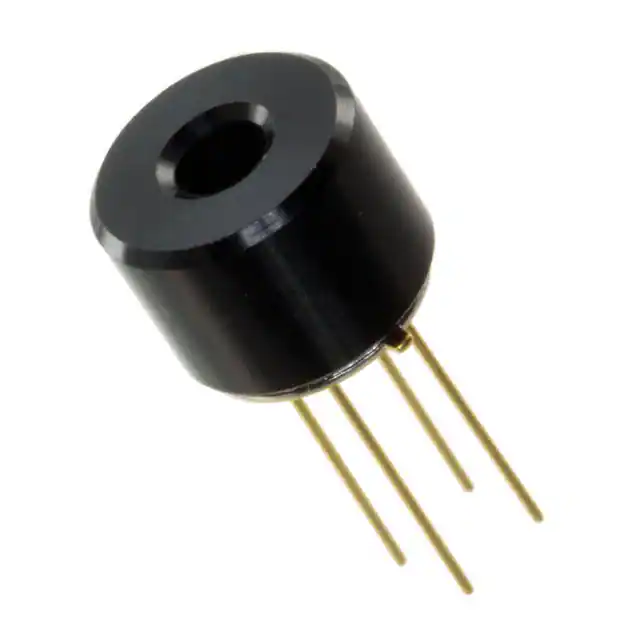
- Part No.:
- MLX90640ESF-BAA-000-SP
- Manufacturer:
- Melexis Technologies NV
- Category:
- Image Sensors, Camera
- Package:
- TO-39-4 Metal Can
- Datasheet:
-
MLX90640ESF-BAA-000-SP.pdf
- Description:
- SENSOR DGTL -40C-85C TO39
- Quantity:
- Payment:

- Shipping:

Inventory:1,090
Please send an inquiry. Send us your inquiry, and we will respond immediately.
Product details
Overview
MLX90640ESF-BAA-000-SP from Melexis is a factory-calibrated 32×24-pixel thermal infrared array in a 4-lead TO39 package, delivering 768 FIR pixels with 0.1K RMS NETD at 1Hz, I²C digital interface, and dual subpage refresh architecture for ambient (Ta) and IR pixel data. It operates from 3.3V, draws <23mA, supports programmable 0.5–64Hz frame rates, and targets non-contact temperature measurement in HVAC, automotive climate control, and presence detection.
For engineers reviewing the MLX90640ESF-BAA-000-SP datasheet, pinout, applications, or equivalent options, this device delivers calibrated thermal imaging with integrated Ta and VDD sensors, chess/TV reading patterns, EEPROM-stored calibration coefficients, and RoHS-compliant TO39 packaging for rapid integration into embedded thermal sensing systems.
Technical Context
The MLX90640ESF-BAA-000-SP implements a dual-subpage measurement architecture where IR pixel data and ambient temperature (Ta) are updated alternately-each subpage refreshed at the configured frame rate (e.g., 4Hz → 250ms), while Ta calculation requires both subpages, effectively halving its update rate. Its internal RAM stores raw IR, Ta, and VDD sensor outputs accessible via I²C.
It uses a 34MHz RC oscillator, bandgap reference, and PTAT sensor for on-chip temperature compensation; calibration data-including per-pixel Kta(i,j), Kv(i,j), offset, sensitivity, TGC, and corner temperatures-is factory-programmed into EEPROM and must be restored before object temperature calculation. The device supports FM+ I²C up to 1MHz with 5V-tolerant SDA/SCL pins and default slave address 0x33.
Key Specifications
| Parameter | Value and Actual Design Meaning |
|---|---|
| Resolution | 32 × 24 = 768 FIR pixels; enables thermal image formation at VGA-equivalent spatial density for localized temperature mapping. |
| NETD | 0.1K RMS @1Hz; defines minimum detectable temperature difference under low-noise, slow-refresh conditions for high-precision thermometry. |
| Refresh Rate | Programmable 0.5–64Hz; controls thermal frame capture speed and system responsiveness-e.g., 64Hz supports real-time motion tracking. |
| Supply Voltage | 3.0–3.6V (typ. 3.3V); requires stable ±0.05V regulation for optimal calibration accuracy and noise performance. |
| Current Consumption | <23mA max; enables battery-powered operation in portable thermal sensors and low-power IoT edge nodes. |
| Field of View | 55° × 35° (BAA variant); provides narrow-angle thermal imaging suitable for focused target monitoring in confined spaces. |
| Operating Temp | −40°C to +85°C; ensures reliable operation in automotive cabins, industrial enclosures, and outdoor building automation environments. |
| I²C Interface | FM+ compatible, 0.4–1MHz clock, 5V-tolerant pins, default address 0x33; simplifies host MCU integration without level-shifting circuitry. |
Pinout & Package
MLX90640ESF-BAA-000-SP uses an industry-standard 4-lead TO39 metal can package with hermetically sealed IR window, optimized for thermal stability and ESD robustness (4kV AEC-Q100 Class 2). Pin 1 (SDA) and Pin 4 (SCL) are 5V-tolerant; Pin 2 (VDD) and Pin 3 (GND) define the analog/digital power domain.
| Pin/Terminal | Circuit Role | Design Meaning |
|---|---|---|
| 1 - SDA | I²C serial data bidirectional line | Transfers register reads/writes, calibration data, and raw pixel values; open-drain with internal pull-up; 5V tolerant. |
| 2 - VDD | Positive supply input | 3.3V nominal supply for analog/digital circuitry; requires low-noise decoupling near the pin to maintain NETD performance. |
| 3 - GND | Ground reference | Analog and digital common return; must be low-impedance and separated from noisy digital ground planes to minimize thermal drift. |
| 4 - SCL | I²C serial clock input | Master-generated clock synchronizing all I²C transfers; 5V tolerant; timing-critical for reliable EEPROM read/write operations. |
Key Features
| Feature | Design Value |
|---|---|
| Factory calibration | All 768 pixel offsets, sensitivities, Kta/Kv coefficients, TGC, and Ta/VDD sensor parameters pre-programmed in EEPROM-eliminates field calibration effort. |
| Dual subpage architecture | Alternating subpage updates enable concurrent IR and Ta acquisition; required for accurate object temperature calculation using full calibration model. |
| Chess pattern reading mode | Default pixel read sequence reduces fixed-pattern noise by interleaving pixel sampling-critical for stable thermal image quality. |
| Integrated Ta and VDD sensors | On-die ambient temperature and supply voltage monitoring provide real-time compensation inputs for pixel-level temperature correction. |
| EEPROM programmability | User-configurable refresh rate, reading pattern, and control registers persist across power cycles-no host reinitialization needed after POR. |
| RoHS-compliant TO39 | Hermetic metal-can package with IR-transmissive window ensures long-term stability, ESD immunity (4kV), and compatibility with reflow soldering. |
Applications
| Smart HVAC Control | Automotive Cabin Comfort |
|---|---|
|
Use Scenario: Real-time occupancy and thermal zone mapping in commercial buildings to dynamically adjust airflow and setpoints. IC Role / Device Role / Timing Role: Primary thermal imaging sensor providing 32×24 spatial temperature grid; synchronized via I²C to MCU every 1–4Hz. Use Value: Enables precise person localization and thermal comfort scoring (PMV/PPD), reducing HVAC energy use by up to 25% versus single-point thermostats. |
Use Scenario: Driver/passenger presence detection and seat surface temperature monitoring for automatic climate adaptation. IC Role / Device Role / Timing Role: Ambient-facing IR array mounted in overhead console; captures cabin thermal distribution at 2–8Hz for closed-loop HVAC control. Use Value: Supports ASHRAE 55-compliant thermal comfort tuning and eliminates false triggers from passive infrared (PIR) sensors. |
| Industrial Equipment Monitoring | Portable Thermal Imaging |
|
Use Scenario: Non-contact temperature surveillance of conveyor belts, motors, and bearings in manufacturing lines. IC Role / Device Role / Timing Role: Edge-mounted thermal sensor feeding temperature gradients to predictive maintenance firmware at 0.5–4Hz. Use Value: Detects >2K hotspot deviations before mechanical failure, extending mean time between failures (MTBF) by 30% in rotating equipment. |
Use Scenario: Handheld thermal camera module for facility inspections, electrical panel scanning, and building envelope diagnostics. IC Role / Device Role / Timing Role: Core IR imaging element interfaced to ARM Cortex-M7 MCU; acquires frames at 8–32Hz for live display rendering. Use Value: Delivers 0.1K thermal resolution in compact form factor-enabling sub-$200 professional-grade tools with calibrated radiometric output. |
Equivalent & Alternatives
The following parts are listed as comparable options for similar thermal imaging applications.
| Alternative Part | Technical Difference | Application Difference | Selection Advice |
|---|---|---|---|
| MLX90640ESF-BAB-000-SP | Same 32×24 array and TO39 package but with 110°×75° FOV; higher pixel-to-FOV ratio reduces spatial resolution per degree. | Better suited for wide-area coverage (e.g., room occupancy), less ideal for targeted object measurement at distance. | Select BAB for broad-field detection; BAA for focused thermal profiling where angular precision matters. |
| AMG8833 | 8×8 grid (64 pixels), lower resolution; no integrated Ta sensor; 10-bit ADC vs MLX90640's 18-bit effective resolution; NETD ~1.5K. | Limited to coarse presence/motion detection-not suitable for quantitative thermography or HVAC comfort control. | Choose AMG8833 only for cost-sensitive, low-resolution applications where <0.5K NETD is unnecessary. |
Compared with MLX90640ESF-BAB-000-SP and AMG8833, the MLX90640ESF-BAA-000-SP uniquely combines narrow 55°×35° FOV, 0.1K NETD, full per-pixel calibration, and dual-subpage Ta/IR synchronization-making it the only option among the three qualified for ASHRAE-compliant thermal comfort sensing and industrial radiometric monitoring.
Availability
MLX90640ESF-BAA-000-SP is available at Aetrix Electronics and suitable for smart HVAC control, automotive cabin comfort systems, and industrial equipment monitoring requiring stable component supply, calibrated thermal imaging performance, and long-lifecycle support.
Supply support for MLX90640ESF-BAA-000-SP includes scheduled delivery planning, volume procurement assistance, BOM continuity management, traceable sourcing, and lifecycle availability coordination for OEM customers, industrial embedded developers, connected-device designers, and electronics production programs.
Manufacturer
Melexis is a Belgian semiconductor company specializing in intelligent sensors and driver ICs for automotive, industrial, and consumer applications, with core expertise in magnetic, infrared, and pressure sensing.
The MLX90640 product line was designed specifically for high-accuracy, low-cost thermal imaging in resource-constrained embedded systems-emphasizing factory calibration, I²C simplicity, and robust TO39 packaging for real-world environmental reliability.
FAQ
What is the field of view (FOV) of the MLX90640ESF-BAA-000-SP?
The MLX90640ESF-BAA-000-SP has a fixed 55° horizontal × 35° vertical field of view, optimized for medium-range thermal imaging where spatial precision is prioritized over wide-area coverage. This FOV matches the "BAA" option code defined in Melexis' ordering guide and is mechanically implemented via the lens assembly in the TO39 package. It differs from the 110°×75° FOV of the BAB variant.
How does the MLX90640ESF-BAA-000-SP achieve 0.1K NETD?
The MLX90640ESF-BAA-000-SP achieves 0.1K RMS Noise Equivalent Temperature Difference at 1Hz through a combination of low-noise analog front-end design, factory-trimmed pixel response uniformity, dual-subpage temporal noise averaging, and integrated Ta/VDD compensation. This specification is measured under controlled conditions per ISO 18434-1 and requires stable 3.3V ±0.05V supply and proper PCB thermal isolation to replicate in end systems.
Does the MLX90640ESF-BAA-000-SP require external calibration?
No-the MLX90640ESF-BAA-000-SP is fully factory-calibrated with all 768 pixel coefficients (offset, sensitivity, Kta, Kv), TGC, corner temperatures, and Ta/VDD sensor parameters permanently stored in on-chip EEPROM. Host firmware must load these values into RAM before computing object temperature, but no user-performed calibration is needed. The device ships ready for radiometric operation.
What I²C configuration is required to communicate with the MLX90640ESF-BAA-000-SP?
The MLX90640ESF-BAA-000-SP uses standard FM+ I²C with default 7-bit slave address 0x33 (0x66 write, 0x67 read), supports clock frequencies up to 1MHz, and features 5V-tolerant SDA/SCL pins. Pull-up resistors (typically 2.2–4.7kΩ to 3.3V) are required on both lines. EEPROM writes must observe 5ms delays between operations, and the I²C bus must be free of contention during device initialization.
Can the MLX90640ESF-BAA-000-SP operate in environments above 85°C?
No-the MLX90640ESF-BAA-000-SP is rated for operation from −40°C to +85°C ambient temperature (TAMB), as specified in its absolute maximum ratings. Exceeding +85°C risks permanent damage to the silicon die and IR window seal. For higher-temperature environments, external thermal shielding or heat-sinking of the TO39 package is required to maintain case temperature within spec-Melexis does not guarantee performance beyond this range.
MLX90640ESF-BAA-000-SP Specifications
- Product attributes
- Attribute value
- Manufacturer:
- Melexis Technologies NV
- Series:
- -
- Package/Case:
- TO-39-4 Metal Can
- Packaging:
- Bulk
- Product Status:
- Active
- Type:
- Thermal
- Pixel Size:
- -
- Active Pixel Array:
- 32H x 24V
- Frames per Second:
- -
- Voltage - Supply:
- 2.9V ~ 3.6V
- Supplier Device Package:
- TO-39
- Operating Temperature:
- -40°C ~ 85°C
- Grade:
- -
- Qualification:
- -
MLX90640ESF-BAA-000-SP FAQ
1.How can I place an order for MLX90640ESF-BAA-000-SP through Aetrix?
Please submit a Request for Quotation (RFQ) for MLX90640ESF-BAA-000-SP on Aetrix. Our sales agent will provide a competitive quotation and guide you through the order confirmation once you accept the terms.
2.Are the price and stock information for MLX90640ESF-BAA-000-SP reliable?
The price and inventory of MLX90640ESF-BAA-000-SP are updated periodically and may fluctuate due to market conditions. Stock and pricing data are typically refreshed every 24 hours. Quotation validity for MLX90640ESF-BAA-000-SP is usually 5 days.
3.What payment methods are accepted for MLX90640ESF-BAA-000-SP?
We accept Wire Transfer, PayPal, Credit Card, Western Union, MoneyGram, and Escrow for MLX90640ESF-BAA-000-SP transactions.
Note: Certain payment methods may incur a processing fee.
4.How is shipping managed for MLX90640ESF-BAA-000-SP?
MLX90640ESF-BAA-000-SP orders can be shipped via leading logistics carriers, including DHL, UPS, FedEx, TNT, or Registered Mail.
Once your MLX90640ESF-BAA-000-SP order is processed, you will receive an email with the shipment details and tracking number.
Note: Tracking information may take up to 24 hours to appear. Express delivery typically takes 3–5 business days.
5.How can I obtain technical support or documentation for MLX90640ESF-BAA-000-SP?
For technical support, including MLX90640ESF-BAA-000-SP datasheets, pinout diagrams, or application guidance, please contact our engineering support team. They can provide detailed documentation and assistance for your MLX90640ESF-BAA-000-SP requirements.
6.How does Aetrix verify that MLX90640ESF-BAA-000-SP is sourced from the original manufacturer or authorized distributors?
All MLX90640ESF-BAA-000-SP products on Aetrix are procured from qualified distributors and authorized channels. Our dedicated quality assurance team conducts strict verification, including traceability checks and, if necessary, third-party testing. This ensures that MLX90640ESF-BAA-000-SP meets industry standards.
7.What is the process for return or replacement of MLX90640ESF-BAA-000-SP?
All MLX90640ESF-BAA-000-SP units undergo pre-shipment inspection (PSI). If there is an issue with MLX90640ESF-BAA-000-SP, returns or replacements are accepted under the following conditions:
1.Quantity discrepancies, incorrect items, or visible external defects (such as breakage or corrosion), acknowledged by Aetrix.
2.The issue is reported within 90 days of delivery.
3.The MLX90640ESF-BAA-000-SP part is unused and in its original packaging.
Return procedure for MLX90640ESF-BAA-000-SP:
1.Submit a request within 90 days.
2.Obtain a Return Material Authorization (RMA) from Aetrix.
MLX90640ESF-BAA-000-SP Tags

-
MT9M114EBLSTCZ-CR
onsemi
-
EPC611-CSP24-001
ESPROS Photonics AG

-
AR0147ATSC00XUEG5-DRBR
onsemi

-
AR0130CSSM00SPCA0-DRBR
onsemi
-
AR1335CSSC11SMKA0-CP
onsemi
-
AR0521SR2M09SURA0-DP
onsemi
-
AR0135CS2M25SUEA0-DPBR
onsemi

-
AR0522SRSC09SURA0-DP
onsemi

-
AR0134CSSC00SPCA0-DPBR
onsemi

-
AR0134CSSM00SUEA0-DPBR
onsemi
-
AR0521SR2C09SURA0-DP
onsemi
-
AR0135CS2M00SUEA0-DPBR
onsemi
Tech Hub

Comparator circuit design covering voltage thresholds, input limits, open-collector outputs, LM393 wiring, op-amp differences, hysteresis, timing, window detection and practical fault diagnosis.
Schmitt triggers use separate rising and falling thresholds to stabilize slow or noisy signals. This guide covers hysteresis, 74HC14 and 74HCT14 selection, comparator calculations, RC oscillators and p…
Counterfeit components can hide behind convincing markings and passing basic function tests. This engineering reference covers source traceability, external inspection, X-ray, XRF, electrical testing, …
A practical engineering and sourcing framework covering lifecycle verification, lifetime-buy calculations, replacement qualification, supplier checks and counterfeit-risk controls.
TTL and CMOS logic families differ in thresholds, loading, output drive, power and timing. This engineering guide compares 74HC and 74HCT, calculates noise margins and checks 3.3 V/5 V compatibility.
A practical engineering guide to 3.3V and 5V logic compatibility, input thresholds, resistor dividers, translator ICs, MOSFET level shifting, I2C pull-ups, timing limits and power-sequencing risks.
The 74HC595 uses push-pull logic outputs, while the TPIC6B595 uses 50 V open-drain DMOS sinks for higher-power loads. This guide compares timing, current limits, 3.3 V interfacing, load wiring, thermal…
The 74HC595 converts serial data into eight stable parallel outputs. This guide covers pin functions, shift and storage timing, OE and MR behavior, drive-current limits, cascading, voltage compatibilit…
A technical comparison of level-sensitive latches and edge-triggered flip-flops, covering timing windows, setup and hold limits, master–slave operation, time borrowing, race-through, HDL inference and…
A D latch stores one bit while Enable controls when data can pass. This reference covers gate-level operation, truth tables, transparency, setup and hold timing, LE versus OE, common ICs and practical …