
 My Inquiry
 My Account


Infineon Technologies SAK-TC234LC-24F133F AC
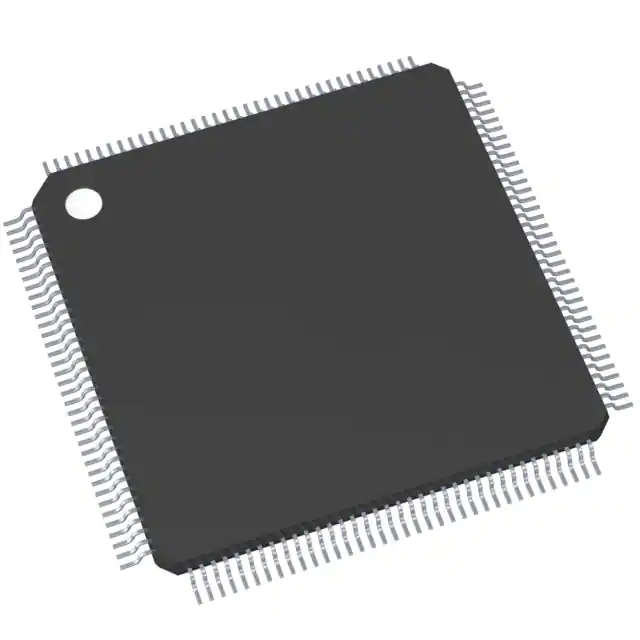
- Part No.:
- SAK-TC234LC-24F133F AC
- Manufacturer:
- Infineon Technologies
- Category:
- Microcontrollers
- Package:
- 144-LQFP Exposed Pad
- Datasheet:
-
 SAK-TC234LC-24F133F AC.pdf
- Description:
- IC MCU 32BIT 1.5MB FLASH 144TQFP
- Quantity:
- Payment:

- Shipping:

Inventory:4,160
Please send an inquiry. Send us your inquiry, and we will respond immediately.
Product details
Overview
SAK-TC234LC-24F133F AC from Infineon Technologies is a 32-bit AURIX™ TriCore™ microcontroller with a lockstepped TC1.6E CPU core operating up to 200 MHz, 2 MB program flash, 128 KB data flash (EEPROM-emulated), and integrated Ethernet MAC (MII/RMII), dual MultiCAN+ (6 CAN nodes), FlexRay v2.1, and GTM for autonomous I/O timing - deployed in automotive ADAS domain controllers and safety-critical ECU designs.
For engineers reviewing the SAK-TC234LC-24F133F AC datasheet, SAK-TC234LC-24F133F AC pinout, SAK-TC234LC-24F133F AC application, or SAK-TC234LC-24F133F AC equivalent, key selection criteria include ASCLIN/LIN support (v2.1/J2602), ECC-protected memory hierarchy, SMU-assisted ISO 26262 ASIL-D compliance readiness, and hardware security module (HSM) availability on select variants.
Technical Context
The SAK-TC234LC-24F133F AC implements a dual-core lockstep architecture where the shadow core continuously verifies the primary TC1.6E CPU's instruction execution, enabling real-time fault detection per ISO 26262 requirements. Its System PLL delivers stable 200 MHz core clock with jitter < ±50 ps RMS over temperature.
The on-chip GTM provides deterministic, offload-capable signal processing for PWM generation, capture/compare, and SENT sensor interfacing - independent of CPU load - while the dual MultiCAN+ modules support concurrent CAN FD and classical CAN traffic with 128 configurable message objects and hardware FIFOs.
Key Specifications
| Parameter | Value and Actual Design Meaning |
|---|---|
| CPU Core | TriCore™ TC1.6E with lockstepped shadow core for ASIL-D runtime fault detection |
| Max Clock Frequency | 200 MHz across full industrial temperature range (−40 °C to +125 °C) |
| Flash Memory | 2 MB PFLASH with ECC protection; 128 KB DFLASH supporting EEPROM emulation with 100k write cycles |
| RAM | 184 KB DSPR + 8 KB PSPR + 512 KB EMEM, all ECC-protected |
| Communication Interfaces | 2× MultiCAN+ (6 CAN nodes), 1× FlexRay v2.1 (2 channels), 1× IEEE 802.3 Ethernet (MII/RMII), 4× QSPI, 2× ASCLIN with LIN v2.1/J2602 |
| Analog Peripherals | VADC with 4 independent kernels, 0–5.5 V input range, up to 12-bit resolution, 1.2 MSps aggregate sampling rate |
| Safety Features | SMU with configurable alarm routing, MTU for memory BIST/ECC initialization, IOM for digital I/O monitoring |
Pinout & Package
This device uses the PG-TQFP-144-27 package: 144-pin thermally enhanced thin quad flat pack with 0.5 mm pitch, 20 mm × 20 mm body, and exposed thermal pad for enhanced heat dissipation in automotive under-hood environments.
| Pin/Terminal | Circuit Role | Design Meaning |
|---|---|---|
| VDDP_3V3 | 3.3 V I/O supply | Power domain for all digital I/O banks; requires external 3.3 V regulator with ≤100 mV ripple |
| VDDA_5V0 | 5.0 V analog supply | Supplies VADC reference and analog front-end; must be filtered separately from digital rails |
| ETH_MDC / ETH_MDIO | Ethernet management interface | IEEE 802.3-compliant MDIO bus for PHY configuration; supports auto-negotiation and link status polling |
| ERAY_TXD0 / ERAY_RXD0 | FlexRay channel 0 differential pair | LVDS-compatible physical layer interface compliant with FlexRay v2.1; requires 100 Ω termination |
| ASC0_TX / ASC0_RX | ASCLIN0 UART/LIN transceiver | Hardware-supported LIN v2.1 frame generation and checksum verification; supports wake-up via dominant timeout |
| CCU60_OUT0A / CCU60_OUT0B | Capture/Compare Unit 6 output pair | Complementary PWM outputs with programmable dead-time insertion for motor gate driver control |
Key Features
| Feature | Design Value |
|---|---|
| Lockstep CPU Architecture | Real-time comparison of primary and shadow core outputs enables immediate fault flag assertion without software intervention |
| ECC-Protected Memory Hierarchy | All SRAM, Flash, and peripheral register blocks include single-bit error correction and double-bit error detection (SECDED) |
| Hardware Security Module (HSM) | Optional embedded cryptographic accelerator supporting AES-128/256, SHA-256, RSA-2048, and secure boot key management |
| GTM Timer Subsystem | Offloads time-critical I/O tasks (e.g., SENT decoding, PWM modulation, sigma-delta filtering) from CPU, reducing ISR latency by >90% |
| MultiCAN+ with Message RAM | 128-message-object RAM with hardware FIFOs and gateway routing enables zero-CPU-load CAN-to-CAN bridging in multi-bus ECUs |
Applications
| Radar Sensor Fusion ECU | Electric Power Steering (EPS) Controller |
|---|---|
Use Scenario: Aggregates raw data from 77 GHz radar, ultrasonic, and camera sensors for object tracking and path prediction in L2+ ADAS systems. IC Role / Device Role / Timing Role: Central domain controller executing sensor fusion algorithms, managing inter-ECU CAN FD communication, and triggering safety actions via FlexRay. Use Value: Lockstep CPU and SMU enable ASIL-D decomposition; GTM handles real-time radar pulse timing and SENT-based temperature compensation without CPU overhead. | Use Scenario: Controls brushless motor torque, monitors steering angle/torque feedback, and enforces fail-operational behavior during partial system faults. IC Role / Device Role / Timing Role: Safety-critical motor control unit with dual-redundant current sensing, PWM generation, and CAN-based vehicle network integration. Use Value: CCU6 units deliver precise 20 kHz three-phase PWM with hardware dead-time; ECC-protected DFLASH stores calibration parameters across 10+ years of operation. |
| Brake-by-Wire Actuator Module | Vehicle Gateway ECU |
Use Scenario: Manages electro-hydraulic actuation of front/rear brakes with redundant pressure feedback and hydraulic isolation valve control. IC Role / Device Role / Timing Role: Fail-operational brake controller executing ISO 26262 ASIL-D motion control loops at 10 kHz sample rate. Use Value: Dual MultiCAN+ modules route CAN messages between powertrain, chassis, and body domains; SMU triggers safe state transitions within < 5 ms upon fault detection. | Use Scenario: Bridges high-speed CAN FD, LIN, FlexRay, and Ethernet networks in zonal architecture vehicles to unify diagnostics, OTA updates, and telematics. IC Role / Device Role / Timing Role: Network gateway with protocol translation, firewalling, and secure boot enforcement for ECU firmware updates. Use Value: HSM accelerates TLS 1.2 handshake and firmware signature verification; Ethernet MAC enables 100 Mbps OTA download with CRC32 + ECC integrity checking. |
Equivalent & Alternatives
The following parts are listed as comparable options for similar automotive safety microcontroller applications.
| Alternative Part | Technical Difference | Application Difference | Selection Advice |
|---|---|---|---|
| SAK-TC233L-24F133F AC | Same core and peripherals but reduced memory: 1 MB PFLASH, 64 KB DFLASH, no Ethernet MAC | Suitable for cost-sensitive ASIL-B ECUs without Ethernet connectivity or large code footprint | Select when Ethernet and >1.5 MB flash are not required; reduces BOM cost by ~18% at volume |
| SAK-TC237L-32F200N AC | Higher performance: 32-bit TriCore™ TC1.8P core, 200 MHz, 4 MB PFLASH, 256 KB DFLASH, dual Ethernet ports | Targeted at central compute platforms requiring higher throughput for AI-based perception stacks | Choose for next-gen ADAS with neural network inference offload and dual-gigabit Ethernet backhaul |
Compared with SAK-TC234LC-24F133F AC, the TC233L variant trades Ethernet and memory capacity for lower cost in non-gateway roles, while the TC237L adds dual Ethernet and larger memory for centralized compute - making the TC234LC the optimal balance of safety, connectivity, and scalability for mid-tier domain controllers.
Availability
SAK-TC234LC-24F133F AC is available at Aetrix Electronics and suitable for automotive ADAS domain controllers, electric power steering systems, brake-by-wire actuators, and vehicle gateway ECUs requiring stable component supply across extended product lifecycles.
Supply support for SAK-TC234LC-24F133F AC includes scheduled delivery planning, volume procurement assistance, BOM continuity management, traceable sourcing, and lifecycle availability coordination for OEM customers, industrial embedded developers, connected-device designers, and electronics production programs.
Manufacturer
Infineon Technologies AG is a German semiconductor manufacturer specializing in power management, automotive ICs, and security solutions, with R&D centers across Europe, Asia, and the Americas.
The AURIX™ TC23x product line was engineered specifically for ISO 26262 ASIL-D automotive safety applications, integrating lockstep cores, ECC memory, and hardware safety monitors to eliminate single points of failure in critical drive systems.
FAQ
What is the maximum junction temperature rating for SAK-TC234LC-24F133F AC?
The device is qualified for operation up to +125 °C junction temperature, validated per AEC-Q100 Grade 1 requirements. Thermal derating begins at 105 °C ambient when using the PG-TQFP-144 package with standard PCB copper pour; full 200 MHz performance is maintained across this range with proper heatsinking.
Does SAK-TC234LC-24F133F AC include a hardware security module (HSM)?
The SAK-TC234LC-24F133F AC does not integrate the optional Hardware Security Module (HSM); that feature is present only in variants designated with "H" suffix (e.g., SAK-TC234LH-24F133F AC). This part supports secure boot via external HSM or software-based key management using its embedded SMU and protected memory regions.
Can the VADC measure signals above 3.3 V directly?
Yes - the VADC accepts input voltages from 0 V to 5.5 V when supplied by the dedicated VDDA_5V0 analog rail. It supports external voltage dividers and internal gain stages, enabling direct measurement of battery-sensed signals (e.g., 12 V rail monitoring) without external op-amp conditioning.
Is JTAG debug supported on this microcontroller?
Yes - the device supports IEEE 1149.1-compliant four-wire JTAG and alternative five-wire DAP (Device Access Port) interfaces for OCDS Level 1 debug access to CPU cores, DMA, and on-chip buses. Both interfaces operate at up to 25 MHz and support real-time trace via Embedded Trace Macrocell (ETM) when enabled.
SAK-TC234LC-24F133F AC Specifications
- Product attributes
- Attribute value
- Manufacturer:
- Infineon Technologies
- Package/Case:
- 144-LQFP Exposed Pad
- Series:
- AURIX™
- Packaging:
- Tape & Reel (TR)
- Product Status:
- Active
- Programmable:
- Not Verified
- Core Processor:
- TriCore™
- Core Size:
- 32-Bit Single-Core
- Speed:
- 133MHz
- Connectivity:
- CANbus, FlexRay, LINbus, QSPI
- Peripherals:
- DMA, PWM, WDT
- Number of I/O:
- 78
- Program Memory Size:
- 1.5MB (1.5M x 8)
- Program Memory Type:
- FLASH
- EEPROM Size:
- 128K x 8
- RAM Size:
- 192K x 8
- Voltage - Supply (Vcc/Vdd):
- 1.17V ~ 5.5V
- Data Converters:
- A/D 24x12b SAR
- Oscillator Type:
- External
- Operating Temperature:
- -40°C ~ 125°C (TA)
- Grade:
- -
- Qualification:
- -
- Mounting Type:
- Surface Mount
- Supplier Device Package:
SAK-TC234LC-24F133F AC FAQ
1.How can I place an order for SAK-TC234LC-24F133F AC through Aetrix?
Please submit a Request for Quotation (RFQ) for SAK-TC234LC-24F133F AC on Aetrix. Our sales agent will provide a competitive quotation and guide you through the order confirmation once you accept the terms.
2.Are the price and stock information for SAK-TC234LC-24F133F AC reliable?
The price and inventory of SAK-TC234LC-24F133F AC are updated periodically and may fluctuate due to market conditions. Stock and pricing data are typically refreshed every 24 hours. Quotation validity for SAK-TC234LC-24F133F AC is usually 5 days.
3.What payment methods are accepted for SAK-TC234LC-24F133F AC?
We accept Wire Transfer, PayPal, Credit Card, Western Union, MoneyGram, and Escrow for SAK-TC234LC-24F133F AC transactions.
Note: Certain payment methods may incur a processing fee.
4.How is shipping managed for SAK-TC234LC-24F133F AC?
SAK-TC234LC-24F133F AC orders can be shipped via leading logistics carriers, including DHL, UPS, FedEx, TNT, or Registered Mail.
Once your SAK-TC234LC-24F133F AC order is processed, you will receive an email with the shipment details and tracking number.
Note: Tracking information may take up to 24 hours to appear. Express delivery typically takes 3–5 business days.
5.How can I obtain technical support or documentation for SAK-TC234LC-24F133F AC?
For technical support, including SAK-TC234LC-24F133F AC datasheets, pinout diagrams, or application guidance, please contact our engineering support team. They can provide detailed documentation and assistance for your SAK-TC234LC-24F133F AC requirements.
6.How does Aetrix verify that SAK-TC234LC-24F133F AC is sourced from the original manufacturer or authorized distributors?
All SAK-TC234LC-24F133F AC products on Aetrix are procured from qualified distributors and authorized channels. Our dedicated quality assurance team conducts strict verification, including traceability checks and, if necessary, third-party testing. This ensures that SAK-TC234LC-24F133F AC meets industry standards.
7.What is the process for return or replacement of SAK-TC234LC-24F133F AC?
All SAK-TC234LC-24F133F AC units undergo pre-shipment inspection (PSI). If there is an issue with SAK-TC234LC-24F133F AC, returns or replacements are accepted under the following conditions:
1.Quantity discrepancies, incorrect items, or visible external defects (such as breakage or corrosion), acknowledged by Aetrix.
2.The issue is reported within 90 days of delivery.
3.The SAK-TC234LC-24F133F AC part is unused and in its original packaging.
Return procedure for SAK-TC234LC-24F133F AC:
1.Submit a request within 90 days.
2.Obtain a Return Material Authorization (RMA) from Aetrix.
SAK-TC234LC-24F133F AC Tags

-
ATTINY4-TSHR
Microchip Technology
-
ATTINY10-TSHR
Microchip Technology
-
ATTINY10-TS8R
Microchip Technology

-
ATTINY202-SSNR
Microchip Technology
-
ATTINY202-SSFR
Microchip Technology
-
ATTINY402-SSNR
Microchip Technology

-
PIC16F15213T-I/MF
Microchip Technology
-
PIC16F15213-E/MF
Microchip Technology

-
PIC10F200T-I/OT
Microchip Technology
-
ATTINY412-SSNR
Microchip Technology
-
PIC10F202T-I/OT
Microchip Technology

-
ATTINY404-SSNR
Microchip Technology
Tech Hub

Comparator circuit design covering voltage thresholds, input limits, open-collector outputs, LM393 wiring, op-amp differences, hysteresis, timing, window detection and practical fault diagnosis.
Schmitt triggers use separate rising and falling thresholds to stabilize slow or noisy signals. This guide covers hysteresis, 74HC14 and 74HCT14 selection, comparator calculations, RC oscillators and p…

Counterfeit components can hide behind convincing markings and passing basic function tests. This engineering reference covers source traceability, external inspection, X-ray, XRF, electrical testing, …

A practical engineering and sourcing framework covering lifecycle verification, lifetime-buy calculations, replacement qualification, supplier checks and counterfeit-risk controls.

TTL and CMOS logic families differ in thresholds, loading, output drive, power and timing. This engineering guide compares 74HC and 74HCT, calculates noise margins and checks 3.3 V/5 V compatibility.

A practical engineering guide to 3.3V and 5V logic compatibility, input thresholds, resistor dividers, translator ICs, MOSFET level shifting, I2C pull-ups, timing limits and power-sequencing risks.

The 74HC595 uses push-pull logic outputs, while the TPIC6B595 uses 50 V open-drain DMOS sinks for higher-power loads. This guide compares timing, current limits, 3.3 V interfacing, load wiring, thermal…

The 74HC595 converts serial data into eight stable parallel outputs. This guide covers pin functions, shift and storage timing, OE and MR behavior, drive-current limits, cascading, voltage compatibilit…

A technical comparison of level-sensitive latches and edge-triggered flip-flops, covering timing windows, setup and hold limits, master–slave operation, time borrowing, race-through, HDL inference and…

A D latch stores one bit while Enable controls when data can pass. This reference covers gate-level operation, truth tables, transparency, setup and hold timing, LE versus OE, common ICs and practical …


