Semtech Corporation SC310CSKTRT
- Part No.:
- SC310CSKTRT
- Manufacturer:
- Semtech Corporation
- Category:
- Instrumentation, Op Amps, Buffer Amps
- Package:
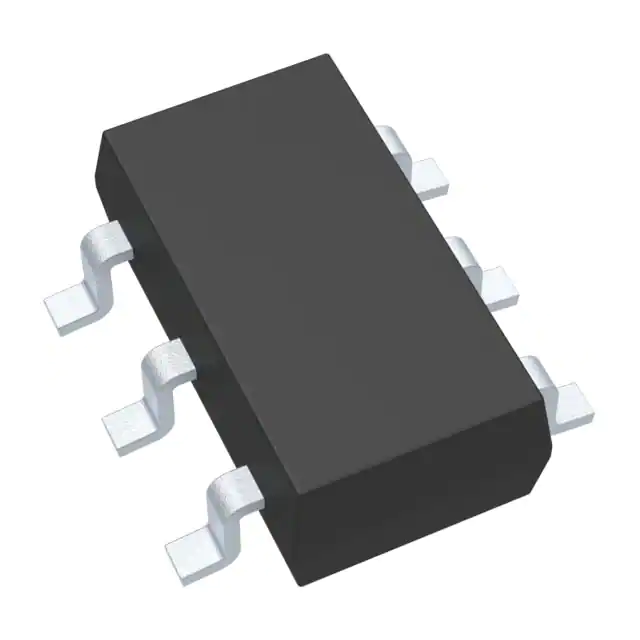
- SOT-23-6
- Datasheet:
-
SC310CSKTRT.pdf
- Description:
- IC CURR SENSE 1 CIRCUIT SOT23-6
- Quantity:
- Payment:

- Shipping:

Inventory:4,633
Please send an inquiry. Send us your inquiry, and we will respond immediately.
Product details
Overview
SC310CSKTRT from Semtech is a transient diverting suppressor designed for high-energy EOS protection of 22V-rated power or I/O lines, featuring ±30kV IEC 61000-4-2 ESD immunity, 40A (8/20μs) peak pulse current handling, and stable 27.5–28V clamping across temperature and current range - deployed in USB Type-C PD input protection and industrial load switch inputs.
For engineers reviewing the SC310CSKTRT datasheet, pinout, applications, or equivalent options, key selection criteria include clamping voltage stability under 40A surge, DFN-6 thermal and layout performance, 175pF junction capacitance at 22V, and compatibility with 22V bus systems requiring robust EOS resilience without TVS-like voltage drift.
Technical Context
The SC310CSKTRT uses a surge-rated FET as its primary protection element, activated by a precision trigger circuit that senses overvoltage events and rapidly shunts transient current to ground. Unlike conventional TVS diodes, its clamping voltage remains nearly constant due to the FET's low dynamic resistance (20mΩ) and decreasing RDS(on) under surge conditions.
It operates across –40°C to +125°C with reverse stand-off voltage of 22V, breakdown voltage of 25–27.9V, and maintains <600nA leakage at VRWM - enabling reliable protection in thermally demanding industrial and portable applications where voltage margin and thermal derating are critical.
Key Specifications
| Parameter | Value and Actual Design Meaning |
|---|---|
| Working Voltage | 22V - defines maximum continuous DC bus voltage before activation; matches USB PD 20V nominal + margin. |
| Clamping Voltage | 27.5–28V at 40A (8/20μs) - ensures protected ICs (e.g., load switches, PD controllers) remain below damage thresholds during worst-case surges. |
| Peak Pulse Current | 40A (8/20μs) - meets IEC 61000-4-5 Level 4 surge immunity for industrial equipment and USB PD interfaces. |
| ESD Withstand | ±30kV contact & air (IEC 61000-4-2) - exceeds automotive and industrial ESD requirements without external staging. |
| Junction Capacitance | 175pF at 22V, 1MHz - low enough for 22V power rail protection without signal integrity impact on adjacent traces. |
| Dynamic Resistance | 20mΩ (8/20μs) - enables flat clamping curve and minimizes voltage rise under increasing surge current. |
| Package | DFN 1.6 × 1.6 × 0.55 mm, 6-lead - supports high-density PCB layouts and thermal dissipation via three GND pins and exposed pad design. |
Pinout & Package
SC310CSKTRT is housed in a RoHS-compliant, halogen-free DFN-6 package (1.6mm × 1.6mm × 0.55mm) with wettable flank leads and UL 94V-0 molding compound. All six terminals are electrically active: three dedicated ground pins and three parallel input pins - requiring full connection for rated 40A surge performance.
| Pin/Terminal | Circuit Role | Design Meaning |
|---|---|---|
| Pins 1, 2, 3 | GND | Common ground return path; all three must be connected to minimize parasitic inductance and maximize surge current handling. |
| Pins 4, 5, 6 | IN | Parallel-connected input terminals for protected line (e.g., VBUS); equal current sharing ensures uniform stress distribution during 40A transients. |
Key Features
| Feature | Design Value |
|---|---|
| Constant-clamp architecture | Clamping voltage stays within 27.5–28V from 24A to 40A and across –40°C to +125°C - eliminates thermal derating uncertainty vs. TVS diodes. |
| FET-based shunt topology | Surge-rated MOSFET replaces PN-junction, reducing dynamic resistance to 20mΩ and avoiding junction heating limitations of traditional TVS devices. |
| Low leakage at VRWM | ≤600nA at 22V - prevents excessive standby power loss in battery-powered IoT and portable equipment. |
| High-energy surge rating | 1120W peak pulse power (8/20μs) - supports repeated lightning-induced surges per IEC 61000-4-5 without degradation. |
Applications
| USB Type-C Power Delivery Protection | Industrial Load Switch Input Protection |
|---|---|
Use Scenario: Protecting VBUS lines in USB-C receptacles supporting up to 20V/5A PD negotiation against ESD, lightning surges, and hot-plug transients. IC Role / Device Role / Timing Role: Primary EOS shunt device placed directly at connector, clamping transients before they reach PD controller or load switch. Use Value: Maintains 27.5–28V clamping at 40A and 125°C - avoids overvoltage damage to sensitive 24V-tolerant PD ICs where standard TVS would exceed 35V. | Use Scenario: Safeguarding input terminals of industrial-grade load switches (e.g., HS2950P) in remote meters, robotics, and factory automation systems. IC Role / Device Role / Timing Role: Front-end transient diverter that limits voltage seen by internal FET gate oxide and drain-source junction during 1kV/42Ω surges. Use Value: Prevents latch-up or permanent failure of load switches by holding clamping voltage below their absolute maximum ratings (typically ≤30V). |
| IoT Edge Device Power Bus Protection | Notebook/Tablet DC Input Protection |
Use Scenario: Securing 22V-capable power rails in compact, thermally constrained IoT gateways and sensor hubs exposed to field ESD and induced surges. IC Role / Device Role / Timing Role: Single-component, space-efficient solution replacing multi-device TVS+capacitor networks for 22V rail hardening. Use Value: 1.6×1.6mm DFN footprint saves >60% board area versus discrete TVS arrays while delivering superior clamping consistency. | Use Scenario: Protecting 20V DC input ports in ultraportable notebooks and tablets against accidental adapter misconnection and conducted surges. IC Role / Device Role / Timing Role: Standalone transient suppressor on main power entry, coordinated with upstream fusing and downstream PMIC overvoltage protection. Use Value: Enables compliance with IEC 61000-4-5 Level 3 (±1kV) and IEC 61000-4-2 Level 4 (±15kV air) without compromising thin-profile mechanical design. |
Equivalent & Alternatives
The following parts are listed as comparable options for similar transient suppression applications.
| Alternative Part | Technical Difference | Application Difference | Selection Advice |
|---|---|---|---|
| TDS2211P.C | Identical electrical specs, same DFN-6 package, identical marking code T22 - direct Semtech manufacturing variant with 3,000-unit tape-and-reel packaging. | No functional difference; used interchangeably in production where reel quantity or date-code traceability is required. | Select TDS2211P.C when sourcing from Semtech-authorized channels with full lot traceability and standard 7″ reel logistics. |
| uClamp2411ZA | 24V working voltage, lower 20A IPP rating, smaller 0.65×0.65mm DFN-2 package, higher 24V clamping (~32V), optimized for CC/SBU lines - not rated for 40A or 22V bus protection. | Designed for low-capacitance data-line protection (CC/SBU), not power-rail duty; unsuitable for VBUS or load-switch input use cases. | Choose uClamp2411ZA only for auxiliary signal lines in USB-C; avoid for SC310CSKTRT's 22V power-rail role due to insufficient surge rating and higher clamping. |
Compared with TDS2211P.C (identical function, packaging, and spec), SC310CSKTRT offers equivalent performance with possible minor date-code or internal lot differentiation; versus uClamp2411ZA, SC310CSKTRT delivers 2× peak current capability, 5V lower clamping, and validated 22V bus compatibility - making it the sole suitable option for high-energy power-line protection.
Availability
SC310CSKTRT is available at Aetrix Electronics and suitable for USB Type-C PD interfaces, industrial load switch inputs, and IoT edge device power buses requiring stable component supply, long-term lifecycle support, and guaranteed surge performance consistency across production batches.
Supply support for SC310CSKTRT includes scheduled delivery planning, volume procurement assistance, BOM continuity management, traceable sourcing, and lifecycle availability coordination for OEM customers, industrial embedded developers, connected-device designers, and electronics production programs.
Manufacturer
Semtech Corporation is a U.S.-based fabless semiconductor company specializing in analog and mixed-signal ICs for precision sensing, protection, and connectivity.
The TDS family - including SC310CSKTRT - was engineered specifically to replace conventional TVS diodes in high-reliability 22V power-rail applications where clamping voltage stability, temperature independence, and surge endurance are critical.
FAQ
What is the maximum operating temperature for SC310CSKTRT?
The SC310CSKTRT is rated for continuous operation from –40°C to +125°C ambient temperature. Its clamping voltage remains stable across this full range, and junction temperature is specified up to +150°C - enabling deployment in industrial enclosures and automotive-adjacent environments without thermal derating of surge capability.
Does SC310CSKTRT require a thermal pad on the PCB?
No, SC310CSKTRT does not require an external thermal pad. The device dissipates surge energy primarily through its internal FET structure rather than junction heating, and the DFN-6 package relies on direct copper connections at Pins 1–3 (GND) and Pins 4–6 (IN) for thermal conduction - confirmed in Semtech's layout guidelines and thermal characterization data.
Can SC310CSKTRT be used to protect 24V industrial control lines?
SC310CSKTRT is rated for 22V working voltage (VRWM), with 25–27.9V breakdown and 27.5–28V clamping. Using it on a sustained 24V line risks premature triggering and increased leakage; for 24V systems, Semtech's TDS2411P (24V VRWM) is the validated alternative - SC310CSKTRT should only be applied where nominal voltage remains ≤22V.
How does SC310CSKTRT differ from standard TVS diodes in clamping behavior?
Unlike standard TVS diodes whose clamping voltage rises linearly with peak pulse current (VC = VBR + IPP × RDYN), SC310CSKTRT uses a triggered FET to maintain near-constant clamping (27.5–28V) from 24A to 40A and across –40°C to +125°C - eliminating thermal drift and enabling predictable protection margins in high-temperature or high-surge environments.
Is SC310CSKTRT compatible with automated optical inspection (AOI) after reflow?
Yes, SC310CSKTRT features wettable flank leads and laser-marked "T22" identification on the top surface - both explicitly supported in Semtech's assembly guidelines for AOI and solder paste inspection. Its DFN-6 footprint and coplanarity meet IPC-7351B Class B standards, ensuring reliable detection and process control in high-volume SMT lines.
SC310CSKTRT Specifications
- Product attributes
- Attribute value
- Manufacturer:
- Semtech Corporation
- Series:
- -
- Package/Case:
- SOT-23-6
- Packaging:
- Cut Tape (CT)
- Product Status:
- Obsolete
- Amplifier Type:
- Current Sense
- Number of Circuits:
- 1
- Output Type:
- -
- Slew Rate:
- -
- Gain Bandwidth Product:
- -
- -3db Bandwidth:
- 900 kHz
- Current - Input Bias:
- 150 µA
- Voltage - Input Offset:
- -
- Current - Supply:
- 270µA
- Current - Output / Channel:
- -
- Voltage - Supply Span (Min):
- 3 V
- Voltage - Supply Span (Max):
- 25 V
- Operating Temperature:
- -40°C ~ 125°C
- Grade:
- -
- Qualification:
- -
- Mounting Type:
- Surface Mount
- Supplier Device Package:
- SOT-23-6
SC310CSKTRT FAQ
1.How can I place an order for SC310CSKTRT through Aetrix?
Please submit a Request for Quotation (RFQ) for SC310CSKTRT on Aetrix. Our sales agent will provide a competitive quotation and guide you through the order confirmation once you accept the terms.
2.Are the price and stock information for SC310CSKTRT reliable?
The price and inventory of SC310CSKTRT are updated periodically and may fluctuate due to market conditions. Stock and pricing data are typically refreshed every 24 hours. Quotation validity for SC310CSKTRT is usually 5 days.
3.What payment methods are accepted for SC310CSKTRT?
We accept Wire Transfer, PayPal, Credit Card, Western Union, MoneyGram, and Escrow for SC310CSKTRT transactions.
Note: Certain payment methods may incur a processing fee.
4.How is shipping managed for SC310CSKTRT?
SC310CSKTRT orders can be shipped via leading logistics carriers, including DHL, UPS, FedEx, TNT, or Registered Mail.
Once your SC310CSKTRT order is processed, you will receive an email with the shipment details and tracking number.
Note: Tracking information may take up to 24 hours to appear. Express delivery typically takes 3–5 business days.
5.How can I obtain technical support or documentation for SC310CSKTRT?
For technical support, including SC310CSKTRT datasheets, pinout diagrams, or application guidance, please contact our engineering support team. They can provide detailed documentation and assistance for your SC310CSKTRT requirements.
6.How does Aetrix verify that SC310CSKTRT is sourced from the original manufacturer or authorized distributors?
All SC310CSKTRT products on Aetrix are procured from qualified distributors and authorized channels. Our dedicated quality assurance team conducts strict verification, including traceability checks and, if necessary, third-party testing. This ensures that SC310CSKTRT meets industry standards.
7.What is the process for return or replacement of SC310CSKTRT?
All SC310CSKTRT units undergo pre-shipment inspection (PSI). If there is an issue with SC310CSKTRT, returns or replacements are accepted under the following conditions:
1.Quantity discrepancies, incorrect items, or visible external defects (such as breakage or corrosion), acknowledged by Aetrix.
2.The issue is reported within 90 days of delivery.
3.The SC310CSKTRT part is unused and in its original packaging.
Return procedure for SC310CSKTRT:
1.Submit a request within 90 days.
2.Obtain a Return Material Authorization (RMA) from Aetrix.
SC310CSKTRT Tags

-
LM358DT
STMicroelectronics

-
LM358DR
Texas Instruments

-
LM2904DR
Texas Instruments

-
LM358ADR
Texas Instruments
-
LM2904DGKR
Texas Instruments
-
LM324DR
Texas Instruments

-
MCP6006T-E/OT
Microchip Technology

-
MCP6006UT-E/OT
Microchip Technology
-
LM324PWR
Texas Instruments

-
LM2902PWR
Texas Instruments
-
LM2902DR
Texas Instruments
-
LM358P
Texas Instruments
Tech Hub

Comparator circuit design covering voltage thresholds, input limits, open-collector outputs, LM393 wiring, op-amp differences, hysteresis, timing, window detection and practical fault diagnosis.
Schmitt triggers use separate rising and falling thresholds to stabilize slow or noisy signals. This guide covers hysteresis, 74HC14 and 74HCT14 selection, comparator calculations, RC oscillators and p…
Counterfeit components can hide behind convincing markings and passing basic function tests. This engineering reference covers source traceability, external inspection, X-ray, XRF, electrical testing, …
A practical engineering and sourcing framework covering lifecycle verification, lifetime-buy calculations, replacement qualification, supplier checks and counterfeit-risk controls.
TTL and CMOS logic families differ in thresholds, loading, output drive, power and timing. This engineering guide compares 74HC and 74HCT, calculates noise margins and checks 3.3 V/5 V compatibility.
A practical engineering guide to 3.3V and 5V logic compatibility, input thresholds, resistor dividers, translator ICs, MOSFET level shifting, I2C pull-ups, timing limits and power-sequencing risks.
The 74HC595 uses push-pull logic outputs, while the TPIC6B595 uses 50 V open-drain DMOS sinks for higher-power loads. This guide compares timing, current limits, 3.3 V interfacing, load wiring, thermal…
The 74HC595 converts serial data into eight stable parallel outputs. This guide covers pin functions, shift and storage timing, OE and MR behavior, drive-current limits, cascading, voltage compatibilit…
A technical comparison of level-sensitive latches and edge-triggered flip-flops, covering timing windows, setup and hold limits, master–slave operation, time borrowing, race-through, HDL inference and…
A D latch stores one bit while Enable controls when data can pass. This reference covers gate-level operation, truth tables, transparency, setup and hold timing, LE versus OE, common ICs and practical …