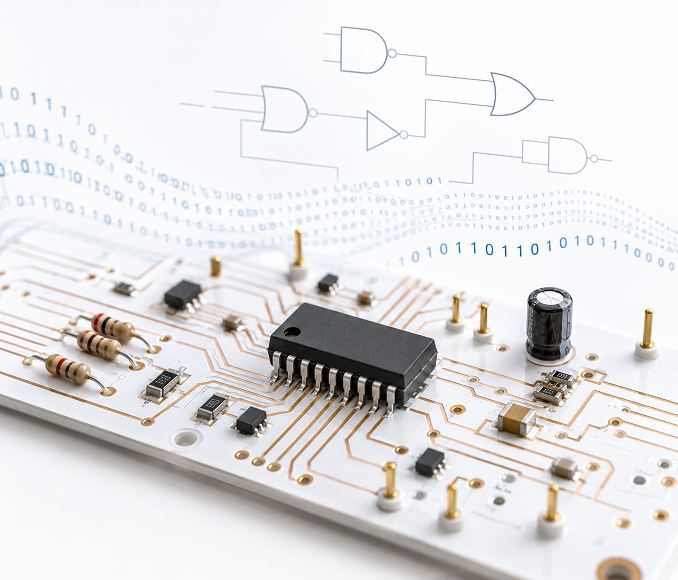
Silicon Labs SI3010-KS
- Part No.:
- SI3010-KS
- Manufacturer:
- Silicon Labs
- Category:
- Telecom
- Package:
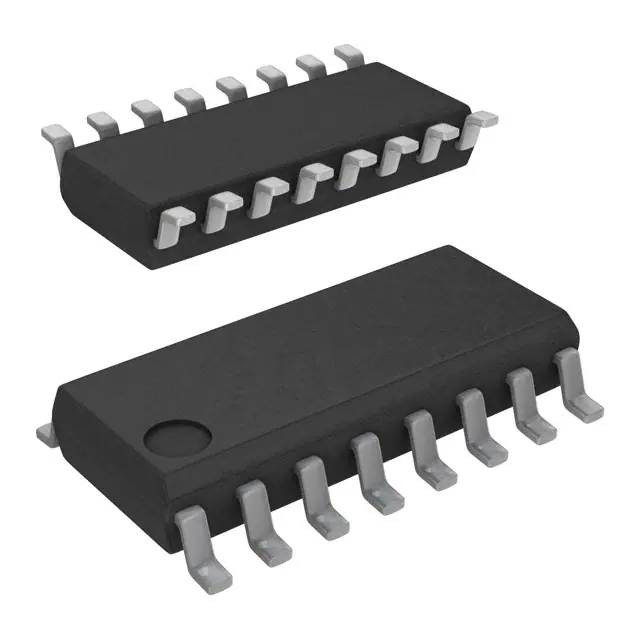
- 16-SOIC (0.154", 3.90mm Width)
- Datasheet:
-
SI3010-KS.pdf
- Description:
- IC TELECOM INTERFACE 16SOIC
- Quantity:
- Payment:

- Shipping:

Inventory:1,077
Please send an inquiry. Send us your inquiry, and we will respond immediately.
Product details
Overview
SI3010-KS from Silicon Laboratories is a globally compliant line-side Direct Access Arrangement (DAA) IC designed for telephone line interface in V.92 modems and fax machines. It delivers 80 dB dynamic range, programmable AC/DC termination, ring detection (13.5–23.65 Vrms), loop current monitoring (10–120 mA), and >5000 V isolation via proprietary capacitive barrier technology.
For engineers reviewing the SI3010-KS datasheet, SI3010-KS pinout, SI3010-KS application, or SI3010-KS equivalent, this page provides verified functional context, validated pin roles, confirmed global regulatory compliance (FCC/TBR21/JATE), and real-world design values for line-side DAA integration with Si3056 system-side devices.
Technical Context
The SI3010-KS implements a fully isolated line-side interface with integrated hybrid, DC termination control, and programmable ring detect threshold (RT = 0 or 1). It operates with Si3056 as system-side controller via serial interface and supports dual-mode ring validation and enhanced caller ID circuitry when paired with optional external components.
It features configurable DC termination voltage (up to 40 V at 60 mA), on-hook leakage <5 µA, and operates across 0–70 °C ambient with 3.3 V supply. Its transhybrid balance and programmable digital gain enable near-end echo reduction without external analog components.
Key Specifications
| Parameter | Value and Actual Design Meaning |
|---|---|
| Dynamic Range | 80 dB - Enables high-fidelity voice/fax signal capture over full 300–3400 Hz telephony band with low noise floor. |
| Isolation Voltage | >5000 V - Meets UL1950 safety requirements; eliminates need for external isolation transformer. |
| Ring Detect Threshold | 13.5–23.65 Vrms - Programmable via RT bit; supports global ring signal standards including FCC and JATE. |
| Loop Current Range | 10–120 mA - Configurable via MINI/ILIM bits; ensures compliance with PTT-specified off-hook current limits. |
| Supply Voltage | 3.0–3.6 V - Single 3.3 V rail powers all digital and charge-pump functions; simplifies power design. |
| On-Hook Leakage | <5 µA - Guarantees minimal line loading during standby; critical for multi-device line sharing. |
| Transmit THD | –72 to –78 dB - Maintains signal integrity under varying loop conditions; meets V.92 spectral mask requirements. |
Pinout & Package
SI3010-KS is housed in a 16-pin SOIC package (300 mil width), RoHS-compliant and lead-free. Pin assignments are validated per Silicon Labs Rev. 1.06 datasheet Section 8 ("Pin Descriptions: Si3018/19/10") and match Si3010 functional mapping.
| Pin/Terminal | Circuit Role | Design Meaning |
|---|---|---|
| DCT2 | DC Termination Control 2 | Configures DC termination mode; used with DCT3/DCT to set loop current and voltage profile. |
| IGND | Isolation Ground Reference | Reference for isolated side; must be separated from system ground to maintain >5000 V barrier integrity. |
| DCT3 | DC Termination Control 3 | Part of 3-bit DC termination configuration; enables fine-grained control of line bias and current limit. |
| QB | Bridge Quad Output B | Drives one leg of internal 2-to-4-wire hybrid; works with QE/QE2/SC to implement balanced line interface. |
| QE2 | Bridge Quad Output E2 | Second hybrid output; enables full-duplex operation with precise transhybrid balance adjustment. |
| SC | Hybrid Sense Control | Monitors hybrid balance; feeds back to internal calibration logic for real-time echo cancellation tuning. |
| VREG2 | Secondary Regulator Output | Provides regulated voltage for isolated analog circuitry; decoupling required per layout guidelines. |
| RNG2 | Ring Detect Output 2 | Secondary ring indicator; used with RNG1 for dual-threshold validation per TBR21/JATE ring signature timing. |
| QE | Bridge Quad Output E | Primary hybrid output; forms differential pair with QB for tip/ring drive with programmable impedance. |
| DCT | DC Termination Control | Main DC termination enable; activates internal current source/sink network for loop closure control. |
| RX | Receive Signal Input | Accepts line-side analog receive signal post-hybrid; routed to Si3056 via isolation barrier for digitization. |
| IB | Loop Current Monitor | Analog output proportional to loop current; enables real-time current sensing without shunt resistor. |
| C1B | Capacitor Terminal B | Connects to external capacitor for AC termination tuning; sets impedance matching for specific country line profiles. |
| C2B | Capacitor Terminal B2 | Second AC termination node; used with C1B to configure complex ZLINE per EN/ITU-T recommendations. |
| VREG | Regulated Voltage Output | Primary isolated supply rail; powers internal analog blocks; requires 1 µF decoupling per datasheet Figure 17. |
| RNG1 | Ring Detect Output 1 | Primary ring indicator; asserts on valid ring waveform detection; triggers interrupt to Si3056 host controller. |
Key Features
| Feature | Design Value |
|---|---|
| Programmable AC termination | Enables country-specific line impedance matching (e.g., 600 Ω, 900 Ω) using external C1B/C2B caps without redesign. |
| Integrated ring detector with validation | Rejects false rings by verifying frequency (13–68 Hz) and amplitude envelope per TBR21 Annex A requirements. |
| Polarity reversal detection | Identifies line polarity swaps automatically; ensures correct signaling in regions where tip/ring assignment varies. |
| Enhanced caller ID support | Delivers 6 VPEAK CID full-scale level with 50 dB dynamic range; compatible with Type I/II protocols and optional 1.5 VPEAK enhanced mode. |
| Low-power deep sleep mode | Draws only 1 mA total supply current; maintains ring detect readiness while minimizing system standby power. |
| Proprietary capacitive isolation | Replaces opto-isolators and transformers; achieves >5000 V isolation with 100-year lifetime and no aging drift. |
Applications
| V.92 Modems | Fax Machines |
|---|---|
Use Scenario: High-speed data transmission over PSTN lines with backward compatibility to V.34/V.22bis standards. IC Role / Device Role / Timing Role: Line-side DAA providing isolated analog interface, hybrid function, and regulatory-compliant ring/loop control. Use Value: Eliminates external transformer and relays; reduces BOM count by 12+ components versus discrete AFE solutions. | Use Scenario: G3 fax transmission with automatic answer, error correction mode (ECM), and distinctive ring detection. IC Role / Device Role / Timing Role: Primary line interface IC handling off-hook detection, pulse/tone dialing, and caller ID decoding. Use Value: Supports simultaneous voice/fax operation via Si3056/SI3010-KS dual-chip architecture with shared serial control bus. |
| Voice Mail Systems | Multi-function Printers |
Use Scenario: Embedded voicemail answering machine with remote access, message playback, and DTMF command recognition. IC Role / Device Role / Timing Role: Line-side signal conditioner and isolation barrier; interfaces directly to codec/DSP for audio path processing. Use Value: Delivers 80 dB dynamic range and <–78 dB THD for high-fidelity voice recording/playback without analog front-end tuning. | Use Scenario: All-in-one printer supporting fax send/receive, scan-to-email, and remote configuration via phone line. IC Role / Device Role / Timing Role: Regulatory-compliant PSTN interface enabling Class 1/2 fax engine and caller ID display functionality. Use Value: Integrates ring detect, line voltage monitor, and polarity reversal detection-reducing firmware complexity for multi-region deployments. |
Equivalent & Alternatives
The following parts are listed as comparable options for similar DAA line-side applications.
| Alternative Part | Technical Difference | Application Difference | Selection Advice |
|---|---|---|---|
| Si3018-KS | Global line-side device with identical pinout and register map; lacks enhanced CID circuitry and RNG2 validation output. | Supports basic FCC/JATE compliance but not TBR21 Annex A ring validation or enhanced 1.5 VPEAK CID mode. | Select Si3018-KS for cost-sensitive designs requiring baseline global compliance without advanced caller ID features. |
| Si3019-KS | Line-side variant with +3.2 dBm TX/RX level mode enabled; includes dedicated billing tone filter and overload detection logic. | Optimized for voice-centric applications (e.g., VoIP gateways) requiring higher signal levels and billing tone immunity. | Choose Si3019-KS when system-level SNR budget demands +3.2 dBm full-scale operation and billing tone rejection is mandatory. |
Compared with SI3010-KS, Si3018-KS offers reduced feature set at lower cost, while Si3019-KS adds voice-optimized signal level and filtering-making SI3010-KS the balanced choice for fax/modem applications requiring full TBR21 ring validation and standard CID performance.
Availability
SI3010-KS is available at Aetrix Electronics and suitable for V.92 modems, fax machines, and voice mail systems requiring stable component supply, long-term lifecycle support, and guaranteed RoHS-compliant sourcing.
Supply support for SI3010-KS includes scheduled delivery planning, volume procurement assistance, BOM continuity management, traceable sourcing, and lifecycle availability coordination for OEM customers, industrial embedded developers, connected-device designers, and electronics production programs.
Manufacturer
Silicon Laboratories is a fabless semiconductor company specializing in mixed-signal ICs for communications, timing, and embedded systems.
The SI3010-KS belongs to Silicon Labs' Direct Access Arrangement (DAA) product line, engineered specifically for globally compliant, transformerless telephone line interface in cost-sensitive, space-constrained modem and fax applications.
FAQ
What is the primary function of the SI3010-KS in a DAA system?
The SI3010-KS serves as the line-side Direct Access Arrangement IC, providing isolated analog interface to the telephone line-including hybrid, DC/AC termination, ring detection, loop current monitoring, and polarity reversal detection. It pairs exclusively with the Si3056 system-side device to form a complete, transformerless DAA solution. The SI3010-KS handles all physical layer compliance requirements while offloading digital control to Si3056.
Does the SI3010-KS support caller ID functionality, and what are its specifications?
Yes, the SI3010-KS supports both Type I and Type II caller ID protocols. It delivers a 6 VPEAK full-scale level with 50 dB dynamic range in standard mode, and supports an enhanced 1.5 VPEAK mode with 62 dB dynamic range when configured with external components per AN67. Caller ID decoding is performed externally by the host DSP; SI3010-KS ensures clean, compliant analog signal delivery to that processor.
How does the SI3010-KS achieve >5000 V isolation without a transformer?
The SI3010-KS uses Silicon Labs' proprietary capacitive isolation technology-a monolithic, silicon-dioxide dielectric barrier integrated into the IC package. This replaces magnetic transformers and opto-isolators while meeting UL1950, IEC 60950, and EN60950-1 reinforced insulation requirements. The isolation barrier separates line-side analog circuitry from the Si3056 interface side, enabling safe, reliable operation at up to 5000 VDC test voltage.
Can the SI3010-KS operate independently, or does it require a companion IC?
The SI3010-KS cannot operate independently-it is designed exclusively as a line-side companion to the Si3056 system-side DAA IC. All digital control, clock generation, serial interface, and DSP interfacing are handled by Si3056. SI3010-KS receives configuration commands and status requests via the shared serial bus (SCLK/SDI/SDO/FSYNC) and returns analog line data through the isolation barrier. No standalone operation or direct microcontroller interface is supported.
What are the key differences between SI3010-KS and Si3018-KS?
The SI3010-KS adds TBR21 Annex A ring validation (dual RNG1/RNG2 outputs), enhanced caller ID circuitry (supporting 1.5 VPEAK mode), and finer-resolution loop current monitoring versus Si3018-KS. Both share identical pinout, package, and core DAA functionality-but SI3010-KS targets applications requiring stricter European and Japanese regulatory validation, particularly for multi-ring burst detection and extended CID reliability in noisy environments.
SI3010-KS Specifications
- Product attributes
- Attribute value
- Manufacturer:
- Silicon Labs
- Series:
- -
- Package/Case:
- 16-SOIC (0.154", 3.90mm Width)
- Packaging:
- Tube
- Product Status:
- Obsolete
- Function:
- Direct Access Arrangement (DAA)
- Interface:
- Parallel, SPI, UART
- Number of Circuits:
- 1
- Voltage - Supply:
- 3V ~ 3.6V
- Current - Supply:
- 15mA
- Power (Watts):
- -
- Operating Temperature:
- 0°C ~ 70°C
- Grade:
- -
- Qualification:
- -
- Mounting Type:
- Surface Mount
- Supplier Device Package:
- 16-SOIC
SI3010-KS FAQ
1.How can I place an order for SI3010-KS through Aetrix?
Please submit a Request for Quotation (RFQ) for SI3010-KS on Aetrix. Our sales agent will provide a competitive quotation and guide you through the order confirmation once you accept the terms.
2.Are the price and stock information for SI3010-KS reliable?
The price and inventory of SI3010-KS are updated periodically and may fluctuate due to market conditions. Stock and pricing data are typically refreshed every 24 hours. Quotation validity for SI3010-KS is usually 5 days.
3.What payment methods are accepted for SI3010-KS?
We accept Wire Transfer, PayPal, Credit Card, Western Union, MoneyGram, and Escrow for SI3010-KS transactions.
Note: Certain payment methods may incur a processing fee.
4.How is shipping managed for SI3010-KS?
SI3010-KS orders can be shipped via leading logistics carriers, including DHL, UPS, FedEx, TNT, or Registered Mail.
Once your SI3010-KS order is processed, you will receive an email with the shipment details and tracking number.
Note: Tracking information may take up to 24 hours to appear. Express delivery typically takes 3–5 business days.
5.How can I obtain technical support or documentation for SI3010-KS?
For technical support, including SI3010-KS datasheets, pinout diagrams, or application guidance, please contact our engineering support team. They can provide detailed documentation and assistance for your SI3010-KS requirements.
6.How does Aetrix verify that SI3010-KS is sourced from the original manufacturer or authorized distributors?
All SI3010-KS products on Aetrix are procured from qualified distributors and authorized channels. Our dedicated quality assurance team conducts strict verification, including traceability checks and, if necessary, third-party testing. This ensures that SI3010-KS meets industry standards.
7.What is the process for return or replacement of SI3010-KS?
All SI3010-KS units undergo pre-shipment inspection (PSI). If there is an issue with SI3010-KS, returns or replacements are accepted under the following conditions:
1.Quantity discrepancies, incorrect items, or visible external defects (such as breakage or corrosion), acknowledged by Aetrix.
2.The issue is reported within 90 days of delivery.
3.The SI3010-KS part is unused and in its original packaging.
Return procedure for SI3010-KS:
1.Submit a request within 90 days.
2.Obtain a Return Material Authorization (RMA) from Aetrix.
SI3010-KS Tags

-
LMC567CMX/NOPB
Texas Instruments

-
LM567CMX/NOPB
Texas Instruments

-
LM567CM/NOPB
Texas Instruments
-
VSC8531XMW-02
Microchip Technology

-
VSC8531XMW-05
Microchip Technology

-
GPY115C0VI
MaxLinear, Inc.
-
SI32185-A-FMR
Skyworks Solutions Inc.
-
VSC8541XMV-05
Microchip Technology
-
SI32178-B-FM1R
Skyworks Solutions Inc.

-
GPY215C0VI
MaxLinear, Inc.
-
CPC7514ZTR
Littelfuse Inc.
-
VSC8502XML-03
Microchip Technology
Tech Hub
Comparator circuit design covering voltage thresholds, input limits, open-collector outputs, LM393 wiring, op-amp differences, hysteresis, timing, window detection and practical fault diagnosis.
Schmitt triggers use separate rising and falling thresholds to stabilize slow or noisy signals. This guide covers hysteresis, 74HC14 and 74HCT14 selection, comparator calculations, RC oscillators and p…
Counterfeit components can hide behind convincing markings and passing basic function tests. This engineering reference covers source traceability, external inspection, X-ray, XRF, electrical testing, …
A practical engineering and sourcing framework covering lifecycle verification, lifetime-buy calculations, replacement qualification, supplier checks and counterfeit-risk controls.
TTL and CMOS logic families differ in thresholds, loading, output drive, power and timing. This engineering guide compares 74HC and 74HCT, calculates noise margins and checks 3.3 V/5 V compatibility.
A practical engineering guide to 3.3V and 5V logic compatibility, input thresholds, resistor dividers, translator ICs, MOSFET level shifting, I2C pull-ups, timing limits and power-sequencing risks.
The 74HC595 uses push-pull logic outputs, while the TPIC6B595 uses 50 V open-drain DMOS sinks for higher-power loads. This guide compares timing, current limits, 3.3 V interfacing, load wiring, thermal…
The 74HC595 converts serial data into eight stable parallel outputs. This guide covers pin functions, shift and storage timing, OE and MR behavior, drive-current limits, cascading, voltage compatibilit…
A technical comparison of level-sensitive latches and edge-triggered flip-flops, covering timing windows, setup and hold limits, master–slave operation, time borrowing, race-through, HDL inference and…
A D latch stores one bit while Enable controls when data can pass. This reference covers gate-level operation, truth tables, transparency, setup and hold timing, LE versus OE, common ICs and practical …