Vishay Siliconix SIP5630CG-T1-E3
- Part No.:
- SIP5630CG-T1-E3
- Manufacturer:
- Vishay Siliconix
- Category:
- Signal Terminators
- Package:
- -
- Datasheet:
-
SIP5630CG-T1-E3.pdf
- Description:
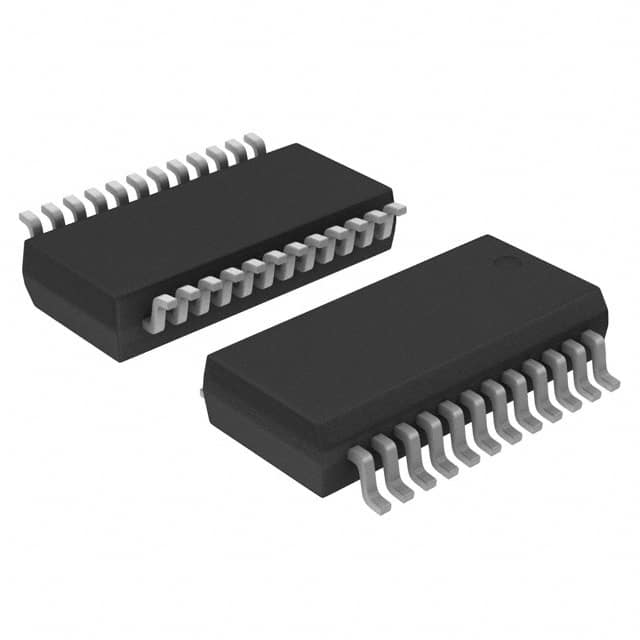
- IC SCSI 14-LINE TERM 36-QSOP
- Quantity:
- Payment:

- Shipping:

Inventory:1,798
Please send an inquiry. Send us your inquiry, and we will respond immediately.
Product details
Overview
SIP5630CG-T1-E3 from Vishay is a 9-channel multimode SCSI bus active terminator IC that auto-selects single-ended (S/E) or low-voltage differential (LVD) termination, operates from 2.7 V to 5.25 V TERMPWR, meets SCSI-1 through SPI-4 (Ultra-320) standards, and features integrated SPI-3 mode change delay filtering for compliance without external capacitors - used in RAID disk arrays and enterprise storage backplanes.
For engineers reviewing the SIP5630CG-T1-E3 datasheet, SIP5630CG-T1-E3 pinout, SIP5630CG-T1-E3 application, or SIP5630CG-T1-E3 equivalent, key selection criteria include multimode S/E–LVD auto-detection, QSOP-36 thermal package compatibility, master/slave input support, hot-swap capability, and absence of HPD bus support.
Technical Context
The SIP5630CG-T1-E3 implements differential failsafe biasing and active negation logic to maintain SCSI bus signal integrity during arbitration and data phases. It senses bus mode via the DIFFSENS input and transitions between S/E and LVD termination states without external configuration.
Its internal thermal shutdown circuit protects against overtemperature conditions, and the DISABLE pin forces high-impedance bus state when asserted. The integrated SPI-3 mode change delay filter replaces the discrete 4.7-μF capacitor required by SPI-3 timing specifications.
Key Specifications
| Parameter | Value and Actual Design Meaning |
|---|---|
| Channel count | 9-channel termination for SCSI parallel bus signals |
| TERMPWR range | 2.7 V to 5.25 V - supports legacy and modern SCSI power rails |
| SCSI compliance | SCSI-1, SCSI-2, SPI-2 (Ultra-2), SPI-3 (Ultra-160), SPI-4 (Ultra-320) |
| Operation mode | Multimode with auto S/E or LVD selection based on DIFFSENS voltage level |
| Package | QSOP-36 - surface-mount, thermally enhanced, Pb-free |
| Temperature range | 0 °C to +70 °C - commercial-grade operation for server/storage environments |
| Hot swap support | Fully compatible - no power-down required during insertion/removal |
Pinout & Package
Package: QSOP-36 (36-pin Quad Small Outline Package), thermally optimized for board-level heat dissipation in dense storage backplanes.
| Pin/Terminal | Circuit Role | Design Meaning |
|---|---|---|
| TERMPWR | Termination supply input | Provides bias voltage for all termination resistors; device enters high-Z if removed |
| DISABLE | Active-low enable control | Asserting LOW disables termination and places outputs in high-impedance state |
| DIFFSENS | Differential mode sense input | Detects bus voltage to auto-select S/E (≤1.2 V) or LVD (>1.2 V) termination |
| MS | Master/Slave select input | Configures device as master (HIGH) or slave (LOW) in multi-terminator systems |
| GND | Ground reference | Common return path for termination current and logic; multiple pins for low-impedance routing |
Key Features
| Feature | Design Value |
|---|---|
| Auto S/E–LVD mode selection | Eliminates manual jumper or configuration ICs; reduces BOM count and assembly steps |
| Integrated SPI-3 mode change delay filter | Removes need for external 4.7-μF capacitor, saving PCB area and improving reliability |
| Differential failsafe bias | Prevents bus floating during idle or fault conditions, ensuring stable SCSI arbitration |
| Thermal shutdown protection | Shuts down termination circuitry above safe junction temperature, preventing damage during overload |
| Hot-swap compatibility | Allows live insertion/removal in RAID enclosures without system reset or bus interruption |
Applications
| Disk Array (RAID) | Storage Area Network (SAN) |
|---|---|
Use Scenario: Termination at both ends of parallel SCSI bus in multi-disk RAID controller backplane. IC Role / Device Role / Timing Role: Active bus terminator providing impedance-matched S/E or LVD termination and failsafe biasing. Use Value: Prevents signal reflections and ensures reliable arbitration across up to 9 SCSI data lines under Ultra-320 timing. | Use Scenario: Front-end SCSI interface between Fibre Channel-to-SCSI bridge and legacy storage shelves. IC Role / Device Role / Timing Role: Multimode terminator enabling seamless interoperability between mixed S/E and LVD devices. Use Value: Auto-detection eliminates manual configuration errors and supports hot-swappable shelf replacement. |
| Network Attached Storage (NAS) | Server Backplane |
Use Scenario: Internal SCSI bus termination in dual-controller NAS units with redundant paths. IC Role / Device Role / Timing Role: Master/slave configurable terminator supporting failover-aware bus topology. Use Value: MS pin enables coordinated termination control during controller switchover without bus glitches. | Use Scenario: Termination on high-density server motherboard SCSI riser card. IC Role / Device Role / Timing Role: Thermally robust QSOP-36 terminator minimizing footprint while dissipating termination power. Use Value: Thermal package design sustains continuous operation at 70 °C ambient in constrained airflow environments. |
Equivalent & Alternatives
The following parts are listed as comparable options for similar SCSI bus termination applications.
| Alternative Part | Technical Difference | Application Difference | Selection Advice |
|---|---|---|---|
| TI UCC5630A | Same 9-channel multimode function, identical QSOP-36 package, but lacks integrated SPI-3 delay filter | Requires external 4.7-μF capacitor for SPI-3 compliance; higher BOM cost and layout area | Select SIP5630CG-T1-E3 when eliminating discrete filter components is critical |
| Maxim DS2118 | 9-channel S/E-only termination; no LVD support or DIFFSENS auto-detection | Limited to legacy single-ended SCSI systems; incompatible with LVD or mixed-mode buses | Select SIP5630CG-T1-E3 for future-proof Ultra-320 deployments requiring multimode flexibility |
Compared with UCC5630A and DS2118, SIP5630CG-T1-E3 uniquely combines multimode auto-detection, integrated SPI-3 filtering, and master/slave control in a thermally optimized QSOP-36 package - enabling compact, compliant, and field-upgradeable SCSI termination without redesign.
Availability
SIP5630CG-T1-E3 is available at Aetrix Electronics and suitable for RAID disk arrays, storage area networks (SAN), and server backplanes requiring stable component supply, long-term lifecycle support, and Pb-free compliance.
Supply support for SIP5630CG-T1-E3 includes scheduled delivery planning, volume procurement assistance, BOM continuity management, traceable sourcing, and lifecycle availability coordination for OEM customers, industrial embedded developers, connected-device designers, and electronics production programs.
Manufacturer
Vishay Intertechnology is a global manufacturer of discrete semiconductors, passive components, and sensors, with leadership in power management and interconnect solutions.
The SiP56xx family was designed specifically for robust, standards-compliant parallel SCSI bus termination in enterprise storage infrastructure - emphasizing multimode flexibility, thermal resilience, and integration to reduce system-level complexity.
FAQ
What SCSI standards does the SIP5630CG-T1-E3 support?
The SIP5630CG-T1-E3 supports SCSI-1, SCSI-2, SPI-2 (Ultra-2), SPI-3 (Ultra-160), and SPI-4 (Ultra-320) standards. It does not support SPI-5 (Ultra-640) or HPD (high-power differential) SCSI buses. Its auto-detection logic ensures correct termination mode selection per active bus standard, and the SIP5630CG-T1-E3 datasheet confirms full compliance up to Ultra-320 timing and electrical requirements.
Does the SIP5630CG-T1-E3 require external components for SPI-3 compliance?
No. The SIP5630CG-T1-E3 integrates a mode change delay filter that satisfies SPI-3 (Ultra-160) timing requirements without an external 4.7-μF capacitor. This eliminates associated PCB area, cost, and reliability risks. The SIP5630CG-T1-E3 achieves this through on-die RC filtering, validated in Vishay's characterization reports and confirmed in the official product selection table.
How does the SIP5630CG-T1-E3 determine whether to use S/E or LVD termination?
The SIP5630CG-T1-E3 uses the DIFFSENS input pin to monitor bus voltage: ≤1.2 V triggers single-ended (S/E) termination, while >1.2 V activates low-voltage differential (LVD) termination. This auto-selection occurs dynamically and requires no software or external configuration. The SIP5630CG-T1-E3 maintains failsafe biasing in both modes and enters high-impedance state if DIFFSENS indicates HPD operation.
Is the SIP5630CG-T1-E3 compatible with hot-swap systems?
Yes, the SIP5630CG-T1-E3 is explicitly designed for hot-swap compatibility. It withstands live insertion and removal on powered SCSI backplanes without latch-up or bus contention. Its DISABLE pin and TERMPWR loss detection ensure graceful high-impedance entry during transition, and the SIP5630CG-T1-E3 thermal shutdown circuit prevents damage during transient overloads encountered in hot-swap events.
What is the role of the MS (Master/Slave) pin on the SIP5630CG-T1-E3?
The MS pin configures the SIP5630CG-T1-E3 as master (logic HIGH) or slave (logic LOW) in systems with multiple terminators, such as dual-controller RAID enclosures. In master mode, it drives termination bias; in slave mode, it defers to the master for coordinated control. This prevents conflicting bias currents and ensures deterministic bus behavior - a feature unique to SIP5630CG-T1-E3 and SIP5670 within the SiP56xx family.
SIP5630CG-T1-E3 Specifications
- Product attributes
- Attribute value
- Manufacturer:
- Vishay Siliconix
- Series:
- -
- Package/Case:
- -
- Packaging:
- Tape & Reel (TR)
- Product Status:
- Obsolete
- Type:
- SCSI
- Number of Terminations:
- 9
- Voltage - Supply:
- 2.7V ~ 5.25V
- Operating Temperature:
- 0°C ~ 70°C
- Mounting Type:
- Surface Mount
- Supplier Device Package:
- 36-QSOP
SIP5630CG-T1-E3 FAQ
1.How can I place an order for SIP5630CG-T1-E3 through Aetrix?
Please submit a Request for Quotation (RFQ) for SIP5630CG-T1-E3 on Aetrix. Our sales agent will provide a competitive quotation and guide you through the order confirmation once you accept the terms.
2.Are the price and stock information for SIP5630CG-T1-E3 reliable?
The price and inventory of SIP5630CG-T1-E3 are updated periodically and may fluctuate due to market conditions. Stock and pricing data are typically refreshed every 24 hours. Quotation validity for SIP5630CG-T1-E3 is usually 5 days.
3.What payment methods are accepted for SIP5630CG-T1-E3?
We accept Wire Transfer, PayPal, Credit Card, Western Union, MoneyGram, and Escrow for SIP5630CG-T1-E3 transactions.
Note: Certain payment methods may incur a processing fee.
4.How is shipping managed for SIP5630CG-T1-E3?
SIP5630CG-T1-E3 orders can be shipped via leading logistics carriers, including DHL, UPS, FedEx, TNT, or Registered Mail.
Once your SIP5630CG-T1-E3 order is processed, you will receive an email with the shipment details and tracking number.
Note: Tracking information may take up to 24 hours to appear. Express delivery typically takes 3–5 business days.
5.How can I obtain technical support or documentation for SIP5630CG-T1-E3?
For technical support, including SIP5630CG-T1-E3 datasheets, pinout diagrams, or application guidance, please contact our engineering support team. They can provide detailed documentation and assistance for your SIP5630CG-T1-E3 requirements.
6.How does Aetrix verify that SIP5630CG-T1-E3 is sourced from the original manufacturer or authorized distributors?
All SIP5630CG-T1-E3 products on Aetrix are procured from qualified distributors and authorized channels. Our dedicated quality assurance team conducts strict verification, including traceability checks and, if necessary, third-party testing. This ensures that SIP5630CG-T1-E3 meets industry standards.
7.What is the process for return or replacement of SIP5630CG-T1-E3?
All SIP5630CG-T1-E3 units undergo pre-shipment inspection (PSI). If there is an issue with SIP5630CG-T1-E3, returns or replacements are accepted under the following conditions:
1.Quantity discrepancies, incorrect items, or visible external defects (such as breakage or corrosion), acknowledged by Aetrix.
2.The issue is reported within 90 days of delivery.
3.The SIP5630CG-T1-E3 part is unused and in its original packaging.
Return procedure for SIP5630CG-T1-E3:
1.Submit a request within 90 days.
2.Obtain a Return Material Authorization (RMA) from Aetrix.
SIP5630CG-T1-E3 Tags
-
LTC1344IG#PBF
Analog Devices Inc.

-
LTC1344AIG#PBF
Analog Devices Inc.

-
UCC5672PWP
Texas Instruments

-
LTC1344ACG#PBF
Analog Devices Inc.

-
MXL1344ACAG+
Analog Devices Inc./Maxim Integrated

-
LTC1344CG#PBF
Analog Devices Inc.
-
PACUSB-U3R
onsemi
-
PACUSB-D1Y5R
onsemi
-
FAN1804MCX
Fairchild Semiconductor
-
MCCS142237DT
onsemi
-
MCCS142237DTR2
onsemi
-
UCC5519PWPR
Texas Instruments
Tech Hub
Comparator circuit design covering voltage thresholds, input limits, open-collector outputs, LM393 wiring, op-amp differences, hysteresis, timing, window detection and practical fault diagnosis.
Schmitt triggers use separate rising and falling thresholds to stabilize slow or noisy signals. This guide covers hysteresis, 74HC14 and 74HCT14 selection, comparator calculations, RC oscillators and p…
Counterfeit components can hide behind convincing markings and passing basic function tests. This engineering reference covers source traceability, external inspection, X-ray, XRF, electrical testing, …
A practical engineering and sourcing framework covering lifecycle verification, lifetime-buy calculations, replacement qualification, supplier checks and counterfeit-risk controls.
TTL and CMOS logic families differ in thresholds, loading, output drive, power and timing. This engineering guide compares 74HC and 74HCT, calculates noise margins and checks 3.3 V/5 V compatibility.
A practical engineering guide to 3.3V and 5V logic compatibility, input thresholds, resistor dividers, translator ICs, MOSFET level shifting, I2C pull-ups, timing limits and power-sequencing risks.
The 74HC595 uses push-pull logic outputs, while the TPIC6B595 uses 50 V open-drain DMOS sinks for higher-power loads. This guide compares timing, current limits, 3.3 V interfacing, load wiring, thermal…
The 74HC595 converts serial data into eight stable parallel outputs. This guide covers pin functions, shift and storage timing, OE and MR behavior, drive-current limits, cascading, voltage compatibilit…
A technical comparison of level-sensitive latches and edge-triggered flip-flops, covering timing windows, setup and hold limits, master–slave operation, time borrowing, race-through, HDL inference and…
A D latch stores one bit while Enable controls when data can pass. This reference covers gate-level operation, truth tables, transparency, setup and hold timing, LE versus OE, common ICs and practical …