
 My Inquiry
 My Account


Infineon Technologies SLB9635TT12XUMA3
- Part No.:
- SLB9635TT12XUMA3
- Manufacturer:
- Infineon Technologies
- Category:
- Application Specific Microcontrollers
- Package:
- 28-TSSOP (0.173", 4.40mm Width)
- Datasheet:
-
 SLB9635TT12XUMA3.pdf
- Description:
- IC SECURITY TPM I2C 28TSSOP
- Quantity:
- Payment:

- Shipping:

Inventory:3,397
Please send an inquiry. Send us your inquiry, and we will respond immediately.
Product details
Overview
SLB9635TT12XUMA3 from Infineon Technologies is a TCG-compliant Trusted Platform Module (TPM) 1.2 security IC implementing hardware-based RSA-2048, SHA-1 acceleration, and a true random number generator (TRNG), deployed as a dedicated security co-processor on the LPC bus in notebook/desktop motherboards for secure boot, key attestation, and platform integrity verification.
For engineers reviewing the SLB9635TT12XUMA3 datasheet, SLB9635TT12XUMA3 pinout, SLB9635TT12XUMA3 application, or SLB9635TT12XUMA3 equivalent, this page delivers verified technical context, LPC interface timing, EAL5-certified security architecture, GPIO configuration, and Windows Vista/WHQL dual-mode driver support - all critical for BIOS integration and TPM-enabled identity management systems.
Technical Context
The SLB9635TT12XUMA3 implements the Trusted Computing Group (TCG) TPM 1.2 specification using Infineon's SLE66CXxxPE 16-bit security controller architecture fabricated in 0.22 µm CMOS. It integrates non-volatile EEPROM for firmware updates and key storage, an Advanced Crypto Engine (ACE) supporting RSA up to 2048-bit keys, and hardware-accelerated SHA-1 hashing.
It connects via Low Pin Count (LPC) bus at 33 MHz, supports CLKRUN dynamic clock shutdown and power-down signaling for sleep mode, includes tamper-detecting tick counter, over/under-voltage detection, and meets TÜViT EAL4+ certification requirements for platform authentication and sealed storage.
Key Specifications
| Parameter | Value and Actual Design Meaning |
|---|---|
| TPM Specification | TCG TPM 1.2 compliant - enables Windows Vista BitLocker, secure boot, and remote attestation per defined platform trust hierarchy. |
| Crypto Engine | RSA-2048 + SHA-1 hardware accelerator - offloads asymmetric key generation and hash computation from host CPU, reducing boot latency and improving cryptographic throughput. |
| Random Number Generation | True Random Number Generator (TRNG) - certified entropy source meeting TCG 1.2 requirements for key derivation and nonce generation. |
| Interface | LPC bus (33 MHz) with CLKRUN support - enables seamless integration into Intel/AMD chipset-based desktop/notebook platforms without PCIe or SPI redesign. |
| Power Supply | 3.3 V ±10% single supply - compatible with standard motherboard voltage rails and low-power sleep states. |
| Operating Temperature | 0°C to +70°C - validated for deployment inside consumer PC chassis with passive thermal management. |
| Security Certification | EAL5+ Common Criteria certified by German BSI - highest publicly available assurance level for embedded security controllers at time of release. |
Pinout & Package
SLB9635TT12XUMA3 is housed in a green, lead-free Small Low-profile TSSOP-28 package (7.8 mm × 4.4 mm × 1.2 mm), optimized for surface-mount assembly on high-density motherboard PCBs.
| Pin/Terminal | Circuit Role | Design Meaning |
|---|---|---|
| LCLK | LPC Clock Input | Accepts 33 MHz system clock; synchronizes all LPC transactions and internal crypto operations. |
| LRESET# | Active-Low Reset | Hardware reset signal from southbridge; initiates secure state initialization and clears volatile registers. |
| LFRAME# | LPC Frame Strobe | Indicates start/end of LPC cycle; used for command framing and transaction arbitration on shared bus. |
| LAD[3:0] | LPC Address/Data Bus | Time-multiplexed 4-bit bidirectional bus carrying address, data, and control signals per TCG LPC protocol. |
| GPIO0–GPIO3 | General Purpose I/O | Configurable pins supporting Microsoft-recommended TPM presence detection, wake events, and OEM-specific security signaling. |
| VDD / VSS | Power / Ground | Dedicated 3.3 V supply and return paths with internal decoupling; designed for noise immunity in electrically noisy motherboard environments. |
Key Features
| Feature | Design Value |
|---|---|
| Endorsement Key (EK) Personalization | Factory-provisioned unique RSA-2048 EK with X.509 certificate - enables hardware-rooted identity binding and prevents cloning across platforms. |
| Tamper Detection | Integrated tick counter with physical tamper sensing - triggers secure erase of sensitive keys upon unauthorized enclosure access or voltage anomaly. |
| Dictionary Attack Protection | Lockout counter with configurable retry limits - enforces delay penalties after failed authorization attempts, mitigating brute-force PIN cracking. |
| WHQL Dual-Mode Driver | Microsoft-certified kernel-mode driver supporting both TPM 1.1b and 1.2 protocols - ensures backward compatibility with legacy BIOS while enabling Vista-era security features. |
| Memory Encryption (MED) | Hardware-enforced encryption of EEPROM contents - protects stored keys and firmware against physical readout attacks during chip removal or probing. |
Applications
| Secure Boot Integrity | BitLocker Drive Encryption |
|---|---|
Use Scenario: Verifying firmware and OS loader integrity during POST before handing control to bootloader. IC Role / Device Role / Timing Role: Root-of-trust anchor performing SHA-1 hashes of BIOS/UEFI modules and storing PCR values in protected Platform Configuration Registers. Use Value: Prevents persistent rootkit injection by detecting unauthorized firmware modifications prior to execution. | Use Scenario: Protecting full-disk encryption keys used by Windows BitLocker on enterprise laptops. IC Role / Device Role / Timing Role: Secure key vault and binding engine that releases decryption keys only when platform measurements match expected PCR values. Use Value: Ensures encrypted data remains inaccessible if device is stolen or booted from external media. |
| Single Sign-On (SSO) | Remote Attestation |
Use Scenario: Enabling passwordless authentication across corporate applications using stored credentials and biometric templates. IC Role / Device Role / Timing Role: Cryptographic service provider hosting private keys and performing challenge-response signing for identity assertion. Use Value: Eliminates credential replay risks and reduces helpdesk password-reset volume by centralizing auth secrets in hardware. | Use Scenario: Proving platform health to cloud services or network gateways before granting access to sensitive resources. IC Role / Device Role / Timing Role: Attestation engine generating digitally signed reports of current software stack measurements (PCR values). Use Value: Enables zero-trust network admission control by cryptographically verifying absence of malware or policy violations. |
Equivalent & Alternatives
The following parts are listed as comparable options for similar TPM 1.2 security module applications.
| Alternative Part | Technical Difference | Application Difference | Selection Advice |
|---|---|---|---|
| ST33HTPH20AA | STMicroelectronics TPM 1.2 with 32-bit ARM SecurCore SC300 core; supports SHA-256 in addition to SHA-1; same TSSOP-28 footprint. | Offers extended hash algorithm support required for newer TCG 2.0 migration paths; lacks WHQL dual-mode 1.1b/1.2 driver stack. | Select when future-proofing for SHA-256-based attestation or integrating with ST ecosystem toolchains. |
| ATTPM20 | Atmel (now Microchip) TPM 1.2 with integrated temperature sensor and enhanced side-channel resistance; uses SOIC-32 package. | SOIC-32 requires PCB layout change; provides additional environmental monitoring but no EAL5+ certification. | Select when board space allows SOIC-32 and environmental monitoring is prioritized over highest assurance rating. |
Compared with ST33HTPH20AA and ATTPM20, the SLB9635TT12XUMA3 delivers the highest Common Criteria assurance (EAL5+) and native WHQL dual-mode driver support - making it optimal for Windows Vista/7 deployments where regulatory compliance and out-of-box OS integration are mandatory.
Availability
SLB9635TT12XUMA3 is available at Aetrix Electronics and suitable for notebook platform design, desktop motherboard qualification, and enterprise endpoint security certification requiring stable component supply and long-term lifecycle continuity.
Supply support for SLB9635TT12XUMA3 includes scheduled delivery planning, volume procurement assistance, BOM continuity management, traceable sourcing, and lifecycle availability coordination for OEM customers, industrial embedded developers, connected-device designers, and electronics production programs.
Manufacturer
Infineon Technologies AG is a German semiconductor manufacturer specializing in security, power management, automotive, and industrial control ICs, with global R&D centers and ISO/IEC 27001-certified security development processes.
The SLB9635 series belongs to Infineon's Trusted Computing product line, engineered specifically to meet TCG 1.2 requirements for hardware-rooted platform integrity in PC-class computing devices - emphasizing certified crypto, tamper resistance, and BIOS-level interoperability.
FAQ
What is the difference between SLB9635TT12XUMA3 and TPM 2.0 devices?
The SLB9635TT12XUMA3 implements only TCG TPM 1.2, supporting RSA-2048 and SHA-1, whereas TPM 2.0 adds ECC algorithms, SHA-256/384, hierarchical key management, and policy-based authorization. It is not firmware-upgradable to 2.0 due to architectural differences in crypto engine and command set.
Does SLB9635TT12XUMA3 require external firmware updates?
No - it contains embedded TCG-compliant firmware in on-chip EEPROM. Field updates are supported via LPC-based firmware update commands defined in TCG 1.2 spec, but require signed update packages and proper BIOS integration to initiate.
Is SLB9635TT12XUMA3 compatible with AMD platforms?
Yes - it supports AMD Secure Virtual Machine (SVM) architecture and integrates via standard LPC bus, confirmed in AMD SB700/SB800 southbridge reference designs. GPIO and CLKRUN signaling align with AMD platform power management requirements.
What certifications does SLB9635TT12XUMA3 hold?
It holds Common Criteria EAL5+ certification issued by German BSI, TÜViT EAL4+ for TPM functionality, and WHQL certification for Windows Vista/7 kernel-mode drivers. No FIPS 140-2 validation is claimed - its security assurance derives from CC EAL5+ evaluation scope.
SLB9635TT12XUMA3 Specifications
- Product attributes
- Attribute value
- Manufacturer:
- Infineon Technologies
- Series:
- -
- Package/Case:
- 28-TSSOP (0.173", 4.40mm Width)
- Packaging:
- Tape & Reel (TR)
- Product Status:
- Obsolete
- Programmable:
- Not Verified
- Applications:
- Trusted Platform Module (TPM)
- Core Processor:
- 16-Bit
- Program Memory Type:
- -
- Controller Series:
- -
- RAM Size:
- -
- Interface:
- LPC
- Number of I/O:
- 2
- Voltage - Supply:
- 3.3V
- Operating Temperature:
- 0°C ~ 70°C
- Grade:
- -
- Qualification:
- -
- Mounting Type:
- Surface Mount
- Supplier Device Package:
- PG-TSSOP-28
SLB9635TT12XUMA3 FAQ
1.How can I place an order for SLB9635TT12XUMA3 through Aetrix?
Please submit a Request for Quotation (RFQ) for SLB9635TT12XUMA3 on Aetrix. Our sales agent will provide a competitive quotation and guide you through the order confirmation once you accept the terms.
2.Are the price and stock information for SLB9635TT12XUMA3 reliable?
The price and inventory of SLB9635TT12XUMA3 are updated periodically and may fluctuate due to market conditions. Stock and pricing data are typically refreshed every 24 hours. Quotation validity for SLB9635TT12XUMA3 is usually 5 days.
3.What payment methods are accepted for SLB9635TT12XUMA3?
We accept Wire Transfer, PayPal, Credit Card, Western Union, MoneyGram, and Escrow for SLB9635TT12XUMA3 transactions.
Note: Certain payment methods may incur a processing fee.
4.How is shipping managed for SLB9635TT12XUMA3?
SLB9635TT12XUMA3 orders can be shipped via leading logistics carriers, including DHL, UPS, FedEx, TNT, or Registered Mail.
Once your SLB9635TT12XUMA3 order is processed, you will receive an email with the shipment details and tracking number.
Note: Tracking information may take up to 24 hours to appear. Express delivery typically takes 3–5 business days.
5.How can I obtain technical support or documentation for SLB9635TT12XUMA3?
For technical support, including SLB9635TT12XUMA3 datasheets, pinout diagrams, or application guidance, please contact our engineering support team. They can provide detailed documentation and assistance for your SLB9635TT12XUMA3 requirements.
6.How does Aetrix verify that SLB9635TT12XUMA3 is sourced from the original manufacturer or authorized distributors?
All SLB9635TT12XUMA3 products on Aetrix are procured from qualified distributors and authorized channels. Our dedicated quality assurance team conducts strict verification, including traceability checks and, if necessary, third-party testing. This ensures that SLB9635TT12XUMA3 meets industry standards.
7.What is the process for return or replacement of SLB9635TT12XUMA3?
All SLB9635TT12XUMA3 units undergo pre-shipment inspection (PSI). If there is an issue with SLB9635TT12XUMA3, returns or replacements are accepted under the following conditions:
1.Quantity discrepancies, incorrect items, or visible external defects (such as breakage or corrosion), acknowledged by Aetrix.
2.The issue is reported within 90 days of delivery.
3.The SLB9635TT12XUMA3 part is unused and in its original packaging.
Return procedure for SLB9635TT12XUMA3:
1.Submit a request within 90 days.
2.Obtain a Return Material Authorization (RMA) from Aetrix.
SLB9635TT12XUMA3 Tags
-
CYPD3175-24LQXQ
Infineon Technologies

-
SLB9672VU20FW1523XTMA1
Infineon Technologies
-
SLB9670VQ20FW785XTMA1
Infineon Technologies
-
SLB9672XU20FW1523XTMA1
Infineon Technologies
-
SLB9673XU20FW2613XTMA1
Infineon Technologies
-
CYPD3125-40LQXIT
Infineon Technologies
-
AT97SC3204-U2A1A-20
Microchip Technology
-
AT97SC3204-U2A1A-10
Microchip Technology
-
SLM9670AQ20FW1311XTMA1
Infineon Technologies
-
SLB9672XU20FW1613XTMA1
Infineon Technologies
-
SLB9672AU20FW1613XTMA1
Infineon Technologies
-
SLB9673AU20FW2613XTMA1
Infineon Technologies
Tech Hub

18650 battery guide covering lithium-ion cell basics, 3.6V/3.7V voltage, 4.2V charging, mAh and Wh capacity, protected cells, chargers, BMS, series-parallel packs, holders, welding and sourcing checks.…

Hall effect sensor guide covering working principle, linear and digital sensors, Arduino circuits, current sensing, speed detection, automotive applications, A3144 examples, signal filtering and datash…

Product Change Notification guide for electronic components, covering PCN meaning, PCN vs PDN/EOL, common change types, risk levels, form-fit-function review, engineering validation, BOM control, LTB/L…

A practical guide to blend door actuators, covering HVAC function, symptoms, location, AC and heater issues, reset and calibration, replacement cost, electrical diagnosis, compatibility checks, and rep…

Engineering guide to Raspberry Pi alternatives, covering chip-level differences, Orange Pi, ROCK, Jetson, Banana Pi, NanoPi, Compute Module, Pico, GPIO, camera, HAT compatibility, and replacement risks…
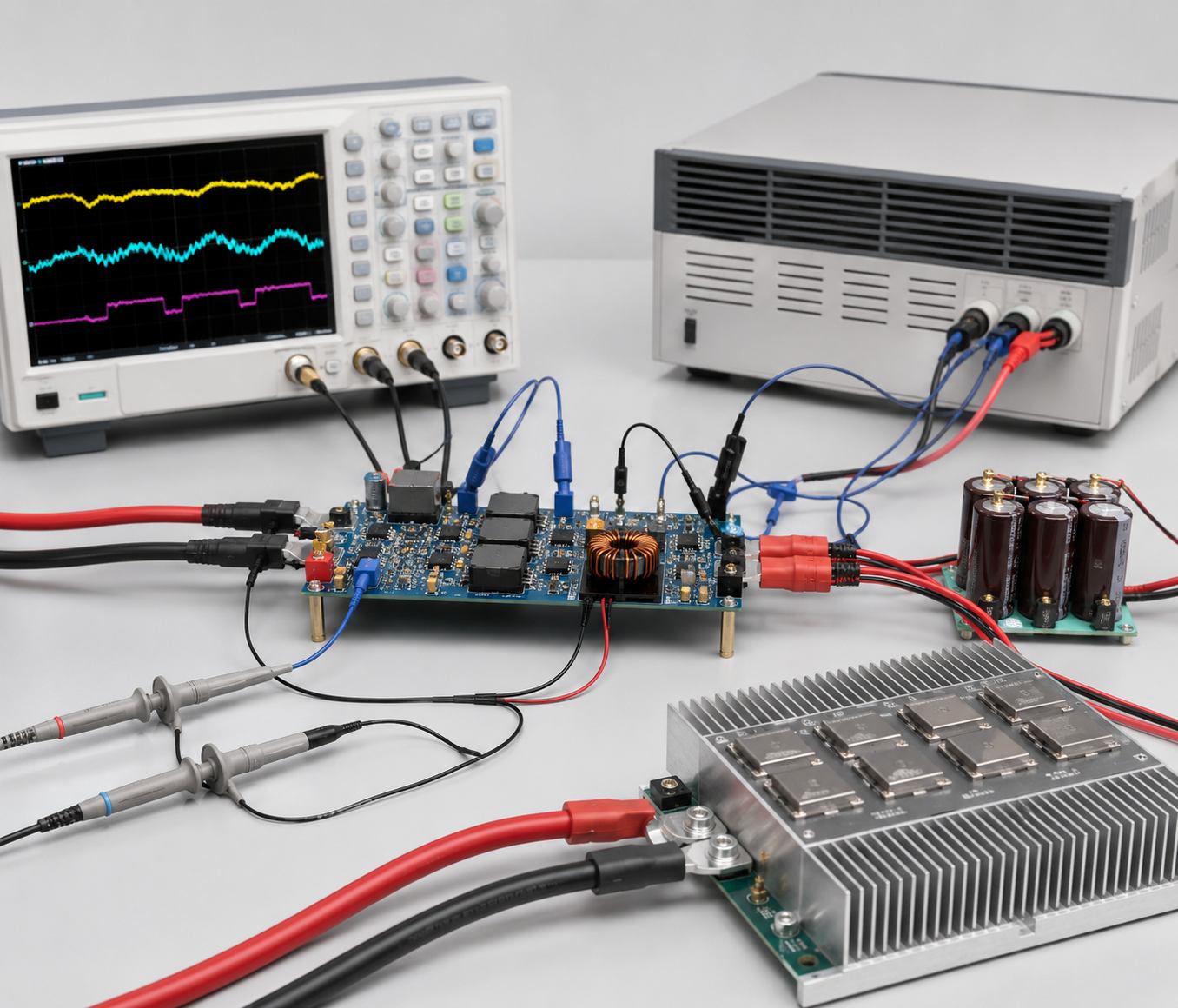
Engineering guide to dynamic load response testing for high-current buck converters, covering load step setup, slew rate, Vcore undershoot, overshoot, recovery time, probe location, output capacitors a…
Engineering guide to output capacitor selection for ASIC Vcore rails, covering bulk capacitors, polymer capacitors, MLCC decoupling, DC bias, ESR, ESL, placement, transient response and substitution ri…
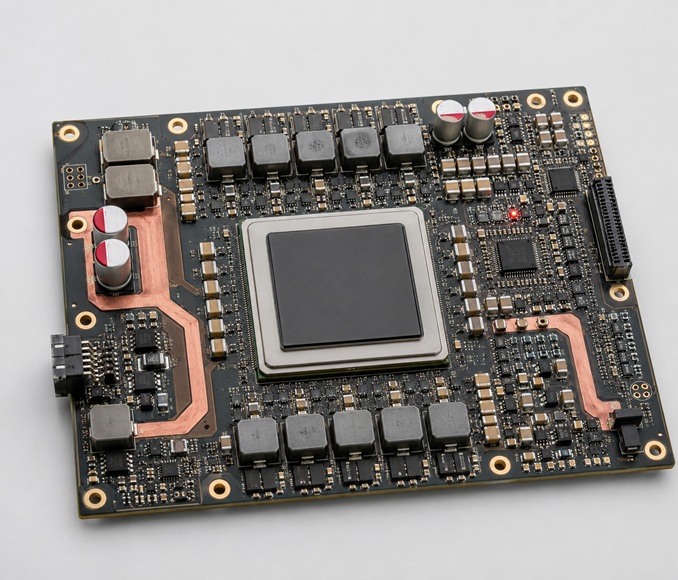
Engineering guide to high-current ASIC Vcore rails, covering 12-phase buck architecture, PMBus control, dynamic load testing, output capacitor networks, smart power stage selection, thermal design and …
Voltage regulator guide covering linear, LDO, 7805, Zener, adjustable, buck, VRM and alternator regulators, with design checks, testing methods, troubleshooting and datasheet-based selection.
Amplifier guide covering voltage, current and power amplification, gain, feedback, amplifier classes, audio and RF applications, op-amp circuits, transimpedance amplifiers, datasheet selection and trou…


