
 My Inquiry
 My Account


Infineon Technologies SLB9665TT20FW560XUMA2
- Part No.:
- SLB9665TT20FW560XUMA2
- Manufacturer:
- Infineon Technologies
- Category:
- Application Specific Microcontrollers
- Package:
- 28-TSSOP (0.173", 4.40mm Width)
- Datasheet:
-
 SLB9665TT20FW560XUMA2.pdf
- Description:
- SECURITY IC'S/AUTHENTICATION IC'
- Quantity:
- Payment:

- Shipping:

Inventory:3,064
Please send an inquiry. Send us your inquiry, and we will respond immediately.
Product details
Overview
SLB9665TT20FW560XUMA2 from Infineon is a TPM 2.0 Trusted Platform Module compliant with TCG Main Specification v01.16 Level 00, featuring LPC interface, SHA-1/SHA-256 PCR support (24 PCRs), 7206 Byte NV memory, and low standby current (150 µA typ.) for secure boot and platform attestation in x86-based industrial PCs and embedded systems.
For engineers reviewing the SLB9665TT20FW560XUMA2 datasheet, SLB9665TT20FW560XUMA2 pinout, SLB9665TT20FW560XUMA2 application, or SLB9665TT20FW560XUMA2 equivalent, key selection criteria include LPC timing compliance, EK personalization capability, NIST SP800-90A RNG certification, temperature range (-20°C to +85°C), and TSSOP-28 mechanical compatibility with legacy SLB9660 designs.
Technical Context
The SLB9665TT20FW560XUMA2 implements a dedicated hardware root of trust using a hardened ARM SecurCore SC300 CPU with on-die flash and tamper-resistant logic. It supports only TPM-type LPC cycles-not standard IO-mapped accesses-and enforces locality-based register access control per TCG specifications.
Power management is fully autonomous: the device wakes on LPC transaction start and returns to 150 µA standby mode 50 ms after command completion, without requiring external LPCPD or CLKRUN signals. All cryptographic operations-including SHA-256 hashing, RSA key generation, and HMAC signing-are executed internally with no host-side software dependency.
Key Specifications
| Parameter | Value and Actual Design Meaning |
|---|---|
| Interface | LPC bus only; supports TPM-type read/write cycles, not standard IO cycles-requires host LPC controller with TPM locality protocol support. |
| Temperature Range | -20°C to +85°C (standard grade); enables deployment in commercial and light-industrial computing environments without thermal derating. |
| Standby Current | 150 µA typical; reduces system-level power budget impact during idle states in battery-backed or energy-sensitive platforms. |
| PCR Count | 24 Platform Configuration Registers (SHA-1 or SHA-256); provides granular measurement coverage for UEFI firmware, bootloader, OS kernel, and critical drivers. |
| NV Memory Size | 7206 Bytes non-volatile storage; accommodates endorsement keys, platform certificates, sealed data, and policy-controlled secrets with wear leveling. |
| RNG Compliance | Fully compliant with NIST SP800-90A (CTR_DRBG); delivers cryptographically secure entropy for key generation and challenge-response protocols. |
| Package | PG-TSSOP-28-2 (28-pin thin shrink small outline package); 0.65 mm pitch, 9.7 × 4.4 mm footprint-pin-compatible with SLB9660 for drop-in upgrade paths. |
Pinout & Package
SLB9665TT20FW560XUMA2 uses the PG-TSSOP-28-2 package: 28-pin, 0.65 mm pitch, body size 9.7 mm × 4.4 mm, exposed thermal pad (non-electrical), JEDEC MO-153 compliant.
| Pin/Terminal | Circuit Role | Design Meaning |
|---|---|---|
| LCLK | LPC Clock Input | Accepts 33 MHz ±1% LPC clock; synchronous timing reference for all LPC transactions; no internal clock generation. |
| LRESET# | Active-Low Reset Input | Asynchronous hardware reset; initiates full state clear and reinitialization of crypto engine and NV memory controller. |
| LFRAME# | LPC Frame Strobe | Indicates start of LPC cycle; sampled on LCLK rising edge to determine cycle type and address phase. |
| LAD[3:0] | LPC Address/Data Bus | Time-multiplexed 4-bit bidirectional bus carrying both address (during setup) and data (during transfer) per LPC spec. |
| LDRQ# | LPC DMA Request | Not used; device does not support LPC DMA-only programmed I/O via FIFO registers. |
| VDD | Core Power Supply | 3.3 V ±10%; powers digital logic, crypto accelerator, and internal SRAM; requires local 100 nF + 10 µF decoupling. |
| VSS | Digital Ground | Reference for all digital I/O; must be connected to system ground plane with low-inductance path to minimize noise coupling into crypto operations. |
Key Features
| Feature | Design Value |
|---|---|
| TPM 2.0 Certification | Fully compliant with TCG Main Specification v01.16 Level 00-enables Windows Hello, Intel TXT, and Chromebook platform qualification out-of-box. |
| Endorsement Key Personalization | Factory-provisioned unique EK with X.509 certificate; supports secure identity binding and remote attestation without host-side key generation. |
| Secure Session Management | Supports up to 64 active sessions and 3 loaded transient objects-enables concurrent attestation, sealing, and key derivation without resource starvation. |
| Linux Kernel Integration | Built-in driver support from Linux Kernel v3.10+; exposes /dev/tpm0 and sysfs interfaces for tpm2-tools and systemd-tpm2-tss integration. |
| Low-Power Idle Mode | Autonomous entry into 150 µA standby after 50 ms idle; eliminates need for host-driven power state coordination in ACPI-based systems. |
Applications
| Industrial Control System | Medical Imaging Workstation |
|---|---|
|
Use Scenario: Secure boot and runtime integrity verification for PLC controllers running real-time Linux. IC Role / Device Role / Timing Role: Root of trust enforcing measured boot chain from BIOS through RTOS kernel and safety-critical application binaries. Use Value: Prevents unauthorized firmware updates and detects memory corruption via SHA-256 PCRs-meeting IEC 62443-3-3 SL2 requirements. |
Use Scenario: HIPAA-compliant data encryption and audit log signing in DICOM-enabled MRI consoles. IC Role / Device Role / Timing Role: Hardware-secured key vault for AES-256 encryption keys and RSA-2048 signing keys used in PACS transmission. Use Value: Ensures private keys never leave the tamper-resistant boundary-eliminating software-based key extraction risks during forensic analysis. |
| Network Edge Appliance | Automotive Diagnostic Tool |
|
Use Scenario: Secure firmware update authentication and TLS certificate provisioning for 5G small cell gateways. IC Role / Device Role / Timing Role: Attestation anchor validating signed OTA images and generating device-specific TLS client certificates. Use Value: Enables zero-touch enrollment in PKI infrastructures while meeting GSMA IoT SAFE v2.0 secure element interoperability profiles. |
Use Scenario: Secure J2534 pass-thru programming and ECU reflash authorization for OEM diagnostic tools. IC Role / Device Role / Timing Role: Cryptographic verifier of manufacturer-signed calibration files and VIN-locked software packages. Use Value: Blocks counterfeit firmware injection by validating ECDSA signatures against factory-provisioned public keys stored in NV memory. |
Equivalent & Alternatives
The following parts are listed as comparable options for similar TPM 2.0 security module applications.
| Alternative Part | Technical Difference | Application Difference | Selection Advice |
|---|---|---|---|
| SLB9670XT20FW560XUMA1 | VQFN-32 package, -40°C to +85°C extended temp range, same LPC interface and TPM 2.0 feature set. | Required for automotive under-hood or outdoor telecom equipment where ambient exceeds +85°C. | Select when wider thermal margin or smaller footprint (VQFN vs TSSOP) is prioritized over legacy board compatibility. |
| ST33TPHF2ESAF0 | SPI interface instead of LPC; supports ISO/IEC 15408 EAL4+ certification; lacks built-in Linux kernel driver integration. | Suitable for ARM-based SoC platforms without native LPC bus, e.g., Raspberry Pi CM4 carrier boards. | Choose only if SPI-native host architecture exists and vendor-specific driver porting effort is acceptable. |
Compared with SLB9665TT20FW560XUMA2, the SLB9670 offers extended temperature operation in a smaller VQFN package but sacrifices TSSOP-28 pin compatibility; the ST33TPHF2ESAF0 shifts to SPI for ARM-centric designs but requires custom driver integration and lacks out-of-box Windows/Linux attestation support.
Availability
SLB9665TT20FW560XUMA2 is available at Aetrix Electronics and suitable for industrial PC manufacturing, medical device certification, and network infrastructure projects requiring stable component supply with long-term lifecycle assurance.
Supply support for SLB9665TT20FW560XUMA2 includes scheduled delivery planning, volume procurement assistance, BOM continuity management, traceable sourcing, and lifecycle availability coordination for OEM customers, industrial embedded developers, connected-device designers, and electronics production programs.
Manufacturer
Infineon Technologies is a German semiconductor company specializing in security ICs, power management, and automotive microcontrollers, with global manufacturing and R&D centers across Europe, Asia, and the Americas.
This device belongs to the OPTIGA™ TPM product line, engineered specifically for hardware-rooted platform integrity in x86 and ARM-based computing systems requiring FIPS 140-2 Level 2 or Common Criteria EAL4+ validated security.
FAQ
Does SLB9665TT20FW560XUMA2 support SPI interface?
No. This part exclusively implements the Low Pin Count (LPC) interface as defined in the TCG specification. It does not support SPI, I²C, or UART communication modes. Host systems must provide an LPC bus controller compatible with TPM 2.0 locality protocol timing and register mapping.
Is the Endorsement Key (EK) pre-provisioned and certified?
Yes. Each SLB9665TT20FW560XUMA2 unit ships with a unique, factory-generated RSA-2048 Endorsement Key permanently fused into secure memory, accompanied by an X.509 certificate signed by Infineon's Certificate Authority-enabling immediate use in attestation workflows without host-side key generation.
What is the maximum supported LPC clock frequency?
The device operates at a fixed 33 MHz LPC clock with ±1% tolerance, as specified in Table 12 of the datasheet. Exceeding this frequency violates AC timing parameters and may cause command aborts or data corruption; no overclocking or frequency scaling is supported.
Can this TPM be used in systems without ACPI support?
Yes. While ACPI facilitates automatic enumeration in Windows/Linux, the SLB9665TT20FW560XUMA2 functions correctly in non-ACPI environments via direct LPC I/O port access (0x0CF8–0x0CFF) and polling-based status register reads-common in bare-metal firmware and RTOS implementations.
SLB9665TT20FW560XUMA2 Specifications
- Product attributes
- Attribute value
- Manufacturer:
- Infineon Technologies
- Series:
- OPTIGA™ TPM
- Package/Case:
- 28-TSSOP (0.173", 4.40mm Width)
- Packaging:
- Tape & Reel (TR)
- Product Status:
- Not For New Designs
- Programmable:
- Not Verified
- Applications:
- Trusted Platform Module (TPM)
- Core Processor:
- 16-Bit
- Program Memory Type:
- NVM (7.04kB)
- Controller Series:
- -
- RAM Size:
- -
- Interface:
- LPC
- Number of I/O:
- 1
- Voltage - Supply:
- 3V ~ 3.6V
- Operating Temperature:
- -20°C ~ 85°C (TA)
- Grade:
- -
- Qualification:
- -
- Mounting Type:
- Surface Mount
- Supplier Device Package:
- PG-TSSOP-28-2
SLB9665TT20FW560XUMA2 FAQ
1.How can I place an order for SLB9665TT20FW560XUMA2 through Aetrix?
Please submit a Request for Quotation (RFQ) for SLB9665TT20FW560XUMA2 on Aetrix. Our sales agent will provide a competitive quotation and guide you through the order confirmation once you accept the terms.
2.Are the price and stock information for SLB9665TT20FW560XUMA2 reliable?
The price and inventory of SLB9665TT20FW560XUMA2 are updated periodically and may fluctuate due to market conditions. Stock and pricing data are typically refreshed every 24 hours. Quotation validity for SLB9665TT20FW560XUMA2 is usually 5 days.
3.What payment methods are accepted for SLB9665TT20FW560XUMA2?
We accept Wire Transfer, PayPal, Credit Card, Western Union, MoneyGram, and Escrow for SLB9665TT20FW560XUMA2 transactions.
Note: Certain payment methods may incur a processing fee.
4.How is shipping managed for SLB9665TT20FW560XUMA2?
SLB9665TT20FW560XUMA2 orders can be shipped via leading logistics carriers, including DHL, UPS, FedEx, TNT, or Registered Mail.
Once your SLB9665TT20FW560XUMA2 order is processed, you will receive an email with the shipment details and tracking number.
Note: Tracking information may take up to 24 hours to appear. Express delivery typically takes 3–5 business days.
5.How can I obtain technical support or documentation for SLB9665TT20FW560XUMA2?
For technical support, including SLB9665TT20FW560XUMA2 datasheets, pinout diagrams, or application guidance, please contact our engineering support team. They can provide detailed documentation and assistance for your SLB9665TT20FW560XUMA2 requirements.
6.How does Aetrix verify that SLB9665TT20FW560XUMA2 is sourced from the original manufacturer or authorized distributors?
All SLB9665TT20FW560XUMA2 products on Aetrix are procured from qualified distributors and authorized channels. Our dedicated quality assurance team conducts strict verification, including traceability checks and, if necessary, third-party testing. This ensures that SLB9665TT20FW560XUMA2 meets industry standards.
7.What is the process for return or replacement of SLB9665TT20FW560XUMA2?
All SLB9665TT20FW560XUMA2 units undergo pre-shipment inspection (PSI). If there is an issue with SLB9665TT20FW560XUMA2, returns or replacements are accepted under the following conditions:
1.Quantity discrepancies, incorrect items, or visible external defects (such as breakage or corrosion), acknowledged by Aetrix.
2.The issue is reported within 90 days of delivery.
3.The SLB9665TT20FW560XUMA2 part is unused and in its original packaging.
Return procedure for SLB9665TT20FW560XUMA2:
1.Submit a request within 90 days.
2.Obtain a Return Material Authorization (RMA) from Aetrix.
SLB9665TT20FW560XUMA2 Tags
-
CYPD3175-24LQXQ
Infineon Technologies

-
SLB9672VU20FW1523XTMA1
Infineon Technologies
-
SLB9670VQ20FW785XTMA1
Infineon Technologies
-
SLB9672XU20FW1523XTMA1
Infineon Technologies
-
SLB9673XU20FW2613XTMA1
Infineon Technologies
-
CYPD3125-40LQXIT
Infineon Technologies
-
AT97SC3204-U2A1A-20
Microchip Technology
-
AT97SC3204-U2A1A-10
Microchip Technology
-
SLM9670AQ20FW1311XTMA1
Infineon Technologies
-
SLB9672XU20FW1613XTMA1
Infineon Technologies
-
SLB9672AU20FW1613XTMA1
Infineon Technologies
-
SLB9673AU20FW2613XTMA1
Infineon Technologies
Tech Hub

18650 battery guide covering lithium-ion cell basics, 3.6V/3.7V voltage, 4.2V charging, mAh and Wh capacity, protected cells, chargers, BMS, series-parallel packs, holders, welding and sourcing checks.…

Hall effect sensor guide covering working principle, linear and digital sensors, Arduino circuits, current sensing, speed detection, automotive applications, A3144 examples, signal filtering and datash…

Product Change Notification guide for electronic components, covering PCN meaning, PCN vs PDN/EOL, common change types, risk levels, form-fit-function review, engineering validation, BOM control, LTB/L…

A practical guide to blend door actuators, covering HVAC function, symptoms, location, AC and heater issues, reset and calibration, replacement cost, electrical diagnosis, compatibility checks, and rep…

Engineering guide to Raspberry Pi alternatives, covering chip-level differences, Orange Pi, ROCK, Jetson, Banana Pi, NanoPi, Compute Module, Pico, GPIO, camera, HAT compatibility, and replacement risks…
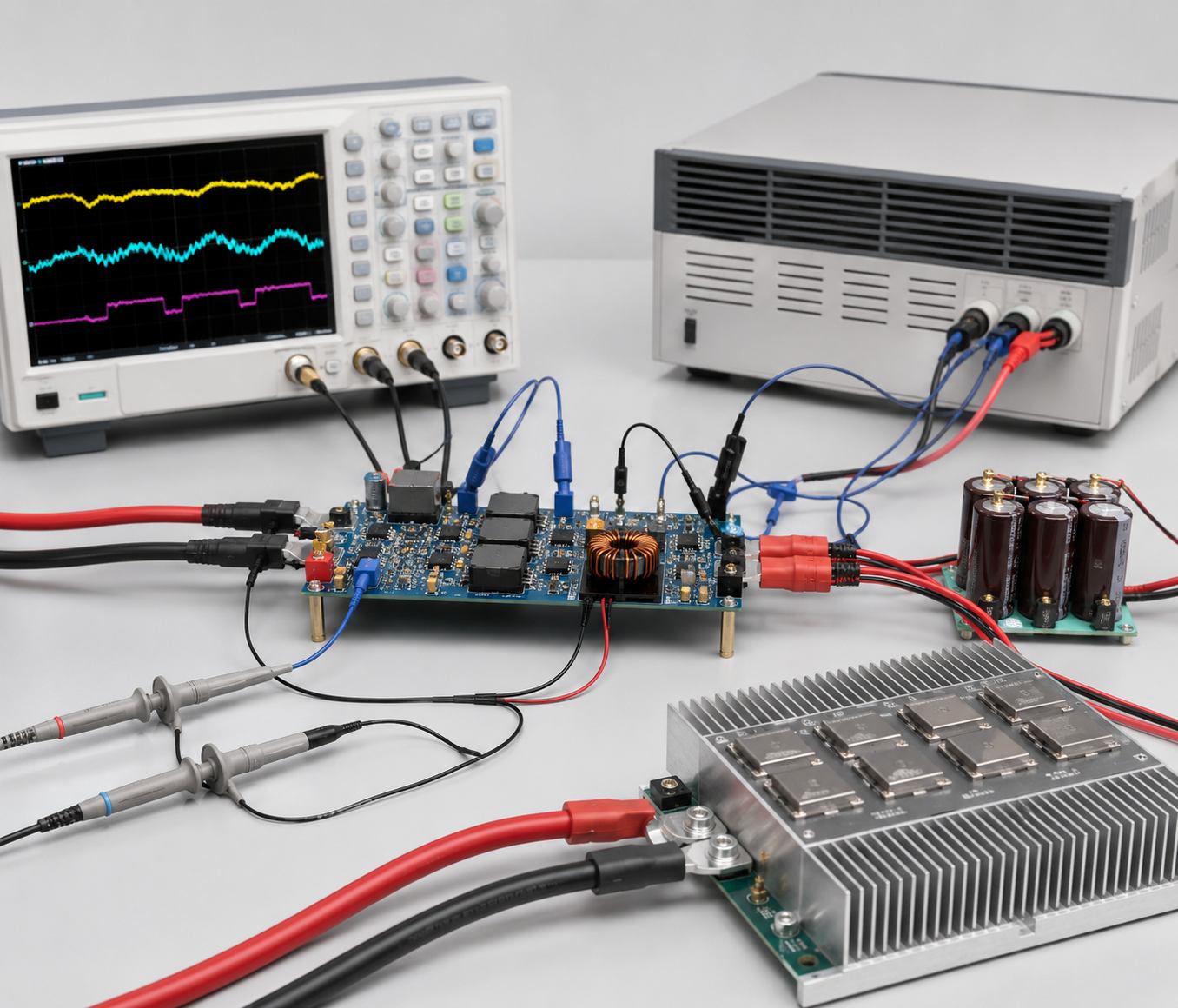
Engineering guide to dynamic load response testing for high-current buck converters, covering load step setup, slew rate, Vcore undershoot, overshoot, recovery time, probe location, output capacitors a…
Engineering guide to output capacitor selection for ASIC Vcore rails, covering bulk capacitors, polymer capacitors, MLCC decoupling, DC bias, ESR, ESL, placement, transient response and substitution ri…
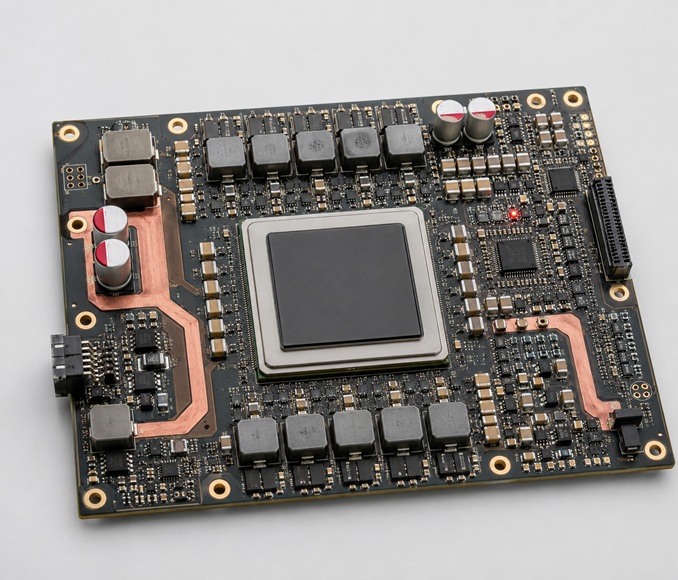
Engineering guide to high-current ASIC Vcore rails, covering 12-phase buck architecture, PMBus control, dynamic load testing, output capacitor networks, smart power stage selection, thermal design and …
Voltage regulator guide covering linear, LDO, 7805, Zener, adjustable, buck, VRM and alternator regulators, with design checks, testing methods, troubleshooting and datasheet-based selection.
Amplifier guide covering voltage, current and power amplification, gain, feedback, amplifier classes, audio and RF applications, op-amp circuits, transimpedance amplifiers, datasheet selection and trou…


