
 My Inquiry
 My Account


Infineon Technologies SLE 4428 M2.2
- Part No.:
- SLE 4428 M2.2
- Manufacturer:
- Infineon Technologies
- Category:
- Application Specific Microcontrollers
- Package:
- M2.2 Chip Card Module
- Datasheet:
-
 SLE 4428 M2.2.pdf
- Description:
- IC EEPROM 1KBYTE M2.2 PKG
- Quantity:
- Payment:

- Shipping:

Inventory:3,535
Please send an inquiry. Send us your inquiry, and we will respond immediately.
Product details
Overview
SLE 4428 M2.2 from Siemens AG is an intelligent 1-KByte (1024 × 8-bit) EEPROM IC for contact-based smart cards, featuring byte-wise write protection, programmable 2-byte security code (PSC), and ISO/IEC 7816-3 synchronous serial interface. It operates at 5 V, supports ≥10⁴ write/erase cycles, and guarantees ≥10-year data retention. Used in secure financial or ID cards where tamper-resistant memory access is required.
For engineers reviewing the SLE 4428 M2.2 datasheet, SLE 4428 M2.2 pinout, SLE 4428 M2.2 application, or SLE 4428 M2.2 equivalent, key selection factors include PSC-verified write enablement, irreversible byte-level protection memory (1024 × 1 bit), open-drain I/O timing compliance with ISO 7816 Answer-to-Reset, and M2.2 wire-bonded module form factor for card embedding.
Technical Context
The SLE 4428 implements a synchronous three-wire serial interface (VCC, RST, CLK, I/O, GND) compliant with ISO/IEC 7816-3 for contact smart cards. Its PSC verification logic blocks all memory writes/erases unless the correct 2-byte code is entered - after eight failed attempts, the error counter permanently disables further PSC checks.
Memory organization includes 1024 × 8-bit EEPROM plus a separate 1024 × 1-bit protection memory. Protection bits are one-time programmable (OTP); once set, they convert target bytes to ROM. Read operations remain unrestricted regardless of protection or PSC status.
Key Specifications
| Parameter | Value and Actual Design Meaning |
|---|---|
| Memory size | 1024 × 8-bit EEPROM: provides 1 KB user-accessible nonvolatile storage for cardholder data, keys, or credentials. |
| Protection memory | 1024 × 1-bit OTP memory: enables per-byte irreversible write lock, preventing reprogramming of sensitive fields like PINs or certificates. |
| Security code | 2-byte programmable security code (PSC): required before any write/erase; enforced by on-chip logic with 8-attempt error counter lockout. |
| Interface standard | ISO/IEC 7816-3 synchronous mode: uses CLK, RST, and open-drain I/O with defined Answer-to-Reset sequence for host controller handshake. |
| Endurance | ≥10⁴ write/erase cycles: ensures reliable field operation across repeated transaction updates in payment or transit cards. |
| Data retention | ≥10 years at TA = 25 °C: meets long-life requirements for identity documents and embedded credential storage. |
| Supply voltage | 5 V ± 10 %: matches standard smart card reader power delivery; no internal voltage regulation required. |
Pinout & Package
Package: M2.2 wire-bonded module - designed for direct embedding into PVC or polycarbonate smart cards per ISO/IEC 7816 mechanical specifications. Not a die or bare chip; includes bond wires and encapsulation suitable for lamination.
| Pin/Terminal | Circuit Role | Design Meaning |
|---|---|---|
| C1 (VCC) | Power supply input | 5 V DC supply pin; must be stable during programming and read cycles to prevent corruption or incomplete PSC verification. |
| C2 (RST) | Chip reset control | Active-high signal initiating power-on reset or command abort; defines I/O direction (1 = command entry, 0 = data output). |
| C3 (CLK) | Clock input | Synchronous timing reference for command decoding and data transfer; edge-triggered on rising edge per ISO 7816 timing diagrams. |
| C5 (GND) | Ground reference | Return path for VCC and I/O; requires low-impedance connection to avoid noise-induced communication errors during PSC entry. |
| C7 (I/O) | Open-drain bidirectional data line | Serial data path for command input and memory read output; requires external pull-up resistor (typically 10 kΩ) per ISO 7816-3. |
Key Features
| Feature | Design Value |
|---|---|
| Programmable Security Code (PSC) | 2-byte code verified on-chip before enabling write/erase; prevents unauthorized memory modification without physical access and correct credential. |
| Irreversible byte-wise protection | Each of 1024 bytes can be individually locked via OTP bit; eliminates need for external security controllers in low-cost card designs. |
| ISO/IEC 7816-3 compliance | Full synchronous transmission support including Answer-to-Reset handshake and clock-controlled command framing; ensures interoperability with standard card readers. |
| End-of-programming indication | Internal status signaled on I/O line after write completion; allows host to synchronize next command without fixed delay timing. |
| Error counter lockout | Eight consecutive incorrect PSC entries disable further verification attempts; enforces brute-force resistance in deployed card environments. |
Applications
| Financial Payment Card | Government ID Card |
|---|---|
Use Scenario: Embedded in EMV-compliant credit/debit cards for storing cryptographic keys, transaction logs, and dynamic CVV values. IC Role / Device Role / Timing Role: Secure nonvolatile memory with PSC-gated write access; synchronizes with reader clock via ISO 7816-3 for deterministic command execution. Use Value: Prevents cloning or replay attacks by enforcing PSC validation before updating sensitive fields, while maintaining backward compatibility with legacy readers. | Use Scenario: Integrated into national e-passports or driver's licenses for biometric template storage and digital signature certificate persistence. IC Role / Device Role / Timing Role: Tamper-resistant credential vault; uses OTP protection bits to harden critical identifiers (e.g., passport number) against overwrite. Use Value: Ensures integrity of legally binding identity data through irreversible byte locking, meeting ICAO Doc 9303 assurance level requirements. |
| Transit Fare Card | Healthcare Access Token |
Use Scenario: Deployed in contact-based metro or bus fare cards for balance tracking, trip history, and reload authorization codes. IC Role / Device Role / Timing Role: High-endurance EEPROM with fast read/write cycles; leverages end-of-programming signal to minimize dwell time at reader terminals. Use Value: Supports >10,000 ride transactions over service life while enabling secure over-the-air balance updates via PSC-authenticated commands. | Use Scenario: Used in hospital staff access tokens storing encrypted patient record permissions and role-based access policies. IC Role / Device Role / Timing Role: Secure policy store with selective write protection; isolates immutable access rules from modifiable session tokens. Use Value: Enforces HIPAA-compliant data segregation by locking regulatory policy bytes permanently, reducing firmware complexity in reader-side enforcement logic. |
Equivalent & Alternatives
The following parts are listed as comparable options for similar contact smart card EEPROM applications.
| Alternative Part | Technical Difference | Application Difference | Selection Advice |
|---|---|---|---|
| AT88SC0104CA-SH | 1-KB EEPROM with hardware write protection and 4-byte PSC; supports both synchronous and asynchronous protocols. | Broader protocol flexibility but lacks ISO 7816-3 Answer-to-Reset timing compliance out-of-box. | Select if migrating to multi-interface readers or requiring longer PSC length; verify timing alignment with existing card OS. |
| SLC 520 | 1-KB EEPROM with 2-byte PSC and identical M2.2 footprint; manufactured by Infineon (ex-Siemens spin-off) with updated process node. | Drop-in replacement with enhanced ESD tolerance (4 kV HBM) and extended temperature range (−25 °C to +70 °C). | Prefer for new designs requiring improved robustness in outdoor or industrial card environments; maintains full software compatibility. |
Compared with AT88SC0104CA-SH and SLC 520, the SLE 4428 M2.2 offers strict ISO 7816-3 timing fidelity and proven field reliability in high-volume financial cards, whereas alternatives trade protocol breadth or modern process benefits for minor deviations in reset behavior or protection granularity.
Availability
SLE 4428 M2.2 is available at Aetrix Electronics and suitable for financial payment cards, government ID systems, transit fare platforms, and healthcare access tokens requiring stable component supply and long-term lifecycle support.
Supply support for SLE 4428 M2.2 includes scheduled delivery planning, volume procurement assistance, BOM continuity management, traceable sourcing, and lifecycle availability coordination for OEM customers, industrial embedded developers, connected-device designers, and electronics production programs.
Manufacturer
Siemens AG Semiconductor Group, headquartered in Munich, Germany, developed foundational secure memory ICs for contact smart cards in the 1990s and established early ISO/IEC 7816 interoperability standards.
The SLE 44xx series was designed specifically for embedded secure credential storage in plastic cards, prioritizing tamper resistance, protocol compliance, and manufacturability in high-volume card personalization lines.
FAQ
Does the SLE 4428 M2.2 support ISO/IEC 7816-3 asynchronous communication?
No. The SLE 4428 M2.2 implements only synchronous transmission per ISO/IEC 7816-3, using CLK, RST, and I/O with defined Answer-to-Reset timing. It does not include UART logic or guard time handling required for asynchronous mode. Hardware design must align with synchronous clock-driven command framing.
Can the Programmable Security Code (PSC) be changed after initial programming?
Yes - the PSC is fully reprogrammable at any time, provided the current valid PSC is presented first. Unlike protection bits, the PSC memory location is writable multiple times. However, each change requires successful verification of the prior code, preserving access control integrity throughout the card's lifecycle.
What happens when the error counter reaches eight failed PSC attempts?
After eight consecutive incorrect PSC entries, the error counter triggers permanent lockout: no further PSC verification attempts are accepted, and all write/erase commands return invalid status. The memory remains readable, but no modifications - including PSC update - are possible. Recovery requires physical card replacement.
Is the M2.2 module RoHS-compliant or lead-free?
The original SLE 4428 M2.2 (04.94 datasheet era) predates RoHS legislation and contains lead-based solder in its wire-bonded construction. It is not RoHS-compliant. For compliant alternatives, consider Infineon's SLC 520 or newer generations explicitly marked "lead-free" and qualified to EU Directive 2011/65/EU.
SLE 4428 M2.2 Specifications
- Product attributes
- Attribute value
- Manufacturer:
- Infineon Technologies
- Series:
- -
- Package/Case:
- M2.2 Chip Card Module
- Packaging:
- Bulk
- Product Status:
- Obsolete
- Programmable:
- Not Verified
- Applications:
- Security
- Core Processor:
- -
- Program Memory Type:
- -
- Controller Series:
- -
- RAM Size:
- -
- Interface:
- -
- Number of I/O:
- -
- Voltage - Supply:
- -
- Operating Temperature:
- -
- Grade:
- -
- Qualification:
- -
- Mounting Type:
- -
- Supplier Device Package:
- M2.2 Chip Card Module
SLE 4428 M2.2 FAQ
1.How can I place an order for SLE 4428 M2.2 through Aetrix?
Please submit a Request for Quotation (RFQ) for SLE 4428 M2.2 on Aetrix. Our sales agent will provide a competitive quotation and guide you through the order confirmation once you accept the terms.
2.Are the price and stock information for SLE 4428 M2.2 reliable?
The price and inventory of SLE 4428 M2.2 are updated periodically and may fluctuate due to market conditions. Stock and pricing data are typically refreshed every 24 hours. Quotation validity for SLE 4428 M2.2 is usually 5 days.
3.What payment methods are accepted for SLE 4428 M2.2?
We accept Wire Transfer, PayPal, Credit Card, Western Union, MoneyGram, and Escrow for SLE 4428 M2.2 transactions.
Note: Certain payment methods may incur a processing fee.
4.How is shipping managed for SLE 4428 M2.2?
SLE 4428 M2.2 orders can be shipped via leading logistics carriers, including DHL, UPS, FedEx, TNT, or Registered Mail.
Once your SLE 4428 M2.2 order is processed, you will receive an email with the shipment details and tracking number.
Note: Tracking information may take up to 24 hours to appear. Express delivery typically takes 3–5 business days.
5.How can I obtain technical support or documentation for SLE 4428 M2.2?
For technical support, including SLE 4428 M2.2 datasheets, pinout diagrams, or application guidance, please contact our engineering support team. They can provide detailed documentation and assistance for your SLE 4428 M2.2 requirements.
6.How does Aetrix verify that SLE 4428 M2.2 is sourced from the original manufacturer or authorized distributors?
All SLE 4428 M2.2 products on Aetrix are procured from qualified distributors and authorized channels. Our dedicated quality assurance team conducts strict verification, including traceability checks and, if necessary, third-party testing. This ensures that SLE 4428 M2.2 meets industry standards.
7.What is the process for return or replacement of SLE 4428 M2.2?
All SLE 4428 M2.2 units undergo pre-shipment inspection (PSI). If there is an issue with SLE 4428 M2.2, returns or replacements are accepted under the following conditions:
1.Quantity discrepancies, incorrect items, or visible external defects (such as breakage or corrosion), acknowledged by Aetrix.
2.The issue is reported within 90 days of delivery.
3.The SLE 4428 M2.2 part is unused and in its original packaging.
Return procedure for SLE 4428 M2.2:
1.Submit a request within 90 days.
2.Obtain a Return Material Authorization (RMA) from Aetrix.
SLE 4428 M2.2 Tags
-
CYPD3175-24LQXQ
Infineon Technologies

-
SLB9672VU20FW1523XTMA1
Infineon Technologies
-
SLB9670VQ20FW785XTMA1
Infineon Technologies
-
SLB9672XU20FW1523XTMA1
Infineon Technologies
-
SLB9673XU20FW2613XTMA1
Infineon Technologies
-
CYPD3125-40LQXIT
Infineon Technologies
-
AT97SC3204-U2A1A-20
Microchip Technology
-
AT97SC3204-U2A1A-10
Microchip Technology
-
SLM9670AQ20FW1311XTMA1
Infineon Technologies
-
SLB9672XU20FW1613XTMA1
Infineon Technologies
-
SLB9672AU20FW1613XTMA1
Infineon Technologies
-
SLB9673AU20FW2613XTMA1
Infineon Technologies
Tech Hub

18650 battery guide covering lithium-ion cell basics, 3.6V/3.7V voltage, 4.2V charging, mAh and Wh capacity, protected cells, chargers, BMS, series-parallel packs, holders, welding and sourcing checks.…

Hall effect sensor guide covering working principle, linear and digital sensors, Arduino circuits, current sensing, speed detection, automotive applications, A3144 examples, signal filtering and datash…

Product Change Notification guide for electronic components, covering PCN meaning, PCN vs PDN/EOL, common change types, risk levels, form-fit-function review, engineering validation, BOM control, LTB/L…

A practical guide to blend door actuators, covering HVAC function, symptoms, location, AC and heater issues, reset and calibration, replacement cost, electrical diagnosis, compatibility checks, and rep…

Engineering guide to Raspberry Pi alternatives, covering chip-level differences, Orange Pi, ROCK, Jetson, Banana Pi, NanoPi, Compute Module, Pico, GPIO, camera, HAT compatibility, and replacement risks…
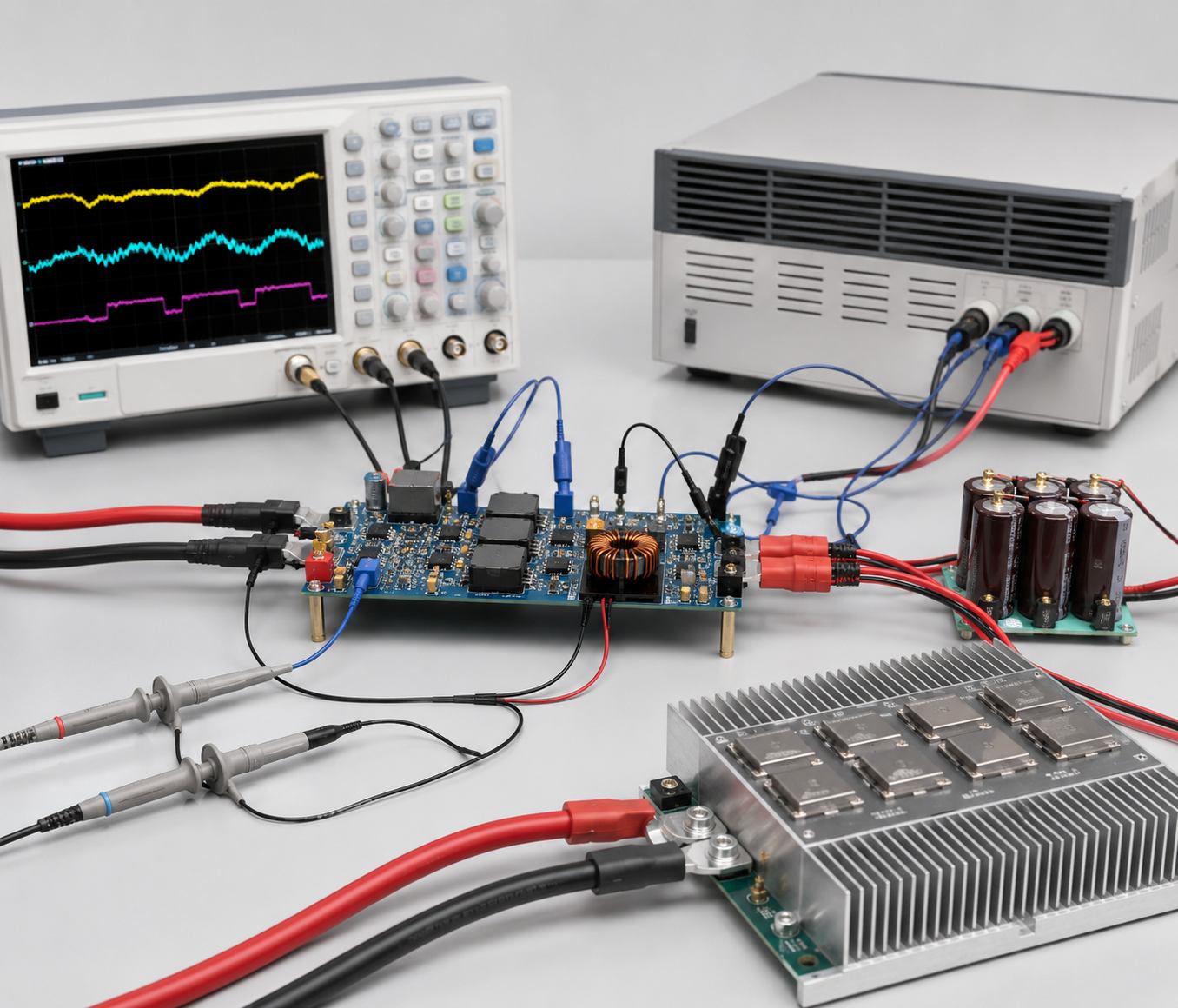
Engineering guide to dynamic load response testing for high-current buck converters, covering load step setup, slew rate, Vcore undershoot, overshoot, recovery time, probe location, output capacitors a…
Engineering guide to output capacitor selection for ASIC Vcore rails, covering bulk capacitors, polymer capacitors, MLCC decoupling, DC bias, ESR, ESL, placement, transient response and substitution ri…
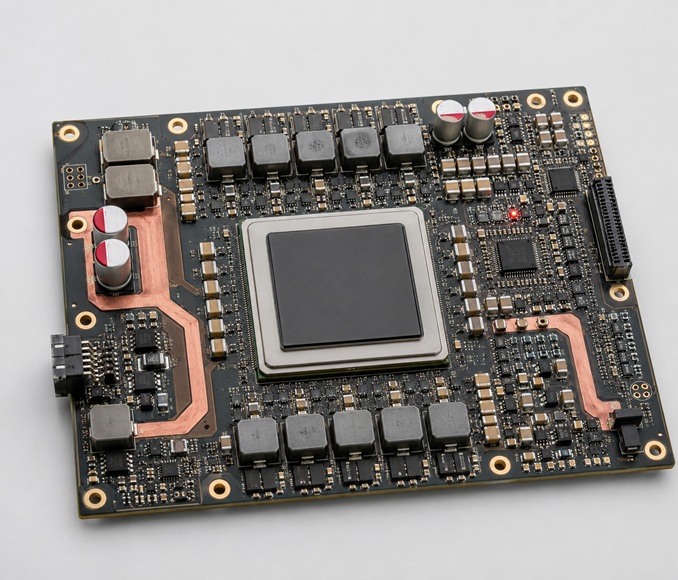
Engineering guide to high-current ASIC Vcore rails, covering 12-phase buck architecture, PMBus control, dynamic load testing, output capacitor networks, smart power stage selection, thermal design and …
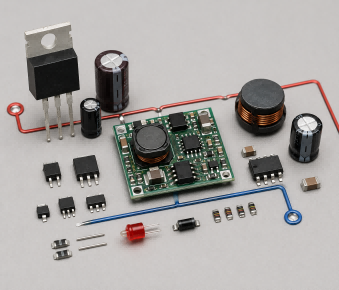
Voltage regulator guide covering linear, LDO, 7805, Zener, adjustable, buck, VRM and alternator regulators, with design checks, testing methods, troubleshooting and datasheet-based selection.
Amplifier guide covering voltage, current and power amplification, gain, feedback, amplifier classes, audio and RF applications, op-amp circuits, transimpedance amplifiers, datasheet selection and trou…


