Silicon Labs SLWSTK6002A
- Part No.:
- SLWSTK6002A
- Manufacturer:
- Silicon Labs
- Category:
- RF, RFID, Wireless Evaluation Boards
- Package:
- Datasheet:
-
SLWSTK6002A.pdf
- Description:
- DEV KIT EFR32MG 915MHZ 2.4GHZ
- Quantity:
- Payment:

- Shipping:

Inventory:4,813
Please send an inquiry. Send us your inquiry, and we will respond immediately.
Product details
Overview
SLWSTK6002A from Silicon Labs is a wireless SoC evaluation kit for the EFR32MG1 Mighty Gecko family, enabling rapid prototyping of ZigBee and Thread mesh networks. It integrates an EFR32MG1P232F256GM48-C0 SoC (ARM Cortex-M4 @ 40 MHz, 256 kB Flash, 32 kB RAM), onboard J-Link debugger, RF trace antenna, and USB interface - all in a QFN48 package with 31 GPIOs and dual-band 2.4 GHz/Sub-GHz radio support. Designed for battery-powered smart home sensors and lighting controls.
For engineers reviewing the SLWSTK6002A datasheet, SLWSTK6002A pinout, SLWSTK6002A application, or SLWSTK6002A equivalent, this page delivers verified hardware configuration details, supported protocols (ZigBee 3.0, Thread 1.1), RF performance metrics (-94 dBm @ 2.4 GHz), energy mode behavior (1.4 μA EM2), and direct integration paths with Simplicity Studio v5.
Technical Context
The SLWSTK6002A implements a complete reference design for EFR32MG1P232F256GM48-C0, featuring dual-band RF front-end matching networks for 2.4 GHz (via integrated balun) and Sub-GHz (differential SUBGRF_OP/ON/IP/IN), calibrated to meet FCC/CE regulatory limits. Its on-board DC-DC converter supports up to 200 mA system supply with RF noise mitigation.
Hardware abstraction includes dedicated PRS routing between LEUART, CRYOTIMER, and RFSENSE for autonomous wake-on-radio operation, plus full access to the 12-channel Peripheral Reflex System and hardware crypto accelerator (AES-128/256, SHA-256, ECC) - all validated under EM2 Deep Sleep (1.4 μA) and EM4 Hibernate (0.58 μA) conditions.
Key Specifications
| Parameter | Value and Actual Design Meaning |
|---|---|
| Core MCU | ARM Cortex-M4 @ 40 MHz with FPU and DSP extensions - enables real-time signal processing for protocol stack execution without external co-processor. |
| Memory | 256 kB flash / 32 kB RAM - sufficient for ZigBee 3.0 + Thread 1.1 dual-stack firmware with OTA update partitioning. |
| Radio Bands | 2.4 GHz (IEEE 802.15.4) and Sub-GHz (868/915 MHz) - supports regional compliance and long-range indoor/outdoor deployment. |
| TX Power | Up to 19.5 dBm @ 2.4 GHz, 20 dBm @ Sub-GHz - achieves >100 m line-of-sight range with standard PCB trace antenna. |
| Receiver Sensitivity | -94 dBm @ 1 Mbps GFSK (2.4 GHz), -121.4 dBm @ 2.4 kbps GFSK (868 MHz) - ensures robust link budget in noisy RF environments. |
| Energy Modes | EM2 Deep Sleep: 1.4 μA (full RAM retention + RTCC); EM4 Hibernate: 0.58 μA (128 B RAM) - extends coin-cell battery life to multi-year operation. |
| Crypto Acceleration | Hardware AES-128/256, SHA-256, ECC (NIST P-256) - offloads TLS 1.2 handshake and secure boot verification from CPU. |
Availability
SLWSTK6002A is available at Aetrix Electronics and suitable for smart lighting control systems, battery-powered occupancy sensors, HVAC zone controllers, and connected home security hubs requiring stable component supply and full development toolchain support.
Supply support for SLWSTK6002A includes scheduled delivery planning, volume procurement assistance, BOM continuity management, traceable sourcing, and lifecycle availability coordination for OEM customers, industrial embedded developers, connected-device designers, and electronics production programs.
Manufacturer
Silicon Labs is a fabless semiconductor company specializing in low-power wireless ICs, timing solutions, and IoT development tools - headquartered in Austin, TX, with global design and support centers.
The SLWSTK6002A belongs to Silicon Labs' Wireless Gecko evaluation platform line, engineered to accelerate certification-ready ZigBee and Thread product development for energy-constrained, cloud-connected edge devices.
FAQ
What is the primary function of the SLWSTK6002A evaluation kit?
The SLWSTK6002A evaluation kit serves as a fully integrated hardware reference platform for the EFR32MG1P232F256GM48-C0 SoC. It enables immediate firmware development, RF performance validation, and regulatory pre-scan for ZigBee and Thread applications. The SLWSTK6002A includes onboard J-Link debugger, USB-to-serial bridge, user LEDs/buttons, and matched RF front-end - eliminating need for custom carrier boards during early-stage prototyping.
Does the SLWSTK6002A support both 2.4 GHz and Sub-GHz radio operation out of the box?
Yes, the SLWSTK6002A supports both bands simultaneously via its EFR32MG1P232F256GM48-C0 SoC. The board provides dedicated RF matching networks and antenna interfaces: single-ended 2.4 GHz trace antenna (with internal balun) and differential Sub-GHz ports (SUBGRF_OP/ON/IP/IN) for external antenna connection. Firmware selection determines active band; no hardware modification is required to switch between them.
What debug and programming interfaces does the SLWSTK6002A provide?
The SLWSTK6002A features an integrated Segger J-Link OB debugger supporting SWD programming, real-time tracing, and energy profiling via Simplicity Studio v5. It exposes standard ARM Cortex-M4 debug pins (SWDIO, SWCLK, RESETn, VTREF) on a 10-pin header and provides UART-to-USB bridging through CP2104 for serial console access - all accessible without external adapters. The SLWSTK6002A also supports mass storage device (MSD) drag-and-drop firmware loading.
Can the SLWSTK6002A be used for FCC/CE radiated emissions pre-compliance testing?
Yes, the SLWSTK6002A is configured with production-grade RF layout, calibrated matching networks, and certified antenna structures - making it suitable for pre-compliance radiated emissions and receiver sensitivity testing per FCC Part 15.247 and EN 300 328. Its documented RF performance (-94 dBm sensitivity, 19.5 dBm output) and conducted emission profiles align with final product requirements when used with identical firmware and power settings as the target end device.
What power supply options does the SLWSTK6002A support for low-energy mode validation?
The SLWSTK6002A accepts power via USB (5 V) or external 3.3 V supply, with automatic source selection. Its onboard DC-DC converter operates down to 1.85 V input and delivers regulated 1.8 V/3.3 V rails while maintaining RF noise isolation - critical for validating EM2 (1.4 μA) and EM4 (0.58 μA) current consumption. Current measurement headers allow direct ammeter insertion at VMCU and VREGVDD nodes, enabling precise energy mode characterization for the SLWSTK6002A.
SLWSTK6002A Specifications
- Product attributes
- Attribute value
- Manufacturer:
- Silicon Labs
- Series:
- Mighty Gecko
- Packaging:
- Bulk
- Product Status:
- Obsolete
- Type:
- Transceiver
- Frequency:
- 915MHz, 2.4GHz
- Contents:
- Board(s)
- Utilized IC / Part:
- EFR32MG
SLWSTK6002A FAQ
1.How can I place an order for SLWSTK6002A through Aetrix?
Please submit a Request for Quotation (RFQ) for SLWSTK6002A on Aetrix. Our sales agent will provide a competitive quotation and guide you through the order confirmation once you accept the terms.
2.Are the price and stock information for SLWSTK6002A reliable?
The price and inventory of SLWSTK6002A are updated periodically and may fluctuate due to market conditions. Stock and pricing data are typically refreshed every 24 hours. Quotation validity for SLWSTK6002A is usually 5 days.
3.What payment methods are accepted for SLWSTK6002A?
We accept Wire Transfer, PayPal, Credit Card, Western Union, MoneyGram, and Escrow for SLWSTK6002A transactions.
Note: Certain payment methods may incur a processing fee.
4.How is shipping managed for SLWSTK6002A?
SLWSTK6002A orders can be shipped via leading logistics carriers, including DHL, UPS, FedEx, TNT, or Registered Mail.
Once your SLWSTK6002A order is processed, you will receive an email with the shipment details and tracking number.
Note: Tracking information may take up to 24 hours to appear. Express delivery typically takes 3–5 business days.
5.How can I obtain technical support or documentation for SLWSTK6002A?
For technical support, including SLWSTK6002A datasheets, pinout diagrams, or application guidance, please contact our engineering support team. They can provide detailed documentation and assistance for your SLWSTK6002A requirements.
6.How does Aetrix verify that SLWSTK6002A is sourced from the original manufacturer or authorized distributors?
All SLWSTK6002A products on Aetrix are procured from qualified distributors and authorized channels. Our dedicated quality assurance team conducts strict verification, including traceability checks and, if necessary, third-party testing. This ensures that SLWSTK6002A meets industry standards.
7.What is the process for return or replacement of SLWSTK6002A?
All SLWSTK6002A units undergo pre-shipment inspection (PSI). If there is an issue with SLWSTK6002A, returns or replacements are accepted under the following conditions:
1.Quantity discrepancies, incorrect items, or visible external defects (such as breakage or corrosion), acknowledged by Aetrix.
2.The issue is reported within 90 days of delivery.
3.The SLWSTK6002A part is unused and in its original packaging.
Return procedure for SLWSTK6002A:
1.Submit a request within 90 days.
2.Obtain a Return Material Authorization (RMA) from Aetrix.
SLWSTK6002A Tags
-
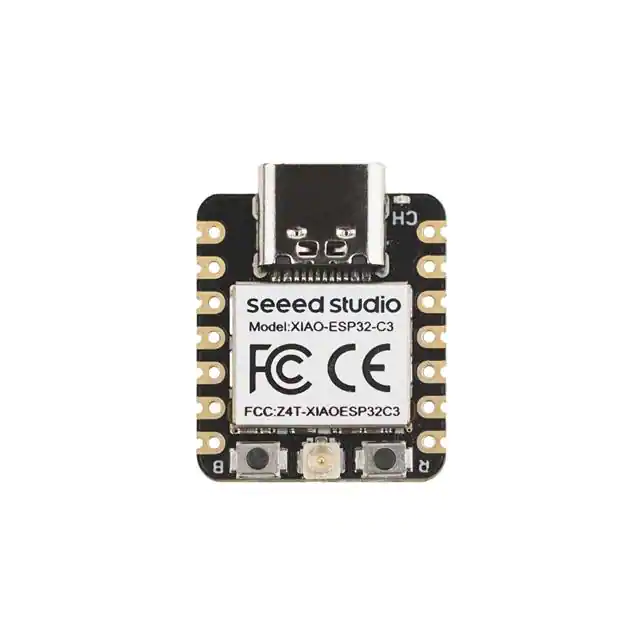
113991054
Seeed Technology Co., Ltd
-
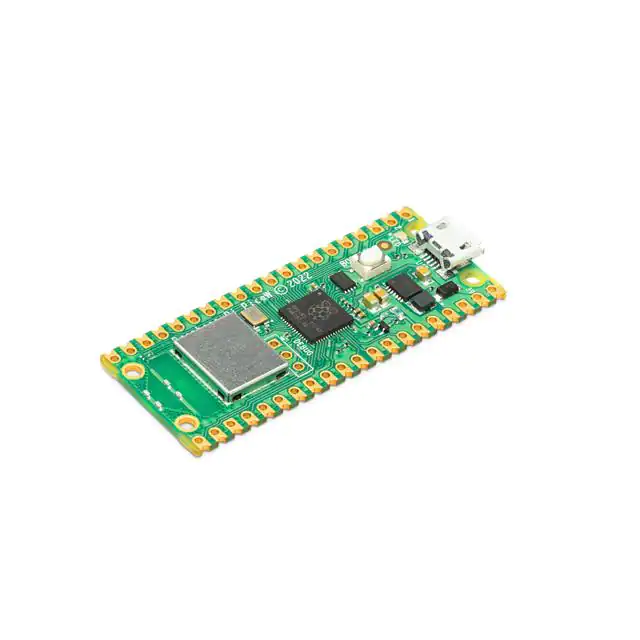
SC0918
Raspberry Pi

-
113991114
Seeed Technology Co., Ltd

-
ESP32-C6-DEVKITM-1-N4
Espressif Systems
-
ESP32-DEVKITM-1
Espressif Systems
-
C008
M5Stack Technology Co., Ltd.
-
ESP32-C3-DEVKITC-02
Espressif Systems

-
ESP32-C6-DEVKITC-1-N8
Espressif Systems
-
DFR0478
DFRobot
-
102010448
Seeed Technology Co., Ltd
-
ESP32-DEVKITC-32E
Espressif Systems
-
ESP32-DEVKITC-32UE
Espressif Systems
Tech Hub
Comparator circuit design covering voltage thresholds, input limits, open-collector outputs, LM393 wiring, op-amp differences, hysteresis, timing, window detection and practical fault diagnosis.
Schmitt triggers use separate rising and falling thresholds to stabilize slow or noisy signals. This guide covers hysteresis, 74HC14 and 74HCT14 selection, comparator calculations, RC oscillators and p…
Counterfeit components can hide behind convincing markings and passing basic function tests. This engineering reference covers source traceability, external inspection, X-ray, XRF, electrical testing, …
A practical engineering and sourcing framework covering lifecycle verification, lifetime-buy calculations, replacement qualification, supplier checks and counterfeit-risk controls.
TTL and CMOS logic families differ in thresholds, loading, output drive, power and timing. This engineering guide compares 74HC and 74HCT, calculates noise margins and checks 3.3 V/5 V compatibility.
A practical engineering guide to 3.3V and 5V logic compatibility, input thresholds, resistor dividers, translator ICs, MOSFET level shifting, I2C pull-ups, timing limits and power-sequencing risks.
The 74HC595 uses push-pull logic outputs, while the TPIC6B595 uses 50 V open-drain DMOS sinks for higher-power loads. This guide compares timing, current limits, 3.3 V interfacing, load wiring, thermal…
The 74HC595 converts serial data into eight stable parallel outputs. This guide covers pin functions, shift and storage timing, OE and MR behavior, drive-current limits, cascading, voltage compatibilit…
A technical comparison of level-sensitive latches and edge-triggered flip-flops, covering timing windows, setup and hold limits, master–slave operation, time borrowing, race-through, HDL inference and…
A D latch stores one bit while Enable controls when data can pass. This reference covers gate-level operation, truth tables, transparency, setup and hold timing, LE versus OE, common ICs and practical …