
 My Inquiry
 My Account


STMicroelectronics SPC560P40L1BEABR
- Part No.:
- SPC560P40L1BEABR
- Manufacturer:
- STMicroelectronics
- Category:
- Microcontrollers
- Package:
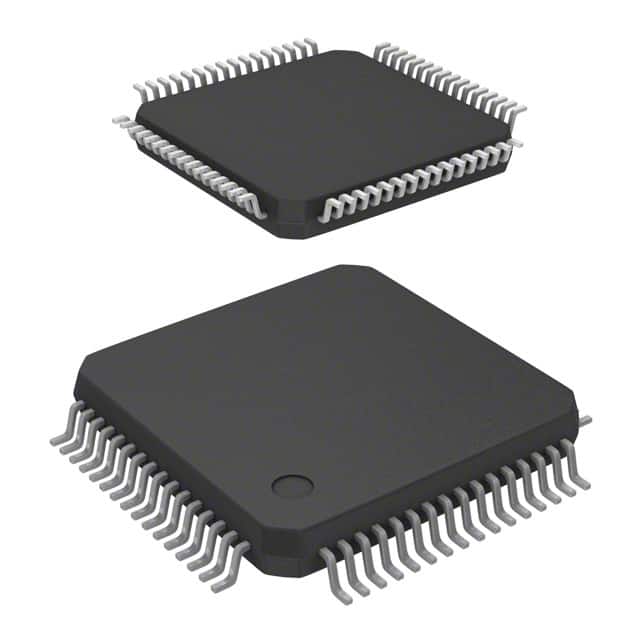
- 64-LQFP
- Datasheet:
-
 SPC560P40L1BEABR.pdf
- Description:
- IC MCU 32BIT 256KB FLASH 64LQFP
- Quantity:
- Payment:

- Shipping:

Inventory:4,383
Please send an inquiry. Send us your inquiry, and we will respond immediately.
Product details
Overview
SPC560P40L1BEABR from STMicroelectronics is a 32-bit Power Architecture® e200z0h-based automotive MCU with 256 KB on-chip flash memory (ECC-protected), 20 KB SRAM (ECC-protected), and 64 MHz CPU clock, designed for chassis and safety-critical systems including electronic braking and steering control units. It integrates dual FlexCAN 2.0B interfaces (one configurable as safety port), LINFlex, DSPI, FlexPWM, and a 10-bit ADC with <1 µs conversion time.
For engineers reviewing the SPC560P40L1BEABR datasheet, SPC560P40L1BEABR pinout, SPC560P40L1BEABR application, or SPC560P40L1BEABR equivalent, key selection considerations include its AEC-Q100 Grade 1 qualification, fail-safe features (NMI, fault collection unit, programmable watchdog), Nexus Class 1 debug support, and LQFP64 package with 37 GPIOs - all critical for ISO 26262 ASIL-B compliant automotive chassis designs.
Technical Context
The SPC560P40L1BEABR implements a single-issue e200z0h core compliant with Power Architecture® embedded category and supports Variable Length Encoding (VLE) for code density optimization. Its memory subsystem includes 256 KB main flash with ECC and erase/program controller, plus 64 KB data flash (4 × 16 KB banks) for EEPROM emulation - both accessible via crossbar switch (XBAR) with deterministic latency.
Real-time peripheral coordination is enabled by the Cross Triggering Unit (CTU), which synchronizes ADC sampling with FlexPWM events and eTimer captures. The safety port leverages FlexCAN hardware to deliver up to 8 Mbit/s at 64 MHz while maintaining message buffer isolation - a dedicated resource distinct from the primary FlexCAN interface and essential for redundant communication in ASIL-B architectures.
Key Specifications
| Parameter | Value and Actual Design Meaning |
|---|---|
| CPU Core | e200z0h, 32-bit Power Architecture®, up to 64 MHz, VLE support for compact firmware footprint |
| Flash Memory | 256 KB code flash + 64 KB data flash, both with ECC and hardware erase/program control |
| RAM | 20 KB SRAM with ECC, enabling safe storage of runtime variables and stack in safety-critical contexts |
| ADC | 10-bit, 12-channel (LQFP64), <1 µs full-precision conversion time, CTU-triggered sampling for deterministic timing |
| FlexCAN Interfaces | 2× FlexCAN 2.0B (32-message buffers each); one configurable as safety port with 8 Mbit/s capability |
| Package | LQFP64 (10 × 10 × 1.4 mm), 37 GPIOs, AEC-Q100 Grade 1 qualified (–40°C to +125°C ambient) |
| Fail-Safe Features | Programmable watchdog timer, non-maskable interrupt (NMI), fault collection unit (FCU) for error logging and recovery |
Pinout & Package
LQFP64 package (10 × 10 × 1.4 mm), RoHS-compliant, ECOPACK® certified, with 37 general-purpose I/Os individually configurable as input, output, or peripheral function.
| Pin/Terminal | Circuit Role | Design Meaning |
|---|---|---|
| VDD_HV_IOx | High-voltage I/O supply | Provides 3.3 V or 5.0 V power to GPIOs and analog peripherals; supports mixed-voltage operation |
| VDD_HV_REG | ADC reference supply | Dedicated 3.3 V or 5.0 V supply for ADC voltage reference; independent from core logic supply |
| RESET | Asynchronous reset input | Active-low, Schmitt-triggered, with internal pull-up; meets automotive reset timing requirements per ISO 16750 |
| CLKIN | Main oscillator input | Accepts external crystal (4–20 MHz) or clock source; feeds FMPLL for system clock generation |
| CAN0_TX / CAN0_RX | Primary FlexCAN channel signals | Differential CAN bus interface supporting 2.0B protocol; integrated transceiver not included - requires external PHY |
| CAN1_TX / CAN1_RX | Safety port FlexCAN signals | Second CAN interface, configurable as isolated safety channel with separate message RAM and clock domain |
| ET0_QA / ET0_QB | eTimer quadrature encoder inputs | Hardware-decoded rotation direction and position sensing for motor feedback without CPU overhead |
Key Features
| Feature | Design Value |
|---|---|
| Nexus Class 1 debug interface | Enables real-time trace, breakpoint, and register access for ISO 26262 tool qualification and functional safety verification |
| FlexPWM with ADC sync | 8 complementary/independent outputs; hardware-triggered ADC sampling ensures precise current/voltage capture during PWM switching |
| Programmable watchdog (SWT) | Configurable timeout periods and windowed mode; supports fail-safe state transitions in ASIL-B software stacks |
| Boot Assist Module (BAM) | On-chip CAN/UART bootloader enables field firmware updates without external programming hardware |
| CTU-triggered peripheral chaining | Links eTimer capture, ADC start, and FlexPWM reload events in hardware - eliminates interrupt latency in closed-loop control |
Applications
| Electronic Brake Control Unit (EBCU) | Electric Power Steering (EPS) |
|---|---|
Use Scenario: Real-time monitoring of wheel speed sensors, brake pressure transducers, and vehicle dynamics signals under ASIL-B requirements. IC Role / Device Role / Timing Role: Primary safety controller executing brake actuation algorithms with deterministic 64 MHz execution and hardware-synchronized ADC sampling. Use Value: ECC-protected 256 KB flash ensures integrity of braking firmware; dual FlexCAN interfaces enable redundancy between master ECU and slave caliper modules. | Use Scenario: Closed-loop torque assist control using motor current feedback, torque sensor inputs, and vehicle speed data in harsh under-hood environments. IC Role / Device Role / Timing Role: Real-time motor control processor managing FlexPWM outputs and eTimer-based rotor position decoding with sub-microsecond timing precision. Use Value: CTU synchronization between FlexPWM dead-time insertion and ADC sampling eliminates phase lag in current loop - critical for stability at high assist levels. |
| Adaptive Front Lighting System (AFS) | Chassis Domain Controller |
Use Scenario: Coordinating headlamp swivel angle, leveling, and adaptive beam pattern based on steering angle, yaw rate, and road profile inputs. IC Role / Device Role / Timing Role: Central chassis-domain MCU interfacing with LINFlex-connected sensors and DSPI-linked LED drivers while maintaining CAN network visibility. Use Value: 37 GPIOs support direct connection to multiple analog sensors and digital actuators; LINFlex channels reduce wiring complexity versus discrete UART solutions. | Use Scenario: Aggregating and preprocessing signals from suspension sensors, ride height modules, and active damping controllers before forwarding to central ADAS ECU. IC Role / Device Role / Timing Role: Safety-aware signal concentrator with FCU logging and NMI-triggered fail-safe shutdown upon detected memory or peripheral errors. Use Value: Fault Collection Unit (FCU) captures error signatures (ECC failures, bus timeouts) for root-cause analysis during diagnostic sessions - required for ASIL-B compliance reporting. |
Equivalent & Alternatives
The following parts are listed as comparable options for similar automotive microcontroller applications.
| Alternative Part | Technical Difference | Application Difference | Selection Advice |
|---|---|---|---|
| MPC5604B | Power Architecture® e200z0 core, 64 MHz, 512 KB flash, 48 KB RAM; no integrated safety port or CTU | Lacks dedicated safety port and CTU - requires external arbitration for dual-CAN redundancy and software-managed peripheral triggering | Preferred when larger memory and higher I/O count (LQFP100) are needed, but safety port and hardware-triggered ADC are not required |
| SPC560B50L3 | Same e200z0h core, 64 MHz, 512 KB flash, 48 KB RAM, LQFP100; adds CRC engine and enhanced FMPLL | Supports higher ASIL levels via additional safety mechanisms (CRC, lockstep-ready peripherals), but lacks safety port configuration option | Selected for ASIL-C designs requiring extended diagnostics coverage and larger code space, where safety port isolation is implemented externally |
Compared with MPC5604B and SPC560B50L3, the SPC560P40L1BEABR uniquely combines AEC-Q100 Grade 1 qualification, integrated safety port FlexCAN, and CTU-based hardware synchronization in an LQFP64 package - making it optimal for cost-constrained, space-limited ASIL-B chassis modules where deterministic timing and functional isolation are mandatory.
Availability
SPC560P40L1BEABR is available at Aetrix Electronics and suitable for electronic brake control units, electric power steering systems, and adaptive front lighting systems requiring stable component supply across automotive production lifecycles.
Supply support for SPC560P40L1BEABR includes scheduled delivery planning, volume procurement assistance, BOM continuity management, traceable sourcing, and lifecycle availability coordination for OEM customers, industrial embedded developers, connected-device designers, and electronics production programs.
Manufacturer
STMicroelectronics is a global semiconductor leader headquartered in Geneva, Switzerland, specializing in automotive, industrial, and power management ICs with strong functional safety expertise.
The SPC560P series belongs to ST's automotive-qualified Power Architecture® MCU family, engineered specifically for chassis and safety applications demanding ASIL-B compliance, fail-safe operation, and deterministic real-time performance in harsh environments.
FAQ
What is the maximum operating temperature range for SPC560P40L1BEABR?
The SPC560P40L1BEABR is qualified per AEC-Q100 Grade 1, supporting operation from –40°C to +125°C ambient temperature. This rating applies to the full LQFP64 package variant and is validated across all electrical specifications in the datasheet, including flash endurance, ADC accuracy, and CAN timing margins.
Does SPC560P40L1BEABR include an integrated CAN transceiver?
No, the SPC560P40L1BEABR integrates FlexCAN 2.0B controllers only - physical layer transceivers must be added externally. Both CAN0 and CAN1 channels require discrete CAN transceivers (e.g., TJA1042, SN65HVD230) for bus connection. The safety port operates at up to 8 Mbit/s but still relies on external PHY components.
How is EEPROM emulation implemented on this MCU?
EEPROM emulation uses the 64 KB on-chip data flash (organized as four 16 KB banks), managed by ST's SPC5 Flash Driver library. Each bank supports independent erase cycles (100k cycles minimum), wear leveling, and atomic write operations - enabling robust parameter storage for calibration data, odometer values, and fault logs without external serial EEPROM.
Is Nexus Class 1 debug supported in production silicon?
Yes, Nexus Class 1 debug is fully implemented in production SPC560P40L1BEABR silicon and enabled by default. It provides real-time instruction trace, hardware breakpoints, and register access via dedicated pins (NTRST, NTDO, NTCK, etc.), meeting ISO 26262 tool qualification requirements for functional safety development and validation.
SPC560P40L1BEABR Specifications
- Product attributes
- Attribute value
- Manufacturer:
- STMicroelectronics
- Package/Case:
- 64-LQFP
- Series:
- SPC56
- Packaging:
- Tape & Reel (TR)
- Product Status:
- Obsolete
- Programmable:
- Not Verified
- Core Processor:
- e200z0h
- Core Size:
- 32-Bit Single-Core
- Speed:
- 64MHz
- Connectivity:
- CANbus, LINbus, SPI, UART/USART
- Peripherals:
- DMA, POR, PWM, WDT
- Number of I/O:
- 37
- Program Memory Size:
- 256KB (256K x 8)
- Program Memory Type:
- FLASH
- EEPROM Size:
- -
- RAM Size:
- 20K x 8
- Voltage - Supply (Vcc/Vdd):
- 3V ~ 3.6V
- Data Converters:
- A/D 16x10b
- Oscillator Type:
- Internal
- Operating Temperature:
- -40°C ~ 105°C (TA)
- Grade:
- Automotive
- Qualification:
- AEC-Q100
- Mounting Type:
- Surface Mount
- Supplier Device Package:
SPC560P40L1BEABR FAQ
1.How can I place an order for SPC560P40L1BEABR through Aetrix?
Please submit a Request for Quotation (RFQ) for SPC560P40L1BEABR on Aetrix. Our sales agent will provide a competitive quotation and guide you through the order confirmation once you accept the terms.
2.Are the price and stock information for SPC560P40L1BEABR reliable?
The price and inventory of SPC560P40L1BEABR are updated periodically and may fluctuate due to market conditions. Stock and pricing data are typically refreshed every 24 hours. Quotation validity for SPC560P40L1BEABR is usually 5 days.
3.What payment methods are accepted for SPC560P40L1BEABR?
We accept Wire Transfer, PayPal, Credit Card, Western Union, MoneyGram, and Escrow for SPC560P40L1BEABR transactions.
Note: Certain payment methods may incur a processing fee.
4.How is shipping managed for SPC560P40L1BEABR?
SPC560P40L1BEABR orders can be shipped via leading logistics carriers, including DHL, UPS, FedEx, TNT, or Registered Mail.
Once your SPC560P40L1BEABR order is processed, you will receive an email with the shipment details and tracking number.
Note: Tracking information may take up to 24 hours to appear. Express delivery typically takes 3–5 business days.
5.How can I obtain technical support or documentation for SPC560P40L1BEABR?
For technical support, including SPC560P40L1BEABR datasheets, pinout diagrams, or application guidance, please contact our engineering support team. They can provide detailed documentation and assistance for your SPC560P40L1BEABR requirements.
6.How does Aetrix verify that SPC560P40L1BEABR is sourced from the original manufacturer or authorized distributors?
All SPC560P40L1BEABR products on Aetrix are procured from qualified distributors and authorized channels. Our dedicated quality assurance team conducts strict verification, including traceability checks and, if necessary, third-party testing. This ensures that SPC560P40L1BEABR meets industry standards.
7.What is the process for return or replacement of SPC560P40L1BEABR?
All SPC560P40L1BEABR units undergo pre-shipment inspection (PSI). If there is an issue with SPC560P40L1BEABR, returns or replacements are accepted under the following conditions:
1.Quantity discrepancies, incorrect items, or visible external defects (such as breakage or corrosion), acknowledged by Aetrix.
2.The issue is reported within 90 days of delivery.
3.The SPC560P40L1BEABR part is unused and in its original packaging.
Return procedure for SPC560P40L1BEABR:
1.Submit a request within 90 days.
2.Obtain a Return Material Authorization (RMA) from Aetrix.
SPC560P40L1BEABR Tags

-
ATTINY4-TSHR
Microchip Technology
-
ATTINY10-TSHR
Microchip Technology
-
ATTINY10-TS8R
Microchip Technology

-
ATTINY202-SSNR
Microchip Technology
-
ATTINY202-SSFR
Microchip Technology
-
ATTINY402-SSNR
Microchip Technology
-
PIC16F15213T-I/MF
Microchip Technology
-
PIC16F15213-E/MF
Microchip Technology

-
PIC10F200T-I/OT
Microchip Technology
-
ATTINY412-SSNR
Microchip Technology
-
PIC10F202T-I/OT
Microchip Technology
-
ATTINY404-SSNR
Microchip Technology
Tech Hub

Comparator circuit design covering voltage thresholds, input limits, open-collector outputs, LM393 wiring, op-amp differences, hysteresis, timing, window detection and practical fault diagnosis.
Schmitt triggers use separate rising and falling thresholds to stabilize slow or noisy signals. This guide covers hysteresis, 74HC14 and 74HCT14 selection, comparator calculations, RC oscillators and p…

Counterfeit components can hide behind convincing markings and passing basic function tests. This engineering reference covers source traceability, external inspection, X-ray, XRF, electrical testing, …

A practical engineering and sourcing framework covering lifecycle verification, lifetime-buy calculations, replacement qualification, supplier checks and counterfeit-risk controls.

TTL and CMOS logic families differ in thresholds, loading, output drive, power and timing. This engineering guide compares 74HC and 74HCT, calculates noise margins and checks 3.3 V/5 V compatibility.

A practical engineering guide to 3.3V and 5V logic compatibility, input thresholds, resistor dividers, translator ICs, MOSFET level shifting, I2C pull-ups, timing limits and power-sequencing risks.

The 74HC595 uses push-pull logic outputs, while the TPIC6B595 uses 50 V open-drain DMOS sinks for higher-power loads. This guide compares timing, current limits, 3.3 V interfacing, load wiring, thermal…

The 74HC595 converts serial data into eight stable parallel outputs. This guide covers pin functions, shift and storage timing, OE and MR behavior, drive-current limits, cascading, voltage compatibilit…

A technical comparison of level-sensitive latches and edge-triggered flip-flops, covering timing windows, setup and hold limits, master–slave operation, time borrowing, race-through, HDL inference and…

A D latch stores one bit while Enable controls when data can pass. This reference covers gate-level operation, truth tables, transparency, setup and hold timing, LE versus OE, common ICs and practical …


