
 My Inquiry
 My Account


STMicroelectronics STM32F051K4U6TR
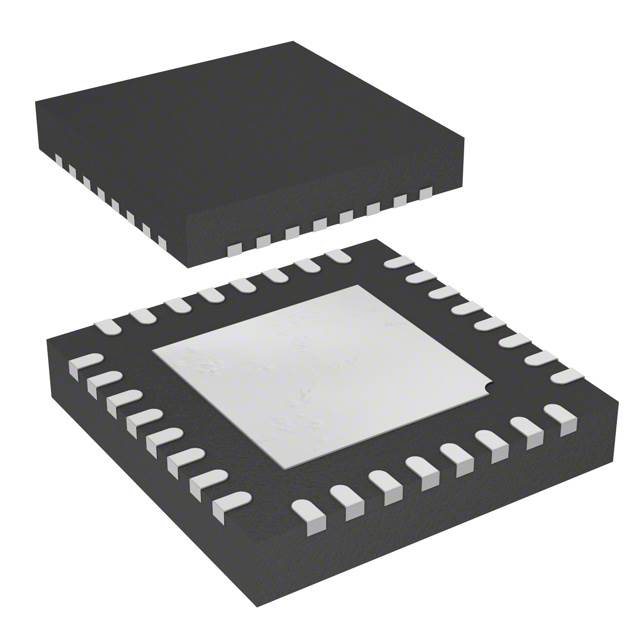
- Part No.:
- STM32F051K4U6TR
- Manufacturer:
- STMicroelectronics
- Category:
- Microcontrollers
- Package:
- 32-UFQFN Exposed Pad
- Datasheet:
-
 STM32F051K4U6TR.pdf
- Description:
- IC MCU 32BIT 16KB FLASH 32UFQFPN
- Quantity:
- Payment:

- Shipping:

Inventory:2,022
Please send an inquiry. Send us your inquiry, and we will respond immediately.
Product details
Overview
STM32F051K4U6TR from STMicroelectronics is an ARM® Cortex®-M0 32-bit microcontroller with 16 KB Flash, 8 KB SRAM, 48 MHz max CPU frequency, and integrated peripherals including a 12-bit ADC, 12-bit DAC, two USARTs (one with LIN/IrDA), two I²C interfaces (one Fast Mode Plus), and up to 36 5 V-tolerant GPIOs. It targets cost-sensitive industrial control and sensor interface applications requiring low-power operation and analog integration.
For engineers reviewing the STM32F051K4U6TR datasheet, STM32F051K4U6TR pinout, STM32F051K4U6TR application, or STM32F051K4U6TR equivalent, key selection criteria include its 16 KB Flash density, UFQFPN32 package footprint, 5 V-tolerant I/O capability, RTC with alarm and wakeup from Stop/Standby, and support for capacitive touch sensing on up to 18 channels.
Technical Context
The STM32F051K4U6TR implements a single-cycle ARM Cortex-M0 core with Thumb-2 instruction set, supporting deterministic real-time execution at up to 48 MHz. Its memory subsystem includes 16 KB of embedded Flash with error correction and 8 KB of SRAM with hardware parity checking - both accessible via AHB bus with zero-wait-state operation at full speed.
Peripherals are organized around three APB domains (APB1, APB2, and AHB). Critical timing resources include one advanced-control timer (TIM1) with deadtime generation and emergency stop, one basic timer (TIM6) dedicated to DAC triggering, and dual watchdogs (IWDG/WWDG) with independent clock sources (LSI and PCLK), enabling robust system supervision in safety-aware designs.
Key Specifications
| Parameter | Value and Actual Design Meaning |
|---|---|
| CPU Core | ARM Cortex-M0, 48 MHz max - enables real-time deterministic control loops with <1 µs interrupt latency. |
| Flash Memory | 16 KB - sufficient for compact firmware with bootloader, communication stack, and control logic in space-constrained designs. |
| SRAM | 8 KB with HW parity - supports reliable data buffering and stack operations while detecting single-bit memory errors. |
| Analog Peripherals | 1×12-bit ADC (16 ch, 1 µs conv.), 1×12-bit DAC, 2× comparators - enables closed-loop analog signal conditioning without external components. |
| I/O Capability | Up to 25 GPIOs in UFQFPN32, 36 with 5 V tolerance - simplifies interfacing with legacy 5 V logic and industrial sensors. |
| Low-Power Modes | Sleep, Stop, Standby with RTC + backup registers - achieves sub-1 µA standby current for battery-powered endpoint devices. |
| Communication | 2×USART (1×LIN/IrDA), 2×I²C (1×Fast Mode Plus), 2×SPI (1×I²S) - supports mixed wired protocols in smart sensors and HMI nodes. |
Pinout & Package
STM32F051K4U6TR uses the UFQFPN32 (5 × 5 mm, 0.5 mm pitch) package - a compact, thermally enhanced leadless package suitable for high-density PCB layouts and automated assembly. Pin count is 32, with 25 user-configurable I/Os plus power, reset, and clock pins.
| Pin/Terminal | Circuit Role | Design Meaning |
|---|---|---|
| VDD, VSS | Digital power supply and ground | Core and I/O domain supply (2.0–3.6 V); decoupling required per STM32 layout guidelines. |
| VDDA, VSSA | Analog power supply and ground | Separate 2.4–3.6 V analog rail for ADC/DAC/compensator - must be filtered and isolated from digital noise. |
| NRST | Active-low reset input | Asynchronous reset pin with internal pull-up; accepts external push-button or supervisor IC assertion. |
| PA0–PA15, PB0–PB11 | General-purpose I/O ports | 25 total GPIOs; up to 36 support 5 V tolerance - usable as UART TX/RX, SPI SCK/MOSI/MISO, I²C SCL/SDA, or touch-sensing inputs. |
| BOOT0 | Boot mode selection | Configures boot source (system memory vs. main Flash) at power-on; pulled low by default for Flash execution. |
| OSC_IN/OSC_OUT | External crystal oscillator connection | Supports 4–32 MHz crystals; used for precise clocking of USB, RTC, or high-accuracy timing functions. |
Key Features
| Feature | Design Value |
|---|---|
| Capacitive Touch Sensing (TSC) | 18-channel controller supporting touchkey, linear, and rotary sensors - eliminates need for external touch IC in HMI applications. |
| Programmable Voltage Detector (PVD) | Monitors VDD against 4 programmable thresholds (2.2–2.9 V) - enables graceful shutdown or brown-out recovery before system failure. |
| Hardware CRC Unit | Dedicated 32-bit CRC engine compliant with IEEE-802.3 - accelerates firmware integrity checks and communication frame validation. |
| Serial Wire Debug (SWD) | 2-pin debug interface (SWCLK/SWDIO) - enables full JTAG-equivalent debugging with minimal PCB footprint and no SWO trace overhead. |
| RTC with Calendar & Alarm | Real-time clock with calendar, alarm, and periodic wakeup from Stop/Standby - supports time-stamped logging and scheduled wakeups in energy-harvesting systems. |
Applications
| Industrial Sensor Node | Smart Thermostat Interface |
|---|---|
Use Scenario: Compact environmental sensor node measuring temperature, humidity, and air quality with local processing and RS-485/LIN output. IC Role / Device Role / Timing Role: Main MCU executing sensor fusion, LIN communication stack, and low-power scheduling using RTC alarm wakeup. Use Value: Integrated 12-bit ADC and 5 V-tolerant UART pins eliminate level shifters; 1 µA Standby current extends battery life to >5 years on coin cell. | Use Scenario: Residential HVAC control panel with capacitive touch buttons, display backlight control, and temperature feedback loop. IC Role / Device Role / Timing Role: System controller managing TSC-based touch UI, PWM-driven LED dimming, and PID-controlled relay outputs. Use Value: On-chip TSC supports 12+ touch keys without external IC; DAC provides smooth analog reference for thermal sensor calibration. |
| Programmable Logic Controller (PLC) I/O Module | Energy Meter Front-End |
Use Scenario: DIN-rail mounted digital I/O expansion module with opto-isolated inputs and transistor outputs. IC Role / Device Role / Timing Role: Peripheral manager handling GPIO scanning, pulse-width modulation for status LEDs, and UART-based Modbus RTU communication. Use Value: 36 5 V-tolerant I/Os directly interface with industrial 24 V DC logic; hardware CRC ensures reliable fieldbus packet integrity. | Use Scenario: Sub-metering unit monitoring voltage, current, and power factor in residential solar inverters. IC Role / Device Role / Timing Role: Analog front-end controller acquiring ADC samples synchronized to AC line cycle via TIM1 trigger. Use Value: 12-bit ADC with 1 µs conversion time captures 16+ samples per half-cycle; internal VREFINT enables ratiometric measurement stability. |
Equivalent & Alternatives
The following parts are listed as comparable options for similar microcontroller applications.
| Alternative Part | Technical Difference | Application Difference | Selection Advice |
|---|---|---|---|
| STM32F030F4P6 | 16 KB Flash, 4 KB SRAM, no DAC, no capacitive touch, fewer timers - lower peripheral integration. | Limited to basic control tasks without analog output or touch UI; lacks RTC calendar and advanced timer features. | Select when cost is primary constraint and DAC/touch/RTC are unnecessary. |
| STM32F070F6P6 | 16 KB Flash, 6 KB SRAM, no DAC, no TSC, but adds USB 2.0 FS device interface - different peripheral trade-off. | Suitable for USB-connected firmware update modules or HID devices; not viable for analog-intensive or touch-based use cases. | Choose when USB connectivity outweighs analog feature requirements. |
Compared with STM32F030F4P6 and STM32F070F6P6, the STM32F051K4U6TR uniquely balances analog integration (DAC + ADC + comparators), capacitive touch capability, and RTC calendar functionality - making it optimal for intelligent sensor nodes and human-interface microcontrollers where mixed-signal processing is essential.
Availability
STM32F051K4U6TR is available at Aetrix Electronics and suitable for industrial sensor nodes, smart thermostats, PLC I/O modules, and energy meter front-ends requiring stable component supply, long-term lifecycle support, and RoHS-compliant packaging.
Supply support for STM32F051K4U6TR includes scheduled delivery planning, volume procurement assistance, BOM continuity management, traceable sourcing, and lifecycle availability coordination for OEM customers, industrial embedded developers, connected-device designers, and electronics production programs.
Manufacturer
STMicroelectronics is a global semiconductor leader headquartered in Geneva, Switzerland, designing and manufacturing microcontrollers, power management ICs, MEMS sensors, and automotive-grade components.
The STM32F0 series targets cost-sensitive, resource-constrained embedded applications - delivering Cortex-M0 performance with industrial-grade reliability, low-power operation, and rich analog/mixed-signal integration for smart sensors and control endpoints.
FAQ
What is the maximum operating frequency and supported voltage range for STM32F051K4U6TR?
The STM32F051K4U6TR operates at up to 48 MHz using its internal PLL driven by the 8 MHz HSI or external crystal. Its digital supply (VDD) ranges from 2.0 V to 3.6 V, and analog supply (VDDA) spans 2.4 V to 3.6 V - with separate power domains ensuring ADC/DAC accuracy across the full operating range.
Does STM32F051K4U6TR support in-circuit debugging and programming?
Yes - it features Serial Wire Debug (SWD) with two dedicated pins (SWCLK and SWDIO), enabling full-speed debugging, flash programming, and real-time variable inspection using standard tools like ST-LINK/V2 or compatible JTAG/SWD debuggers without requiring additional hardware interfaces.
How many I/O pins are available in the UFQFPN32 package, and which are 5 V tolerant?
The UFQFPN32 package provides 25 general-purpose I/O pins. Of these, up to 36 pins across the full STM32F051xx family are 5 V tolerant - and specifically in this variant, all 25 GPIOs (PA0–PA15, PB0–PB11) support 5 V tolerance when configured in input or output modes, simplifying interface with legacy 5 V peripherals.
What are the low-power capabilities and typical current consumption in Stop mode?
In Stop mode with RTC running and SRAM retention enabled, STM32F051K4U6TR consumes typically 0.8 µA at 25 °C (VDD = 3.3 V). Wakeup occurs within 5.5 µs from EXTI event or RTC alarm, supporting ultra-low-power duty-cycled operation ideal for battery-powered endpoints with infrequent sensor sampling.
STM32F051K4U6TR Specifications
- Product attributes
- Attribute value
- Manufacturer:
- STMicroelectronics
- Package/Case:
- 32-UFQFN Exposed Pad
- Series:
- STM32F0
- Packaging:
- Tape & Reel (TR)
- Product Status:
- Active
- Programmable:
- Not Verified
- Core Processor:
- ARM® Cortex®-M0
- Core Size:
- 32-Bit Single-Core
- Speed:
- 48MHz
- Connectivity:
- HDMI-CEC, I2C, IrDA, LINbus, SPI, UART/USART
- Peripherals:
- DMA, I2S, POR, PWM, WDT
- Number of I/O:
- 27
- Program Memory Size:
- 16KB (16K x 8)
- Program Memory Type:
- FLASH
- EEPROM Size:
- -
- RAM Size:
- 8K x 8
- Voltage - Supply (Vcc/Vdd):
- 2V ~ 3.6V
- Data Converters:
- A/D 13x12b; D/A 1x12b
- Oscillator Type:
- Internal
- Operating Temperature:
- -40°C ~ 85°C (TA)
- Grade:
- -
- Qualification:
- -
- Mounting Type:
- Surface Mount
- Supplier Device Package:
STM32F051K4U6TR FAQ
1.How can I place an order for STM32F051K4U6TR through Aetrix?
Please submit a Request for Quotation (RFQ) for STM32F051K4U6TR on Aetrix. Our sales agent will provide a competitive quotation and guide you through the order confirmation once you accept the terms.
2.Are the price and stock information for STM32F051K4U6TR reliable?
The price and inventory of STM32F051K4U6TR are updated periodically and may fluctuate due to market conditions. Stock and pricing data are typically refreshed every 24 hours. Quotation validity for STM32F051K4U6TR is usually 5 days.
3.What payment methods are accepted for STM32F051K4U6TR?
We accept Wire Transfer, PayPal, Credit Card, Western Union, MoneyGram, and Escrow for STM32F051K4U6TR transactions.
Note: Certain payment methods may incur a processing fee.
4.How is shipping managed for STM32F051K4U6TR?
STM32F051K4U6TR orders can be shipped via leading logistics carriers, including DHL, UPS, FedEx, TNT, or Registered Mail.
Once your STM32F051K4U6TR order is processed, you will receive an email with the shipment details and tracking number.
Note: Tracking information may take up to 24 hours to appear. Express delivery typically takes 3–5 business days.
5.How can I obtain technical support or documentation for STM32F051K4U6TR?
For technical support, including STM32F051K4U6TR datasheets, pinout diagrams, or application guidance, please contact our engineering support team. They can provide detailed documentation and assistance for your STM32F051K4U6TR requirements.
6.How does Aetrix verify that STM32F051K4U6TR is sourced from the original manufacturer or authorized distributors?
All STM32F051K4U6TR products on Aetrix are procured from qualified distributors and authorized channels. Our dedicated quality assurance team conducts strict verification, including traceability checks and, if necessary, third-party testing. This ensures that STM32F051K4U6TR meets industry standards.
7.What is the process for return or replacement of STM32F051K4U6TR?
All STM32F051K4U6TR units undergo pre-shipment inspection (PSI). If there is an issue with STM32F051K4U6TR, returns or replacements are accepted under the following conditions:
1.Quantity discrepancies, incorrect items, or visible external defects (such as breakage or corrosion), acknowledged by Aetrix.
2.The issue is reported within 90 days of delivery.
3.The STM32F051K4U6TR part is unused and in its original packaging.
Return procedure for STM32F051K4U6TR:
1.Submit a request within 90 days.
2.Obtain a Return Material Authorization (RMA) from Aetrix.
STM32F051K4U6TR Tags

-
ATTINY4-TSHR
Microchip Technology
-
ATTINY10-TSHR
Microchip Technology
-
ATTINY10-TS8R
Microchip Technology

-
ATTINY202-SSNR
Microchip Technology
-
ATTINY202-SSFR
Microchip Technology
-
ATTINY402-SSNR
Microchip Technology
-
PIC16F15213T-I/MF
Microchip Technology
-
PIC16F15213-E/MF
Microchip Technology

-
PIC10F200T-I/OT
Microchip Technology
-
ATTINY412-SSNR
Microchip Technology
-
PIC10F202T-I/OT
Microchip Technology
-
ATTINY404-SSNR
Microchip Technology
Tech Hub

Comparator circuit design covering voltage thresholds, input limits, open-collector outputs, LM393 wiring, op-amp differences, hysteresis, timing, window detection and practical fault diagnosis.
Schmitt triggers use separate rising and falling thresholds to stabilize slow or noisy signals. This guide covers hysteresis, 74HC14 and 74HCT14 selection, comparator calculations, RC oscillators and p…

Counterfeit components can hide behind convincing markings and passing basic function tests. This engineering reference covers source traceability, external inspection, X-ray, XRF, electrical testing, …

A practical engineering and sourcing framework covering lifecycle verification, lifetime-buy calculations, replacement qualification, supplier checks and counterfeit-risk controls.

TTL and CMOS logic families differ in thresholds, loading, output drive, power and timing. This engineering guide compares 74HC and 74HCT, calculates noise margins and checks 3.3 V/5 V compatibility.

A practical engineering guide to 3.3V and 5V logic compatibility, input thresholds, resistor dividers, translator ICs, MOSFET level shifting, I2C pull-ups, timing limits and power-sequencing risks.

The 74HC595 uses push-pull logic outputs, while the TPIC6B595 uses 50 V open-drain DMOS sinks for higher-power loads. This guide compares timing, current limits, 3.3 V interfacing, load wiring, thermal…

The 74HC595 converts serial data into eight stable parallel outputs. This guide covers pin functions, shift and storage timing, OE and MR behavior, drive-current limits, cascading, voltage compatibilit…

A technical comparison of level-sensitive latches and edge-triggered flip-flops, covering timing windows, setup and hold limits, master–slave operation, time borrowing, race-through, HDL inference and…

A D latch stores one bit while Enable controls when data can pass. This reference covers gate-level operation, truth tables, transparency, setup and hold timing, LE versus OE, common ICs and practical …


