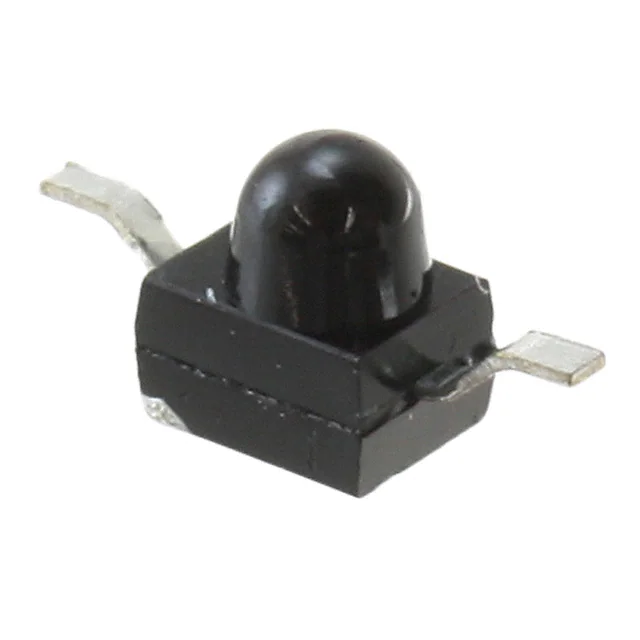
Vishay Semiconductor Opto Division TEMT7100X01
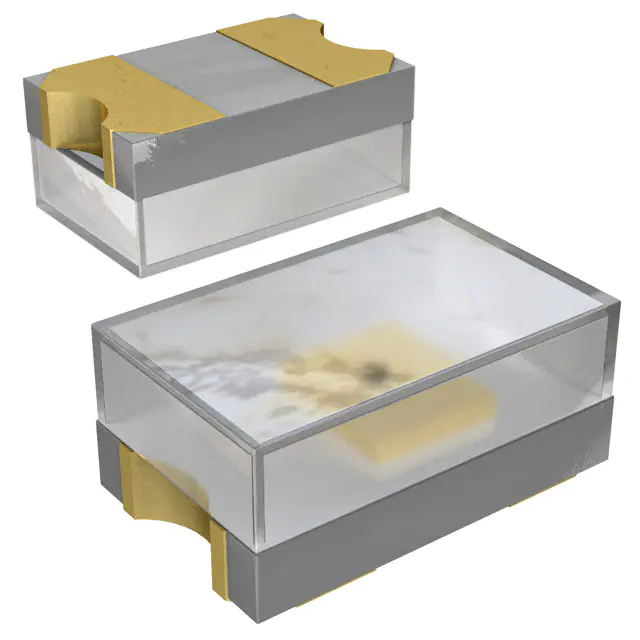
- Part No.:
- TEMT7100X01
- Manufacturer:
- Vishay Semiconductor Opto Division
- Category:
- Phototransistors
- Package:
- 0805 (2012 Metric)
- Datasheet:
-
TEMT7100X01.pdf
- Description:
- PHOTOTRANSISTOR 750 TO 1010 NM
- Quantity:
- Payment:

- Shipping:

Inventory:1,590
Please send an inquiry. Send us your inquiry, and we will respond immediately.
Product details
Overview
TEMT7100X01 from Vishay Semiconductors is a silicon NPN epitaxial planar phototransistor with daylight-blocking filter in a surface-mount 0805 package (2.0 × 1.25 × 0.85 mm), optimized for IR detection at 830–950 nm. It delivers 225–675 μA collector light current at 1 mW/cm² irradiance (λ = 950 nm, VCE = 5 V), features ±60° half-sensitivity angle, and is AEC-Q101 qualified for automotive sensing.
For engineers reviewing the TEMT7100X01 datasheet, TEMT7100X01 pinout, TEMT7100X01 application, or TEMT7100X01 equivalent, key selection criteria include spectral match to 830–950 nm IR emitters (e.g., VSMB1940X01), daylight rejection capability, high photo sensitivity in miniature SMD form, and compliance with automotive reliability standards.
Technical Context
The TEMT7100X01 operates as a light-controlled NPN transistor with emitter-grounded configuration, where incident IR radiation generates base current to modulate collector current. Its integrated daylight-blocking filter suppresses visible spectrum response while maintaining peak sensitivity at 870 nm and full-width half-maximum bandwidth of 750–1010 nm.
Thermal performance is defined by RthJA = 270 K/W and operation up to +100 °C junction temperature. Rise/fall times range from ~250 µs to ~1000 µs depending on collector current (100–1500 µA), and dark current remains ≤100 nA at VCE = 5 V and Tamb = 25 °C.
Key Specifications
| Parameter | Value and Actual Design Meaning |
|---|---|
| VCEO | 20 V - Maximum collector-emitter voltage before breakdown; sets upper limit for bias supply in open-collector detector circuits |
| ICA (typ) | 450 μA - Typical collector light current under standard test condition (1 mW/cm², 950 nm, 5 V); defines signal level for comparator or ADC interface |
| λ0.5 | 750–1010 nm - Spectral bandwidth enabling reliable pairing with common 850/940 nm IR LEDs while rejecting ambient visible light |
| ϕ | ±60° - Angular half-sensitivity range; determines mechanical alignment tolerance in optocoupler or position-sensing layouts |
| Tamb | −40 to +100 °C - Extended operating temperature range supporting under-hood automotive and industrial encoder applications |
| CCEO | 25 pF - Collector-emitter capacitance at 0 V and 1 MHz; impacts high-speed switching response and noise coupling in sensitive analog front-ends |
Pinout & Package
TEMT7100X01 uses a 2-terminal 0805 surface-mount package with cathode (collector) and anode (emitter) terminals. The device is unidirectional and polarity-sensitive; correct orientation is required for proper biasing in common-emitter or common-collector configurations.
| Pin/Terminal | Circuit Role | Design Meaning |
|---|---|---|
| Terminal 1 (Anode) | Emitter | Connected to ground or low-side reference; forms current sink path when transistor is active |
| Terminal 2 (Cathode) | Collector | Output node pulled high via load resistor; provides light-dependent current source to downstream circuitry |
Key Features
| Feature | Design Value |
|---|---|
| Daylight-blocking filter | Rejects visible light while preserving 830–950 nm IR response-enables stable operation in brightly lit environments without external shielding |
| AEC-Q101 qualification | Validated for automotive-grade reliability including thermal cycling, humidity resistance, and mechanical shock-supports use in ADAS proximity sensors and cabin occupancy detection |
| ±60° angular sensitivity | Allows ±10° mechanical misalignment tolerance in encoder slotted-wheel assemblies without signal loss beyond 50% amplitude |
| MSL 3 moisture sensitivity | 168-hour floor life at <30 °C / <60% RH-permits standard SMT handling without baking unless exposed beyond specified time |
Applications
| Photo Interrupters | Position Sensors |
|---|---|
Use Scenario: Slotted disk rotating between TEMT7100X01 and matching IR emitter (e.g., VSMB1940X01) to detect object presence or rotation count. IC Role / Device Role / Timing Role: Light-controlled switch providing digital ON/OFF output based on beam interruption. Use Value: High ICA (up to 675 μA) ensures robust signal margin over temperature and aging; ±60° angle accommodates minor assembly offset. | Use Scenario: Linear or rotary position feedback in automotive throttle bodies or HVAC damper actuators using coded masks or reflective targets. IC Role / Device Role / Timing Role: Analog light-current transducer converting positional displacement into proportional output current. Use Value: Stable λp = 870 nm and narrow λ0.5 band minimize interference from ambient lighting, improving accuracy in cabin environments. |
| Automotive Detectors | Miniature Switches |
Use Scenario: Occupancy detection in vehicle seats or glovebox lid status monitoring using IR beam break or reflection mode. IC Role / Device Role / Timing Role: AEC-Q101-qualified photodetector interfacing directly with microcontroller GPIO or comparator inputs. Use Value: −40 to +100 °C operation and MSL 3 handling support direct integration into production automotive PCBs without derating. | Use Scenario: Non-contact tactile feedback in consumer electronics (e.g., smart speaker touch zones, wearable gesture interfaces). IC Role / Device Role / Timing Role: Low-profile optical switch replacing mechanical buttons to improve IP rating and longevity. Use Value: 0805 footprint (2.0 × 1.25 mm) enables dense layout; daylight blocking eliminates false triggers under indoor lighting. |
Equivalent & Alternatives
The following parts are listed as comparable options for similar phototransistor detection applications.
| Alternative Part | Technical Difference | Application Difference | Selection Advice |
|---|---|---|---|
| TEMT6000X01 | Wider spectral bandwidth (500–1100 nm), no daylight filter, lower ICA (100–300 μA), same 0805 package | Suitable for broad-spectrum or visible-light detection; not recommended where ambient light rejection is critical | Select TEMT6000X01 only if daylight immunity is unnecessary and cost is prioritized over signal-to-noise ratio |
| QSE113 | Through-hole TO-92 package, higher ICA (1.5 mA typ), no AEC-Q101 qualification, wider viewing angle (±75°) | Better suited for prototyping or non-automotive industrial encoders requiring higher output current | Choose QSE113 when board space allows through-hole mounting and automotive qualification is not required |
Compared with TEMT6000X01 and QSE113, the TEMT7100X01 uniquely combines daylight rejection, AEC-Q101 qualification, and miniature 0805 packaging-making it the only option among the three suitable for production automotive interior sensing where size, reliability, and ambient light immunity are jointly constrained.
Availability
TEMT7100X01 is available at Aetrix Electronics and suitable for automotive occupancy detection, industrial photo interrupters, and consumer miniature optical switches requiring stable component supply, consistent parametric performance across batches, and traceable sourcing for ISO/TS 16949-aligned manufacturing.
Supply support for TEMT7100X01 includes scheduled delivery planning, volume procurement assistance, BOM continuity management, traceable sourcing, and lifecycle availability coordination for OEM customers, industrial embedded developers, connected-device designers, and electronics production programs.
Manufacturer
Vishay Semiconductors is a global leader in discrete semiconductors and passive components, specializing in high-reliability optoelectronics, power MOSFETs, and precision resistors for industrial, automotive, and computing markets.
The TEMT7100X01 belongs to Vishay's automotive-qualified phototransistor family designed specifically for IR-based position, presence, and motion sensing in harsh environments-emphasizing spectral selectivity, thermal stability, and SMT manufacturability.
FAQ
What is the peak wavelength sensitivity of the TEMT7100X01?
The TEMT7100X01 has a peak wavelength sensitivity (λp) of 870 nm, with a full-width half-maximum spectral bandwidth spanning 750–1010 nm. This matches common infrared emitters such as the VSMB1940X01 and ensures strong signal generation while rejecting visible light. The daylight-blocking filter enhances contrast in ambient-lit conditions, making the TEMT7100X01 especially effective in automotive and consumer applications where background light interference must be minimized.
Is the TEMT7100X01 compatible with lead-free reflow soldering processes?
Yes, the TEMT7100X01 supports lead-free reflow soldering per J-STD-020, with a maximum peak temperature of 260 °C for up to 10 seconds. Its moisture sensitivity level is MSL 3, requiring floor life management: devices must be assembled within 168 hours after opening the moisture barrier bag, under conditions of <30 °C and <60% RH. The TEMT7100X01 datasheet (Rev. 1.3, 30-Jul-2020) provides the full reflow profile in Figure 8.
Does the TEMT7100X01 require an external bias resistor?
Yes, the TEMT7100X01 requires an external collector load resistor to convert its light-dependent collector current into a measurable voltage. In common-emitter configuration, a typical value ranges from 1 kΩ to 10 kΩ depending on supply voltage and desired output swing. The TEMT7100X01 itself contains no internal biasing elements-it functions as a pure phototransistor with two terminals (emitter and collector), and proper biasing is essential for linear or switching operation.
Can the TEMT7100X01 be used in reflective-sensing mode?
Yes, the TEMT7100X01 can be used in reflective-sensing mode when paired with a matched IR emitter (e.g., VSMB1940X01) in close proximity. Its ±60° half-sensitivity angle and daylight-blocking filter make it well-suited for short-range reflectance detection, such as in proximity sensing for automatic faucets or touchless controls. Signal strength depends on target reflectivity and distance; design validation under actual mechanical constraints is recommended for each TEMT7100X01 implementation.
What is the maximum allowable power dissipation for the TEMT7100X01 at 85 °C ambient temperature?
At 85 °C ambient temperature, the maximum allowable power dissipation for the TEMT7100X01 is approximately 55 mW, derived from the derating curve in Figure 1 of the datasheet (RthJA = 270 K/W). Since PV = (Tj(max) − Tamb) / RthJA, with Tj(max) = 100 °C, the calculation yields (100 − 85) / 270 ≈ 0.0556 W. This limits usable collector current under high irradiance or elevated bias-designers should verify thermal margins when operating near absolute maximum ratings.
TEMT7100X01 Specifications
- Product attributes
- Attribute value
- Manufacturer:
- Vishay Semiconductor Opto Division
- Series:
- -
- Package/Case:
- 0805 (2012 Metric)
- Packaging:
- Tape & Reel (TR)
- Product Status:
- Active
- Voltage - Collector Emitter Breakdown (Max):
- 20 V
- Current - Collector (Ic) (Max):
- 20 mA
- Current - Dark (Id) (Max):
- 100 nA
- Wavelength:
- 870nm
- Viewing Angle:
- 120°
- Power - Max:
- 100 mW
- Mounting Type:
- Surface Mount
- Orientation:
- Top View
- Operating Temperature:
- -40°C ~ 100°C
- Grade:
- -
- Qualification:
- -
TEMT7100X01 FAQ
1.How can I place an order for TEMT7100X01 through Aetrix?
Please submit a Request for Quotation (RFQ) for TEMT7100X01 on Aetrix. Our sales agent will provide a competitive quotation and guide you through the order confirmation once you accept the terms.
2.Are the price and stock information for TEMT7100X01 reliable?
The price and inventory of TEMT7100X01 are updated periodically and may fluctuate due to market conditions. Stock and pricing data are typically refreshed every 24 hours. Quotation validity for TEMT7100X01 is usually 5 days.
3.What payment methods are accepted for TEMT7100X01?
We accept Wire Transfer, PayPal, Credit Card, Western Union, MoneyGram, and Escrow for TEMT7100X01 transactions.
Note: Certain payment methods may incur a processing fee.
4.How is shipping managed for TEMT7100X01?
TEMT7100X01 orders can be shipped via leading logistics carriers, including DHL, UPS, FedEx, TNT, or Registered Mail.
Once your TEMT7100X01 order is processed, you will receive an email with the shipment details and tracking number.
Note: Tracking information may take up to 24 hours to appear. Express delivery typically takes 3–5 business days.
5.How can I obtain technical support or documentation for TEMT7100X01?
For technical support, including TEMT7100X01 datasheets, pinout diagrams, or application guidance, please contact our engineering support team. They can provide detailed documentation and assistance for your TEMT7100X01 requirements.
6.How does Aetrix verify that TEMT7100X01 is sourced from the original manufacturer or authorized distributors?
All TEMT7100X01 products on Aetrix are procured from qualified distributors and authorized channels. Our dedicated quality assurance team conducts strict verification, including traceability checks and, if necessary, third-party testing. This ensures that TEMT7100X01 meets industry standards.
7.What is the process for return or replacement of TEMT7100X01?
All TEMT7100X01 units undergo pre-shipment inspection (PSI). If there is an issue with TEMT7100X01, returns or replacements are accepted under the following conditions:
1.Quantity discrepancies, incorrect items, or visible external defects (such as breakage or corrosion), acknowledged by Aetrix.
2.The issue is reported within 90 days of delivery.
3.The TEMT7100X01 part is unused and in its original packaging.
Return procedure for TEMT7100X01:
1.Submit a request within 90 days.
2.Obtain a Return Material Authorization (RMA) from Aetrix.
TEMT7100X01 Tags
-
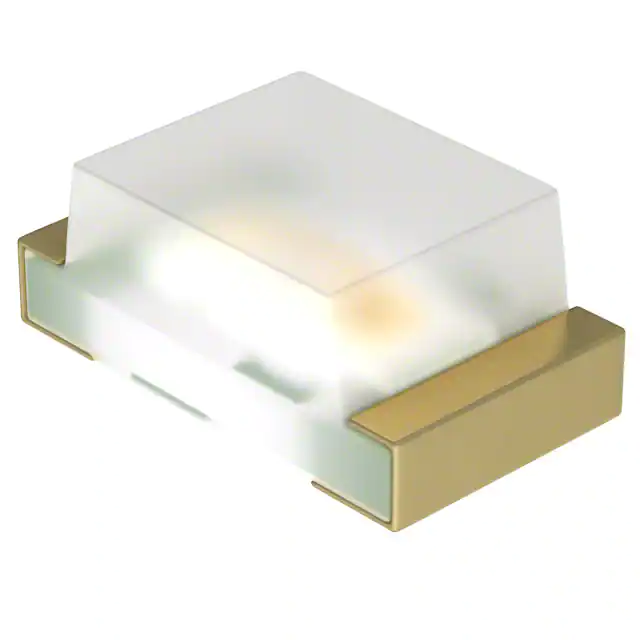
ALS-PT19-315C/L177/TR8
Everlight Electronics Co Ltd
-
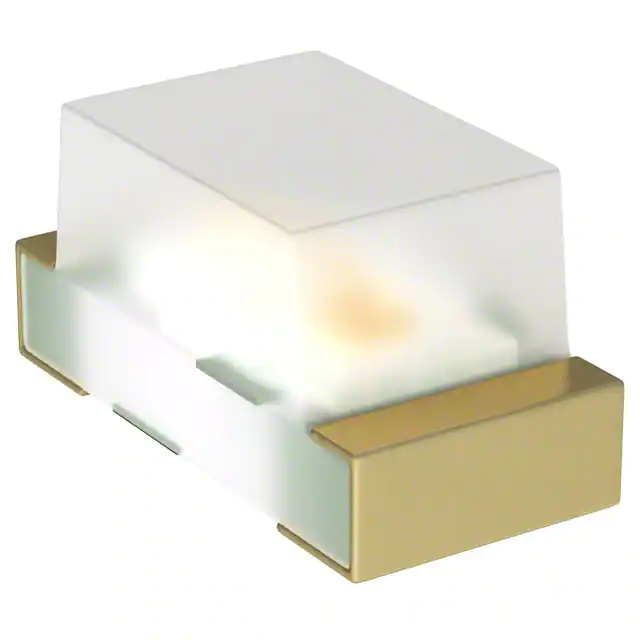
PT19-21C/L41/TR8
Everlight Electronics Co Ltd
-
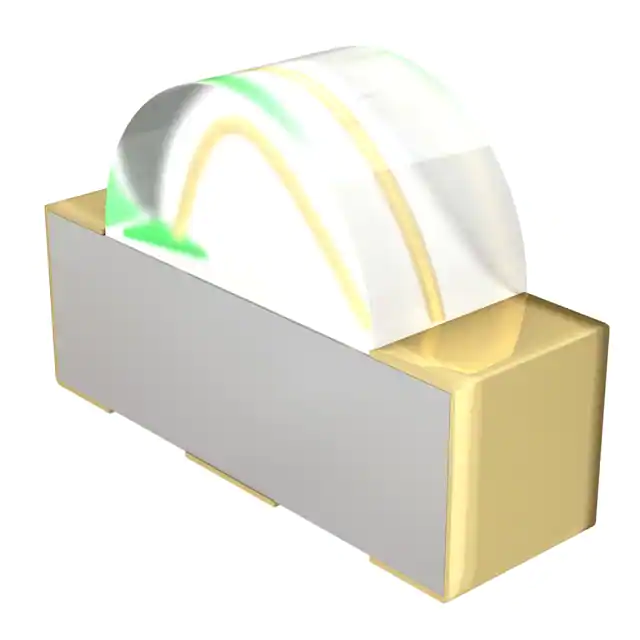
PT12-21C/TR8
Everlight Electronics Co Ltd
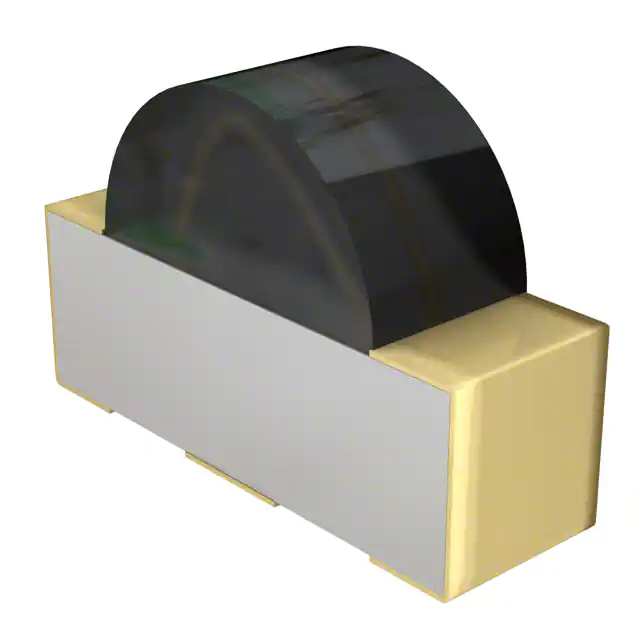
-
PT12-21B/TR8
Everlight Electronics Co Ltd

-
ALS-PT204-6C/L177
Everlight Electronics Co Ltd
.jpg)
-
APA3010P3BT-GX
Kingbright

-
PT26-51B/TR8(DGK)
Everlight Electronics Co Ltd
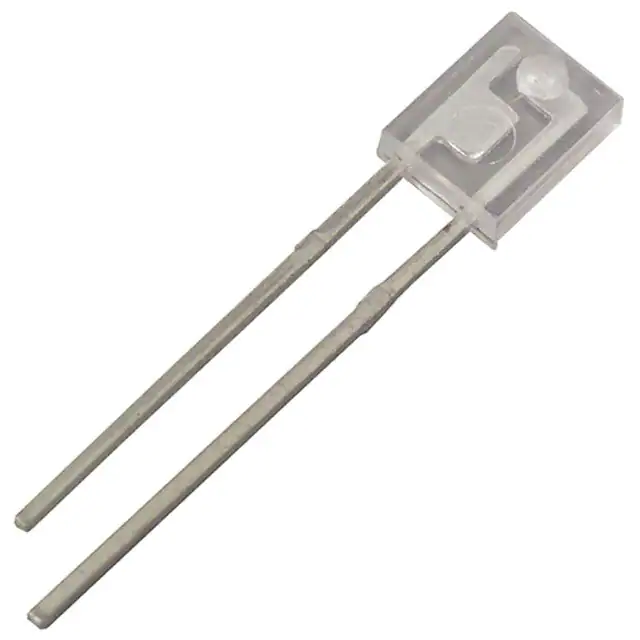
-
OP550A
TT Electronics/Optek Technology
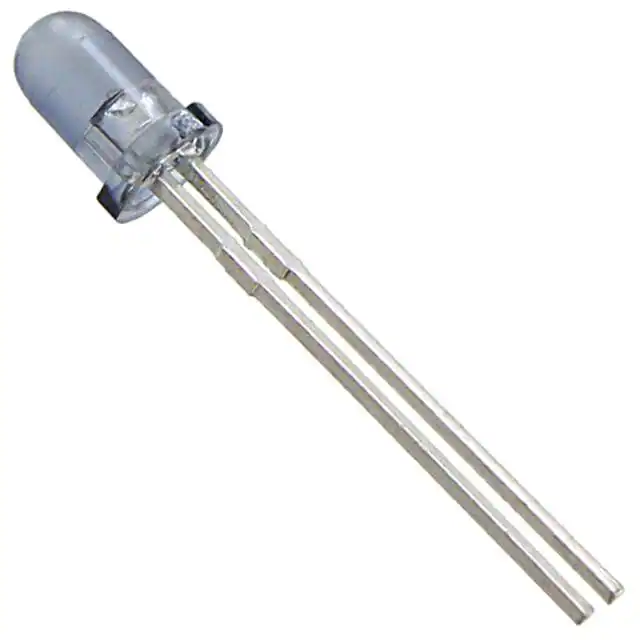
-
OP505A
TT Electronics/Optek Technology
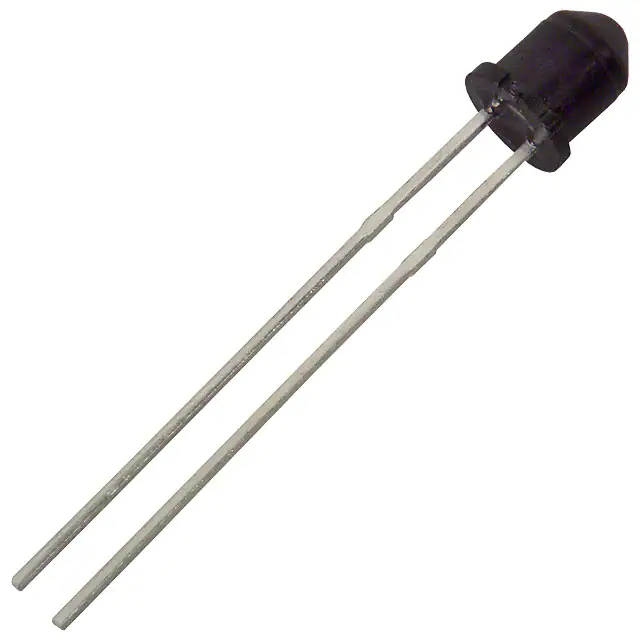
-
OP598A
TT Electronics/Optek Technology

-
PT42-21B/TR8
Everlight Electronics Co Ltd
-
QSB363ZR
onsemi
Tech Hub
Comparator circuit design covering voltage thresholds, input limits, open-collector outputs, LM393 wiring, op-amp differences, hysteresis, timing, window detection and practical fault diagnosis.
Schmitt triggers use separate rising and falling thresholds to stabilize slow or noisy signals. This guide covers hysteresis, 74HC14 and 74HCT14 selection, comparator calculations, RC oscillators and p…
Counterfeit components can hide behind convincing markings and passing basic function tests. This engineering reference covers source traceability, external inspection, X-ray, XRF, electrical testing, …
A practical engineering and sourcing framework covering lifecycle verification, lifetime-buy calculations, replacement qualification, supplier checks and counterfeit-risk controls.
TTL and CMOS logic families differ in thresholds, loading, output drive, power and timing. This engineering guide compares 74HC and 74HCT, calculates noise margins and checks 3.3 V/5 V compatibility.
A practical engineering guide to 3.3V and 5V logic compatibility, input thresholds, resistor dividers, translator ICs, MOSFET level shifting, I2C pull-ups, timing limits and power-sequencing risks.
The 74HC595 uses push-pull logic outputs, while the TPIC6B595 uses 50 V open-drain DMOS sinks for higher-power loads. This guide compares timing, current limits, 3.3 V interfacing, load wiring, thermal…
The 74HC595 converts serial data into eight stable parallel outputs. This guide covers pin functions, shift and storage timing, OE and MR behavior, drive-current limits, cascading, voltage compatibilit…
A technical comparison of level-sensitive latches and edge-triggered flip-flops, covering timing windows, setup and hold limits, master–slave operation, time borrowing, race-through, HDL inference and…
A D latch stores one bit while Enable controls when data can pass. This reference covers gate-level operation, truth tables, transparency, setup and hold timing, LE versus OE, common ICs and practical …