Qorvo TGL2226-SM
- Part No.:
- TGL2226-SM
- Manufacturer:
- Qorvo
- Category:
- Attenuators
- Package:
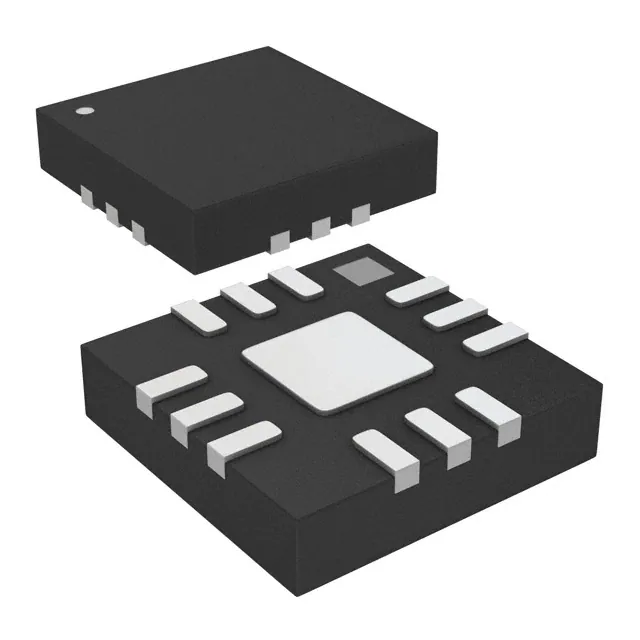
- 16-LFQFN Exposed Pad
- Datasheet:
-
TGL2226-SM.pdf
- Description:
- 0.1-15 GHZ 6-BIT, 31.5DB RANGE D
- Quantity:
- Payment:

- Shipping:

Inventory:3,954
Please send an inquiry. Send us your inquiry, and we will respond immediately.
Product details
Overview
TGL2226-SM from Qorvo is a GaAs pHEMT MMIC low-noise amplifier (LNA) operating from 24 to 44 GHz, delivering 17 dB small-signal gain, 2.5 dB noise figure, and +12 dBm output P1dB in a 3 mm × 3 mm 16-pin QFN package - used in 5G mmWave base station receive chains and point-to-point radio front-ends.
For engineers reviewing the TGL2226-SM datasheet, pinout, applications, or equivalent options, key selection criteria include its 24–44 GHz bandwidth coverage, integrated bias network, ESD-protected I/Os, and compatibility with high-frequency PCB materials like Rogers 4350B.
Technical Context
The TGL2226-SM employs a single-stage GaAs pHEMT design with on-chip input/output matching networks optimized for 50 Ω systems across 24–44 GHz. It integrates DC blocking capacitors and RF chokes to simplify external component count.
Bias is applied via a single positive supply (VDD = +3 V to +5 V), with internal active bias circuitry maintaining stable quiescent current (IDQ = 60 mA typical) over temperature and process variation - enabling robust operation in outdoor wireless infrastructure.
Key Specifications
| Parameter | Value and Actual Design Meaning |
|---|---|
| Frequency Range | 24–44 GHz - fully characterized band supports n257/n258/n260 5G FR2 and E-band point-to-point links |
| Small-Signal Gain | 17 dB ±1 dB - sufficient for cascaded LNA stages without intermediate filtering |
| Noise Figure | 2.5 dB max at 38 GHz - enables high sensitivity in low-SNR mmWave receivers |
| Output P1dB | +12 dBm - supports wide dynamic range before compression in multi-carrier systems |
| Supply Voltage | +3 V to +5 V - compatible with standard telecom power rails and simplifies system-level voltage regulation |
| Package | 3 mm × 3 mm, 16-pin QFN - surface-mountable with exposed thermal pad for efficient heat dissipation |
Pinout & Package
Package: 3 mm × 3 mm, 16-pin QFN with exposed thermal pad (EP). RoHS-compliant, lead-free, moisture-sensitive level 3.
| Pin/Terminal | Circuit Role | Design Meaning |
|---|---|---|
| VDD1, VDD2 | DC supply inputs | Separate bias paths for gate and drain; enable independent optimization of stability and linearity |
| RF_IN, RF_OUT | Matched RF ports | 50 Ω matched; DC-coupled with integrated blocking caps - eliminates external DC blocks |
| GND1–GND8 | Ground terminals | Multiple low-inductance ground connections reduce parasitic loop area and improve high-frequency stability |
| EP | Exposed thermal pad | Must be soldered to PCB thermal plane for junction temperature control below 125°C |
Key Features
| Feature | Design Value |
|---|---|
| Integrated bias network | Reduces external component count by ≥4 passive parts per stage - accelerates RF layout and lowers BOM cost |
| ESD-protected I/Os | Withstands ≥500 V HBM - eliminates need for external TVS diodes in production assembly |
| On-chip input/output matching | Enables direct 50 Ω interface without tuning stubs or lumped elements - improves repeatability across PCB lots |
| Active bias stabilization | Maintains IDQ within ±10% over −40°C to +85°C - ensures consistent gain/noise performance in uncontrolled environments |
Applications
| 5G FR2 Base Station Receiver | E-band Point-to-Point Radio |
|---|---|
Use Scenario: Receive path in massive MIMO active antenna units operating in n257/n258 bands. IC Role / Device Role / Timing Role: First-stage LNA providing signal amplification prior to downconversion and digitization. Use Value: 2.5 dB NF and 17 dB gain preserve SNR margin for high-order modulation (e.g., 1024-QAM) under weak signal conditions. | Use Scenario: High-capacity backhaul link between cell sites using 71–76 GHz or 81–86 GHz bands. IC Role / Device Role / Timing Role: Low-noise front-end amplifier in dual-polarized transceiver modules. Use Value: +12 dBm P1dB supports >100 MHz channel bandwidths while maintaining linearity for multi-carrier OFDM signals. |
| Automotive Radar Test Equipment | Millimeter-Wave Spectrum Analyzer Front-End |
Use Scenario: Signal conditioning in 77–81 GHz radar target simulator calibration fixtures. IC Role / Device Role / Timing Role: Wideband LNA used to amplify reflected chirp signals before digitization. Use Value: 24–44 GHz bandwidth allows reuse across multiple radar bands (e.g., 24 GHz ISM, 77 GHz automotive) with minimal reconfiguration. | Use Scenario: Input stage of portable mmWave spectrum analyzers requiring broadband sensitivity. IC Role / Device Role / Timing Role: Pre-amplifier boosting weak swept signals before mixer downconversion. Use Value: Integrated 50 Ω matching and ESD protection eliminate external matching networks - reducing measurement uncertainty and improving test repeatability. |
Equivalent & Alternatives
The following parts are listed as comparable options for similar low-noise amplifier applications.
| Alternative Part | Technical Difference | Application Difference | Selection Advice |
|---|---|---|---|
| QPL9057 | Narrower bandwidth (26–35 GHz); lower NF (2.0 dB); same 3 mm × 3 mm QFN package | Optimized for 28 GHz 5G fixed wireless access; less suitable for full 24–44 GHz sweep applications | Select when prioritizing lowest possible noise figure over bandwidth breadth |
| MACOM MAAL-011100 | Wider bandwidth (18–44 GHz); higher NF (3.0 dB); requires external bias network | Supports sub-6 GHz legacy radar coexistence; adds ≥6 external passives for stable biasing | Select when system-level flexibility across microwave/mmWave bands outweighs board space constraints |
Compared with QPL9057 and MAAL-011100, the TGL2226-SM uniquely balances 24–44 GHz coverage, integrated bias, and 2.5 dB NF - making it optimal for compact, production-ready 5G mmWave receiver designs where layout simplicity and thermal management are critical.
Availability
TGL2226-SM is available at Aetrix Electronics and suitable for 5G infrastructure, point-to-point radio, and test equipment applications requiring stable component supply despite end-of-life status.
Supply support for TGL2226-SM includes scheduled delivery planning, volume procurement assistance, BOM continuity management, traceable sourcing, and lifecycle availability coordination for OEM customers, industrial embedded developers, connected-device designers, and electronics production programs.
Manufacturer
Qorvo is a U.S.-based fabless semiconductor company specializing in RF, power, and defense technologies with global manufacturing and design centers.
The TGL2226-SM belongs to Qorvo's high-frequency GaAs MMIC amplifier product line, engineered for millimeter-wave infrastructure and instrumentation where broadband low-noise gain and thermal reliability are essential.
FAQ
Is the TGL2226-SM still in production?
No - the TGL2226-SM has been officially discontinued by Qorvo. Aetrix Electronics maintains limited legacy stock and supports last-time-buy coordination, but no new wafer starts are planned. Customers should consult Qorvo's PCN documentation for formal EOL timelines and replacement guidance specific to the TGL2226-SM.
What is the recommended replacement for the TGL2226-SM?
Qorvo recommends the QPL9057 as the nearest functional replacement for the TGL2226-SM, particularly for 28 GHz 5G FWA applications. While the QPL9057 offers lower noise figure (2.0 dB), its narrower 26–35 GHz bandwidth means it does not fully cover the TGL2226-SM's 24–44 GHz range. System validation is required before substituting the QPL9057 for the TGL2226-SM.
Can the TGL2226-SM operate with a 3.3 V supply?
Yes - the TGL2226-SM supports VDD from +3 V to +5 V. At +3.3 V, typical IDQ is 60 mA, gain remains 17 dB, and noise figure increases only marginally to 2.6 dB at 38 GHz. This makes the TGL2226-SM compatible with common 3.3 V telecom power domains without derating.
Does the TGL2226-SM require external matching components?
No - the TGL2226-SM features fully integrated input and output matching networks designed for 50 Ω systems across 24–44 GHz. External matching is unnecessary for nominal operation; only DC blocking capacitors and RF chokes are omitted from the die, and those functions are implemented internally. The TGL2226-SM pinout reflects this integration with dedicated VDD and GND pins eliminating external bias networks.
What thermal management is required for the TGL2226-SM?
The TGL2226-SM requires soldering of its exposed thermal pad (EP) to a minimum 10 mm² copper thermal plane on the PCB. With 60 mA IDQ at +5 V, power dissipation is ~300 mW; junction temperature must stay ≤125°C. Thermal vias (≥6×0.3 mm diameter) under the EP are mandatory for continuous operation in ambient temperatures up to +85°C - verified in Qorvo's TGL2226-SM thermal characterization report.
TGL2226-SM Specifications
- Product attributes
- Attribute value
- Manufacturer:
- Qorvo
- Package/Case:
- 16-LFQFN Exposed Pad
- Series:
- -
- Packaging:
- Tray
- Product Status:
- Active
- Attenuation Value:
- 0dB
- Frequency Range:
- 100 MHz ~ 15 GHz
- Power (Watts):
- 700mW
- Impedance:
- 50 Ohms
- Grade:
- -
- Qualification:
- -
TGL2226-SM FAQ
1.How can I place an order for TGL2226-SM through Aetrix?
Please submit a Request for Quotation (RFQ) for TGL2226-SM on Aetrix. Our sales agent will provide a competitive quotation and guide you through the order confirmation once you accept the terms.
2.Are the price and stock information for TGL2226-SM reliable?
The price and inventory of TGL2226-SM are updated periodically and may fluctuate due to market conditions. Stock and pricing data are typically refreshed every 24 hours. Quotation validity for TGL2226-SM is usually 5 days.
3.What payment methods are accepted for TGL2226-SM?
We accept Wire Transfer, PayPal, Credit Card, Western Union, MoneyGram, and Escrow for TGL2226-SM transactions.
Note: Certain payment methods may incur a processing fee.
4.How is shipping managed for TGL2226-SM?
TGL2226-SM orders can be shipped via leading logistics carriers, including DHL, UPS, FedEx, TNT, or Registered Mail.
Once your TGL2226-SM order is processed, you will receive an email with the shipment details and tracking number.
Note: Tracking information may take up to 24 hours to appear. Express delivery typically takes 3–5 business days.
5.How can I obtain technical support or documentation for TGL2226-SM?
For technical support, including TGL2226-SM datasheets, pinout diagrams, or application guidance, please contact our engineering support team. They can provide detailed documentation and assistance for your TGL2226-SM requirements.
6.How does Aetrix verify that TGL2226-SM is sourced from the original manufacturer or authorized distributors?
All TGL2226-SM products on Aetrix are procured from qualified distributors and authorized channels. Our dedicated quality assurance team conducts strict verification, including traceability checks and, if necessary, third-party testing. This ensures that TGL2226-SM meets industry standards.
7.What is the process for return or replacement of TGL2226-SM?
All TGL2226-SM units undergo pre-shipment inspection (PSI). If there is an issue with TGL2226-SM, returns or replacements are accepted under the following conditions:
1.Quantity discrepancies, incorrect items, or visible external defects (such as breakage or corrosion), acknowledged by Aetrix.
2.The issue is reported within 90 days of delivery.
3.The TGL2226-SM part is unused and in its original packaging.
Return procedure for TGL2226-SM:
1.Submit a request within 90 days.
2.Obtain a Return Material Authorization (RMA) from Aetrix.
TGL2226-SM Tags

-
PAT0510S-C-3DB-T10
Susumu

-
PAT0510S-C-10DB-T10
Susumu

-
PAT0510S-C-2DB-T10
Susumu
-
PAT1220-C-10DB-T5
Susumu

-
PAT1220-C-6DB-T5
Susumu

-
PAT1220-C-0DB-T5
Susumu

-
PAT1220-C-3DB-T5
Susumu

-
PAT1220-C-5DB-T5
Susumu

-
PAT1220-C-8DB-T5
Susumu
-
MAADSS0008TR-3000
MACOM Technology Solutions

-
MAATSS0018TR-3000
MACOM Technology Solutions
-
PE43205B-Z
pSemi
Tech Hub
Comparator circuit design covering voltage thresholds, input limits, open-collector outputs, LM393 wiring, op-amp differences, hysteresis, timing, window detection and practical fault diagnosis.
Schmitt triggers use separate rising and falling thresholds to stabilize slow or noisy signals. This guide covers hysteresis, 74HC14 and 74HCT14 selection, comparator calculations, RC oscillators and p…
Counterfeit components can hide behind convincing markings and passing basic function tests. This engineering reference covers source traceability, external inspection, X-ray, XRF, electrical testing, …
A practical engineering and sourcing framework covering lifecycle verification, lifetime-buy calculations, replacement qualification, supplier checks and counterfeit-risk controls.
TTL and CMOS logic families differ in thresholds, loading, output drive, power and timing. This engineering guide compares 74HC and 74HCT, calculates noise margins and checks 3.3 V/5 V compatibility.
A practical engineering guide to 3.3V and 5V logic compatibility, input thresholds, resistor dividers, translator ICs, MOSFET level shifting, I2C pull-ups, timing limits and power-sequencing risks.
The 74HC595 uses push-pull logic outputs, while the TPIC6B595 uses 50 V open-drain DMOS sinks for higher-power loads. This guide compares timing, current limits, 3.3 V interfacing, load wiring, thermal…
The 74HC595 converts serial data into eight stable parallel outputs. This guide covers pin functions, shift and storage timing, OE and MR behavior, drive-current limits, cascading, voltage compatibilit…
A technical comparison of level-sensitive latches and edge-triggered flip-flops, covering timing windows, setup and hold limits, master–slave operation, time borrowing, race-through, HDL inference and…
A D latch stores one bit while Enable controls when data can pass. This reference covers gate-level operation, truth tables, transparency, setup and hold timing, LE versus OE, common ICs and practical …