
 My Inquiry
 My Account


Infineon Technologies TLE7250GXUMA1
- Part No.:
- TLE7250GXUMA1
- Manufacturer:
- Infineon Technologies
- Category:
- Drivers, Receivers, Transceivers
- Package:
- 8-SOIC (0.154", 3.90mm Width)
- Datasheet:
-
 TLE7250GXUMA1.pdf
- Description:
- IC TRANSCEIVER HALF 1/1 PGDSO8
- Quantity:
- Payment:

- Shipping:

Inventory:3,509
Please send an inquiry. Send us your inquiry, and we will respond immediately.
Product details
Overview
TLE7250GXUMA1 from Infineon Technologies is a high-speed CAN transceiver for automotive and industrial networks, compliant with ISO 11898-2, supporting up to 1 Mbps data rate, operating from 4.5 V to 5.5 V supply, featuring integrated overtemperature and short-circuit protection, and used as the physical-layer interface between CAN controllers and differential bus lines in ECU designs.
For engineers reviewing the TLE7250GXUMA1 datasheet, TLE7250GXUMA1 pinout, TLE7250GXUMA1 application, or TLE7250GXUMA1 equivalent, key selection criteria include bus fault tolerance (CANH/CANL short-circuit proof to ground, battery, and VCC), power-down state leakage (<1 µA), mode control via NEN/NRM pins, and AEC-Q100 qualification for under-hood deployment.
Technical Context
The TLE7250GXUMA1 implements a fully differential HS-CAN physical layer with symmetrical CANH/CANL slew-rate control to minimize electromagnetic emission (EME) across 1–100 MHz. Its receiver detects dominant states at VDIFF ≥ 1.5 V and recessive states at VDIFF ≤ 0.5 V per ISO 11898-2.
It supports three operational modes-normal (transmit + receive), receive-only, and stand-by-selected via dual logic inputs (NEN, NRM) with internal pull-ups. In power-down, input resistance exceeds 1 MΩ and bus leakage drops below 1 µA, enabling robust operation in partially-supplied CAN networks.
Key Specifications
| Parameter | Value and Actual Design Meaning |
|---|---|
| Data Rate | Up to 1 Mbps - enables real-time communication in powertrain and chassis ECUs. |
| Supply Voltage | 4.5 V to 5.5 V - accommodates automotive battery variations including cold-crank conditions. |
| Common-Mode Range | −2 V to 14 V - ensures immunity against load-dump and jump-start transients. |
| Bus Leakage (Power-down) | <1 µA - prevents bus disturbance when node is unpowered in mixed-supply networks. |
| ESD Immunity | ±8 kV HBM - meets IEC 61000-4-2 Level 4 for robustness in assembly and field environments. |
| Thermal Protection | Activation at Tj > 160 °C - shuts down output stage to prevent latch-up during overheating. |
| Fail-Safe Features | TxD time-out, undervoltage lockout, unconnected pin detection - eliminates undefined bus behavior during controller faults. |
Pinout & Package
Package: PG-DSO-8 (RoHS-compliant, surface-mount, 8-pin SOIC variant with exposed thermal pad).
| Pin/Terminal | Circuit Role | Design Meaning |
|---|---|---|
| 1 TxD | Transmit Data Input | CMOS-level input from CAN controller; internal pull-up to VCC; "low" = dominant bus state. |
| 2 GND | Ground Reference | Primary return path for VCC and bus drivers; must be low-inductance connection to minimize EMI. |
| 3 VCC | Supply Voltage | 4.5–5.5 V transceiver supply; requires 100 nF decoupling capacitor to GND at pin. |
| 4 RxD | Receive Data Output | CMOS-level output to CAN controller; "low" during dominant bus state. |
| 5 NRM | Not Receive-only Mode Input | Active-low control; "low" enables receive-only mode; internal pull-up to VCC. |
| 6 CANL | CAN Bus Low I/O | Differential bus terminal; sinks current in dominant state; short-circuit protected to GND/VCC/battery. |
| 7 CANH | CAN Bus High I/O | Differential bus terminal; sources current in dominant state; symmetric slew rate with CANL. |
| 8 NEN | Not Enable Input | Active-low mode enable; "low" activates normal or receive-only mode; internal pull-up to VCC. |
Key Features
| Feature | Design Value |
|---|---|
| ISO 11898-2 Compliance | Fully compliant - guarantees interoperability with all standard HS-CAN nodes without protocol translation. |
| Partially-Supplied Network Support | High-impedance power-down state - allows live bus operation while individual nodes are unpowered. |
| Integrated Fail-Safe Logic | TxD time-out + undervoltage lockout + open-pin detection - prevents bus lockup during MCU reset or brownout. |
| Low EME/High EMI Immunity | Optimized driver symmetry + wide common-mode range - reduces radiated emissions and improves noise rejection in dense ECU layouts. |
| AEC-Q100 Qualified | Grade 1 (−40 °C to +125 °C ambient) - validated for engine bay, transmission, and ADAS module placement. |
Applications
| Powertrain Control Unit | Advanced Driver Assistance System |
|---|---|
Use Scenario: Real-time torque and throttle actuation commands exchanged between engine ECU and transmission control unit. IC Role / Device Role / Timing Role: Physical-layer transceiver translating CAN controller serial frames into differential bus signals with <100 ns propagation delay. Use Value: Enables deterministic 1 Mbps messaging required for closed-loop combustion control and gearshift timing synchronization. | Use Scenario: Sensor fusion data (radar, camera, ultrasonic) aggregated across distributed ADAS ECUs via CAN FD backbone. IC Role / Device Role / Timing Role: HS-CAN interface ensuring bit-accurate reception of time-critical object detection packets with <500 ns jitter. Use Value: Maintains bus integrity during ESD events near windshield-mounted sensors and resists conducted noise from DC-DC converters. |
| Body Control Module | Electric Power Steering |
Use Scenario: Centralized lighting, door lock, and climate control coordination across multiple body domain ECUs. IC Role / Device Role / Timing Role: Robust bus node with receive-only mode for diagnostic monitoring without bus arbitration conflict. Use Value: Reduces quiescent current to <10 µA in sleep mode while retaining wake-on-CAN capability via external logic. | Use Scenario: Torque feedback loop between steering angle sensor, motor driver, and main EPS controller. IC Role / Device Role / Timing Role: Fault-tolerant transceiver with short-circuit protection on CANH/CANL to survive motor winding faults. Use Value: Prevents bus collapse during phase-to-phase shorts in 12 V EPS motor drives, maintaining safety-critical communication. |
Equivalent & Alternatives
The following parts are listed as comparable options for similar high-speed CAN transceiver applications.
| Alternative Part | Technical Difference | Application Difference | Selection Advice |
|---|---|---|---|
| TJA1042T/3 | Includes wake-up capability via WAKE pin; slightly higher VIO tolerance (5.5 V); no NRM pin - receive-only mode not supported. | Required where local wake-up from sleep is needed; unsuitable for partial-network receive-only monitoring. | Select if wake-up functionality is mandatory and receive-only mode is unnecessary. |
| SN65HVD230DR | Non-AEC qualified; lower ESD rating (±4 kV); no overtemperature shutdown; wider supply range (3–5.5 V). | Limited to non-automotive industrial use; cannot be deployed in under-hood or safety-critical systems. | Select only for cost-sensitive, non-automotive CAN nodes with no thermal or transient stress requirements. |
Compared with TJA1042T/3 and SN65HVD230DR, the TLE7250GXUMA1 uniquely combines AEC-Q100 Grade 1 qualification, receive-only mode control (NRM), and sub-1 µA power-down leakage-making it optimal for mixed-supply automotive domains requiring fail-safe bus monitoring without wake-up overhead.
Availability
TLE7250GXUMA1 is available at Aetrix Electronics and suitable for powertrain control units, ADAS domain controllers, and electric power steering modules requiring stable component supply, long-term automotive lifecycle support, and traceable RoHS-compliant sourcing.
Supply support for TLE7250GXUMA1 includes scheduled delivery planning, volume procurement assistance, BOM continuity management, traceable sourcing, and lifecycle availability coordination for OEM customers, industrial embedded developers, connected-device designers, and electronics production programs.
Manufacturer
Infineon Technologies is a German semiconductor manufacturer specializing in power management, automotive ICs, and security solutions, with global manufacturing and AEC-Q100 validation infrastructure.
The TLE7250GXUMA1 belongs to Infineon's automotive CAN transceiver product line, designed specifically for robust, high-reliability HS-CAN communication in engine, chassis, and safety-critical electronic control units.
FAQ
Is TLE7250GXUMA1 pin-compatible with TLE6250G?
Yes, TLE7250GXUMA1 is functionally and pin-compatible with TLE6250G, though pin 5 (RM → NRM) and pin 8 (INH → NEN) have renamed symbols. The electrical functions and layout remain identical, enabling drop-in replacement in existing designs without PCB revision.
What is the maximum allowable bus capacitance for reliable 1 Mbps operation?
The TLE7250GXUMA1 supports 1 Mbps operation with total bus capacitance up to 44 pF per node, as verified in Infineon's application note AN2012-07. Exceeding this value increases rise/fall time asymmetry and may cause bit errors in long stub configurations.
Does TLE7250GXUMA1 support CAN FD physical layer?
No, TLE7250GXUMA1 is strictly compliant with ISO 11898-2 for classical HS-CAN (up to 1 Mbps). It does not support the higher data rates, variable bit timing, or improved error detection of CAN FD, which requires ISO 11898-2:2016-compliant transceivers like TJA1044.
How is the TxD time-out function implemented and what is its timeout duration?
The TxD time-out function disables the transmitter after detecting >5 dominant bits without a recessive transition, preventing bus lockup during controller faults. Timeout duration is fixed at approximately 20 µs (equivalent to five bit times at 1 Mbps), and recovery occurs automatically upon next recessive TxD edge.
TLE7250GXUMA1 Specifications
- Product attributes
- Attribute value
- Manufacturer:
- Infineon Technologies
- Series:
- -
- Package/Case:
- 8-SOIC (0.154", 3.90mm Width)
- Packaging:
- Tape & Reel (TR)
- Product Status:
- Discontinued at Digi-Key
- Type:
- Transceiver
- Protocol:
- CANbus
- Number of Drivers/Receivers:
- 1/1
- Duplex:
- Half
- Receiver Hysteresis:
- 100 mV
- Data Rate:
- 1Mbps
- Voltage - Supply:
- 4.75V ~ 5.25V
- Operating Temperature:
- -
- Grade:
- -
- Qualification:
- -
- Mounting Type:
- Surface Mount
- Supplier Device Package:
- PG-DSO-8
TLE7250GXUMA1 FAQ
1.How can I place an order for TLE7250GXUMA1 through Aetrix?
Please submit a Request for Quotation (RFQ) for TLE7250GXUMA1 on Aetrix. Our sales agent will provide a competitive quotation and guide you through the order confirmation once you accept the terms.
2.Are the price and stock information for TLE7250GXUMA1 reliable?
The price and inventory of TLE7250GXUMA1 are updated periodically and may fluctuate due to market conditions. Stock and pricing data are typically refreshed every 24 hours. Quotation validity for TLE7250GXUMA1 is usually 5 days.
3.What payment methods are accepted for TLE7250GXUMA1?
We accept Wire Transfer, PayPal, Credit Card, Western Union, MoneyGram, and Escrow for TLE7250GXUMA1 transactions.
Note: Certain payment methods may incur a processing fee.
4.How is shipping managed for TLE7250GXUMA1?
TLE7250GXUMA1 orders can be shipped via leading logistics carriers, including DHL, UPS, FedEx, TNT, or Registered Mail.
Once your TLE7250GXUMA1 order is processed, you will receive an email with the shipment details and tracking number.
Note: Tracking information may take up to 24 hours to appear. Express delivery typically takes 3–5 business days.
5.How can I obtain technical support or documentation for TLE7250GXUMA1?
For technical support, including TLE7250GXUMA1 datasheets, pinout diagrams, or application guidance, please contact our engineering support team. They can provide detailed documentation and assistance for your TLE7250GXUMA1 requirements.
6.How does Aetrix verify that TLE7250GXUMA1 is sourced from the original manufacturer or authorized distributors?
All TLE7250GXUMA1 products on Aetrix are procured from qualified distributors and authorized channels. Our dedicated quality assurance team conducts strict verification, including traceability checks and, if necessary, third-party testing. This ensures that TLE7250GXUMA1 meets industry standards.
7.What is the process for return or replacement of TLE7250GXUMA1?
All TLE7250GXUMA1 units undergo pre-shipment inspection (PSI). If there is an issue with TLE7250GXUMA1, returns or replacements are accepted under the following conditions:
1.Quantity discrepancies, incorrect items, or visible external defects (such as breakage or corrosion), acknowledged by Aetrix.
2.The issue is reported within 90 days of delivery.
3.The TLE7250GXUMA1 part is unused and in its original packaging.
Return procedure for TLE7250GXUMA1:
1.Submit a request within 90 days.
2.Obtain a Return Material Authorization (RMA) from Aetrix.
TLE7250GXUMA1 Tags

-
ATA6561-GAQW-N
Microchip Technology
-
ATA6561-GBQW-N
Microchip Technology
-
AM26LS32ACDR
Texas Instruments

-
SP485CN-L/TR
MaxLinear, Inc.
-
SP485EN-L/TR
MaxLinear, Inc.
-
SP485EEN-L/TR
MaxLinear, Inc.
-
SP485ECN-L/TR
MaxLinear, Inc.
-
THVD1400DR
Texas Instruments
-
AM26C31IDR
Texas Instruments

-
TLIN1021ADRQ1
Texas Instruments
-
MAX232IDR
Texas Instruments
-
AM26C32IDR
Texas Instruments
Tech Hub

Conditional Access Module guide covering CAM meaning, CI/CI+ interface, smart card authorization, DVB security workflow, TV and set-top box compatibility, internal electronics, ESD protection, connecto…

Guide to electronic component obsolescence covering EOL risk, PCN/PDN notices, last-time buy planning, replacement options, form-fit-function validation, counterfeit risk and BOM lifecycle management.

18650 battery guide covering lithium-ion cell basics, 3.6V/3.7V voltage, 4.2V charging, mAh and Wh capacity, protected cells, chargers, BMS, series-parallel packs, holders, welding and sourcing checks.…

Hall effect sensor guide covering working principle, linear and digital sensors, Arduino circuits, current sensing, speed detection, automotive applications, A3144 examples, signal filtering and datash…

Product Change Notification guide for electronic components, covering PCN meaning, PCN vs PDN/EOL, common change types, risk levels, form-fit-function review, engineering validation, BOM control, LTB/L…

A practical guide to blend door actuators, covering HVAC function, symptoms, location, AC and heater issues, reset and calibration, replacement cost, electrical diagnosis, compatibility checks, and rep…

Engineering guide to Raspberry Pi alternatives, covering chip-level differences, Orange Pi, ROCK, Jetson, Banana Pi, NanoPi, Compute Module, Pico, GPIO, camera, HAT compatibility, and replacement risks…
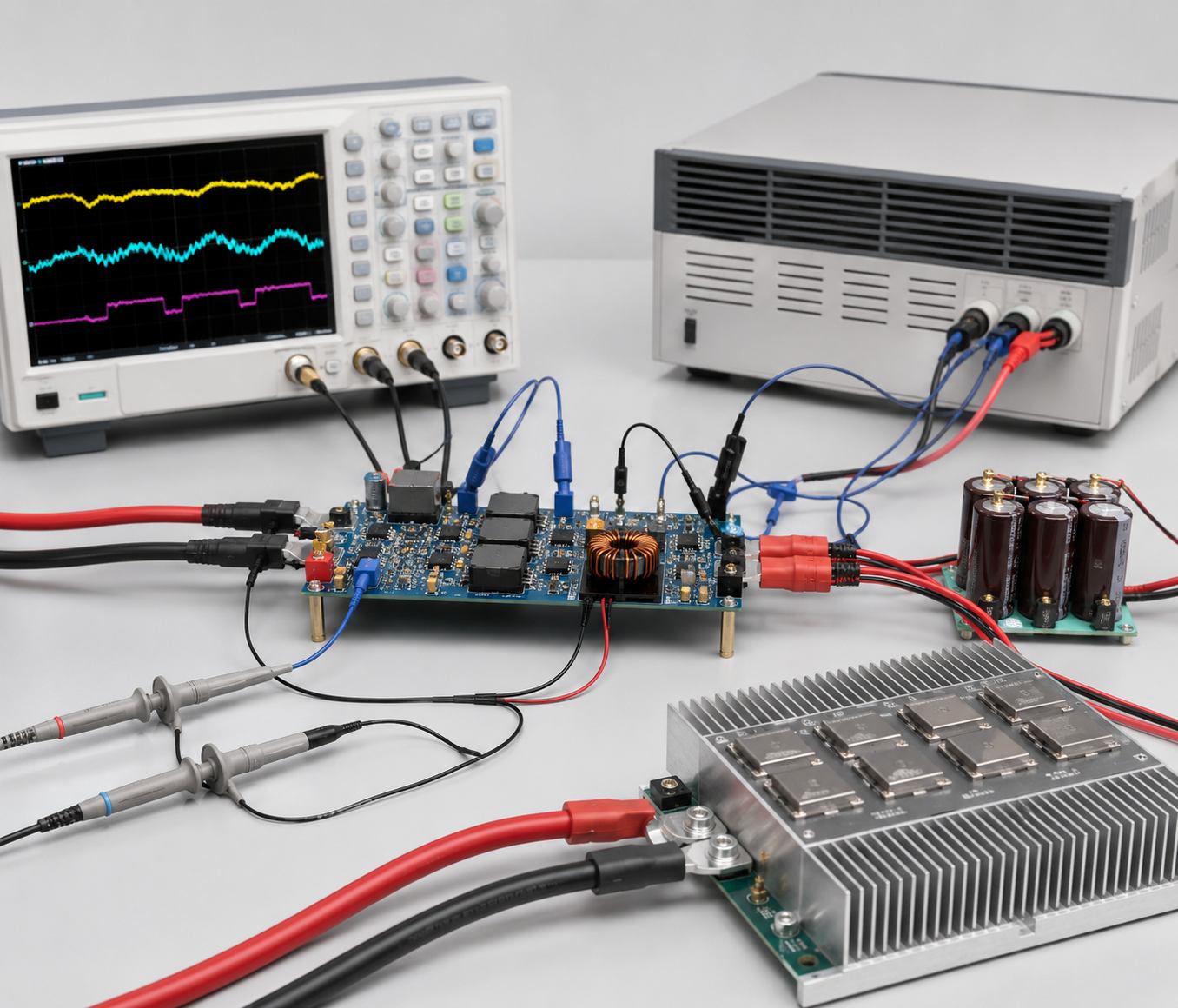
Engineering guide to dynamic load response testing for high-current buck converters, covering load step setup, slew rate, Vcore undershoot, overshoot, recovery time, probe location, output capacitors a…
Engineering guide to output capacitor selection for ASIC Vcore rails, covering bulk capacitors, polymer capacitors, MLCC decoupling, DC bias, ESR, ESL, placement, transient response and substitution ri…
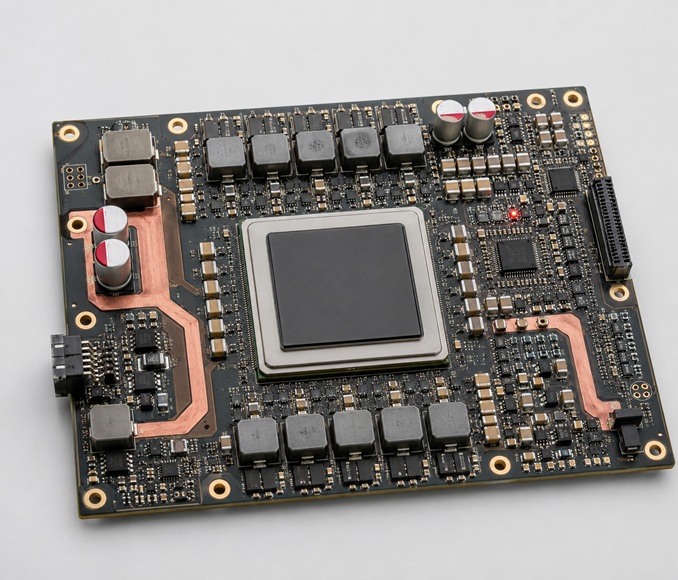
Engineering guide to high-current ASIC Vcore rails, covering 12-phase buck architecture, PMBus control, dynamic load testing, output capacitor networks, smart power stage selection, thermal design and …


