Vishay Semiconductor Opto Division TLVG4200
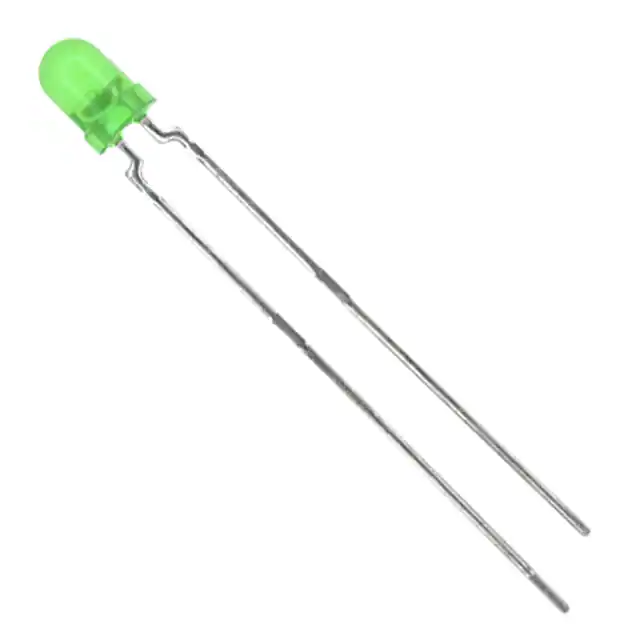
- Part No.:
- TLVG4200
- Manufacturer:
- Vishay Semiconductor Opto Division
- Category:
- LED Indication - Discrete
- Package:
- Radial
- Datasheet:
-
TLVG4200.pdf
- Description:
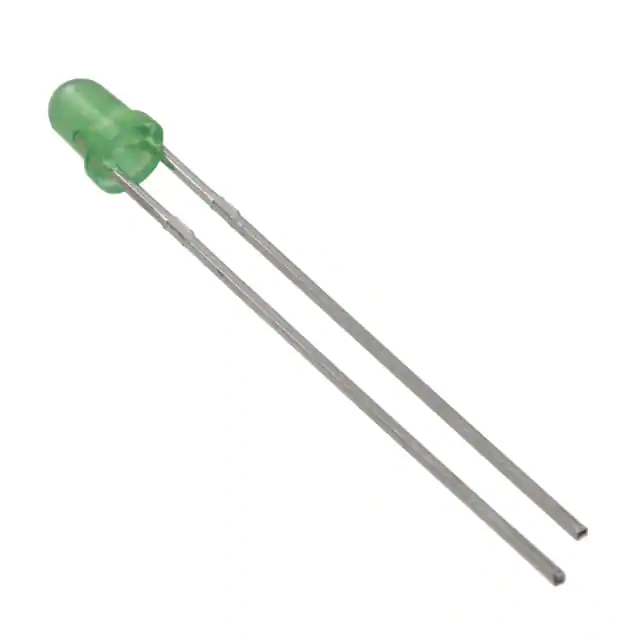
- LED GREEN CLEAR 3MM T/H
- Quantity:
- Payment:

- Shipping:

Inventory:302
Please send an inquiry. Send us your inquiry, and we will respond immediately.
Product details
Overview
TLVG4200 from Vishay Semiconductors is a green backlighting LED in a 3 mm tinted non-diffused package, designed for uniform panel illumination with ±85° viewing angle, 10–30 mlm luminous flux at 15 mA, and 562–575 nm dominant wavelength using GaP-on-GaP technology.
For engineers reviewing the TLVG4200 datasheet, TLVG4200 pinout, TLVG4200 application, or TLVG4200 equivalent, this device supports low-power, high-reliability backlighting in space-constrained industrial displays, switch indicators, and measurement scales where spectral accuracy and wide-angle emission are critical.
Technical Context
The TLVG4200 operates as a discrete visible-light emitter with forward voltage of 2.4–3.0 V at 20 mA and absolute maximum DC forward current of 30 mA at ≤60 °C ambient. Its optical output is characterized by dominant wavelength (562–575 nm) and peak wavelength (555 nm), confirming green spectral purity optimized for human-eye sensitivity in indicator applications.
Thermal performance is defined by junction-to-ambient thermal resistance of 400 K/W and maximum junction temperature of 100 °C, enabling stable operation across –40 to +100 °C ambient range. The device uses a standard 3 mm radial-leaded package with non-diffused lens and tinted clear epoxy, supporting direct mounting without secondary optics in most backlight configurations.
Key Specifications
| Parameter | Value and Actual Design Meaning |
|---|---|
| Luminous flux | 10–30 mlm at 15 mA - defines usable brightness level for legible backlighting under typical ambient conditions |
| Dominant wavelength | 562–575 nm - ensures consistent green color perception across production batches |
| Forward voltage | 2.4–3.0 V at 20 mA - determines minimum supply headroom and series resistor sizing |
| Viewing angle | ±85° half-intensity - provides wide, even illumination without hotspots on flat surfaces |
| Max DC forward current | 30 mA at ≤60 °C - sets continuous drive limit for thermal reliability in sealed enclosures |
| Junction-to-ambient Rth | 400 K/W - quantifies self-heating impact under sustained operation; requires board-level thermal management above 15 mA |
| Operating temperature | –40 to +100 °C - supports deployment in automotive dashboards and industrial HMI panels |
Pinout & Package
TLVG4200 uses a standard 3 mm radial-leaded package with cathode-indicated lead (shorter lead or flat side on housing). No internal circuitry or active terminals - two-terminal diode configuration.
| Pin/Terminal | Circuit Role | Design Meaning |
|---|---|---|
| Anode (longer lead) | Positive terminal | Connects to current-limiting resistor and supply rail; polarity must be observed to avoid reverse breakdown |
| Cathode (shorter lead) | Negative terminal | Typically connected to ground or driver sink; reverse voltage rating is only 5 V - not intended for bidirectional use |
Key Features
| Feature | Design Value |
|---|---|
| Wide viewing angle (±85°) | Enables uniform backlight coverage across LCD segments or keyboard keycaps without reflector redesign |
| Tinted clear package | Preserves spectral purity while reducing ambient light washout in daylight-readable interfaces |
| Categorized luminous flux | Ensures predictable brightness matching within same order bag - eliminates manual binning during assembly |
| Low power dissipation (90 mW max) | Permits dense LED arrays without forced cooling or thermal derating in plastic enclosures |
| Rugged mechanical design | Withstands reflow soldering up to 260 °C for 5 s and survives vibration/shock in transportation equipment |
Applications
| Display Panel Backlighting | Switch & Keypad Indicators |
|---|---|
Use Scenario: Illuminating segmented LCDs in industrial control panels with ambient operating temperatures up to 85 °C. IC Role / Device Role / Timing Role: Discrete green light source driven by constant-current LED driver or microcontroller GPIO with series resistor. Use Value: 30 mlm output and ±85° beam angle ensure full segment visibility without glare or shadowing under variable viewing angles. |
Use Scenario: Providing status indication on membrane switches in medical diagnostic equipment requiring long-term color stability. IC Role / Device Role / Timing Role: Standalone visual feedback element powered from 3.3 V or 5 V rail via current-limiting resistor. Use Value: GaP-on-GaP construction delivers minimal wavelength shift over 10,000 hours, maintaining compliance with IEC 62368-1 visual signaling requirements. |
| Graphic Board Markers | Measuring Scale Illumination |
Use Scenario: Highlighting reference points on PCB test fixtures and calibration jigs used in automated optical inspection systems. IC Role / Device Role / Timing Role: Passive optical marker activated during test sequence; no timing or control interface required. Use Value: Tinted non-diffused lens preserves directional contrast for machine vision cameras detecting LED presence/absence. |
Use Scenario: Backlighting linear analog scales on handheld multimeters and portable instrumentation. IC Role / Device Role / Timing Role: Low-voltage, low-current emitter compatible with battery-powered designs using coin-cell or AA supply. Use Value: 2.4 V typical forward voltage enables direct drive from single alkaline cell (1.5 V) with boost converter or dual-cell (3 V) with minimal dropout loss. |
Equivalent & Alternatives
The following parts are listed as comparable options for similar backlighting LED applications.
| Alternative Part | Technical Difference | Application Difference | Selection Advice |
|---|---|---|---|
| TLVP4200 | Pure green variant with narrower dominant wavelength (555–565 nm) and lower luminous flux (4–20 mlm) | Better color match for monochrome green displays but insufficient brightness for large-area backlighting | Select TLVP4200 when spectral purity outweighs brightness; TLVG4200 preferred for general-purpose green backlighting |
| TLVY4200 | Yellow variant (581–594 nm), same package and viewing angle, higher luminous flux (10–30 mlm) | Used where yellow-green coding improves differentiation from red/green status LEDs in multi-color interfaces | Choose TLVY4200 for ESD-sensitive environments where yellow's lower forward voltage reduces driver stress; TLVG4200 retains native green identity |
Compared with TLVP4200 and TLVY4200, TLVG4200 delivers balanced green chromaticity and mid-range brightness ideal for cost-sensitive, high-volume backlighting where CIE 1931 coordinates must fall within standard green gamut boundaries without requiring binning-level selection.
Availability
TLVG4200 is available at Aetrix Electronics and suitable for display panel backlighting, switch indicators, graphic board markers, and measuring scale illumination requiring stable component supply across extended production cycles.
Supply support for TLVG4200 includes scheduled delivery planning, volume procurement assistance, BOM continuity management, traceable sourcing, and lifecycle availability coordination for OEM customers, industrial embedded developers, connected-device designers, and electronics production programs.
Manufacturer
Vishay Semiconductors is a global manufacturer of discrete semiconductors and passive components, specializing in high-reliability optoelectronics, power MOSFETs, and precision resistors for industrial and automotive markets.
The TLVG4200 belongs to Vishay's TLV.420. series of 3 mm backlighting LEDs, engineered specifically for uniform, low-power illumination of user interfaces where mechanical robustness and spectral consistency are prioritized over ultra-high brightness.
FAQ
What is the maximum continuous forward current for TLVG4200?
The TLVG4200 has an absolute maximum DC forward current of 30 mA at ambient temperatures ≤60 °C. Exceeding this value risks accelerated degradation and thermal runaway. At higher ambient temperatures, derating is required per Figure 1 in the datasheet; for example, at 85 °C ambient, the safe continuous current drops to approximately 20 mA. Always verify thermal margin using the 400 K/W junction-to-ambient resistance value when designing PCB copper area and airflow.
Does TLVG4200 require a current-limiting resistor in series?
Yes, TLVG4200 requires an external current-limiting resistor when driven from a fixed-voltage source. With a typical forward voltage of 2.4 V and maximum of 3.0 V at 20 mA, the resistor value must be calculated based on supply voltage and desired operating current - e.g., for 5 V supply and 20 mA target, a 100 Ω resistor provides appropriate bias. Constant-current drivers eliminate resistor dependency but must respect the 30 mA absolute maximum rating.
Can TLVG4200 be used in reverse-bias configurations?
No - TLVG4200 is not rated for sustained reverse-bias operation. Its absolute maximum reverse voltage is only 5 V, and the datasheet explicitly states that reverse conduction is suitable only for short-term applications (e.g., transient protection or multiplexed scanning). Continuous reverse bias will cause rapid degradation. For bidirectional signaling, use purpose-built dual-LED packages or discrete anti-parallel pairs with individual current limiting.
How does TLVG4200's luminous flux categorization affect ordering?
TLVG4200 is shipped in pre-binned luminous flux groups (e.g., Group R = 10–20 mlm) - each bag contains LEDs from only one brightness group. Single-group orders are not supported; distributors ship mixed-bag allocations to ensure availability. Engineers must design tolerance into optical systems to accommodate the full min–max flux range (10–30 mlm) rather than relying on tight binning unless specifying custom reels through Vishay's special-order process.
Is TLVG4200 RoHS-compliant and halogen-free?
Yes, TLVG4200 complies with RoHS Directive 2011/65/EU and is halogen-free per Vishay's material categorization standard (document #99912). The device uses lead-free matte tin-plated leads and halogen-free epoxy encapsulant. Full compliance documentation, including test reports and declarations of conformity, is available upon request from Aetrix Electronics or directly from Vishay's quality portal.
TLVG4200 Specifications
- Product attributes
- Attribute value
- Manufacturer:
- Vishay Semiconductor Opto Division
- Series:
- TLV.420
- Package/Case:
- Radial
- Packaging:
- Bulk
- Product Status:
- Active
- Color:
- Green
- Configuration:
- Standard
- Lens Color:
- -
- Lens Transparency:
- Clear
- Millicandela Rating:
- 30mcd
- Lens Style:
- Round with Domed Top
- Lens Size:
- 3mm, T-1
- Voltage - Forward (Vf) (Typ):
- 2.4V
- Current - Test:
- 15mA
- Viewing Angle:
- 170°
- Mounting Type:
- Through Hole
- Wavelength - Dominant:
- 569nm
- Wavelength - Peak:
- 555nm
- Features:
- -
- Grade:
- -
- Qualification:
- -
- Supplier Device Package:
- 3mm
- Size / Dimension:
- -
TLVG4200 FAQ
1.How can I place an order for TLVG4200 through Aetrix?
Please submit a Request for Quotation (RFQ) for TLVG4200 on Aetrix. Our sales agent will provide a competitive quotation and guide you through the order confirmation once you accept the terms.
2.Are the price and stock information for TLVG4200 reliable?
The price and inventory of TLVG4200 are updated periodically and may fluctuate due to market conditions. Stock and pricing data are typically refreshed every 24 hours. Quotation validity for TLVG4200 is usually 5 days.
3.What payment methods are accepted for TLVG4200?
We accept Wire Transfer, PayPal, Credit Card, Western Union, MoneyGram, and Escrow for TLVG4200 transactions.
Note: Certain payment methods may incur a processing fee.
4.How is shipping managed for TLVG4200?
TLVG4200 orders can be shipped via leading logistics carriers, including DHL, UPS, FedEx, TNT, or Registered Mail.
Once your TLVG4200 order is processed, you will receive an email with the shipment details and tracking number.
Note: Tracking information may take up to 24 hours to appear. Express delivery typically takes 3–5 business days.
5.How can I obtain technical support or documentation for TLVG4200?
For technical support, including TLVG4200 datasheets, pinout diagrams, or application guidance, please contact our engineering support team. They can provide detailed documentation and assistance for your TLVG4200 requirements.
6.How does Aetrix verify that TLVG4200 is sourced from the original manufacturer or authorized distributors?
All TLVG4200 products on Aetrix are procured from qualified distributors and authorized channels. Our dedicated quality assurance team conducts strict verification, including traceability checks and, if necessary, third-party testing. This ensures that TLVG4200 meets industry standards.
7.What is the process for return or replacement of TLVG4200?
All TLVG4200 units undergo pre-shipment inspection (PSI). If there is an issue with TLVG4200, returns or replacements are accepted under the following conditions:
1.Quantity discrepancies, incorrect items, or visible external defects (such as breakage or corrosion), acknowledged by Aetrix.
2.The issue is reported within 90 days of delivery.
3.The TLVG4200 part is unused and in its original packaging.
Return procedure for TLVG4200:
1.Submit a request within 90 days.
2.Obtain a Return Material Authorization (RMA) from Aetrix.
TLVG4200 Tags

-
LTST-C281KRKT
Lite-On Inc.
-
150060GS75000
Würth Elektronik

-
150060VS75000
Würth Elektronik

-
150060AS75000
Würth Elektronik

-
150060YS75000
Würth Elektronik

-
150060SS75000
Würth Elektronik

-
150060BS75000
Würth Elektronik
-
151031VS06000
Würth Elektronik
-
151033RS03000
Würth Elektronik
-
150080BS75000
Würth Elektronik
-
150080GS75000
Würth Elektronik
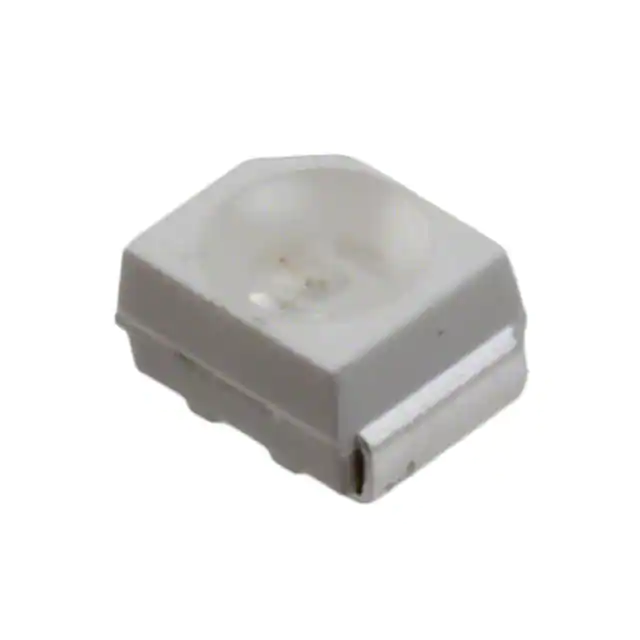
-
150141GS73100
Würth Elektronik
Tech Hub

Comparator circuit design covering voltage thresholds, input limits, open-collector outputs, LM393 wiring, op-amp differences, hysteresis, timing, window detection and practical fault diagnosis.
Schmitt triggers use separate rising and falling thresholds to stabilize slow or noisy signals. This guide covers hysteresis, 74HC14 and 74HCT14 selection, comparator calculations, RC oscillators and p…
Counterfeit components can hide behind convincing markings and passing basic function tests. This engineering reference covers source traceability, external inspection, X-ray, XRF, electrical testing, …
A practical engineering and sourcing framework covering lifecycle verification, lifetime-buy calculations, replacement qualification, supplier checks and counterfeit-risk controls.
TTL and CMOS logic families differ in thresholds, loading, output drive, power and timing. This engineering guide compares 74HC and 74HCT, calculates noise margins and checks 3.3 V/5 V compatibility.
A practical engineering guide to 3.3V and 5V logic compatibility, input thresholds, resistor dividers, translator ICs, MOSFET level shifting, I2C pull-ups, timing limits and power-sequencing risks.
The 74HC595 uses push-pull logic outputs, while the TPIC6B595 uses 50 V open-drain DMOS sinks for higher-power loads. This guide compares timing, current limits, 3.3 V interfacing, load wiring, thermal…
The 74HC595 converts serial data into eight stable parallel outputs. This guide covers pin functions, shift and storage timing, OE and MR behavior, drive-current limits, cascading, voltage compatibilit…
A technical comparison of level-sensitive latches and edge-triggered flip-flops, covering timing windows, setup and hold limits, master–slave operation, time borrowing, race-through, HDL inference and…
A D latch stores one bit while Enable controls when data can pass. This reference covers gate-level operation, truth tables, transparency, setup and hold timing, LE versus OE, common ICs and practical …