Silicon Labs TSM9119EXK+T
- Part No.:
- TSM9119EXK+T
- Manufacturer:
- Silicon Labs
- Category:
- Comparators
- Package:
- 5-TSSOP, SC-70-5, SOT-353
- Datasheet:
-
TSM9119EXK+T.pdf
- Description:
- IC COMPARATOR 1 GEN PUR SC70-5
- Quantity:
- Payment:

- Shipping:

Inventory:2,040
Please send an inquiry. Send us your inquiry, and we will respond immediately.
Product details
Overview
TSM9119EXK+T from Silicon Laboratories is a nanopower, rail-to-rail input comparator without internal reference, housed in a 5-pin SC70 package. It operates down to +1.6V supply, draws only 350nA typical supply current, features 4mV internal hysteresis and ±5mA push-pull output drive capability - enabling ultra-low-power battery monitoring and threshold detection in space-constrained portable systems.
For engineers reviewing the TSM9119EXK+T datasheet, TSM9119EXK+T pinout, TSM9119EXK+T application, or TSM9119EXK+T equivalent, this page delivers verified electrical parameters, confirmed SC70 pin mapping, real-world use cases in 2-cell battery management and ground-referenced sensing, and two validated alternative comparators with documented functional and packaging differences.
Technical Context
The TSM9119EXK+T implements a robust CMOS input stage supporting common-mode voltage from VEE −0.2V to VCC +0.2V, eliminating phase reversal during overdriven inputs. Its push-pull output stage delivers rail-to-rail swing with <400mV low/high saturation voltage at 5mA load and exhibits crowbar-current-free switching behavior.
Internal hysteresis (4mV) ensures clean transitions without external components, while propagation delays are tightly specified: tPD− = 14µs (VCC = 5V), tPD+ = 40µs (VCC = 5V), and power-up time is 1.2ms - all guaranteed across −40°C to +85°C.
Key Specifications
| Parameter | Value and Actual Design Meaning |
|---|---|
| Supply Voltage Range | 1.6V to 5.5V - enables direct operation from single Li-ion or dual alkaline cells without regulation. |
| Supply Current | 350nA typical at 1.6V - extends battery life to >5 million hours in 2-cell alkaline systems (2000mAh). |
| Input Offset Voltage | 1–5mV (typ), ≤10mV (max) - supports accurate threshold detection within ±10mV tolerance. |
| Input Common-Mode Range | VEE −0.2V to VCC +0.2V - allows sensing at ground or supply rail without level-shifting circuitry. |
| Output Drive Capability | ±5mA push-pull - directly drives logic inputs, LEDs, or small MOSFET gates without external buffers. |
| Propagation Delay | tPD− = 14µs, tPD+ = 40µs @5V - suitable for sub-10kHz event detection in telemetry and remote monitoring. |
| Hysteresis | 4mV internal - prevents chatter near trip points in noisy environments without external resistors. |
Pinout & Package
Package: 5-pin SC70 (2.0mm × 1.25mm × 0.95mm height), lead-free, RoHS-compliant.
| Pin | Circuit Role | Design Meaning |
|---|---|---|
| 1 | OUT | Push-pull output - actively drives high/low; no external pullup required; compatible with 1.6V–5.5V logic interfaces. |
| 2 | VEE | Negative supply terminal - typically connected to GND; supports true ground-sensing applications. |
| 3 | IN+ | Noninverting input - accepts signals down to VEE −0.2V, enabling zero-crossing detection when referenced to ground. |
| 4 | IN− | Inverting input - matches IN+ in voltage range and bias current (<1nA); used for differential or reference-based comparison. |
| 5 | VCC | Positive supply terminal - powers internal circuitry and defines output high-level; supports 1.6V minimum operation. |
Key Features
| Feature | Design Value |
|---|---|
| No phase reversal on overdrive | Input tolerates −0.2V to VCC+0.2V - eliminates false triggering when sensor outputs exceed rails. |
| Crowbar-current-free switching | Eliminates supply current spikes during output transitions - reduces need for large bypass capacitors in battery systems. |
| Rail-to-rail input and output | Full dynamic range utilization - maximizes signal margin in low-voltage designs (e.g., 1.8V microcontroller I/O). |
| Guaranteed 1.6V operation | Functional down to end-of-life battery voltage - avoids premature shutdown in 2-cell alkaline/NiMH systems. |
| Internal 4mV hysteresis | Stabilizes switching without external feedback - saves PCB area and BOM cost in high-volume portable devices. |
Applications
| 2-Cell Battery Monitoring | Ground-Referenced Sensing |
|---|---|
|
Use Scenario: Detecting low-voltage cutoff (e.g., 1.8V per cell) in dual alkaline or NiMH battery packs for portable medical instruments. IC Role / Device Role / Timing Role: Comparator compares battery voltage against fixed threshold; output triggers MCU interrupt or shuts down load. Use Value: 350nA quiescent current extends operational lifetime by >2× versus 600nA alternatives; 1.6V min supply ensures detection at true end-of-life. |
Use Scenario: Monitoring current shunt voltage or thermistor output referenced to system ground in wearable health sensors. IC Role / Device Role / Timing Role: Compares analog sensor signal (e.g., 0–100mV) against precision reference; output asserts when threshold exceeded. Use Value: Input range extending 200mV below ground enables direct connection to shunt amplifiers without level shifters. |
| Ultra-Low-Power Telemetry | Zero-Crossing Detection |
|
Use Scenario: Wake-up trigger for sleep-mode microcontrollers in remote environmental sensors powered by coin cells. IC Role / Device Role / Timing Role: Monitors analog sensor output (e.g., humidity ADC output) and asserts wake signal when crossing preset threshold. Use Value: 1.2ms power-up time and 350nA sleep current minimize energy overhead per wake cycle - critical for multi-year deployments. |
Use Scenario: Converting AC line voltage or audio signals to digital square waves in energy metering or audio front-ends. IC Role / Device Role / Timing Role: IN+ tied to AC source, IN− grounded; output toggles precisely at 0V crossings of input waveform. Use Value: No phase reversal and rail-to-rail input allow clean zero-crossing detection even with asymmetric or clipped waveforms. |
Equivalent & Alternatives
The following parts are listed as comparable options for similar nanopower comparator applications.
| Alternative Part | Technical Difference | Application Difference | Selection Advice |
|---|---|---|---|
| MAX9119ASA+ | Pin-compatible 5-pin SC70; identical 350nA ICC, 1.6V min, push-pull output; same hysteresis and input range. | Second-source offering; identical performance and footprint - drop-in replacement where MAX branding is preferred. | Select when sourcing flexibility or legacy MAX design reuse is required; no layout or firmware changes needed. |
| TSM9117EXK+T | Includes integrated 1.252V ±1.75% reference; 600nA supply current; otherwise identical SC70 pinout and core specs. | Used where internal reference eliminates external voltage divider or precision reference IC - reduces component count. | Choose when reference integration justifies +250nA higher supply current; verify reference accuracy (±1.75%) meets system tolerance. |
Compared with TSM9119EXK+T, MAX9119ASA+ offers identical electrical and mechanical compatibility for seamless second-sourcing, while TSM9117EXK+T trades 250nA higher supply current for integrated reference - simplifying BOM but increasing quiescent power in reference-less designs.
Availability
TSM9119EXK+T is available at Aetrix Electronics and suitable for 2-cell battery monitoring, ground-referenced sensing, and ultra-low-power telemetry requiring stable component supply across industrial temperature ranges and long production lifecycles.
Supply support for TSM9119EXK+T includes scheduled delivery planning, volume procurement assistance, BOM continuity management, traceable sourcing, and lifecycle availability coordination for OEM customers, industrial embedded developers, connected-device designers, and electronics production programs.
Manufacturer
Silicon Laboratories is a fabless semiconductor company specializing in low-power, mixed-signal ICs for timing, IoT, and embedded control applications.
The TSM9119EXK+T belongs to Silicon Labs' nanopower comparator family designed specifically for battery-constrained systems requiring reliable threshold detection at voltages as low as 1.6V with minimal quiescent current.
FAQ
What is the minimum operating voltage for the TSM9119EXK+T?
The TSM9119EXK+T guarantees operation down to +1.6V supply voltage across the full −40°C to +85°C temperature range. This enables direct interfacing with aging 2-cell alkaline, NiMH, or lithium primary batteries without regulation - a key enabler for multi-year battery life in portable medical and telemetry devices using the TSM9119EXK+T.
Does the TSM9119EXK+T include an internal voltage reference?
No, the TSM9119EXK+T does not include an internal voltage reference. It is the comparator-only variant in the TSM9117–TSM9120 family. Reference functionality is provided exclusively in the TSM9117EXK+T and TSM9118EXK+T variants. The TSM9119EXK+T requires an external reference or resistor divider for threshold setting - confirmed in the device's ordering table and electrical characteristics tables.
What package type is used for the TSM9119EXK+T?
The TSM9119EXK+T is supplied in a 5-pin SC70 package (2.0mm × 1.25mm), as explicitly stated in the "PACKAGE/ORDERING INFORMATION" section and confirmed by the "5-Pin SC70 Package Outline Drawing" on page 16 of the datasheet. This compact footprint supports high-density PCB layouts in space-constrained portable electronics using the TSM9119EXK+T.
Can the TSM9119EXK+T interface directly with ground-referenced signals?
Yes, the TSM9119EXK+T supports input common-mode voltage from VEE −0.2V to VCC +0.2V. With VEE tied to ground, this allows the IN+ or IN− pins to accept signals as low as −0.2V - enabling direct connection to current-sense amplifiers, thermistors, or other ground-referenced analog sources without level-shifting circuitry in designs using the TSM9119EXK+T.
What is the output configuration of the TSM9119EXK+T?
The TSM9119EXK+T features a push-pull output stage, as confirmed in the "TYPICAL APPLICATION CIRCUIT" table and "DESCRIPTION" section. This means it actively drives both high and low states without requiring an external pullup resistor - simplifying interface to microcontroller GPIOs, logic gates, or small loads in applications deploying the TSM9119EXK+T.
TSM9119EXK+T Specifications
- Product attributes
- Attribute value
- Manufacturer:
- Silicon Labs
- Package/Case:
- 5-TSSOP, SC-70-5, SOT-353
- Series:
- TSM91x
- Packaging:
- Tape & Reel (TR)
- Product Status:
- Obsolete
- Type:
- General Purpose
- Number of Elements:
- 1
- Output Type:
- Push-Pull
- Voltage - Supply, Single/Dual (±):
- 1.6V ~ 5.5V
- :
- 5mV
- Voltage - Input Offset (Max):
- 0.001µA
- Current - Input Bias (Max):
- 50mA
- Current - Output (Typ):
- 800nA
- Current - Quiescent (Max):
- 66.02dB CMRR, 80dB PSRR
- CMRR, PSRR (Typ):
- 40µs
- Propagation Delay (Max):
- 4mV
- Hysteresis:
- -40°C ~ 85°C
- Operating Temperature:
- -
- Grade:
- -
- Qualification:
- Surface Mount
- :
- SC-70-5
TSM9119EXK+T FAQ
1.How can I place an order for TSM9119EXK+T through Aetrix?
Please submit a Request for Quotation (RFQ) for TSM9119EXK+T on Aetrix. Our sales agent will provide a competitive quotation and guide you through the order confirmation once you accept the terms.
2.Are the price and stock information for TSM9119EXK+T reliable?
The price and inventory of TSM9119EXK+T are updated periodically and may fluctuate due to market conditions. Stock and pricing data are typically refreshed every 24 hours. Quotation validity for TSM9119EXK+T is usually 5 days.
3.What payment methods are accepted for TSM9119EXK+T?
We accept Wire Transfer, PayPal, Credit Card, Western Union, MoneyGram, and Escrow for TSM9119EXK+T transactions.
Note: Certain payment methods may incur a processing fee.
4.How is shipping managed for TSM9119EXK+T?
TSM9119EXK+T orders can be shipped via leading logistics carriers, including DHL, UPS, FedEx, TNT, or Registered Mail.
Once your TSM9119EXK+T order is processed, you will receive an email with the shipment details and tracking number.
Note: Tracking information may take up to 24 hours to appear. Express delivery typically takes 3–5 business days.
5.How can I obtain technical support or documentation for TSM9119EXK+T?
For technical support, including TSM9119EXK+T datasheets, pinout diagrams, or application guidance, please contact our engineering support team. They can provide detailed documentation and assistance for your TSM9119EXK+T requirements.
6.How does Aetrix verify that TSM9119EXK+T is sourced from the original manufacturer or authorized distributors?
All TSM9119EXK+T products on Aetrix are procured from qualified distributors and authorized channels. Our dedicated quality assurance team conducts strict verification, including traceability checks and, if necessary, third-party testing. This ensures that TSM9119EXK+T meets industry standards.
7.What is the process for return or replacement of TSM9119EXK+T?
All TSM9119EXK+T units undergo pre-shipment inspection (PSI). If there is an issue with TSM9119EXK+T, returns or replacements are accepted under the following conditions:
1.Quantity discrepancies, incorrect items, or visible external defects (such as breakage or corrosion), acknowledged by Aetrix.
2.The issue is reported within 90 days of delivery.
3.The TSM9119EXK+T part is unused and in its original packaging.
Return procedure for TSM9119EXK+T:
1.Submit a request within 90 days.
2.Obtain a Return Material Authorization (RMA) from Aetrix.
TSM9119EXK+T Tags

-
LM2903DR
Texas Instruments
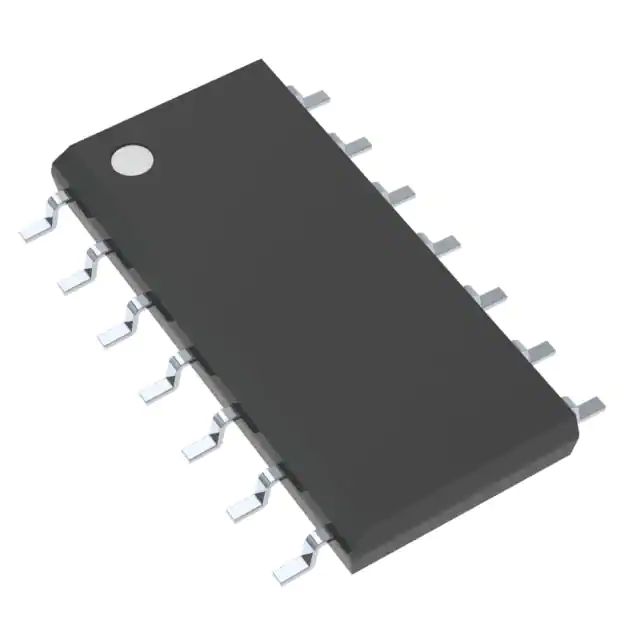
-
LM339DR
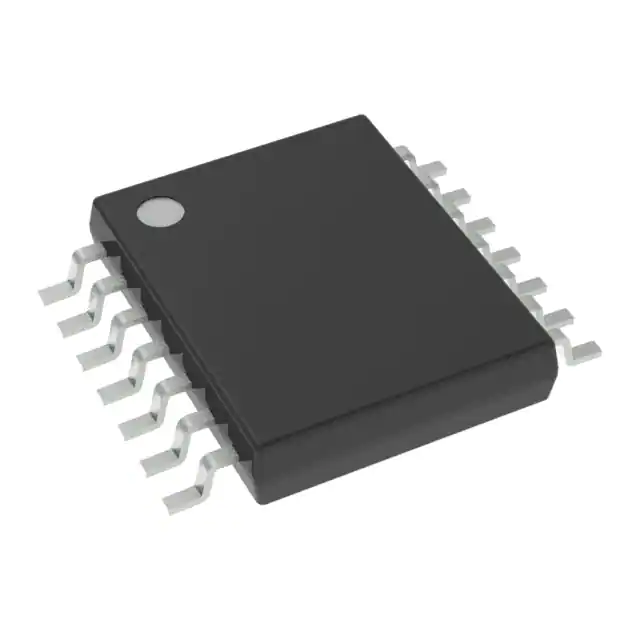
Texas Instruments
-
LM339PWR
Texas Instruments

-
LM393DT
STMicroelectronics

-
LM2901PWR
Texas Instruments

-
LM2903DT
STMicroelectronics

-
LM393DR
Texas Instruments
-
LM239DR
Texas Instruments

-
LM339APWR
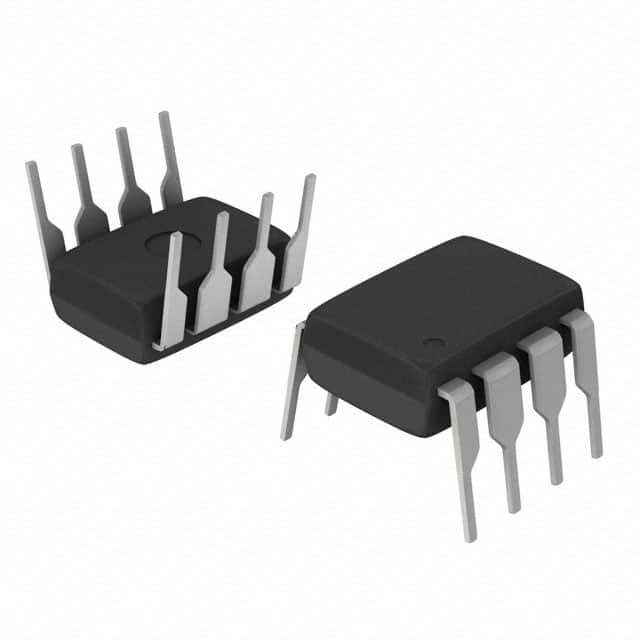
Texas Instruments
-
LM2903P
Texas Instruments

-
LM393ADR
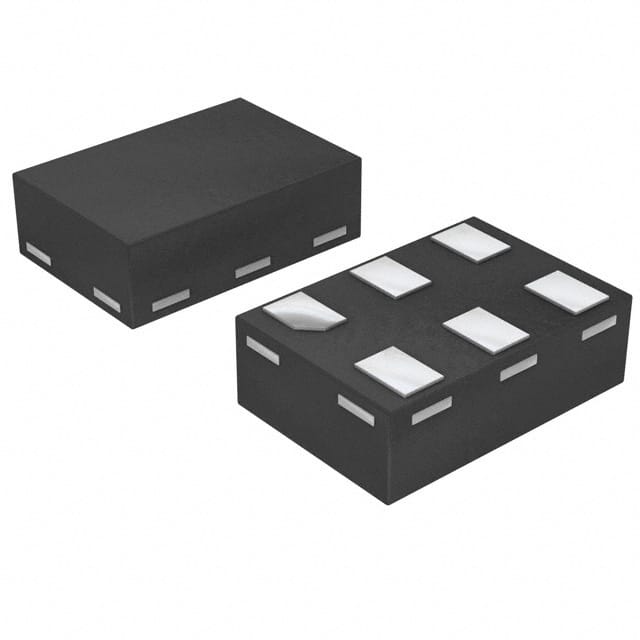
Texas Instruments
-
NCX2200GMAZ
NXP Semiconductors
Tech Hub
Comparator circuit design covering voltage thresholds, input limits, open-collector outputs, LM393 wiring, op-amp differences, hysteresis, timing, window detection and practical fault diagnosis.
Schmitt triggers use separate rising and falling thresholds to stabilize slow or noisy signals. This guide covers hysteresis, 74HC14 and 74HCT14 selection, comparator calculations, RC oscillators and p…
Counterfeit components can hide behind convincing markings and passing basic function tests. This engineering reference covers source traceability, external inspection, X-ray, XRF, electrical testing, …
A practical engineering and sourcing framework covering lifecycle verification, lifetime-buy calculations, replacement qualification, supplier checks and counterfeit-risk controls.
TTL and CMOS logic families differ in thresholds, loading, output drive, power and timing. This engineering guide compares 74HC and 74HCT, calculates noise margins and checks 3.3 V/5 V compatibility.
A practical engineering guide to 3.3V and 5V logic compatibility, input thresholds, resistor dividers, translator ICs, MOSFET level shifting, I2C pull-ups, timing limits and power-sequencing risks.
The 74HC595 uses push-pull logic outputs, while the TPIC6B595 uses 50 V open-drain DMOS sinks for higher-power loads. This guide compares timing, current limits, 3.3 V interfacing, load wiring, thermal…
The 74HC595 converts serial data into eight stable parallel outputs. This guide covers pin functions, shift and storage timing, OE and MR behavior, drive-current limits, cascading, voltage compatibilit…
A technical comparison of level-sensitive latches and edge-triggered flip-flops, covering timing windows, setup and hold limits, master–slave operation, time borrowing, race-through, HDL inference and…
A D latch stores one bit while Enable controls when data can pass. This reference covers gate-level operation, truth tables, transparency, setup and hold timing, LE versus OE, common ICs and practical …