
 My Inquiry
 My Account


AMD XC6SLX100-L1FGG484I
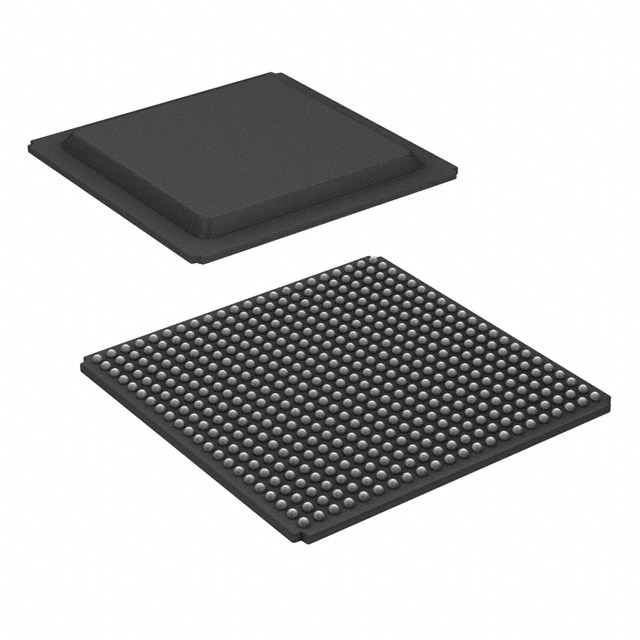
- Part No.:
- XC6SLX100-L1FGG484I
- Manufacturer:
- AMD
- Category:
- FPGAs (Field Programmable Gate Array)
- Package:
- 484-BBGA
- Datasheet:
-
 XC6SLX100-L1FGG484I.pdf
- Description:
- IC FPGA 326 I/O 484FBGA
- Quantity:
- Payment:

- Shipping:

Inventory:120
Please send an inquiry. Send us your inquiry, and we will respond immediately.
Product details
Overview
XC6SLX100-L1FGG484I from AMD (formerly Xilinx) is a Spartan-6 FPGA featuring 101,280 logic cells, 18 Kbit block RAM, 220 DSP48E1 slices, and operates at -1 speed grade with industrial temperature range (-40°C to +100°C). It is packaged in a 484-pin Fine-Pitch Ball Grid Array (FBGA) and used in industrial motor control systems requiring deterministic I/O timing and partial reconfiguration support.
For engineers reviewing the XC6SLX100-L1FGG484I datasheet, pinout, applications, or equivalent options, key selection criteria include I/O bank voltage flexibility (1.2V/1.8V/2.5V/3.3V), LVDS-capable differential pairs (204), and support for PCI Express Gen1 endpoint configuration.
Technical Context
The XC6SLX100-L1FGG484I implements a configurable logic fabric based on six-input LUTs and flip-flops per CLB, with dedicated carry logic for arithmetic functions. It integrates dual-register 18×18 multipliers, wide multiplexers, and shift registers optimized for digital signal processing and real-time control loops.
Configuration is performed via Master SelectMAP, Slave SelectMAP, or JTAG interfaces using external SPI flash or PROM. The device supports bitstream encryption and fallback configuration for secure, robust boot in mission-critical embedded applications.
Key Specifications
| Parameter | Value and Actual Design Meaning |
|---|---|
| Logic Cells | 101,280 - provides gate count equivalent to ~750K ASIC gates for complex state machines and protocol stacks |
| Block RAM | 1,824 Kbits - supports dual-port FIFOs, frame buffers, or lookup tables up to 36-bit width |
| DSP Slices | 220 × DSP48E1 - enables parallel multiply-accumulate operations at 250 MHz for servo loop filtering |
| I/O Pins | 348 user-configurable - includes 204 LVDS pairs usable as 408 single-ended signals with programmable slew rate |
| Speed Grade | -1 - guarantees timing closure at 667 Mbps DDR3 interface operation with 1.5V VCCO |
| Operating Temp | -40°C to +100°C - qualified for industrial enclosure environments without forced cooling |
| Configuration Mode | Master/Slave SelectMAP & JTAG - enables field-upgradable firmware and boundary-scan testability |
Pinout & Package
XC6SLX100-L1FGG484I is housed in a 484-ball Fine-Pitch BGA (FGG) package with 23×23 array, 1.0 mm ball pitch, and 29.0 mm × 29.0 mm body size. Thermal pad on underside requires solder paste stencil design per Xilinx UG381.
| Pin/Terminal | Circuit Role | Design Meaning |
|---|---|---|
| G1 | VCCINT | 1.2V core supply input - must be filtered with ≥10 µF ceramic + 100 nF bypass per power rail |
| A2 | VCCAUX | 2.5V auxiliary supply - powers configuration logic, JTAG, and transceivers |
| P1 | PROGRAM_B | Active-low asynchronous reset - initiates configuration reload when pulsed low |
| R2 | INIT_B | Open-drain status output - goes high-Z after successful bitstream CRC check |
| T1 | CCLK | Configuration clock input - driven externally during Master SelectMAP mode |
| Y2 | DONE | Open-drain completion indicator - pulled high externally upon configuration success |
Key Features
| Feature | Design Value |
|---|---|
| Multi-Voltage I/O Banks | Eight independent banks support mixed-voltage interfaces (1.2V/1.8V/2.5V/3.3V) enabling direct connection to legacy peripherals |
| PCIe Endpoint Logic | Hard IP block compliant with PCIe Gen1 x1/x2/x4 - eliminates soft-core latency and resource overhead |
| Embedded Memory Blocks | 18 Kbit block RAMs with true dual-port capability - allows simultaneous read/write for data buffering in motion control |
| Partial Reconfiguration Support | Enables dynamic module swapping without system reset - critical for adaptive industrial HMI and safety-critical updates |
| Bitstream Encryption | AES-128 decryption engine protects intellectual property against unauthorized cloning or reverse engineering |
Applications
| Industrial Motor Drives | Automated Test Equipment |
|---|---|
Use Scenario: Closed-loop vector control of three-phase AC induction motors with real-time current sampling and PWM generation. IC Role / Device Role / Timing Role: FPGA fabric executes field-oriented control (FOC) algorithm, manages 12-bit ADC interfaces, and generates synchronized 20 kHz PWM outputs with <5 ns jitter. Use Value: Deterministic timing and 348 I/O pins allow integration of encoder feedback, analog inputs, and isolated gate drivers on single XC6SLX100-L1FGG484I-based board. | Use Scenario: High-speed digital pattern generation and acquisition for semiconductor wafer probing and functional validation. IC Role / Device Role / Timing Role: XC6SLX100-L1FGG484I acts as protocol-aware pattern sequencer with built-in JTAG TAP controller and boundary-scan test logic. Use Value: 220 DSP48E1 slices accelerate error correction algorithms, while LVDS I/O supports 667 Mbps parallel test vector streaming. |
| Medical Imaging Subsystems | Avionics Data Concentrators |
Use Scenario: Real-time preprocessing of ultrasound echo data before transmission to host processor via PCIe Gen1 link. IC Role / Device Role / Timing Role: XC6SLX100-L1FGG484I performs beamforming, envelope detection, and DICOM-compliant compression using dedicated DSP blocks. Use Value: Block RAM resources enable line-buffered image processing pipeline with zero-frame latency between analog front-end and PCIe endpoint. | Use Scenario: ARINC 429 and MIL-STD-1553 bus bridging in flight control computers with time-triggered scheduling. IC Role / Device Role / Timing Role: XC6SLX100-L1FGG484I implements dual-bus controllers with hardware timestamping and deterministic interrupt response under DO-254 Level A requirements. Use Value: Industrial temperature rating and configuration encryption meet avionics environmental and security mandates without additional shielding or crypto modules. |
Equivalent & Alternatives
The following parts are listed as comparable options for similar FPGA-based control and interface applications.
| Alternative Part | Technical Difference | Application Difference | Selection Advice |
|---|---|---|---|
| XC6SLX150T-L1FGG676I | 147,443 logic cells, 676-pin FGG package, higher I/O count (408), same -1 speed grade | Supports larger control algorithms and more concurrent protocols; requires PCB redesign due to larger footprint | Select when expanding functionality beyond XC6SLX100-L1FGG484I capacity without changing architecture |
| XC7A100T-1CSG324I | Artix-7 architecture, 101,440 logic cells, 324-pin CSBGA, higher DSP density (240 slices), native PCIe Gen2 | Offers improved power efficiency and faster transceiver speeds but lacks native DDR3 PHY support in base config | Prefer for new designs targeting lower static power and future-proof PCIe bandwidth, accepting toolchain migration effort |
Compared with XC6SLX100-L1FGG484I, the XC6SLX150T-L1FGG676I delivers scalable logic headroom within the same Spartan-6 family, while the XC7A100T-1CSG324I represents a generational upgrade with architectural improvements-both require careful evaluation of pin compatibility, power delivery, and toolchain support.
Availability
XC6SLX100-L1FGG484I is available at Aetrix Electronics and suitable for industrial motor drives, automated test equipment, and medical imaging subsystems requiring stable component supply across extended product lifecycles.
Supply support for XC6SLX100-L1FGG484I includes scheduled delivery planning, volume procurement assistance, BOM continuity management, traceable sourcing, and lifecycle availability coordination for OEM customers, industrial embedded developers, connected-device designers, and electronics production programs.
Manufacturer
AMD acquired Xilinx in 2022 and now develops adaptive computing platforms including FPGAs, adaptive SoCs, and AI accelerators for data center, edge, and embedded markets.
The Spartan-6 family was designed for cost-sensitive, high-volume applications demanding low-power logic, flexible I/O, and reliable configuration - especially in industrial automation and communications infrastructure.
FAQ
What is the maximum supported DDR3 memory interface speed for XC6SLX100-L1FGG484I?
The XC6SLX100-L1FGG484I supports DDR3 SDRAM interfaces up to 800 Mbps data rate (400 MHz clock) using its dedicated DQS logic and phase-matched I/O routing. This capability is validated in Xilinx UG388 and requires proper PCB layout with matched trace lengths and controlled impedance. The XC6SLX100-L1FGG484I does not include a hard memory controller; implementation relies on MIG v3.7 or later IP core.
Does XC6SLX100-L1FGG484I support JTAG boundary-scan testing?
Yes, XC6SLX100-L1FGG484I fully supports IEEE 1149.1 JTAG boundary-scan testing through dedicated TCK, TMS, TDI, and TDO pins. The device includes internal scan chains for I/O pins and configuration logic, enabling manufacturing test and in-system verification. Boundary-scan operation is enabled automatically during configuration and remains active post-configuration unless disabled via configuration bits.
Can XC6SLX100-L1FGG484I operate with a single 1.2V supply?
No, XC6SLX100-L1FGG484I requires three separate supply voltages: 1.2V for VCCINT (core), 2.5V for VCCAUX (auxiliary), and programmable VCCO (1.2V/1.8V/2.5V/3.3V) per I/O bank. Using only 1.2V would prevent configuration logic and I/O operation, causing failure to initialize. Power sequencing per Xilinx UG381 is mandatory.
Is XC6SLX100-L1FGG484I qualified for automotive applications?
No, XC6SLX100-L1FGG484I is specified for industrial temperature range (–40°C to +100°C) and is not AEC-Q100 qualified. While it may function in some automotive under-hood environments, AMD does not guarantee reliability or provide failure rate data for automotive use cases. For automotive applications, Xilinx Automotive (XA) variants such as XA6SLX100 are required.
What configuration modes are supported by XC6SLX100-L1FGG484I?
XC6SLX100-L1FGG484I supports Master SelectMAP, Slave SelectMAP, JTAG, and Serial Peripheral Interface (SPI) flash configuration modes. Master SelectMAP uses internal oscillator to drive CCLK; Slave SelectMAP accepts external clock; JTAG enables programming and debugging; SPI mode loads bitstream from standard SPI flash devices like Micron N25Q series. Mode selection is controlled by MODE pins.
XC6SLX100-L1FGG484I Specifications
- Product attributes
- Attribute value
- Manufacturer:
- AMD
- Series:
- Spartan®-6 LX
- Package/Case:
- 484-BBGA
- Packaging:
- Tray
- Product Status:
- Active
- Programmable:
- Not Verified
- Number of LABs/CLBs:
- 7911
- Number of Logic Elements/Cells:
- 101261
- Total RAM Bits:
- 4939776
- Number of I/O:
- 326
- Number of Gates:
- -
- Voltage - Supply:
- 1.14V ~ 1.26V
- Mounting Type:
- Surface Mount
- Operating Temperature:
- -40°C ~ 100°C (TJ)
- Grade:
- -
- Qualification:
- -
- Supplier Device Package:
- 484-FBGA (23x23)
XC6SLX100-L1FGG484I FAQ
1.How can I place an order for XC6SLX100-L1FGG484I through Aetrix?
Please submit a Request for Quotation (RFQ) for XC6SLX100-L1FGG484I on Aetrix. Our sales agent will provide a competitive quotation and guide you through the order confirmation once you accept the terms.
2.Are the price and stock information for XC6SLX100-L1FGG484I reliable?
The price and inventory of XC6SLX100-L1FGG484I are updated periodically and may fluctuate due to market conditions. Stock and pricing data are typically refreshed every 24 hours. Quotation validity for XC6SLX100-L1FGG484I is usually 5 days.
3.What payment methods are accepted for XC6SLX100-L1FGG484I?
We accept Wire Transfer, PayPal, Credit Card, Western Union, MoneyGram, and Escrow for XC6SLX100-L1FGG484I transactions.
Note: Certain payment methods may incur a processing fee.
4.How is shipping managed for XC6SLX100-L1FGG484I?
XC6SLX100-L1FGG484I orders can be shipped via leading logistics carriers, including DHL, UPS, FedEx, TNT, or Registered Mail.
Once your XC6SLX100-L1FGG484I order is processed, you will receive an email with the shipment details and tracking number.
Note: Tracking information may take up to 24 hours to appear. Express delivery typically takes 3–5 business days.
5.How can I obtain technical support or documentation for XC6SLX100-L1FGG484I?
For technical support, including XC6SLX100-L1FGG484I datasheets, pinout diagrams, or application guidance, please contact our engineering support team. They can provide detailed documentation and assistance for your XC6SLX100-L1FGG484I requirements.
6.How does Aetrix verify that XC6SLX100-L1FGG484I is sourced from the original manufacturer or authorized distributors?
All XC6SLX100-L1FGG484I products on Aetrix are procured from qualified distributors and authorized channels. Our dedicated quality assurance team conducts strict verification, including traceability checks and, if necessary, third-party testing. This ensures that XC6SLX100-L1FGG484I meets industry standards.
7.What is the process for return or replacement of XC6SLX100-L1FGG484I?
All XC6SLX100-L1FGG484I units undergo pre-shipment inspection (PSI). If there is an issue with XC6SLX100-L1FGG484I, returns or replacements are accepted under the following conditions:
1.Quantity discrepancies, incorrect items, or visible external defects (such as breakage or corrosion), acknowledged by Aetrix.
2.The issue is reported within 90 days of delivery.
3.The XC6SLX100-L1FGG484I part is unused and in its original packaging.
Return procedure for XC6SLX100-L1FGG484I:
1.Submit a request within 90 days.
2.Obtain a Return Material Authorization (RMA) from Aetrix.
XC6SLX100-L1FGG484I Tags
-
ICE40LP384-SG32
Lattice Semiconductor Corporation
-
ICE40UL640-CM36AI
Lattice Semiconductor Corporation
-
ICE40UL1K-CM36AI
Lattice Semiconductor Corporation
-
LCMXO2-256HC-4SG32C
Lattice Semiconductor Corporation
-
10M02DCV36C8G
Intel
-
LCMXO2-256HC-4SG32I
Lattice Semiconductor Corporation
-
ICE5LP1K-SG48ITR
Lattice Semiconductor Corporation
-
ICE40LP1K-CM36
Lattice Semiconductor Corporation
-
LCMXO2-256ZE-1SG32I
Lattice Semiconductor Corporation
-
LCMXO2-256HC-4SG48I
Lattice Semiconductor Corporation
-
ICE40LP1K-CM81
Lattice Semiconductor Corporation

-
T20W80I4
Efinix, Inc.
Tech Hub

A practical engineering and sourcing framework covering lifecycle verification, lifetime-buy calculations, replacement qualification, supplier checks and counterfeit-risk controls.

TTL and CMOS logic families differ in thresholds, loading, output drive, power and timing. This engineering guide compares 74HC and 74HCT, calculates noise margins and checks 3.3 V/5 V compatibility.

A practical engineering guide to 3.3V and 5V logic compatibility, input thresholds, resistor dividers, translator ICs, MOSFET level shifting, I2C pull-ups, timing limits and power-sequencing risks.

The 74HC595 uses push-pull logic outputs, while the TPIC6B595 uses 50 V open-drain DMOS sinks for higher-power loads. This guide compares timing, current limits, 3.3 V interfacing, load wiring, thermal…

The 74HC595 converts serial data into eight stable parallel outputs. This guide covers pin functions, shift and storage timing, OE and MR behavior, drive-current limits, cascading, voltage compatibilit…

A technical comparison of level-sensitive latches and edge-triggered flip-flops, covering timing windows, setup and hold limits, master–slave operation, time borrowing, race-through, HDL inference and…

A D latch stores one bit while Enable controls when data can pass. This reference covers gate-level operation, truth tables, transparency, setup and hold timing, LE versus OE, common ICs and practical …

An SR latch stores one bit through cross-coupled feedback. This engineering reference covers NOR and NAND implementations, truth tables, forbidden-state recovery, gated operation, switch debouncing, fa…

Latch circuits retain one bit through feedback. This technical reference covers SR and D latches, truth tables, transparency, timing limits, latch-versus-flip-flop behavior, applications and common log…

An engineering guide to LED driver operation, constant-current and constant-voltage outputs, linear and switching topologies, dimming, IC selection, calculations, replacement compatibility, and fault c…


