
 My Inquiry
 My Account


AMD XC95288XV-7FG256C
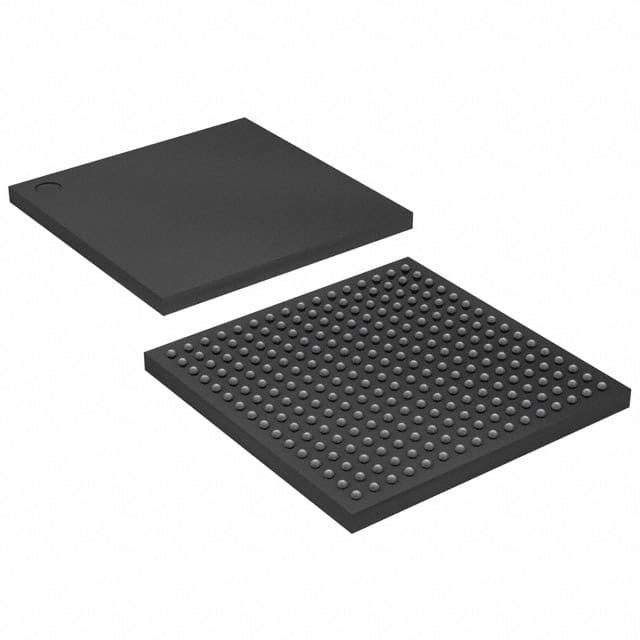
- Part No.:
- XC95288XV-7FG256C
- Manufacturer:
- AMD
- Package:
- 256-BGA
- Datasheet:
-
 XC95288XV-7FG256C.pdf
- Description:
- IC CPLD 288MC 7.5NS 256FBGA
- Quantity:
- Payment:

- Shipping:

Inventory:3,305
Please send an inquiry. Send us your inquiry, and we will respond immediately.
Product details
Overview
XC95288XV-7FG256C from AMD is a high-density XC9500XV CPLD designed for larger deterministic programmable-logic tasks, control-plane integration, and interface consolidation in communications, computing, and embedded control hardware. The device sits above smaller CPLD classes by offering a much larger macrocell resource count while preserving nonvolatile logic retention and CPLD-style startup behavior.
The XC9500XV CPLD series provides higher-density programmable logic resources, JTAG-based in-system programmability, and deterministic CPLD timing for complex board-support functions. For engineers reviewing the XC95288XV-7FG256C datasheet, XC95288XV-7FG256C pinout, XC95288XV-7FG256C application, or XC95288XV-7FG256C equivalent, this device is widely used in communications control logic, embedded backplane management, interface consolidation, industrial platforms, protocol adaptation, and large programmable board-support designs.
Technical Context
In embedded and communications systems, XC95288XV-7FG256C is used when the logic demand exceeds the smaller CPLD classes but the design still benefits from a nonvolatile CPLD architecture rather than a larger volatile FPGA flow. It supports denser decode structures, broader state-control logic, and more extensive board-management logic in one programmable device.
The XC9500XV architecture is intended for deterministic logic behavior, in-system updates, and board-support integration across digital control planes. In this role, the device can replace a large amount of discrete logic or several smaller programmable devices while preserving CPLD-style field programmability and JTAG access.
XC95288XV-7FG256C is commonly selected for large interface-control or supervisory-logic roles where package density, macrocell count, and predictable startup behavior matter more than the richer arithmetic or memory fabric associated with larger FPGA devices.
Key Specifications
| Parameter | Value and Actual Design Meaning |
|---|---|
| Device Type | High-density in-system programmable CPLD. |
| Architecture | XC9500XV CPLD architecture with 288-macrocell device level. |
| Programming | JTAG in-system programmability with nonvolatile logic retention. |
| Density Role | Suitable for larger board-support logic than smaller CPLD classes. |
| Package | 256-ball BGA package with tray packing from the spreadsheet row. |
| Timing Grade | 7ns-grade orderable option indicated by the part suffix. |
| Application Role | Large control-plane logic, interface consolidation, and programmable board-support integration. |
| Design Value | Provides high CPLD density without moving to a full FPGA configuration flow. |
Pinout & Package
The XC95288XV-7FG256C pinout is organized around large programmable I/O resources, clock/control inputs, JTAG access pins, power rails, and grounds within the 256-ball BGA footprint.
For PCB design, BGA escape planning, JTAG accessibility, power-distribution decoupling, and I/O assignment strategy are important because the device is often used as a dense central CPLD on multi-interface boards.
| Pin / Function | PCB Design and Circuit Role |
|---|---|
| User I/O Balls | Provide high-density programmable inputs and outputs for control, decode, and interface integration. |
| Clock / Control Inputs | Support synchronous CPLD timing and larger state/control structures. |
| JTAG Pins | Enable in-system programming and boundary-scan access. |
| Power Balls | Supply the CPLD core and I/O resources across the dense package footprint. |
| Ground Balls | Provide return paths supporting signal integrity and device stability. |
Key Features
- 288-macrocell density supports large CPLD control and interface logic.
- Nonvolatile programmable logic preserves functionality after power cycle.
- JTAG in-system programming supports manufacturing and update workflows.
- Dense BGA package supports high I/O count board integration.
- Deterministic CPLD timing suits communications and control-plane logic.
- Can consolidate large amounts of board-support logic in one device.
Applications
| Communications Control Logic | Backplane and Interface Consolidation |
|---|---|
|
Use Scenario: Used in networking and communications equipment for larger local control-plane logic. IC Role: Implements broad interface, decode, and supervisory logic in one CPLD. Use Value: Reduces the need for several smaller programmable devices. |
Use Scenario: Used where multiple digital interfaces and control terms must be centralized. IC Role: Combines several board-support logic tasks into one dense CPLD. Use Value: Improves integration and field programmability. |
| Industrial Embedded Platforms | Protocol Adaptation and Supervisory Logic |
|
Use Scenario: Used in larger control modules and instrumentation hardware. IC Role: Provides deterministic large-scale board-support logic. Use Value: Supports maintainability and predictable startup behavior. |
Use Scenario: Used in systems needing broad programmable logic resources without a full FPGA flow. IC Role: Bridges interfaces and implements complex board-management logic. Use Value: Preserves CPLD simplicity at higher density. |
Equivalent & Alternatives
When evaluating a XC95288XV-7FG256C equivalent, engineers should compare macrocell density, package, timing grade, CPLD architecture, and board-level I/O requirements.
| Alternative Part | Technical Difference | Application Difference | Selection Advice |
|---|---|---|---|
| XC95144XV-7TQ100C | Smaller XC9500XV family device with lower macrocell count and a different package/density point. | Used when the logic demand is lower and the board can fit a smaller CPLD density. | Compare macrocell count, package, I/O demand, and timing margin. |
| XC2C256-7FT256C | CoolRunner-II class CPLD with a different low-power architecture and a high-density programmable-logic role. | Used in similar dense CPLD control and interface applications when CoolRunner-II architecture is preferred. | Choose according to architecture continuity, power target, package, and logic-fit needs. |
Compared with XC95144XV-7TQ100C, XC95288XV-7FG256C is better suited when the design needs substantially more CPLD density and I/O scale. XC95288XV-7FG256C vs XC2C256-7FT256C selection depends on whether the board should remain in the XC9500XV architecture or move to a CoolRunner-II density point with a different power profile.
Quality
XC95288XV-7FG256C should be sourced as original AMD programmable logic inventory through traceable channels. Quality checks may include BGA package inspection, top-mark validation, JTAG-programming verification, and logic-image load testing.
Production validation should include BGA assembly quality, timing closure, I/O assignment review, boundary-scan access, and signal-integrity verification across dense programmable I/O groups.
Availability
XC95288XV-7FG256C is suitable for larger programmable board-support logic, communications control logic, and dense CPLD integration where nonvolatile startup behavior remains important.
Supply support may include volume procurement planning, scheduled delivery arrangements, traceable sourcing management, and long-term supply support for OEM, industrial electronics, automotive electronics, and embedded product programs. Sample and NPI supply support, as well as urgent in-stock supply support, can also be arranged for prototype builds, pilot runs, and time-critical production needs.
Supply support may include volume procurement planning, scheduled delivery arrangements, traceable sourcing management, and long-term supply support for OEM, industrial electronics, automotive electronics, and embedded product programs. Sample and NPI supply support, as well as urgent in-stock supply support, can also be arranged for prototype builds, pilot runs, and time-critical production needs.
Manufacturer
AMD is a semiconductor manufacturer whose adaptive computing and programmable logic portfolio includes FPGA devices, CPLDs, configuration solutions, embedded processing platforms, and related development technologies for industrial, communication, computing, automotive, and embedded electronic systems.
The XC9500XV family is a higher-density nonvolatile CPLD series intended for larger programmable logic, interface consolidation, and deterministic board-control functions in complex embedded systems.
FAQ
What is XC95288XV-7FG256C used for?
XC95288XV-7FG256C is used for large CPLD control logic, interface consolidation, communications-board support logic, and dense programmable board-management functions.
Where can I find the XC95288XV-7FG256C datasheet download?
The XC95288XV-7FG256C datasheet is available from AMD source material for the XC9500XV CPLD family.
What should be considered in XC95288XV-7FG256C pinout design?
Designers should plan BGA escape routing, preserve JTAG access, manage power-distribution decoupling carefully, and confirm macrocell/I/O fit against the board logic plan.
Is XC95288XV-7FG256C an FPGA?
No. It is a high-density CPLD intended for deterministic programmable logic and board-support roles.
What are common XC95288XV-7FG256C equivalent solutions?
Common candidates include XC95144XV-7TQ100C and XC2C256-7FT256C depending on density, package, architecture, and power requirements.
XC95288XV-7FG256C Specifications
- Product attributes
- Attribute value
- Manufacturer:
- AMD
- Series:
- XC9500XV
- Package/Case:
- 256-BGA
- Packaging:
- Tray
- Product Status:
- Obsolete
- Programmable:
- Not Verified
- Programmable Type:
- In System Programmable
- Delay Time tpd(1) Max:
- 7.5 ns
- Voltage Supply - Internal:
- 2.37V ~ 2.62V
- Number of Logic Elements/Blocks:
- 16
- Number of Macrocells:
- 288
- Number of Gates:
- 6400
- Number of I/O:
- 192
- Operating Temperature:
- 0°C ~ 70°C (TA)
- Grade:
- -
- Qualification:
- -
- Mounting Type:
- Surface Mount
- Supplier Device Package:
- 256-FBGA (17x17)
XC95288XV-7FG256C FAQ
1.How can I place an order for XC95288XV-7FG256C through Aetrix?
Please submit a Request for Quotation (RFQ) for XC95288XV-7FG256C on Aetrix. Our sales agent will provide a competitive quotation and guide you through the order confirmation once you accept the terms.
2.Are the price and stock information for XC95288XV-7FG256C reliable?
The price and inventory of XC95288XV-7FG256C are updated periodically and may fluctuate due to market conditions. Stock and pricing data are typically refreshed every 24 hours. Quotation validity for XC95288XV-7FG256C is usually 5 days.
3.What payment methods are accepted for XC95288XV-7FG256C?
We accept Wire Transfer, PayPal, Credit Card, Western Union, MoneyGram, and Escrow for XC95288XV-7FG256C transactions.
Note: Certain payment methods may incur a processing fee.
4.How is shipping managed for XC95288XV-7FG256C?
XC95288XV-7FG256C orders can be shipped via leading logistics carriers, including DHL, UPS, FedEx, TNT, or Registered Mail.
Once your XC95288XV-7FG256C order is processed, you will receive an email with the shipment details and tracking number.
Note: Tracking information may take up to 24 hours to appear. Express delivery typically takes 3–5 business days.
5.How can I obtain technical support or documentation for XC95288XV-7FG256C?
For technical support, including XC95288XV-7FG256C datasheets, pinout diagrams, or application guidance, please contact our engineering support team. They can provide detailed documentation and assistance for your XC95288XV-7FG256C requirements.
6.How does Aetrix verify that XC95288XV-7FG256C is sourced from the original manufacturer or authorized distributors?
All XC95288XV-7FG256C products on Aetrix are procured from qualified distributors and authorized channels. Our dedicated quality assurance team conducts strict verification, including traceability checks and, if necessary, third-party testing. This ensures that XC95288XV-7FG256C meets industry standards.
7.What is the process for return or replacement of XC95288XV-7FG256C?
All XC95288XV-7FG256C units undergo pre-shipment inspection (PSI). If there is an issue with XC95288XV-7FG256C, returns or replacements are accepted under the following conditions:
1.Quantity discrepancies, incorrect items, or visible external defects (such as breakage or corrosion), acknowledged by Aetrix.
2.The issue is reported within 90 days of delivery.
3.The XC95288XV-7FG256C part is unused and in its original packaging.
Return procedure for XC95288XV-7FG256C:
1.Submit a request within 90 days.
2.Obtain a Return Material Authorization (RMA) from Aetrix.
XC95288XV-7FG256C Tags
-
5M40ZE64C5N
Intel
-
ATF1502ASV-15AU44
Microchip Technology
-
5M80ZE64C5N
Intel
-
5M80ZT100C5N
Intel
-
ATF1502AS-10AU44
Microchip Technology
-
ATF1502AS-10JU44
Microchip Technology
-
5M80ZE64I5N
Intel
-
5M80ZT100I5N
Intel
-
LC4032V-75TN48C
Lattice Semiconductor Corporation
-
ATF1504ASV-15AU44
Microchip Technology
-
ATF1504AS-10JU44
Microchip Technology
-
5M160ZE64C5N
Intel
Tech Hub
Amplifier guide covering voltage, current and power amplification, gain, feedback, amplifier classes, audio and RF applications, op-amp circuits, transimpedance amplifiers, datasheet selection and trou…

Machine vision system guide covering components, inspection workflow, camera and lens selection, FOV, pixel resolution, motion blur, strobe lighting, bandwidth, 2D/3D vision, integration, troubleshooti…
Electronic devices and circuits guide covering passive components, semiconductors, analog and digital circuits, circuit theory, practical calculations, troubleshooting, datasheet selection, and learnin…
Oil pressure sensor diagnosis covering symptoms, location, testing, replacement, socket access, common failure cases, and the electronic signal path between the pressure sensor, wiring, ECU and gauge s…
MLCC ESR, impedance and self-resonant frequency in decoupling networks. Covers PDN behavior, frequency response, measurement methods, failure cases and practical capacitor selection for power integrity…
An actuator converts a control signal and energy source into mechanical motion. This guide explains actuator types, working principles, electric and linear actuators, automotive use cases, troubleshoot…
A potentiometer is a three-terminal adjustable resistor used for voltage division, analog control, calibration and signal adjustment. This guide explains wiring, symbols, types, 10k values, digital pot…
An FPGA is reconfigurable digital hardware used for custom logic, parallel processing, low-latency I/O and interface control. This guide explains FPGA meaning, architecture, boards, programming flow, a…
A logic gate is a basic digital circuit that uses Boolean logic to convert binary inputs into one output. This guide explains AND, OR, NOT, NAND, NOR, XOR, truth tables, universal gates, logic ICs and …

A mass air flow sensor, often called a MAF sensor, measures the amount of air entering an engine.


