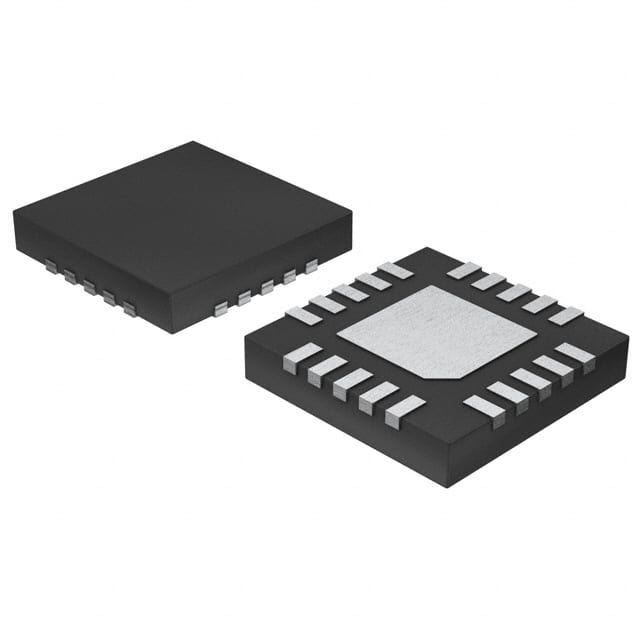
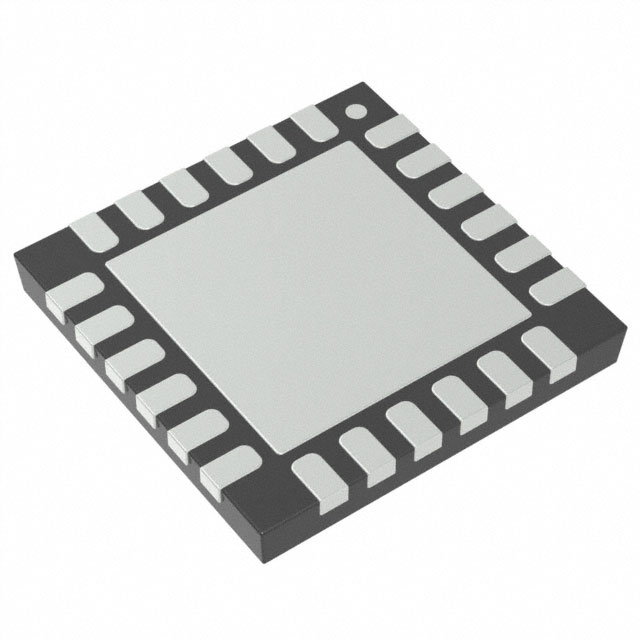
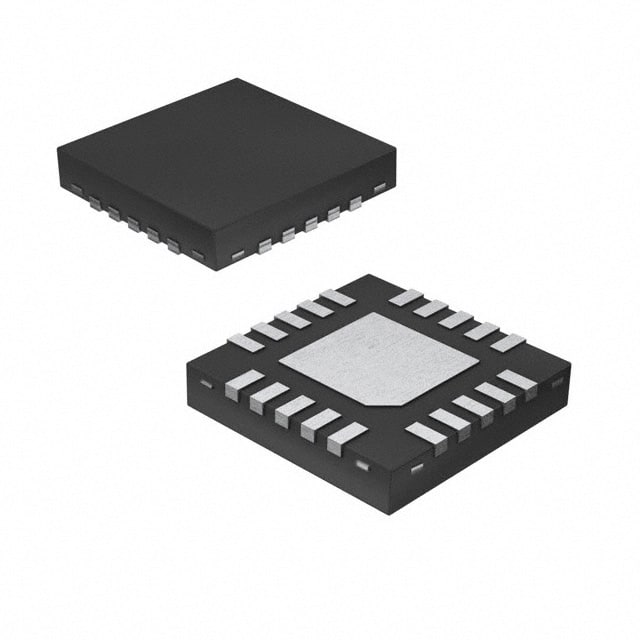
Semtech Corporation XE3005I033TRLF
- Part No.:
- XE3005I033TRLF
- Manufacturer:
- Semtech Corporation
- Category:
- CODECS
- Package:
- 20-TSSOP (0.173", 4.40mm Width)
- Datasheet:
-
XE3005I033TRLF.pdf
- Description:
- IC CODEC LOW PWR 16BIT 20-TSSOP
- Quantity:
- Payment:

- Shipping:

Inventory:4,493
Please send an inquiry. Send us your inquiry, and we will respond immediately.
Product details
Overview
XE3005I033TRLF from Semtech is a low-power 16-bit audio CODEC IC for voice and audio interface applications, integrating 16-bit sigma-delta ADC and DAC, microphone preamplifier with programmable 5×/20× gain, 1.6 V microphone bias (VREG16), Class D power amplifier, and serial audio interface (SFS/LFS) - operating at 4–48 kHz sampling rate and consuming <2 mW typical power in active mode.
For engineers reviewing the XE3005I033TRLF datasheet, pinout, applications, or equivalent options, key selection considerations include its TSSOP-20 package, -20°C to +70°C industrial temperature range, 1.8–3.6 V single-supply operation, 78 dB typical ADC/DAC dynamic range, and compatibility with Bluetooth headset and hearing instrument signal chains requiring ultra-low quiescent current and direct electret mic/speaker interfacing.
Technical Context
The XE3005I033TRLF implements a sigma-delta ADC with decimation filter and programmable gain amplifier (5× or 20×), and a multi-bit sigma-delta DAC followed by a pulse-width modulator driving an integrated Class D power amplifier (AOUTP/AOUTN). It supports master or slave serial audio interface modes (SFS/LFS) synchronized to MCLK via fixed divisors (1/2/4), with frame rate = MCLK/(256 × div_factor).
Power management includes software-controlled channel-level power-down (register I), hardware reset via NRESET, and internal regulators (VREG16 = 1.6 V, VREG11 = 1.1 V) - where VREG16 is always enabled and supplies electret microphones up to 1 mA, while VREG11 is software-enabled and delivers up to 50 µA. The device lacks Sandman™ functionality (exclusive to XE3006), confirming it as the base low-power CODEC variant.
Key Specifications
| Parameter | Value and Actual Design Meaning |
|---|---|
| Supply Voltage | 1.8–3.6 V single supply - enables direct integration into battery-powered systems without external LDOs. |
| Sampling Rate | 4–48 kHz - supports narrowband telephony (8 kHz) through wideband audio (44.1/48 kHz) with register-configurable frame timing. |
| ADC/DAC Resolution | 16-bit 2's complement - ensures linear quantization and compatibility with standard DSP audio pipelines. |
| Dynamic Range | 78 dB typical (ADC & DAC) - meets SNR requirements for wireless headsets and digital hearing aids. |
| Quiescent Current | 0.4 mA @ 20 kHz sampling - enables >100-hour operation on a 40 mAh coin cell in continuous voice capture mode. |
| Microphone Bias | VREG16 = 1.6 V, always enabled, 1 mA max - directly powers standard electret condenser microphones without external bias circuitry. |
| Output Driver | Integrated Class D amplifier (AOUTP/AOUTN) - eliminates need for external audio power amp in compact portable designs. |
Pinout & Package
TSSOP-20 package (4.4 mm × 6.5 mm, 0.65 mm pitch), lead-free, rated for -20°C to +70°C ambient operation.
| Pin/Terminal | Circuit Role | Design Meaning |
|---|---|---|
| AOUTN | DAC analog output negative | Complementary output of integrated Class D amplifier - used with AOUTP for differential speaker drive or single-ended load with DC blocking. |
| AOUTP | DAC analog output positive | Main output of integrated Class D amplifier - delivers up to 100 mW into 16 Ω with minimal external components. |
| BCLK | Serial audio bit clock | Bi-directional clock input/output - defines data edge timing for SDI/SDO; frequency = 32 × FSYNC in standard mode. |
| SDI | Serial audio data input | Receives 16-bit PCM samples from DSP/microcontroller for DAC conversion - sampled on falling BCLK edge. |
| SCK | SPI serial clock | Input for SPI register programming - synchronous with MOSI/MISO; max frequency = 0.5 × MCLK. |
| VSSPA | DAC power amplifier ground | Dedicated analog ground return for Class D output stage - must be isolated from digital ground to prevent switching noise coupling. |
| VDDPA | DAC power amplifier supply | Separate 1.8–3.6 V supply input for Class D amplifier - allows independent voltage scaling for output power optimization. |
| AIN | ADC analog input | Single-ended input for microphone preamplifier - accepts AC-coupled electret mic signals referenced to VSSA. |
| VREG16 | Microphone bias regulator | Always-on 1.6 V output - supplies electret microphone capsule and sets preamp bias point; no external components required. |
| NRESET | Reset output / input | Open-drain output indicating internal power-on reset completion; can also accept external active-low reset pulse ≥32 MCLK cycles. |
Key Features
| Feature | Design Value |
|---|---|
| Ultra-low power operation | <2 mW active power enables multi-day battery life in Bluetooth headsets and hearing instruments using coin cells. |
| Integrated Class D amplifier | Eliminates external audio power stage - reduces BOM count, PCB area, and thermal load in space-constrained wearable designs. |
| Programmable microphone gain | 5× or 20× selectable via SPI register E - accommodates diverse electret mic sensitivities without external gain stages. |
| Flexible serial audio interface | Supports SFS and LFS protocols in master/slave modes - interoperates with TI C5000, ADI SHARC, and ARM Cortex-M audio subsystems. |
| Single-supply 1.8–3.6 V operation | Direct interface with Li-ion/Li-poly battery rails or 2-cell alkaline - removes need for intermediate voltage regulation in portable systems. |
| Dedicated analog/digital grounds | VSSA, VSSD, and VSSPA pins enable clean separation of signal return paths - critical for achieving 78 dB dynamic range in mixed-signal layouts. |
Applications
| Wireless Headsets | Bluetooth™ Headset |
|---|---|
Use Scenario: Compact mono/stereo headset with embedded microphone and speaker, powered by rechargeable Li-poly battery. IC Role / Device Role / Timing Role: Audio interface CODEC handling bidirectional voice path - ADC digitizes mic signal, DAC drives speaker, synchronized via BCLK/FSYNC to Bluetooth baseband IC. Use Value: 0.4 mA current draw at 8 kHz extends talk time beyond 8 hours on 100 mAh battery; integrated VREG16 and Class D eliminate 4 external components. |
Use Scenario: CSR/Qualcomm-based Bluetooth headset implementing HSP/HFP profiles with adaptive noise suppression. IC Role / Device Role / Timing Role: Low-latency audio transceiver - ADC captures near-end speech for echo cancellation, DAC renders far-end audio with <10 ms group delay. Use Value: 78 dB dynamic range preserves voice clarity under RF interference; SFS-mode serial interface ensures deterministic timing with Bluetooth HCI transport layer. |
| Hands-free Telephony | Digital Hearing Instruments |
Use Scenario: Automotive hands-free kit with noise-robust microphone array and speaker output routed to cabin audio system. IC Role / Device Role / Timing Role: Front-end audio processor - ADC digitizes beamformed mic signal, DAC outputs processed audio to line driver; operates at 16 kHz wideband sampling. Use Value: Programmable 20× gain supports low-SNR MEMS mic arrays; 1.8 V minimum supply ensures stable operation during vehicle cranking (9 V battery dip). |
Use Scenario: Rechargeable in-the-ear (ITE) hearing aid with real-time feedback cancellation and compression algorithms. IC Role / Device Role / Timing Role: Primary audio signal chain - ADC acquires acoustic input, DSP applies filtering/gain, DAC drives miniature receiver; runs continuously at 20 kHz. Use Value: <2 mW total power enables >120-hour battery life on 35 mAh Zn-air cell; TSSOP-20 package fits within 12 mm × 8 mm ITE form factor. |
Equivalent & Alternatives
The following parts are listed as comparable options for similar audio CODEC applications.
| Alternative Part | Technical Difference | Application Difference | Selection Advice |
|---|---|---|---|
| AK4537VN | 24-bit stereo CODEC, 3.3 V only, no integrated Class D amp, requires external mic bias. | Targets higher-fidelity consumer audio (e.g., portable media players); lacks ultra-low-power optimization for wearables. | Choose when 96 dB SNR and stereo recording are mandatory; avoid if board space or battery life are constrained. |
| TLV320AIC3104IRHBT | Low-power stereo CODEC with configurable miniDSP, 1.8–3.6 V, but larger QFN-32 package and 1.2 mA typical current @ 16 kHz. | Designed for feature-rich portable audio with parametric EQ and effects processing; higher complexity and cost. | Prefer for applications needing on-chip audio processing; XE3005I033TRLF remains optimal for minimal BOM, lowest power, and smallest footprint. |
Compared with AK4537VN and TLV320AIC3104IRHBT, the XE3005I033TRLF delivers the lowest active current (<0.4 mA), smallest TSSOP-20 footprint, and highest integration (VREG16 + Class D) - making it uniquely suited for size- and battery-limited voice-centric devices where stereo capability and advanced DSP are unnecessary.
Availability
XE3005I033TRLF is available at Aetrix Electronics and suitable for wireless headsets, Bluetooth™ headsets, and digital hearing instruments requiring stable component supply across long production lifecycles and tight thermal/power envelopes.
Supply support for XE3005I033TRLF includes scheduled delivery planning, volume procurement assistance, BOM continuity management, traceable sourcing, and lifecycle availability coordination for OEM customers, industrial embedded developers, connected-device designers, and electronics production programs.
Manufacturer
Semtech Corporation is a U.S.-based semiconductor company specializing in high-performance analog and mixed-signal ICs for sensing, connectivity, and power management applications.
The XE3005 product line was designed specifically for ultra-low-power voice and audio interface in battery-operated portable devices - emphasizing minimal external components, direct microphone/speaker interfacing, and robust operation across industrial temperature ranges.
FAQ
What is the maximum sampling frequency supported by the XE3005I033TRLF?
The XE3005I033TRLF supports sampling frequencies from 4 kHz to 48 kHz. At default register settings, the ADC operates up to 20 kHz; for rates above 20 kHz, register C must be modified per the datasheet. The DAC fully supports the full 4–48 kHz range without additional configuration.
Does the XE3005I033TRLF include the Sandman™ function?
No, the XE3005I033TRLF does not include the Sandman™ function. That feature is exclusive to the XE3006 variant (e.g., XE3006I019), which adds SMAD and SMDA logic outputs for voice activity detection. The XE3005I033TRLF is the base low-power CODEC without VAD capability.
Can the XE3005I033TRLF drive a speaker directly?
Yes, the XE3005I033TRLF integrates a Class D power amplifier with complementary outputs AOUTP and AOUTN, capable of driving 16 Ω speakers directly. Typical output power is ~100 mW; external LC filters may be added for EMI reduction, but no external amplifier is required.
What are the voltage requirements for the VDDPA and VDD pins on the XE3005I033TRLF?
VDD (digital/analog core) and VDDPA (Class D amplifier supply) both accept 1.8–3.6 V. They may be tied together or supplied independently - independent routing allows optimizing amplifier output power (e.g., 3.3 V to VDDPA, 1.8 V to VDD) while minimizing digital core power consumption.
Is the XE3005I033TRLF RoHS-compliant and lead-free?
Yes, the XE3005I033TRLF is lead-free and RoHS-compliant, as confirmed by its "TRLF" suffix and ordering information specifying "Lead free" packaging. It meets JEDEC J-STD-020 moisture sensitivity level 3 and is qualified for reflow soldering per IPC/JEDEC J-STD-020.
XE3005I033TRLF Specifications
- Product attributes
- Attribute value
- Manufacturer:
- Semtech Corporation
- Series:
- -
- Package/Case:
- 20-TSSOP (0.173", 4.40mm Width)
- Packaging:
- Tape & Reel (TR)
- Product Status:
- Obsolete
- Type:
- Audio
- Data Interface:
- Serial
- Resolution (Bits):
- 16 b
- Number of ADCs / DACs:
- 1 / 1
- Sigma Delta:
- Yes
- S/N Ratio, ADCs / DACs (db) Typ:
- 78 / 78
- Dynamic Range, ADCs / DACs (db) Typ:
- 78 / 78
- Voltage - Supply, Analog:
- 1.8V ~ 3.6V
- Voltage - Supply, Digital:
- 1.8V ~ 3.6V
- Operating Temperature:
- -20°C ~ 70°C
- Grade:
- -
- Qualification:
- -
- Mounting Type:
- Surface Mount
- Supplier Device Package:
- 20-TSSOP
XE3005I033TRLF FAQ
1.How can I place an order for XE3005I033TRLF through Aetrix?
Please submit a Request for Quotation (RFQ) for XE3005I033TRLF on Aetrix. Our sales agent will provide a competitive quotation and guide you through the order confirmation once you accept the terms.
2.Are the price and stock information for XE3005I033TRLF reliable?
The price and inventory of XE3005I033TRLF are updated periodically and may fluctuate due to market conditions. Stock and pricing data are typically refreshed every 24 hours. Quotation validity for XE3005I033TRLF is usually 5 days.
3.What payment methods are accepted for XE3005I033TRLF?
We accept Wire Transfer, PayPal, Credit Card, Western Union, MoneyGram, and Escrow for XE3005I033TRLF transactions.
Note: Certain payment methods may incur a processing fee.
4.How is shipping managed for XE3005I033TRLF?
XE3005I033TRLF orders can be shipped via leading logistics carriers, including DHL, UPS, FedEx, TNT, or Registered Mail.
Once your XE3005I033TRLF order is processed, you will receive an email with the shipment details and tracking number.
Note: Tracking information may take up to 24 hours to appear. Express delivery typically takes 3–5 business days.
5.How can I obtain technical support or documentation for XE3005I033TRLF?
For technical support, including XE3005I033TRLF datasheets, pinout diagrams, or application guidance, please contact our engineering support team. They can provide detailed documentation and assistance for your XE3005I033TRLF requirements.
6.How does Aetrix verify that XE3005I033TRLF is sourced from the original manufacturer or authorized distributors?
All XE3005I033TRLF products on Aetrix are procured from qualified distributors and authorized channels. Our dedicated quality assurance team conducts strict verification, including traceability checks and, if necessary, third-party testing. This ensures that XE3005I033TRLF meets industry standards.
7.What is the process for return or replacement of XE3005I033TRLF?
All XE3005I033TRLF units undergo pre-shipment inspection (PSI). If there is an issue with XE3005I033TRLF, returns or replacements are accepted under the following conditions:
1.Quantity discrepancies, incorrect items, or visible external defects (such as breakage or corrosion), acknowledged by Aetrix.
2.The issue is reported within 90 days of delivery.
3.The XE3005I033TRLF part is unused and in its original packaging.
Return procedure for XE3005I033TRLF:
1.Submit a request within 90 days.
2.Obtain a Return Material Authorization (RMA) from Aetrix.
XE3005I033TRLF Tags
-
NAU88C22YG
Nuvoton Technology Corporation
-
TLV320AIC3100IRHBR
Texas Instruments
-
DA7212-01UM2
Renesas

-
NAU8810YG
Nuvoton Technology Corporation
-
DA7218-00U32
Renesas

-
CMX655DQ6-TR1K
CML Micro

-
SGTL5000XNLA3
NXP Semiconductors

-
TLV320AIC3104IRHBR
Texas Instruments
-
MAX9867EWV+T
Analog Devices Inc./Maxim Integrated
-
MAX9860ETG+T
Analog Devices Inc./Maxim Integrated
-
TLV320AIC3106IRGZR
Texas Instruments

-
SGTL5000XNLA3R2
NXP Semiconductors
Tech Hub
Comparator circuit design covering voltage thresholds, input limits, open-collector outputs, LM393 wiring, op-amp differences, hysteresis, timing, window detection and practical fault diagnosis.
Schmitt triggers use separate rising and falling thresholds to stabilize slow or noisy signals. This guide covers hysteresis, 74HC14 and 74HCT14 selection, comparator calculations, RC oscillators and p…
Counterfeit components can hide behind convincing markings and passing basic function tests. This engineering reference covers source traceability, external inspection, X-ray, XRF, electrical testing, …
A practical engineering and sourcing framework covering lifecycle verification, lifetime-buy calculations, replacement qualification, supplier checks and counterfeit-risk controls.
TTL and CMOS logic families differ in thresholds, loading, output drive, power and timing. This engineering guide compares 74HC and 74HCT, calculates noise margins and checks 3.3 V/5 V compatibility.
A practical engineering guide to 3.3V and 5V logic compatibility, input thresholds, resistor dividers, translator ICs, MOSFET level shifting, I2C pull-ups, timing limits and power-sequencing risks.
The 74HC595 uses push-pull logic outputs, while the TPIC6B595 uses 50 V open-drain DMOS sinks for higher-power loads. This guide compares timing, current limits, 3.3 V interfacing, load wiring, thermal…
The 74HC595 converts serial data into eight stable parallel outputs. This guide covers pin functions, shift and storage timing, OE and MR behavior, drive-current limits, cascading, voltage compatibilit…
A technical comparison of level-sensitive latches and edge-triggered flip-flops, covering timing windows, setup and hold limits, master–slave operation, time borrowing, race-through, HDL inference and…
A D latch stores one bit while Enable controls when data can pass. This reference covers gate-level operation, truth tables, transparency, setup and hold timing, LE versus OE, common ICs and practical …

.jpg)