
 My Inquiry
 My Account


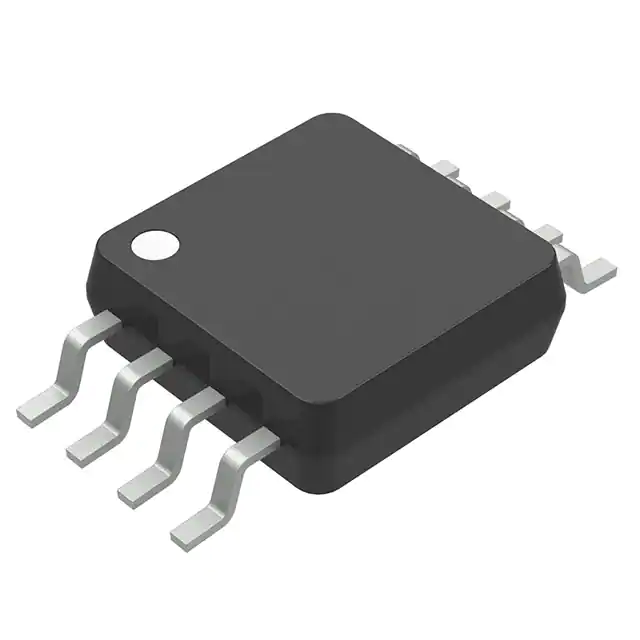
Microchip Technology 11AA020-I/MS
- Part No.:
- 11AA020-I/MS
- Manufacturer:
- Microchip Technology
- Category:
- Memory
- Package:
- 8-TSSOP, 8-MSOP (0.118", 3.00mm Width)
- Datasheet:
-
 11AA020-I/MS.pdf
- Description:
- IC EEPROM 2KBIT SGL WIRE 8MSOP
- Quantity:
- Payment:

- Shipping:

Inventory:1,198
Please send an inquiry. Send us your inquiry, and we will respond immediately.
Product details
Overview
11AA020-I/MS from Microchip Technology is a 2 Kbit (256 × 8) serial EEPROM with UNI/O® single I/O bus interface, operating from 1.8V to 5.5V, featuring 16-byte page write buffer, 1 µA max standby current (I-temp), and Schmitt-trigger SCIO input for noise immunity in space-constrained industrial control and sensor calibration applications.
For engineers reviewing the 11AA020-I/MS datasheet, 11AA020-I/MS pinout, 11AA020-I/MS application, or 11AA020-I/MS equivalent, key selection criteria include its 1.8V low-voltage operation, Manchester-encoded UNI/O® timing compliance (10–100 kHz), STATUS register visibility (WIP/WEL/BP bits), block write protection (0%/25%/50%/100%), and MSOP-8 package compatibility with legacy 8-pin EEPROM footprints.
Technical Context
The 11AA020-I/MS implements a Manchester-encoded, master-controlled UNI/O® bus protocol over a single SCIO line, eliminating separate clock lines and reducing PCB routing complexity. Its internal re-synchronization circuitry tolerates ±0.50% frequency drift per byte and ±0.06 UI edge jitter, enabling robust communication across voltage/temperature variations without external timing components.
It integrates a current-limited, slope-controlled SCIO driver (±3 mA at 2.5V), on-chip high-voltage generator for EEPROM programming, and a nonvolatile STATUS register with write-enable latch and two block-protection bits (BP1/BP0). Write cycles are self-timed (max 10 ms), with automatic erase before write and 1,000,000 endurance cycles per page.
Key Specifications
| Parameter | Value and Actual Design Meaning |
|---|---|
| Density | 2 Kbit (256 × 8 organization) - fixed memory map for deterministic addressing in firmware |
| VCC Range | 1.8V to 5.5V - supports direct interface with 1.8V logic and legacy 3.3V/5V systems without level shifters |
| Interface | Single I/O UNI/O® bus (Manchester-encoded SCIO) - eliminates dedicated clock line, reduces pin count and layout area |
| Page Size | 16 bytes - enables efficient burst writes while preventing accidental cross-page wrap during firmware updates |
| Write Endurance | 1,000,000 erase/write cycles - ensures >10 years of daily field calibration logging at 274 writes/day |
| Data Retention | >200 years - guarantees parameter storage integrity across product lifecycle without refresh |
| Temp Range | −40°C to +85°C (Industrial) - qualified for use in motor drives, HVAC controllers, and industrial sensors |
| ESD Protection | >4,000 V HBM - withstands handling and board-level ESD events without latch-up or data corruption |
Pinout & Package
11AA020-I/MS is packaged in an 8-lead MSOP (MS) package, measuring 3.0 mm × 3.0 mm × 1.0 mm, with gull-wing leads compatible with standard surface-mount reflow profiles. Pin 1 is marked by a dot or beveled corner.
| Pin/Terminal | Circuit Role | Design Meaning |
|---|---|---|
| 1 (NC) | No Connect | Internally unconnected; must be left floating or tied to VSS per layout best practice |
| 2 (NC) | No Connect | Internally unconnected; no electrical function - avoid routing traces to this pad |
| 3 (NC) | No Connect | Internally unconnected; not used for thermal pad or grounding - do not solder |
| 4 (VSS) | Ground Reference | Primary return path for SCIO signaling and internal charge pump; requires low-impedance connection to system ground plane |
| 5 (VCC) | Supply Voltage | Power input for core logic and EEPROM array; bypass with 100 nF ceramic capacitor within 5 mm |
| 6 (NC) | No Connect | Internally unconnected; no function - leave unpopulated or float |
| 7 (NC) | No Connect | Internally unconnected; not a thermal pad - do not connect to ground or power |
| 8 (SCIO) | Serial Clock/Data I/O | Bi-directional Manchester-encoded bus line - requires 10 kΩ pull-up to VCC; shared clock/data path eliminates timing skew |
Key Features
| Feature | Design Value |
|---|---|
| Schmitt-trigger SCIO input | 0.05×VCC hysteresis - rejects <50 ns noise spikes and ensures clean edge detection in electrically noisy industrial environments |
| Output slope control | Controlled rise/fall time (≤100 ns) - eliminates ground bounce and EMI during SCIO transitions |
| Status register visibility | Real-time WIP/WEL/BP bits readable during write cycle - enables firmware polling without blocking other operations |
| Block write protection | Configurable via BP0/BP1 bits to protect 0%, 25%, 50%, or 100% of memory - prevents accidental overwrite of calibration constants or security keys |
| Auto-erase before write | Self-timed erase integrated into write cycle - eliminates need for separate erase command and simplifies firmware flow |
| Low-power standby mode | 1 µA max ICCS at 85°C - extends battery life in portable diagnostic tools and wireless sensor nodes |
Applications
| Industrial Sensor Calibration | Medical Device Configuration |
|---|---|
Use Scenario: Storing factory-calibrated offset/gain coefficients for analog front-end sensors in programmable logic controllers. IC Role / Device Role / Timing Role: Nonvolatile configuration store accessed during power-up and runtime recalibration; UNI/O® timing allows sharing of MCU GPIO without dedicated SPI peripheral. Use Value: Enables field-upgradable calibration without firmware changes; 1.8V operation permits direct interface with low-power ADCs and microcontrollers. |
Use Scenario: Holding patient-specific therapy parameters and device serialization data in portable infusion pumps. IC Role / Device Role / Timing Role: Secure, tamper-resistant parameter storage with block protection preventing unauthorized modification of dose limits. Use Value: Meets IEC 62304 Class C software requirements via 200-year data retention and 1M-cycle endurance for audit log entries. |
| Automotive Body Control Module | Consumer Appliance Settings |
Use Scenario: Saving user preferences (mirror position, seat memory) and fault history logs in 12V automotive body ECUs. IC Role / Device Role / Timing Role: Robust serial storage interfaced to 8-bit MCU GPIO; Schmitt trigger and slope control ensure reliable operation under load-dump transients. Use Value: Qualified for −40°C to +85°C operation and >4 kV ESD - eliminates need for external protection components in cost-sensitive modules. |
Use Scenario: Retaining cooking presets, child lock status, and energy usage counters in smart ovens and washing machines. IC Role / Device Role / Timing Role: Low-pin-count EEPROM for MCU with limited peripherals; single SCIO line simplifies routing on dense, multi-layer appliance PCBs. Use Value: 16-byte page buffer enables atomic save of multi-parameter sets; 1.8V support allows direct connection to 3.3V LDO outputs without level translation. |
Equivalent & Alternatives
The following parts are listed as comparable options for similar serial EEPROM applications.
| Alternative Part | Technical Difference | Application Difference | Selection Advice |
|---|---|---|---|
| AT24C02C-SSHM-T | I²C interface (2-wire), 1 MHz max clock, 5.5V max VCC, no built-in Schmitt triggers | Requires dedicated SCL/SDA pins and external pull-ups; less noise-immune in high-EMI environments | Select when existing design uses I²C infrastructure and MCU lacks flexible GPIO for UNI/O® bit-banging |
| 24AA02E48-I/MS | I²C interface, includes factory-programmed 48-bit MAC address, 1.7V–5.5V VCC, same MSOP-8 package | Provides hardware Ethernet/Wi-Fi identity; no UNI/O® timing or STATUS register visibility during writes | Choose when dual functionality (EEPROM + unique ID) is required and I²C is already implemented |
Compared with AT24C02C-SSHM-T and 24AA02E48-I/MS, the 11AA020-I/MS delivers lower pin count, superior noise immunity via Schmitt-trigger SCIO, real-time STATUS register access during writes, and guaranteed 1.8V operation - making it optimal for resource-constrained, electrically noisy, or ultra-low-voltage embedded systems.
Availability
11AA020-I/MS is available at Aetrix Electronics and suitable for industrial sensor calibration, medical device configuration, automotive body control modules, consumer appliance settings, and portable diagnostic equipment requiring stable component supply across extended temperature ranges and long production lifecycles.
Supply support for 11AA020-I/MS includes scheduled delivery planning, volume procurement assistance, BOM continuity management, traceable sourcing, and lifecycle availability coordination for OEM customers, industrial embedded developers, connected-device designers, and electronics production programs.
Manufacturer
Microchip Technology Inc. is a leading provider of microcontroller, mixed-signal, analog, and Flash-IP solutions, headquartered in Chandler, Arizona, with global design, manufacturing, and sales operations.
The 11AA020-I/MS belongs to Microchip's UNI/O® Serial EEPROM family, designed specifically for space- and pin-constrained embedded systems requiring robust, low-voltage, single-wire nonvolatile storage with minimal firmware overhead.
FAQ
What is the UNI/O® bus interface used by the 11AA020-I/MS?
The 11AA020-I/MS uses Microchip's patented UNI/O® bus, a single-wire, Manchester-encoded serial interface where clock and data are combined on the SCIO line. This eliminates the need for a separate clock signal, reduces pin count to three (VCC, VSS, SCIO), and simplifies PCB layout. The 11AA020-I/MS supports bus frequencies from 10 kHz to 100 kHz and includes built-in re-synchronization to tolerate frequency drift and edge jitter.
Does the 11AA020-I/MS support 1.8V operation, and what are the implications?
Yes, the 11AA020-I/MS operates from 1.8V to 5.5V, with full functionality including read, write, and STATUS register access at 1.8V. This enables direct interfacing with modern ultra-low-power MCUs and sensors without level-shifting circuitry. At 1.8V, active current is 1 mA typical and standby current remains ≤1 µA, making the 11AA020-I/MS ideal for battery-powered applications such as portable diagnostics and wireless sensors.
How does the STATUS register in the 11AA020-I/MS improve system reliability?
The 11AA020-I/MS STATUS register provides real-time visibility into Write-In-Progress (WIP), Write-Enable Latch (WEL), and Block Protection (BP0/BP1) states. Crucially, it can be read *during* an internal write cycle - allowing firmware to poll WIP without halting other operations. This eliminates blind delays and enables responsive error recovery. The 11AA020-I/MS also supports continuous STATUS reads via MAK repetition, enabling tight timing control in safety-critical firmware.
What package options are available for the 11AA020-I/MS, and is the MSOP-8 pinout compatible with other EEPROMs?
The 11AA020-I/MS is offered in the 8-lead MSOP (MS) package, alongside PDIP, SOIC, TDFN, SOT-23, TO-92, and Chip Scale variants. The MSOP-8 footprint matches industry-standard 8-pin EEPROM packages (e.g., SOIC-8 pitch), but pin functions differ: pins 1–3 and 6–7 are NC, pin 4 is VSS, pin 5 is VCC, and pin 8 is SCIO. Therefore, while the physical outline is compatible, PCB layout must follow the 11AA020-I/MS-specific pinout - not generic SOIC-8 mappings.
Can the 11AA020-I/MS be used in automotive applications, and what is its temperature rating?
The 11AA020-I/MS is rated for Industrial temperature range (−40°C to +85°C), not Automotive (−40°C to +125°C). It is therefore suitable for under-hood-adjacent modules like body control units or cabin sensors where ambient temperature stays within I-temp limits, but not for direct engine-compartment placement. For full AEC-Q100 compliance and 125°C operation, Microchip's 11LC020-E/MS variant should be selected instead - the 11AA020-I/MS itself is not qualified for E-temp automotive use.
11AA020-I/MS Specifications
- Product attributes
- Attribute value
- Manufacturer:
- Microchip Technology
- Series:
- -
- Package/Case:
- 8-TSSOP, 8-MSOP (0.118", 3.00mm Width)
- Packaging:
- Tube
- Product Status:
- Active
- Programmable:
- Not Verified
- Memory Type:
- Non-Volatile
- Memory Format:
- EEPROM
- Technology:
- EEPROM
- Memory Size:
- 2Kbit
- Memory Organization:
- 256 x 8
- Memory Interface:
- Single Wire
- Clock Frequency:
- 100 kHz
- Write Cycle Time - Word, Page:
- 5ms
- Access Time:
- -
- Voltage - Supply:
- 1.8V ~ 5.5V
- Operating Temperature:
- -40°C ~ 85°C (TA)
- Grade:
- -
- Qualification:
- -
- Mounting Type:
- Surface Mount
- Supplier Device Package:
- 8-MSOP
11AA020-I/MS FAQ
1.How can I place an order for 11AA020-I/MS through Aetrix?
Please submit a Request for Quotation (RFQ) for 11AA020-I/MS on Aetrix. Our sales agent will provide a competitive quotation and guide you through the order confirmation once you accept the terms.
2.Are the price and stock information for 11AA020-I/MS reliable?
The price and inventory of 11AA020-I/MS are updated periodically and may fluctuate due to market conditions. Stock and pricing data are typically refreshed every 24 hours. Quotation validity for 11AA020-I/MS is usually 5 days.
3.What payment methods are accepted for 11AA020-I/MS?
We accept Wire Transfer, PayPal, Credit Card, Western Union, MoneyGram, and Escrow for 11AA020-I/MS transactions.
Note: Certain payment methods may incur a processing fee.
4.How is shipping managed for 11AA020-I/MS?
11AA020-I/MS orders can be shipped via leading logistics carriers, including DHL, UPS, FedEx, TNT, or Registered Mail.
Once your 11AA020-I/MS order is processed, you will receive an email with the shipment details and tracking number.
Note: Tracking information may take up to 24 hours to appear. Express delivery typically takes 3–5 business days.
5.How can I obtain technical support or documentation for 11AA020-I/MS?
For technical support, including 11AA020-I/MS datasheets, pinout diagrams, or application guidance, please contact our engineering support team. They can provide detailed documentation and assistance for your 11AA020-I/MS requirements.
6.How does Aetrix verify that 11AA020-I/MS is sourced from the original manufacturer or authorized distributors?
All 11AA020-I/MS products on Aetrix are procured from qualified distributors and authorized channels. Our dedicated quality assurance team conducts strict verification, including traceability checks and, if necessary, third-party testing. This ensures that 11AA020-I/MS meets industry standards.
7.What is the process for return or replacement of 11AA020-I/MS?
All 11AA020-I/MS units undergo pre-shipment inspection (PSI). If there is an issue with 11AA020-I/MS, returns or replacements are accepted under the following conditions:
1.Quantity discrepancies, incorrect items, or visible external defects (such as breakage or corrosion), acknowledged by Aetrix.
2.The issue is reported within 90 days of delivery.
3.The 11AA020-I/MS part is unused and in its original packaging.
Return procedure for 11AA020-I/MS:
1.Submit a request within 90 days.
2.Obtain a Return Material Authorization (RMA) from Aetrix.
11AA020-I/MS Tags
-
M24C02-WMN6TP
STMicroelectronics
-
AT24C02C-XHM-T
Microchip Technology
-
AT21CS01-STUM10-T
Microchip Technology

-
AT24C02C-SSHM-T
Microchip Technology
-
24LC01BT-I/OT
Microchip Technology
-
M24C02-FMC6TG
STMicroelectronics
-
AT24CS02-SSHM-T
Microchip Technology

-
93LC46BT-I/OT
Microchip Technology
-
AT24C04C-SSHM-T
Microchip Technology

-
24LC01BT-I/SN
Microchip Technology
-
24AA02UIDT-I/OT
Microchip Technology
-
AT24C08C-STUM-T
Microchip Technology
Tech Hub

TTL and CMOS logic families differ in thresholds, loading, output drive, power and timing. This engineering guide compares 74HC and 74HCT, calculates noise margins and checks 3.3 V/5 V compatibility.

A practical engineering guide to 3.3V and 5V logic compatibility, input thresholds, resistor dividers, translator ICs, MOSFET level shifting, I2C pull-ups, timing limits and power-sequencing risks.

The 74HC595 uses push-pull logic outputs, while the TPIC6B595 uses 50 V open-drain DMOS sinks for higher-power loads. This guide compares timing, current limits, 3.3 V interfacing, load wiring, thermal…

The 74HC595 converts serial data into eight stable parallel outputs. This guide covers pin functions, shift and storage timing, OE and MR behavior, drive-current limits, cascading, voltage compatibilit…

A technical comparison of level-sensitive latches and edge-triggered flip-flops, covering timing windows, setup and hold limits, master–slave operation, time borrowing, race-through, HDL inference and…

A D latch stores one bit while Enable controls when data can pass. This reference covers gate-level operation, truth tables, transparency, setup and hold timing, LE versus OE, common ICs and practical …

An SR latch stores one bit through cross-coupled feedback. This engineering reference covers NOR and NAND implementations, truth tables, forbidden-state recovery, gated operation, switch debouncing, fa…

Latch circuits retain one bit through feedback. This technical reference covers SR and D latches, truth tables, transparency, timing limits, latch-versus-flip-flop behavior, applications and common log…

An engineering guide to LED driver operation, constant-current and constant-voltage outputs, linear and switching topologies, dimming, IC selection, calculations, replacement compatibility, and fault c…

Operational amplifier guide covering op amp basics, feedback, ideal vs real op amps, common configurations, buffer circuits, offset, bias current, gain-bandwidth, slew rate, rail-to-rail limits and sel…


