
 My Inquiry
 My Account


Microchip Technology 24AA00T-I/MNY
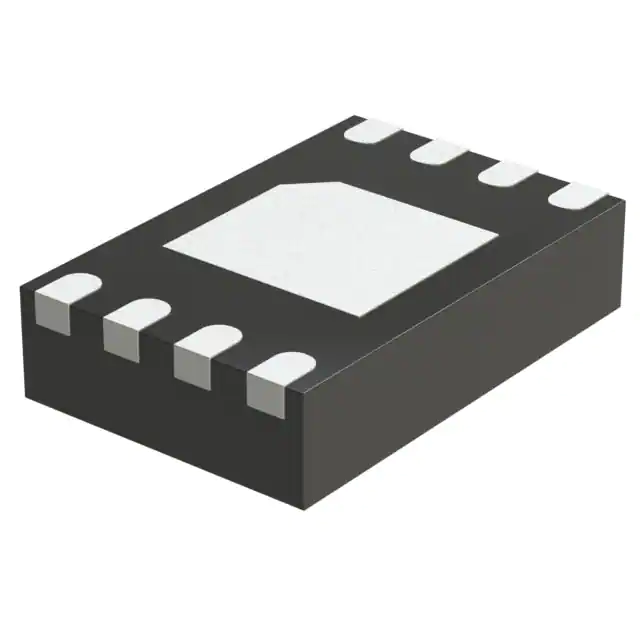
- Part No.:
- 24AA00T-I/MNY
- Manufacturer:
- Microchip Technology
- Category:
- Memory
- Package:
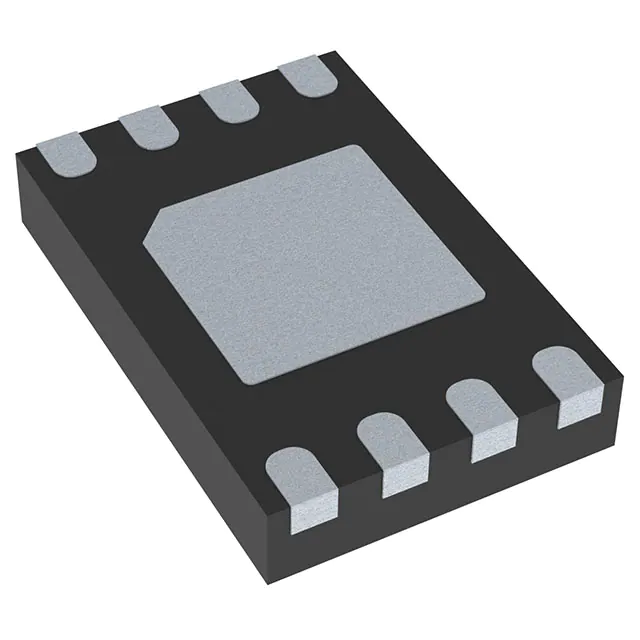
- 8-WFDFN Exposed Pad
- Datasheet:
-
 24AA00T-I/MNY.pdf
- Description:
- IC EEPROM 128BIT I2C 8TDFN
- Quantity:
- Payment:

- Shipping:

Inventory:2,584
Please send an inquiry. Send us your inquiry, and we will respond immediately.
Product details
Overview
24AA00T-I/MNY from Microchip Technology Inc. is a 128-bit (16 × 8) I²C-compatible serial EEPROM designed for low-power, space-constrained applications requiring nonvolatile storage of calibration data, device IDs, or manufacturing traceability. It operates from 1.8 V to 5.5 V, draws only 500 µA typical read current and 100 nA typical standby current, and supports 100 kHz/400 kHz clock rates in industrial temperature range (–40°C to +85°C).
For engineers reviewing the 24AA00T-I/MNY datasheet, 24AA00T-I/MNY pinout, 24AA00T-I/MNY application, or 24AA00T-I/MNY equivalent, key selection considerations include its ultra-low-voltage operation down to 1.8 V, 5-pin SOT-23 package footprint, Schmitt-trigger noise immunity on SDA/SCL, self-timed 3 ms write cycle, and >1 million endurance cycles with >200-year data retention.
Technical Context
The 24AA00T-I/MNY implements a true 2-wire I²C slave interface with fixed 7-bit address (1010xxx), no external address pins, and automatic internal address pointer incrementation during sequential reads. Its architecture includes integrated HV generator for EEPROM programming, Schmitt-trigger inputs with 50 ns spike suppression, and output slope control to minimize ground bounce.
It uses a single VCC-supplied charge pump for erase/write operations and features a VCC threshold detector that disables write logic below 1.5 V. The device does not generate ACK during internal write cycles-enabling reliable acknowledge polling-and supports byte, random, and sequential read modes without requiring external timing components.
Key Specifications
| Parameter | Value and Actual Design Meaning |
|---|---|
| Memory size | 128 bits (16 words × 8 bits); sufficient for small configuration or ID storage without over-provisioning PCB area. |
| Supply voltage | 1.8 V to 5.5 V; enables direct interfacing with 1.8 V, 2.5 V, 3.3 V, and 5 V microcontrollers without level shifters. |
| Interface | I²C-compatible 2-wire bus; requires only SDA and SCL lines plus pull-ups-reducing routing complexity and pin count. |
| Write time | 3 ms typical page write; deterministic self-timed cycle eliminates need for software delay or status polling overhead. |
| Endurance | 1 million erase/write cycles; supports frequent field updates such as logging or calibration adjustment in deployed systems. |
| Data retention | 200+ years at +85°C; ensures long-term reliability for products with multi-decade service life or archival requirements. |
| ESD protection | >4 kV HBM; provides robustness against handling and board-level ESD events without external protection diodes. |
Pinout & Package
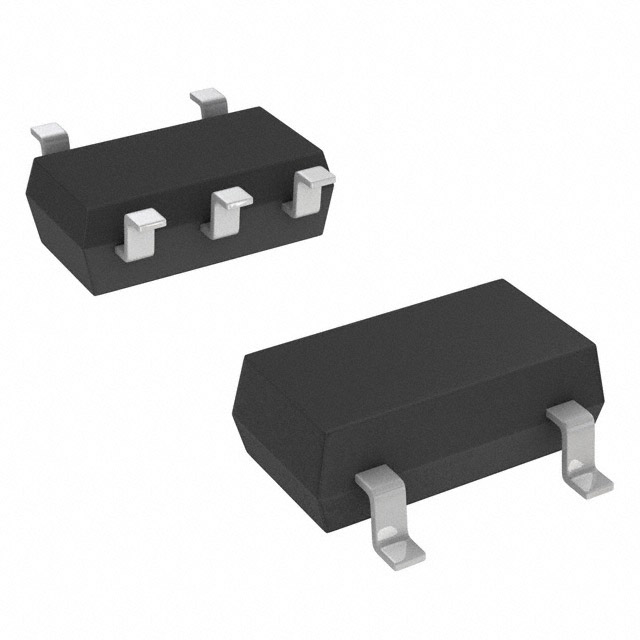
24AA00T-I/MNY is housed in a Pb-free, RoHS-compliant 5-lead SOT-23 package (JEDEC TO-236AB), measuring 2.90 mm × 1.30 mm × 1.00 mm. The exposed pad is not electrically connected and may be left floating or grounded for thermal relief.
| Pin/Terminal | Circuit Role | Design Meaning |
|---|---|---|
| SCL | Serial Clock input | Asynchronous master-controlled clock line; Schmitt-triggered with 50 ns noise filtering-tolerates noisy environments without external RC filters. |
| SDA | Serial Data bidirectional I/O | Open-drain I²C bus line requiring external pull-up; supports shared-bus arbitration and multi-master operation. |
| VSS | Ground reference | Primary return path for all internal circuitry; must be low-impedance to ensure stable EEPROM programming voltage generation. |
| VCC | Power supply input | Supplies both logic and charge-pump circuitry; internal VCC monitor disables writes below 1.5 V to prevent corruption. |
| NC | No-connect terminal | Internally unconnected; electrically isolated-no routing, termination, or grounding required. |
Key Features
| Feature | Design Value |
|---|---|
| Low-voltage operation | Functional down to 1.8 V-enables use in battery-powered or energy-harvesting systems where rail voltage sags below 2.5 V. |
| Ultra-low standby current | 100 nA typical-minimizes quiescent power draw in always-on IoT sensors or sleep-mode embedded controllers. |
| Bus noise immunity | Schmitt-trigger inputs + 50 ns input filter-eliminates false Start/Stop detection on electrically noisy industrial or automotive PCBs. |
| Write cycle reliability | Self-timed erase/write with VCC brown-out protection-guarantees data integrity even during power interruption or undervoltage events. |
| Small-footprint packaging | 5-pin SOT-23 (2.9 × 1.3 mm)-fits in tight spaces where 8-pin SOIC or TSSOP would exceed layout constraints. |
Applications
| Smart Sensor Calibration | Industrial PLC Configuration |
|---|---|
|
Use Scenario: Storing factory-calibrated sensor offset/gain coefficients and temperature compensation tables in MEMS pressure or humidity sensors. IC Role / Device Role / Timing Role: Nonvolatile configuration storage accessed once at power-up via I²C by host MCU; no real-time timing constraints. Use Value: Enables plug-and-play sensor replacement without reprogramming host firmware-calibration data persists across power cycles and field swaps. |
Use Scenario: Retaining user-defined I/O mapping, alarm thresholds, and communication parameters in compact programmable logic controllers. IC Role / Device Role / Timing Role: Persistent parameter store updated infrequently during commissioning or maintenance; accessed via I²C during boot or configuration mode. Use Value: Eliminates need for battery-backed RAM or larger EEPROMs-reduces BOM cost and improves long-term reliability in unattended deployments. |
| Medical Device Traceability | Consumer Appliance Identity |
|
Use Scenario: Recording unique serial number, manufacturing date, and regulatory compliance codes in portable diagnostic equipment. IC Role / Device Role / Timing Role: Secure, tamper-resistant identity storage written once during final test; read-only during device operation. Use Value: Meets UDI (Unique Device Identification) requirements per FDA 21 CFR Part 820 with verified 200-year data retention at operating temperature. |
Use Scenario: Embedding model-specific feature enable bits, regional settings, and firmware version locks in smart home appliances. IC Role / Device Role / Timing Role: Boot-time configuration loader for MCU; stores immutable product variant data independent of main flash memory. Use Value: Allows single hardware SKU to support multiple SKUs via software-defined features-simplifies inventory and reduces production complexity. |
Equivalent & Alternatives
The following parts are listed as comparable options for similar serial EEPROM applications.
| Alternative Part | Technical Difference | Application Difference | Selection Advice |
|---|---|---|---|
| 24LC00T-I/MNY | Requires minimum 2.5 V VCC; otherwise identical pinout, timing, and memory organization. | Not suitable for 1.8 V systems; acceptable where 3.3 V or 5 V rails are guaranteed and lower standby current is not critical. | Select when system VCC never drops below 2.5 V and legacy 24LC00 qualification is required. |
| AT24C01A-PU | 1 Kbit capacity (128 × 8), same 5-pin SOT-23 package, but requires 1.7–5.5 V and lacks factory-programmable option. | Provides 8× more memory for extended configuration sets; no factory programming service available from Microchip. | Choose when future scalability or larger parameter tables are anticipated, and factory pre-programming is unnecessary. |
Compared with 24AA00T-I/MNY, the 24LC00T-I/MNY trades 1.8 V compatibility for marginally higher minimum supply, while the AT24C01A-PU offers greater density in identical footprint at the cost of losing Microchip's factory programming capability and slightly higher typical standby current (300 nA vs. 100 nA).
Availability
24AA00T-I/MNY is available at Aetrix Electronics and suitable for smart sensor calibration, industrial PLC configuration, and medical device traceability requiring stable component supply across extended product lifecycles.
Supply support for 24AA00T-I/MNY includes scheduled delivery planning, volume procurement assistance, BOM continuity management, traceable sourcing, and lifecycle availability coordination for OEM customers, industrial embedded developers, connected-device designers, and electronics production programs.
Manufacturer
Microchip Technology Inc. is a leading provider of microcontroller, analog, FPGA, and memory solutions, with a focus on embedded control and connectivity for industrial, automotive, and consumer markets.
The 24AA00 series was designed specifically for ultra-low-power, minimal-footprint nonvolatile storage in cost-sensitive, space-constrained embedded systems where reliability and long-term data integrity are critical.
FAQ
What is the minimum operating voltage for the 24AA00T-I/MNY?
The 24AA00T-I/MNY operates down to 1.8 V, making it compatible with modern low-voltage microcontrollers and battery-powered devices. Its internal charge pump and VCC threshold detector disable write operations below 1.5 V to prevent data corruption-ensuring safe operation across the full 1.8 V to 5.5 V range specified in the 24AA00T-I/MNY datasheet.
Does the 24AA00T-I/MNY support standard I²C addressing?
Yes, the 24AA00T-I/MNY uses a fixed 7-bit I²C slave address of 1010xxx (where xxx are "don't care" bits), resulting in eight possible addresses (0x50–0x57). It does not support external address pins, so multiple 24AA00T-I/MNY devices on the same bus require different base addresses or external multiplexing-confirmed in the 24AA00T-I/MNY functional description section.
How is write completion detected for the 24AA00T-I/MNY?
Write completion is detected using acknowledge polling: after issuing a Stop condition to initiate the internal 3 ms write cycle, the host sends a repeated Start + control byte (R/W = 0); the 24AA00T-I/MNY responds with an ACK only when the write is complete. This method avoids fixed delays and maximizes bus efficiency-documented in Section 7.0 of the 24AA00T-I/MNY datasheet.
What package type is used for the 24AA00T-I/MNY?
The 24AA00T-I/MNY is supplied in a 5-lead SOT-23 package (JEDEC TO-236AB), with pinout SCL–SDA–VSS–NC–VCC. This compact 2.90 mm × 1.30 mm footprint matches industry-standard land patterns and supports automated placement-verified in the Pin Function Table and Package Marking Information sections of the 24AA00T-I/MNY datasheet.
Can the 24AA00T-I/MNY be factory-programmed before shipment?
Yes, factory programming is explicitly supported for the 24AA00T-I/MNY per the Features section of its datasheet. Microchip offers pre-programming of calibration data, serial numbers, or custom bit patterns during wafer sort or final test-enabling secure, traceable, and ready-to-use deployment without post-manufacture programming steps.
24AA00T-I/MNY Specifications
- Product attributes
- Attribute value
- Manufacturer:
- Microchip Technology
- Series:
- -
- Package/Case:
- 8-WFDFN Exposed Pad
- Packaging:
- Tape & Reel (TR)
- Product Status:
- Active
- Programmable:
- Not Verified
- Memory Type:
- Non-Volatile
- Memory Format:
- EEPROM
- Technology:
- EEPROM
- Memory Size:
- 128bit
- Memory Organization:
- 16 x 8
- Memory Interface:
- I2C
- Clock Frequency:
- 400 kHz
- Write Cycle Time - Word, Page:
- 4ms
- Access Time:
- 3500 ns
- Voltage - Supply:
- 1.8V ~ 5.5V
- Operating Temperature:
- -40°C ~ 85°C (TA)
- Grade:
- -
- Qualification:
- -
- Mounting Type:
- Surface Mount
- Supplier Device Package:
- 8-TDFN (2x3)
24AA00T-I/MNY FAQ
1.How can I place an order for 24AA00T-I/MNY through Aetrix?
Please submit a Request for Quotation (RFQ) for 24AA00T-I/MNY on Aetrix. Our sales agent will provide a competitive quotation and guide you through the order confirmation once you accept the terms.
2.Are the price and stock information for 24AA00T-I/MNY reliable?
The price and inventory of 24AA00T-I/MNY are updated periodically and may fluctuate due to market conditions. Stock and pricing data are typically refreshed every 24 hours. Quotation validity for 24AA00T-I/MNY is usually 5 days.
3.What payment methods are accepted for 24AA00T-I/MNY?
We accept Wire Transfer, PayPal, Credit Card, Western Union, MoneyGram, and Escrow for 24AA00T-I/MNY transactions.
Note: Certain payment methods may incur a processing fee.
4.How is shipping managed for 24AA00T-I/MNY?
24AA00T-I/MNY orders can be shipped via leading logistics carriers, including DHL, UPS, FedEx, TNT, or Registered Mail.
Once your 24AA00T-I/MNY order is processed, you will receive an email with the shipment details and tracking number.
Note: Tracking information may take up to 24 hours to appear. Express delivery typically takes 3–5 business days.
5.How can I obtain technical support or documentation for 24AA00T-I/MNY?
For technical support, including 24AA00T-I/MNY datasheets, pinout diagrams, or application guidance, please contact our engineering support team. They can provide detailed documentation and assistance for your 24AA00T-I/MNY requirements.
6.How does Aetrix verify that 24AA00T-I/MNY is sourced from the original manufacturer or authorized distributors?
All 24AA00T-I/MNY products on Aetrix are procured from qualified distributors and authorized channels. Our dedicated quality assurance team conducts strict verification, including traceability checks and, if necessary, third-party testing. This ensures that 24AA00T-I/MNY meets industry standards.
7.What is the process for return or replacement of 24AA00T-I/MNY?
All 24AA00T-I/MNY units undergo pre-shipment inspection (PSI). If there is an issue with 24AA00T-I/MNY, returns or replacements are accepted under the following conditions:
1.Quantity discrepancies, incorrect items, or visible external defects (such as breakage or corrosion), acknowledged by Aetrix.
2.The issue is reported within 90 days of delivery.
3.The 24AA00T-I/MNY part is unused and in its original packaging.
Return procedure for 24AA00T-I/MNY:
1.Submit a request within 90 days.
2.Obtain a Return Material Authorization (RMA) from Aetrix.
24AA00T-I/MNY Tags

-
M24C02-WMN6TP
STMicroelectronics
-
AT24C02C-XHM-T
Microchip Technology
-
AT21CS01-STUM10-T
Microchip Technology

-
AT24C02C-SSHM-T
Microchip Technology
-
24LC01BT-I/OT
Microchip Technology
-
M24C02-FMC6TG
STMicroelectronics
-
AT24CS02-SSHM-T
Microchip Technology

-
93LC46BT-I/OT
Microchip Technology
-
AT24C04C-SSHM-T
Microchip Technology

-
24LC01BT-I/SN
Microchip Technology
-
24AA02UIDT-I/OT
Microchip Technology
-
AT24C08C-STUM-T
Microchip Technology
Tech Hub

TTL and CMOS logic families differ in thresholds, loading, output drive, power and timing. This engineering guide compares 74HC and 74HCT, calculates noise margins and checks 3.3 V/5 V compatibility.

A practical engineering guide to 3.3V and 5V logic compatibility, input thresholds, resistor dividers, translator ICs, MOSFET level shifting, I2C pull-ups, timing limits and power-sequencing risks.

The 74HC595 uses push-pull logic outputs, while the TPIC6B595 uses 50 V open-drain DMOS sinks for higher-power loads. This guide compares timing, current limits, 3.3 V interfacing, load wiring, thermal…

The 74HC595 converts serial data into eight stable parallel outputs. This guide covers pin functions, shift and storage timing, OE and MR behavior, drive-current limits, cascading, voltage compatibilit…

A technical comparison of level-sensitive latches and edge-triggered flip-flops, covering timing windows, setup and hold limits, master–slave operation, time borrowing, race-through, HDL inference and…

A D latch stores one bit while Enable controls when data can pass. This reference covers gate-level operation, truth tables, transparency, setup and hold timing, LE versus OE, common ICs and practical …

An SR latch stores one bit through cross-coupled feedback. This engineering reference covers NOR and NAND implementations, truth tables, forbidden-state recovery, gated operation, switch debouncing, fa…

Latch circuits retain one bit through feedback. This technical reference covers SR and D latches, truth tables, transparency, timing limits, latch-versus-flip-flop behavior, applications and common log…

An engineering guide to LED driver operation, constant-current and constant-voltage outputs, linear and switching topologies, dimming, IC selection, calculations, replacement compatibility, and fault c…

Operational amplifier guide covering op amp basics, feedback, ideal vs real op amps, common configurations, buffer circuits, offset, bias current, gain-bandwidth, slew rate, rail-to-rail limits and sel…


