
 My Inquiry
 My Account


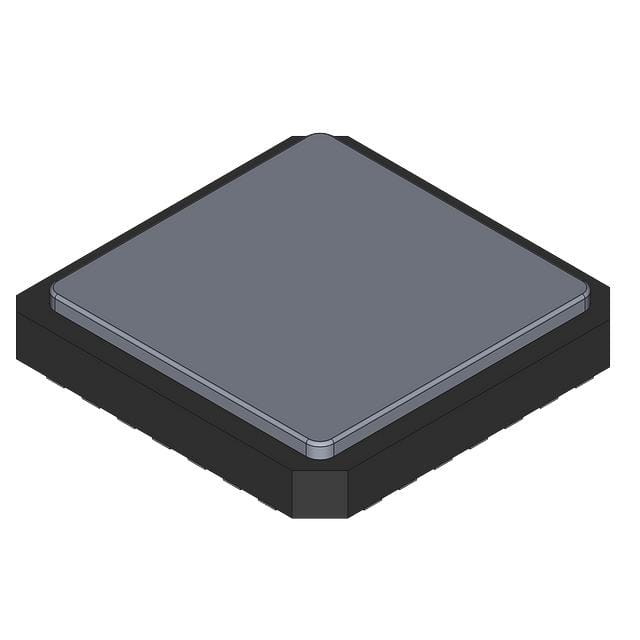
Texas Instruments 5962-87671043A
- Part No.:
- 5962-87671043A
- Manufacturer:
- Texas Instruments
- Category:
- PLDs (Programmable Logic Device)
- Package:
- -
- Datasheet:
-
 5962-87671043A.pdf
- Description:
- TIBPAL20R4-20M HIGH-PERFORMANCE
- Quantity:
- Payment:

- Shipping:

Inventory:4,877
Please send an inquiry. Send us your inquiry, and we will respond immediately.
Product details
Overview
TIBPAL20R4-20M from Texas Instruments is a high-performance military-grade programmable array logic (PAL) device with 12 inputs, 4 registered 3-state outputs, and a maximum clock frequency of 41.6 MHz. It features power-up clear, asynchronous preload capability, and operates across −55°C to 125°C. Used in legacy aerospace and defense control logic for state-machine initialization and I/O buffering.
For engineers reviewing the 5962-87671043A datasheet, 5962-87671043A pinout, 5962-87671043A application, or 5962-87671043A equivalent, this page delivers verified electrical specs, military temperature validation, registered output timing behavior, and LCCC package layout details essential for obsolescence-mitigated system redesigns.
Technical Context
The 5962-87671043A implements a fixed-architecture PAL with 40 × 64 AND-OR logic array, synchronous D-type registers on all four outputs, and active-low output enable (OE). Its register clock (CLK) and OE signals are fully specified for operation at 41.6 MHz max without feedback.
It supports asynchronous preload of each register to high or low states via dedicated control sequences, enabling deterministic test initialization. Power-up reset forces all Q outputs low regardless of input state, ensuring repeatable startup in safety-critical sequencers.
Key Specifications
| Parameter | Value and Actual Design Meaning |
|---|---|
| Logic Type | Registered PAL with 40 × 64 AND-OR array and D-flip-flop outputs |
| Max Clock Frequency | 41.6 MHz - defines highest reliable synchronous update rate for state machines |
| Supply Voltage Range | 4.5 V to 5.5 V - compatible with MIL-STD-704A regulated 5 V systems |
| Operating Temperature | −55°C to 125°C - qualified for airborne, spaceborne, and ground vehicle environments |
| Output Drive | IOL = 12 mA, IOH = −2 mA - sufficient for direct TTL/LS fanout without buffers |
| Propagation Delay | tpd(CLK→Q) = 8–15 ns - enables sub-25 ns state transitions in real-time control loops |
| ICC (max) | 180 mA - establishes worst-case power budget for thermal design in sealed enclosures |
Pinout & Package
LCCC (Leadless Chip Carrier), FD package, 28-pin ceramic, hermetically sealed, JESD-22 qualified for high-reliability applications.
| Pin/Terminal | Circuit Role | Design Meaning |
|---|---|---|
| 1 | CLK | Synchronous clock input controlling all 4 registered outputs |
| 2–11 | I | 10 dedicated input pins (pins 2–11 exclude pin 7, which is NC) |
| 12 | GND | Ground reference for logic and power return |
| 13 | OE | Active-low output enable controlling 3-state behavior of all Q outputs |
| 14–15, 17–18, 20–21 | Q | 4 registered outputs (Q1–Q4); pin 14 = Q1, pin 15 = Q2, pin 17 = Q3, pin 18 = Q4 |
| 16, 19, 22 | NC | No internal connection - must be left unconnected per TI design rules |
| 23–24, 26–28 | I | 2 additional inputs (pins 23, 24, 26, 27, 28 - total 12 inputs confirmed) |
| 25 | VCC | +5 V supply pin - requires local 0.1 µF ceramic decoupling |
Key Features
| Feature | Design Value |
|---|---|
| Power-Up Clear | All Q outputs forced low at VCC ramp - eliminates undefined startup states in flight control sequencers |
| Asynchronous Preload | Each Q register independently set to 0 or 1 before clocking - enables boundary-scan-like test coverage without external logic |
| Military Temp Qualification | Tested and characterized over −55°C to 125°C - meets MIL-PRF-38535 Class B requirements |
| Hermetic LCCC Packaging | FD drawing, 28-pin ceramic - provides moisture resistance and mechanical stability in vibration-prone platforms |
| 3-State Output Enable | Single OE pin controls all 4 outputs - simplifies bus arbitration in multiprocessor backplanes |
Applications
| Aerospace Sequencing Logic | Defense Radar Timing Control |
|---|---|
Use Scenario: Boot-up sequence manager in satellite telemetry subsystems requiring deterministic register initialization after power cycling. IC Role / Device Role / Timing Role: State-machine controller implementing 4-bit counter and mode-select logic with guaranteed zero-start condition. Use Value: Power-up clear ensures no spurious command pulses during cold start; 41.6 MHz clock supports <25 ns step resolution in attitude adjustment loops. | Use Scenario: Pulse timing generator in phased-array radar front-end, synchronizing T/R module activation windows. IC Role / Device Role / Timing Role: Registered output buffer distributing synchronized trigger edges to 4 independent RF channel drivers. Use Value: 8–15 ns CLK→Q delay enables precise inter-channel skew control; 3-state OE allows dynamic reconfiguration during beam steering. |
| Avionics Display Interface | Missile Guidance Logic |
Use Scenario: Data formatter between flight computer and monochrome CRT display controller in legacy cockpit systems. IC Role / Device Role / Timing Role: Parallel-to-serial shift register emulator using registered outputs to serialize pixel data under master clock. Use Value: Asynchronous preload loads first pixel byte before display sync pulse; −55°C to 125°C rating sustains operation in unpressurized avionics bays. | Use Scenario: Fault-tolerant watchdog sequencer in inertial navigation unit, verifying sensor health before arming guidance algorithms. IC Role / Device Role / Timing Role: Safety-critical state machine with dual-redundant register paths and fail-safe reset behavior. Use Value: Hermetic LCCC packaging prevents moisture-induced latent failures; power-up clear guarantees known safe state after brownout recovery. |
Equivalent & Alternatives
The following parts are listed as comparable options for similar registered PAL applications.
| Alternative Part | Technical Difference | Application Difference | Selection Advice |
|---|---|---|---|
| 5962-87671013A | Same FD package, 28-pin LCCC, but TIBPAL20L8-20M variant with 14 inputs + 6 outputs (no registers) | Used where combinatorial logic density > registered function - e.g., address decoding vs. state storage | Select only if application requires higher input count and no clocked outputs |
| 5962-8767102LA | CDIP JT package, 24-pin, TIBPAL20R8-20M - adds 4 more registered outputs (8 total), same temp range | Required when expanding I/O count in existing board layouts with through-hole footprint constraints | Choose when needing 8 registered outputs and CDIP compatibility is mandatory for repair or legacy assembly |
Compared with 5962-87671043A, 5962-87671013A trades registered outputs for greater combinatorial flexibility, while 5962-8767102LA retains full register functionality but increases output count and changes package type - both require PCB-level evaluation for signal integrity and thermal management.
Availability
5962-87671043A is available at Aetrix Electronics and suitable for aerospace sequencing logic, defense radar timing control, avionics display interface, and missile guidance logic requiring stable component supply across extended temperature ranges and long production lifecycles.
Supply support for 5962-87671043A includes scheduled delivery planning, volume procurement assistance, BOM continuity management, traceable sourcing, and lifecycle availability coordination for OEM customers, industrial embedded developers, connected-device designers, and electronics production programs.
Manufacturer
Texas Instruments is a U.S.-based semiconductor company founded in 1930, specializing in analog, embedded processing, and high-reliability logic solutions for industrial, automotive, and defense markets.
The TIBPAL20R4 series belongs to TI's military-qualified IMPACT™ PAL family, designed specifically for replacing discrete TTL logic in radiation-tolerant, high-temperature, and long-lifecycle systems where programmability reduces board area and improves design iteration speed.
FAQ
What is the absolute maximum supply voltage for 5962-87671043A?
The absolute maximum supply voltage for 5962-87671043A is 7 V, as specified in the Absolute Maximum Ratings table. Operation above 5.5 V nominal violates recommended conditions and risks permanent damage. The device is rated for 4.5 V to 5.5 V operation, with 5 V being the typical target for MIL-STD-704A-compliant power supplies. Exceeding 7 V-even momentarily-may cause latch-up or junction breakdown in the Advanced Low-Power Schottky circuitry of the 5962-87671043A.
Does 5962-87671043A support in-system programming?
No, 5962-87671043A does not support in-system programming. It is a one-time programmable (OTP) device using titanium-tungsten fuses, requiring external UV-erasable or dedicated PAL programmers prior to soldering. Programming occurs off-board using standard industry tools like Data I/O PS-29 or BP Microsystems devices, with algorithms documented in TI's SRPS021A specification. The 5962-87671043A has no serial interface, JTAG port, or configuration memory - all logic patterns are permanently fused during initial programming.
What is the purpose of Pin 13 (OE) on 5962-87671043A?
Pin 13 on 5962-87671043A is the active-low Output Enable (OE) signal, which controls the 3-state behavior of all four registered outputs (Q1–Q4). When OE is high, outputs enter high-impedance (Hi-Z) mode; when OE is low, outputs drive valid logic levels. This enables bus sharing in multi-device systems and reduces contention during power-up or fault conditions. The 5962-87671043A datasheet specifies ten(OE→Q) = 10–20 ns and tdis(OE↑→Q) = 8–20 ns, confirming its use in time-critical arbitration schemes.
How does the power-up clear function behave on 5962-87671043A?
On 5962-87671043A, power-up clear forces all four registered outputs (Q1–Q4) to logic low immediately upon VCC crossing 1.5 V, provided the VCC ramp is monotonic. This reset occurs independently of CLK or OE state and lasts ~600 ns (typical), per Figure 2 in SRPS021A. It ensures deterministic initialization in safety-critical applications such as flight control sequencers. The 5962-87671043A does not assert any output high during this event - all Q pins go low, then remain low until first valid clock edge.
Can 5962-87671043A be used as a drop-in replacement for PAL20R4-20M?
No, 5962-87671043A is not a drop-in replacement for commercial PAL20R4-20M. While functionally identical in logic architecture, it differs in qualification level (MIL-PRF-38535 Class B vs. commercial), package (28-pin LCCC FD vs. 24-pin CDIP JT), marking, and screening. The 5962-87671043A requires PCB redesign due to different pin count, layout, and thermal pad requirements. Its use mandates compliance verification per applicable military standards - the 5962-87671043A is intended for new designs requiring certified high-reliability assurance, not retrofits.
5962-87671043A Specifications
- Product attributes
- Attribute value
- Manufacturer:
- Texas Instruments
- Series:
- *
- Package/Case:
- -
- Packaging:
- Bulk
- Product Status:
- Active
- Programmable:
- Not Verified
- Programmable Type:
- -
- Number of Macrocells:
- -
- Voltage - Input:
- -
- Speed:
- -
- Mounting Type:
- -
- Supplier Device Package:
- -
5962-87671043A FAQ
1.How can I place an order for 5962-87671043A through Aetrix?
Please submit a Request for Quotation (RFQ) for 5962-87671043A on Aetrix. Our sales agent will provide a competitive quotation and guide you through the order confirmation once you accept the terms.
2.Are the price and stock information for 5962-87671043A reliable?
The price and inventory of 5962-87671043A are updated periodically and may fluctuate due to market conditions. Stock and pricing data are typically refreshed every 24 hours. Quotation validity for 5962-87671043A is usually 5 days.
3.What payment methods are accepted for 5962-87671043A?
We accept Wire Transfer, PayPal, Credit Card, Western Union, MoneyGram, and Escrow for 5962-87671043A transactions.
Note: Certain payment methods may incur a processing fee.
4.How is shipping managed for 5962-87671043A?
5962-87671043A orders can be shipped via leading logistics carriers, including DHL, UPS, FedEx, TNT, or Registered Mail.
Once your 5962-87671043A order is processed, you will receive an email with the shipment details and tracking number.
Note: Tracking information may take up to 24 hours to appear. Express delivery typically takes 3–5 business days.
5.How can I obtain technical support or documentation for 5962-87671043A?
For technical support, including 5962-87671043A datasheets, pinout diagrams, or application guidance, please contact our engineering support team. They can provide detailed documentation and assistance for your 5962-87671043A requirements.
6.How does Aetrix verify that 5962-87671043A is sourced from the original manufacturer or authorized distributors?
All 5962-87671043A products on Aetrix are procured from qualified distributors and authorized channels. Our dedicated quality assurance team conducts strict verification, including traceability checks and, if necessary, third-party testing. This ensures that 5962-87671043A meets industry standards.
7.What is the process for return or replacement of 5962-87671043A?
All 5962-87671043A units undergo pre-shipment inspection (PSI). If there is an issue with 5962-87671043A, returns or replacements are accepted under the following conditions:
1.Quantity discrepancies, incorrect items, or visible external defects (such as breakage or corrosion), acknowledged by Aetrix.
2.The issue is reported within 90 days of delivery.
3.The 5962-87671043A part is unused and in its original packaging.
Return procedure for 5962-87671043A:
1.Submit a request within 90 days.
2.Obtain a Return Material Authorization (RMA) from Aetrix.
5962-87671043A Tags
-
ATF16V8B-15PU
Microchip Technology
-
ATF16V8B-15JU
Microchip Technology
-
ATF16V8BQL-15PU
Microchip Technology
-
ATF22V10C-15PU
Microchip Technology
.jpg)
-
ATF22V10C-15JU
Microchip Technology
-
ATF22V10C-10JU
Microchip Technology
-
ATF22V10B-15GM/883
Microchip Technology
-
ATF16V8B-15SU
Microchip Technology
-
ATF16V8BQL-15SU
Microchip Technology
-
ATF16V8BQL-15JU
Microchip Technology
-
ATF16V8B-10JU
Microchip Technology
-
ATF16V8BQL-15XU
Microchip Technology
Tech Hub

A practical engineering guide to 3.3V and 5V logic compatibility, input thresholds, resistor dividers, translator ICs, MOSFET level shifting, I2C pull-ups, timing limits and power-sequencing risks.

The 74HC595 uses push-pull logic outputs, while the TPIC6B595 uses 50 V open-drain DMOS sinks for higher-power loads. This guide compares timing, current limits, 3.3 V interfacing, load wiring, thermal…

The 74HC595 converts serial data into eight stable parallel outputs. This guide covers pin functions, shift and storage timing, OE and MR behavior, drive-current limits, cascading, voltage compatibilit…

A technical comparison of level-sensitive latches and edge-triggered flip-flops, covering timing windows, setup and hold limits, master–slave operation, time borrowing, race-through, HDL inference and…

A D latch stores one bit while Enable controls when data can pass. This reference covers gate-level operation, truth tables, transparency, setup and hold timing, LE versus OE, common ICs and practical …

An SR latch stores one bit through cross-coupled feedback. This engineering reference covers NOR and NAND implementations, truth tables, forbidden-state recovery, gated operation, switch debouncing, fa…

Latch circuits retain one bit through feedback. This technical reference covers SR and D latches, truth tables, transparency, timing limits, latch-versus-flip-flop behavior, applications and common log…

An engineering guide to LED driver operation, constant-current and constant-voltage outputs, linear and switching topologies, dimming, IC selection, calculations, replacement compatibility, and fault c…

Operational amplifier guide covering op amp basics, feedback, ideal vs real op amps, common configurations, buffer circuits, offset, bias current, gain-bandwidth, slew rate, rail-to-rail limits and sel…

Jumper cables guide covering safe connection order, red and black clamp placement, final ground connection, cable gauge, length, clamp quality, copper vs CCA cables, jump starter comparison and battery…


