
 My Inquiry
 My Account


Texas Instruments 5962-8861901XA
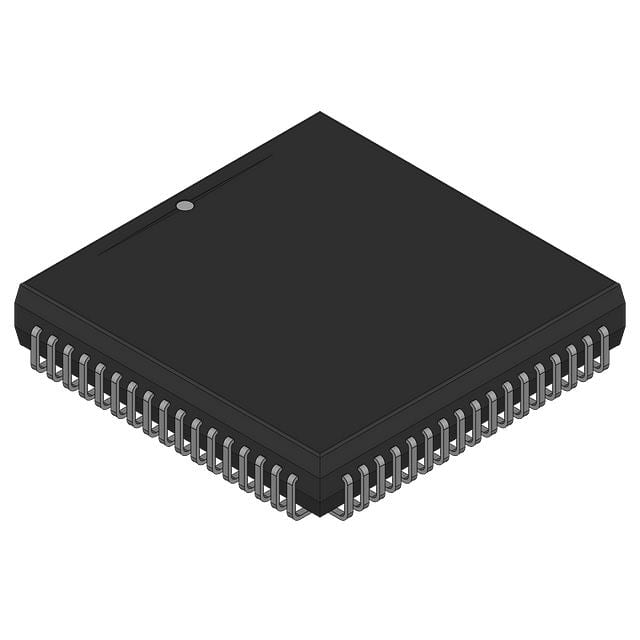
- Part No.:
- 5962-8861901XA
- Manufacturer:
- Texas Instruments
- Category:
- DSP (Digital Signal Processors)
- Package:
- 68-BCPGA Exposed Pad
- Datasheet:
-
 5962-8861901XA.pdf
- Description:
- SMJ320C25 MILITARY CERAMIC C25 D
- Quantity:
- Payment:

- Shipping:

Inventory:1,864
Please send an inquiry. Send us your inquiry, and we will respond immediately.
Product details
Overview
5962-8861901XA from Texas Instruments is a radiation-hardened, military-grade 16-bit digital signal processor (DSP) designed for real-time signal processing in tactical communications, guidance systems, and spectrum analysis. It features a 100-ns instruction cycle time, 544 words of on-chip data RAM, 4K words of on-chip program ROM, a 16 × 16-bit hardware multiplier with 32-bit product, and a 32-bit ALU/accumulator - enabling 12.5 MIPS execution in embedded control and filtering applications.
For engineers reviewing the 5962-8861901XA datasheet, 5962-8861901XA pinout, 5962-8861901XA application, or 5962-8861901XA equivalent, this page delivers verified technical context, military temperature range (-55°C to 125°C), 68-pin ceramic package mapping, serial port interface details, and confirmed alternatives for high-reliability DSP system design.
Technical Context
The 5962-8861901XA implements a Harvard architecture with separate 16-bit program and data buses, supporting single-cycle multiply/accumulate (MAC) instructions and block memory transfers. Its eight auxiliary registers with dedicated arithmetic unit enable efficient indirect addressing for FFTs and adaptive filtering.
It integrates a full-duplex serial port (DR/DX/CLKR/CLKX/FSR/FSX), on-chip 16-bit timer with period register (PRD), global memory arbitration via BR/READY signals, and microprocessor/microcomputer mode selection (MP/MC) - all operating from a single 5-V supply using 1.6-µm CMOS technology.
Key Specifications
| Parameter | Value and Actual Design Meaning |
|---|---|
| Instruction Cycle Time | 100 ns - enables 12.5 million instructions per second (MIPS) for real-time filtering and control loops. |
| On-Chip Data RAM | 544 × 16-bit words - split into three configurable blocks (B0/B1/B2) for flexible data/program memory partitioning. |
| On-Chip Program ROM | 4K × 16-bit words - mask-programmed storage for boot code or fixed algorithms, eliminating external ROM dependency. |
| Multiplier | 16 × 16-bit hardware unit with 32-bit product register - supports single-cycle MAC for FIR/IIR filter kernels. |
| ALU/Accumulator | 32-bit ALU with dual 16-bit accumulator segments (ACCH/ACCL) - enables extended-precision arithmetic and normalization. |
| Memory Address Space | 128K words total (64K program + 64K data) - supports external memory expansion with wait-state control via READY input. |
| Operating Temperature | –55°C to +125°C - qualified per MIL-PRF-38535 Class V for space and defense platforms. |
Pinout & Package
5962-8861901XA is packaged in a 68-pin ceramic leaded chip carrier (FJ suffix), 68-pin ceramic grid array (GB suffix), or 68-pin leadless ceramic chip carrier (FD suffix), all compliant with military hermetic sealing requirements.
| Pin/Terminal | Circuit Role | Design Meaning |
|---|---|---|
| D15–D0 | 16-bit bidirectional data bus | Multiplexed across program/data/I/O spaces; high-impedance during HOLD to support DMA. |
| A15–A0 | 16-bit address bus output | Drives external memory/peripherals; supports 64K-word addressing per space (PS/DS/IS). |
| PS/DS/IS | Memory space select outputs | Active-low signals that decode program/data/I/O access - essential for memory-mapped peripheral interfacing. |
| R/W | Read/write control | Active-low signal indicating direction of data transfer on D15–D0 bus. |
| STRB | Strobe output | Indicates valid address/data setup for external latch capture in asynchronous interfaces. |
| INT0–INT2 | Maskable interrupt inputs | Level-sensitive, priority-encoded inputs for external event handling (e.g., ADC EOC, sensor trigger). |
| BR/HOLD | Bus request / hold inputs | Enable multiprocessor global memory arbitration (BR) and external DMA takeover (HOLD). |
| XF | Programmable flag output | Software-controlled general-purpose output for signaling external logic or status indication. |
Key Features
| Feature | Design Value |
|---|---|
| Single-cycle MAC with data move | Enables zero-overhead loop execution of filter taps without pipeline stalls or additional memory fetches. |
| Eight auxiliary registers + ARAU | Supports bit-reversal, auto-increment/decrement, and post-indexed addressing - critical for FFT and convolution kernels. |
| Global memory allocation register (GREG) | 8-bit memory-mapped register defining size of shared external data space for multiprocessor synchronization. |
| Repeat instruction (RPT/RPTK) | Executes next instruction up to 256 times with no loop overhead - reduces code footprint and improves cache efficiency. |
| Hardware timer with reload (TIM/PRD) | Generates precise periodic interrupts at intervals of (PRD + 1) × CLKOUT1 cycles - ideal for sampling control and watchdog timing. |
Applications
| Tactical Communications | Military Guidance Systems |
|---|---|
Use Scenario: Real-time modulation/demodulation and error correction in secure HF/VHF radios under jamming conditions. IC Role / Device Role / Timing Role: Primary DSP executing adaptive filtering, channel equalization, and Viterbi decoding with deterministic 100-ns instruction latency. Use Value: On-chip 4K ROM stores hardened firmware; 544-word RAM buffers symbol streams; serial port interfaces directly to codec ICs. |
Use Scenario: Inertial measurement unit (IMU) data fusion and Kalman filter execution in missile flight control subsystems. IC Role / Device Role / Timing Role: Deterministic real-time processor managing sensor sampling, state estimation, and actuator command generation at 1 kHz update rate. Use Value: 32-bit accumulator ensures 24-bit effective precision for navigation math; timer triggers synchronized ADC sampling; -55°C to 125°C operation sustains performance in extreme environments. |
| Spectrum Analysis Systems | Digital Audio Processing |
Use Scenario: Real-time FFT-based RF spectrum monitoring in electronic warfare (EW) receivers detecting transient emitters. IC Role / Device Role / Timing Role: High-throughput FFT engine leveraging bit-reversal addressing and repeat instructions to compute 1024-point transforms in <1 ms. Use Value: Auxiliary register arithmetic unit accelerates pointer updates; 16-bit parallel interface loads IQ samples from ADC FIFOs at 20 MB/s. |
Use Scenario: Low-latency audio preprocessing in encrypted voice terminals, including noise suppression and speech enhancement. IC Role / Device Role / Timing Role: Dedicated signal processor handling adaptive noise cancellation and spectral subtraction algorithms with sub-50 µs loop latency. Use Value: Full-duplex serial port connects to TI TLV320AIC10 codec; on-chip multiplier executes 16-tap FIR filters in one cycle; 5-V single supply simplifies power design. |
Equivalent & Alternatives
The following parts are listed as comparable options for similar digital signal processor applications.
| Alternative Part | Technical Difference | Application Difference | Selection Advice |
|---|---|---|---|
| 5962-8861902XA | 80-ns instruction cycle time (12.5 MIPS → 12.5 MIPS base, but higher sustained throughput due to faster memory interface). | Preferred for latency-critical radar pulse compression where every nanosecond of MAC delay matters. | Select when system-level timing budget requires ≤80 ns per instruction and external memory supports faster access. |
| SMJ320C30 | 32-bit floating-point architecture, 33-MHz clock, Harvard+Von Neumann hybrid; no on-chip ROM, larger external memory footprint required. | Used in newer avionics upgrades requiring IEEE-754 compliance and higher dynamic range than fixed-point C25 permits. | Choose for floating-point-intensive applications like synthetic aperture radar (SAR) imaging where precision outweighs radiation hardness trade-offs. |
Compared with 5962-8861901XA, the 5962-8861902XA offers identical pinout and firmware compatibility but improved cycle time, while the SMJ320C30 provides architectural scalability at the cost of increased board area, power, and qualification revalidation effort.
Availability
5962-8861901XA is available at Aetrix Electronics and suitable for tactical communications, military guidance, and spectrum analysis applications requiring stable component supply across extended production lifecycles and obsolescence management.
Supply support for 5962-8861901XA includes scheduled delivery planning, volume procurement assistance, BOM continuity management, traceable sourcing, and lifecycle availability coordination for OEM customers, industrial embedded developers, connected-device designers, and electronics production programs.
Manufacturer
Texas Instruments is a U.S.-based semiconductor company specializing in analog, embedded processing, and aerospace-grade ICs with over 50 years of defense electronics heritage.
The SMJ320 family - including the 5962-8861901XA - was engineered specifically for radiation-tolerant, high-reliability digital signal processing in missile guidance, secure comms, and electronic warfare platforms.
FAQ
What is the maximum operating frequency of the 5962-8861901XA?
The 5962-8861901XA operates with a 100-ns instruction cycle time, corresponding to a maximum internal execution rate of 10 MHz. Its on-chip clock generator derives CLKOUT1 and CLKOUT2 from X1/X2 crystal or external CLKIN, with CLKOUT1 = CLKIN/4. The device does not specify a maximum crystal frequency beyond this ratio, and timing validation must be performed per MIL-PRF-38535 Class V test conditions.
Does the 5962-8861901XA support floating-point operations?
The 5962-8861901XA does not contain hardware floating-point units. However, its instruction set explicitly supports floating-point operations through software libraries - including normalized mantissa/exponent manipulation, extended-precision arithmetic primitives, and adaptive filtering routines optimized for its 32-bit accumulator and scaling shifter.
How is external memory interfaced to the 5962-8861901XA?
The 5962-8861901XA uses PS/DS/IS address space select lines, R/W control, STRB strobe, and READY handshake to interface with external memory. READY allows insertion of wait states for slow devices; BR/HOLD signals enable global memory arbitration and DMA access. Address and data buses are time-multiplexed only in microcomputer mode, not in microprocessor mode.
What packaging options are available for the 5962-8861901XA?
The 5962-8861901XA is offered in three hermetically sealed ceramic packages: 68-pin Leaded Ceramic Chip Carrier (FJ), 68-pin Ceramic Grid Array (GB), and 68-pin Leadless Ceramic Chip Carrier (FD). All meet MIL-STD-883 requirements for thermal cycling, mechanical shock, and humidity resistance.
Is the 5962-8861901XA pin-compatible with other SMJ320 family members?
The 5962-8861901XA shares identical pinout and electrical characteristics with the 5962-8861902XA (80-ns variant) across all three package types (FJ/GB/FD). It is not pin-compatible with later-generation SMJ320C30 or SMJ320C40 devices due to architectural differences in bus structure, memory mapping, and peripheral integration.
5962-8861901XA Specifications
- Product attributes
- Attribute value
- Manufacturer:
- Texas Instruments
- Series:
- TMS320C2x
- Package/Case:
- 68-BCPGA Exposed Pad
- Packaging:
- Bulk
- Product Status:
- Active
- Type:
- Floating Point
- Interface:
- Serial Port
- Clock Rate:
- 40MHz
- Non-Volatile Memory:
- ROM (8kB)
- On-Chip RAM:
- 1.0625kB
- Voltage - I/O:
- -
- Voltage - Core:
- 5V
- Operating Temperature:
- -55°C ~ 125°C (TC)
- Grade:
- -
- Qualification:
- -
- Mounting Type:
- Through Hole
- Supplier Device Package:
- 68-CPGA (24.38x24.38)
5962-8861901XA FAQ
1.How can I place an order for 5962-8861901XA through Aetrix?
Please submit a Request for Quotation (RFQ) for 5962-8861901XA on Aetrix. Our sales agent will provide a competitive quotation and guide you through the order confirmation once you accept the terms.
2.Are the price and stock information for 5962-8861901XA reliable?
The price and inventory of 5962-8861901XA are updated periodically and may fluctuate due to market conditions. Stock and pricing data are typically refreshed every 24 hours. Quotation validity for 5962-8861901XA is usually 5 days.
3.What payment methods are accepted for 5962-8861901XA?
We accept Wire Transfer, PayPal, Credit Card, Western Union, MoneyGram, and Escrow for 5962-8861901XA transactions.
Note: Certain payment methods may incur a processing fee.
4.How is shipping managed for 5962-8861901XA?
5962-8861901XA orders can be shipped via leading logistics carriers, including DHL, UPS, FedEx, TNT, or Registered Mail.
Once your 5962-8861901XA order is processed, you will receive an email with the shipment details and tracking number.
Note: Tracking information may take up to 24 hours to appear. Express delivery typically takes 3–5 business days.
5.How can I obtain technical support or documentation for 5962-8861901XA?
For technical support, including 5962-8861901XA datasheets, pinout diagrams, or application guidance, please contact our engineering support team. They can provide detailed documentation and assistance for your 5962-8861901XA requirements.
6.How does Aetrix verify that 5962-8861901XA is sourced from the original manufacturer or authorized distributors?
All 5962-8861901XA products on Aetrix are procured from qualified distributors and authorized channels. Our dedicated quality assurance team conducts strict verification, including traceability checks and, if necessary, third-party testing. This ensures that 5962-8861901XA meets industry standards.
7.What is the process for return or replacement of 5962-8861901XA?
All 5962-8861901XA units undergo pre-shipment inspection (PSI). If there is an issue with 5962-8861901XA, returns or replacements are accepted under the following conditions:
1.Quantity discrepancies, incorrect items, or visible external defects (such as breakage or corrosion), acknowledged by Aetrix.
2.The issue is reported within 90 days of delivery.
3.The 5962-8861901XA part is unused and in its original packaging.
Return procedure for 5962-8861901XA:
1.Submit a request within 90 days.
2.Obtain a Return Material Authorization (RMA) from Aetrix.
5962-8861901XA Tags
-
TMS320C5535AZAY10
Texas Instruments
-
TMS320VC5501PGF300
Texas Instruments
-
ADSP-BF592KCPZ
Analog Devices Inc.
-
ADAU1463WBCPZ150
Analog Devices Inc.
-
TMS320VC5402PGE100
Texas Instruments
-
ADAU1701JSTZ-RL
Analog Devices Inc.
-
ADAU1701JSTZ
Analog Devices Inc.
-
TMS320VC5502PGF300
Texas Instruments
-
ADAU1462WBCPZ300RL
Analog Devices Inc.
-
ADAU1452KCPZRL
Analog Devices Inc.
-
ADAU1452WBCPZ-RL
Analog Devices Inc.
-
TMS320C6747DZKB3
Texas Instruments
Tech Hub

A practical engineering guide to 3.3V and 5V logic compatibility, input thresholds, resistor dividers, translator ICs, MOSFET level shifting, I2C pull-ups, timing limits and power-sequencing risks.

The 74HC595 uses push-pull logic outputs, while the TPIC6B595 uses 50 V open-drain DMOS sinks for higher-power loads. This guide compares timing, current limits, 3.3 V interfacing, load wiring, thermal…

The 74HC595 converts serial data into eight stable parallel outputs. This guide covers pin functions, shift and storage timing, OE and MR behavior, drive-current limits, cascading, voltage compatibilit…

A technical comparison of level-sensitive latches and edge-triggered flip-flops, covering timing windows, setup and hold limits, master–slave operation, time borrowing, race-through, HDL inference and…

A D latch stores one bit while Enable controls when data can pass. This reference covers gate-level operation, truth tables, transparency, setup and hold timing, LE versus OE, common ICs and practical …

An SR latch stores one bit through cross-coupled feedback. This engineering reference covers NOR and NAND implementations, truth tables, forbidden-state recovery, gated operation, switch debouncing, fa…

Latch circuits retain one bit through feedback. This technical reference covers SR and D latches, truth tables, transparency, timing limits, latch-versus-flip-flop behavior, applications and common log…

An engineering guide to LED driver operation, constant-current and constant-voltage outputs, linear and switching topologies, dimming, IC selection, calculations, replacement compatibility, and fault c…

Operational amplifier guide covering op amp basics, feedback, ideal vs real op amps, common configurations, buffer circuits, offset, bias current, gain-bandwidth, slew rate, rail-to-rail limits and sel…

Jumper cables guide covering safe connection order, red and black clamp placement, final ground connection, cable gauge, length, clamp quality, copper vs CCA cables, jump starter comparison and battery…


