
 My Inquiry
 My Account


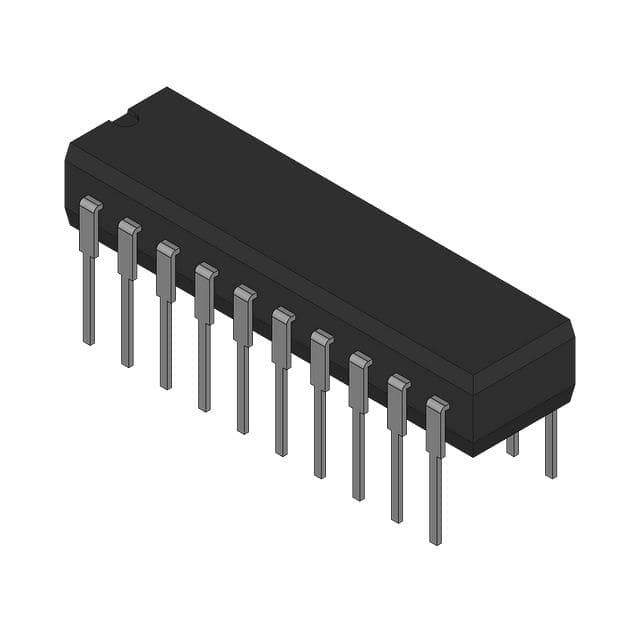
Texas Instruments 5962-9075001MRA
- Part No.:
- 5962-9075001MRA
- Manufacturer:
- Texas Instruments
- Package:
- -
- Datasheet:
-
 5962-9075001MRA.pdf
- Description:
- SN54BCT620A OCTAL BUS TRANSCEIVE
- Quantity:
- Payment:

- Shipping:

Inventory:111
Please send an inquiry. Send us your inquiry, and we will respond immediately.
Product details
Overview
5962-9075001MRA from Texas Instruments is a military-grade 16-bit inverted bus transceiver in ceramic dual-in-line package (CDIP), operating from −55°C to 125°C, with BiCMOS design enabling low ICCZ (10 mA max), 48 mA B-port sink current, and 3.4 V VOH at −3 mA - used for bidirectional asynchronous data isolation in avionics backplanes and radar timing interfaces.
For engineers reviewing the 5962-9075001MRA datasheet, 5962-9075001MRA pinout, 5962-9075001MRA application, or 5962-9075001MRA equivalent, key selection criteria include its dual-output-enable architecture for bus state retention, P-N-P input structure reducing DC loading, ESD protection >2000 V per MIL-STD-883C Method 3015, and compatibility with 5-V TTL/CMOS logic families.
Technical Context
The 5962-9075001MRA implements a dual-directional, inverting transceiver function with independent OEAB (A→B enable) and OEBA (B→A enable) controls, allowing isolated bidirectional data flow or simultaneous bus latching when both enables are active. Its BiCMOS process delivers TTL-compatible input thresholds (VIL = 0.8 V, VIH = 2 V) and rail-to-rail output swing under load.
Timing behavior is defined by propagation delays ranging from 0.1 ns (tPHL A→B) to 7.2 ns (tPZH OEBA→A), with output disable/enable times under 11.5 ns. The device supports hot-swap-capable operation via controlled ICCZ (4–10 mA) and robust off-state leakage (IIL = −0.6 mA, IIH = 20 µA).
Key Specifications
| Parameter | Value and Actual Design Meaning |
|---|---|
| Supply Voltage | 4.5 V to 5.5 V - ensures compatibility with legacy 5-V military power rails and tolerance to transient droop. |
| Operating Temperature | −55°C to 125°C - qualified per MIL-PRF-38535 for deployment in airborne and spaceborne systems. |
| B-Port Sink Current | 64 mA max - drives heavy capacitive loads (e.g., long backplane traces) without signal degradation. |
| A-Port Source Current | −3 mA - sufficient to interface with standard TTL inputs while maintaining VOH ≥2.4 V. |
| Propagation Delay | 0.1–6.9 ns - enables sub-10 ns synchronous bus handshaking in real-time control subsystems. |
| ICCZ Quiescent Current | 10 mA max - minimizes standby power in always-on mission-critical communication nodes. |
| ESD Protection | >2000 V HBM - meets MIL-STD-883C Method 3015 for handling in uncontrolled environments. |
Pinout & Package
Ceramic Dual-In-Line Package (CDIP), 20-pin, hermetically sealed, lead finish per MIL-STD-1835 (Call TI), RoHS exempt, MSL N/A.
| Pin/Terminal | Circuit Role | Design Meaning |
|---|---|---|
| 1, 20 | VCC / GND | Power and ground reference pins - require local 0.1 µF ceramic decoupling per MIL-HDBK-454A. |
| 2–9 | A1–A8 | Input/output port A - bidirectional, inverted data path; high-impedance when OEAB and OEBA both high. |
| 11–18 | B1–B8 | Input/output port B - inverted mirror of A port; driven only when corresponding OE is asserted low. |
| 10 | OEAB | A→B output enable - active-low control; when low, enables A-to-B data transfer; when high, isolates A bus. |
| 19 | OEBA | B→A output enable - active-low control; when low, enables B-to-A data transfer; when high, isolates B bus. |
Key Features
| Feature | Design Value |
|---|---|
| BiCMOS Process Technology | Reduces ICCZ by >50% vs. bipolar-only equivalents, lowering thermal load in sealed chassis. |
| P-N-P Input Structure | Minimizes DC input loading (<0.6 mA IIL), preserving signal integrity on shared bus stubs. |
| Dual-Enable Bus Latching | Simultaneous OEAB/OEBA assertion holds both A and B bus states - eliminates need for external latch ICs. |
| MIL-STD-883C Qualified | Includes screening per Method 3015 (ESD), 2001 (steady-state life test), and 5005 (thermal shock). |
| Inverted Data Path | Guarantees logic inversion across all 16 channels - simplifies negative-logic handshake protocol implementation. |
Applications
| Avionics Data Backplane | Radar Timing Interface |
|---|---|
Use Scenario: Bidirectional data exchange between flight computer and sensor acquisition modules over a 16-bit parallel bus in a DO-254-compliant avionics rack. IC Role / Device Role / Timing Role: Inverting bus transceiver providing galvanic isolation between voltage domains and enabling hot-swap-safe bus arbitration. Use Value: Dual OE control allows deterministic bus release during module insertion/removal, preventing data corruption during maintenance cycles. |
Use Scenario: Synchronizing pulse timing signals between transmitter and receiver chains in an X-band phased-array radar system. IC Role / Device Role / Timing Role: Low-skew inverting transceiver routing delayed trigger edges with sub-7 ns tPHL/tPLH to maintain phase coherence. Use Value: 0.1 ns minimum tPHL ensures <100 ps jitter contribution to RF pulse alignment, meeting MIL-STD-461G emission margins. |
| Tactical Vehicle Control Bus | Secure Crypto Module Interface |
Use Scenario: Interfacing encrypted command processors with motor drive controllers in armored ground vehicles operating under extreme thermal cycling. IC Role / Device Role / Timing Role: Ruggedized bus buffer enabling noise-immune data transfer across 2 m harness runs with 50 pF load capacitance. Use Value: 64 mA B-port sink current maintains VOL ≤0.55 V into 50 pF + 50 Ω termination, ensuring clean edge transitions in EMI-heavy engine bays. |
Use Scenario: Isolating cryptographic key loading ports from host processor buses in NSA-certified Type 1 encryption hardware. IC Role / Device Role / Timing Role: Tamper-resilient transceiver with hermetic CDIP package and MIL-qualified ESD protection. Use Value: >2000 V HBM ESD rating prevents electrostatic discharge-induced key corruption during field rekeying operations. |
Equivalent & Alternatives
The following parts are listed as comparable options for similar bus transceiver applications.
| Alternative Part | Technical Difference | Application Difference | Selection Advice |
|---|---|---|---|
| 5962-9075001M2A | LCCC (FK) package, 20-pin, same electrical specs and temp range; different mechanical footprint and solder joint reliability profile. | Suitable for surface-mount PCBs with strict vibration resistance requirements (e.g., missile guidance systems). | Select when board assembly uses reflow-compatible ceramic leadless carriers and requires lower parasitic inductance than CDIP. |
| SNJ54BCT620AJ | Identical CDIP-20 package and marking; identical parametric performance; differs only in traceability documentation and lot-level screening depth. | Approved for non-mission-critical subsystems where full QML Class V screening is not mandated. | Choose for cost-sensitive programs requiring MIL-PRF-38535 compliance but not full QML certification. |
Compared with 5962-9075001MRA, the 5962-9075001M2A offers superior high-frequency signal integrity in SMT layouts, while SNJ54BCT620AJ provides identical functionality with streamlined qualification-enabling trade-offs between mechanical ruggedness, production scalability, and certification rigor.
Availability
5962-9075001MRA is available at Aetrix Electronics and suitable for avionics backplanes, radar timing interfaces, tactical vehicle control buses, and secure crypto module interfaces requiring stable component supply across extended product lifecycles.
Supply support for 5962-9075001MRA includes scheduled delivery planning, volume procurement assistance, BOM continuity management, traceable sourcing, and lifecycle availability coordination for OEM customers, industrial embedded developers, connected-device designers, and electronics production programs.
Manufacturer
Texas Instruments is a U.S.-based semiconductor leader specializing in high-reliability analog and logic solutions for defense, aerospace, and industrial markets since 1930.
The BCT620A family was engineered for military-grade bidirectional bus isolation in harsh-environment computing systems, emphasizing ESD resilience, wide temperature operation, and deterministic timing control.
FAQ
What is the operating temperature range specified for the 5962-9075001MRA?
The 5962-9075001MRA is characterized for operation from −55°C to 125°C per MIL-PRF-38535, making it suitable for deployment in jet engine bays, satellite payload compartments, and artillery fire-control systems where ambient extremes exceed commercial grade limits. This range is validated through thermal shock, steady-state life, and burn-in testing.
Does the 5962-9075001MRA support non-inverting data transfer?
No, the 5962-9075001MRA provides inverted data at its outputs exclusively - both A→B and B→A paths perform logical inversion. This is inherent to the BCT620A architecture and confirmed in the functional truth table and logic diagram of the SCBS001B datasheet. For non-inverting operation, TI's BCT621A or equivalent must be selected.
What package type does the 5962-9075001MRA use, and is it hermetically sealed?
The 5962-9075001MRA uses a ceramic dual-in-line package (CDIP, drawing J), which is hermetically sealed per MIL-STD-1835. Its construction provides moisture resistance, mechanical stability under shock/vibration, and long-term reliability in vacuum or high-humidity environments typical of space and naval platforms.
Can the 5962-9075001MRA be used with 3.3-V logic systems?
No - the 5962-9075001MRA is designed for 5-V operation only, with absolute maximum VCC of 7 V and recommended VCC range of 4.5 V to 5.5 V. Its input thresholds (VIH = 2 V, VIL = 0.8 V) and output drive strength assume 5-V rail conditions; interfacing with 3.3-V systems requires level-shifting circuitry or a compatible 3.3-V transceiver such as the SN74LVC624.
How does the dual-output-enable feature of the 5962-9075001MRA enable bus state retention?
When both OEAB and OEBA are held low, the 5962-9075001MRA actively drives both A and B buses. If all other drivers on those buses enter high-impedance states, each port reinforces its own value - effectively latching the last transferred data without external storage. This behavior is explicitly documented in the device description and function table of the SCBS001B datasheet.
5962-9075001MRA Specifications
- Product attributes
- Attribute value
- Manufacturer:
- Texas Instruments
- Series:
- *
- Package/Case:
- -
- Packaging:
- Bulk
- Product Status:
- Active
- Logic Type:
- -
- Number of Elements:
- -
- Number of Bits per Element:
- -
- Input Type:
- -
- Output Type:
- -
- Current - Output High, Low:
- -
- Voltage - Supply:
- -
- Operating Temperature:
- -
- Grade:
- -
- Qualification:
- -
- Mounting Type:
- -
- Supplier Device Package:
- -
5962-9075001MRA FAQ
1.How can I place an order for 5962-9075001MRA through Aetrix?
Please submit a Request for Quotation (RFQ) for 5962-9075001MRA on Aetrix. Our sales agent will provide a competitive quotation and guide you through the order confirmation once you accept the terms.
2.Are the price and stock information for 5962-9075001MRA reliable?
The price and inventory of 5962-9075001MRA are updated periodically and may fluctuate due to market conditions. Stock and pricing data are typically refreshed every 24 hours. Quotation validity for 5962-9075001MRA is usually 5 days.
3.What payment methods are accepted for 5962-9075001MRA?
We accept Wire Transfer, PayPal, Credit Card, Western Union, MoneyGram, and Escrow for 5962-9075001MRA transactions.
Note: Certain payment methods may incur a processing fee.
4.How is shipping managed for 5962-9075001MRA?
5962-9075001MRA orders can be shipped via leading logistics carriers, including DHL, UPS, FedEx, TNT, or Registered Mail.
Once your 5962-9075001MRA order is processed, you will receive an email with the shipment details and tracking number.
Note: Tracking information may take up to 24 hours to appear. Express delivery typically takes 3–5 business days.
5.How can I obtain technical support or documentation for 5962-9075001MRA?
For technical support, including 5962-9075001MRA datasheets, pinout diagrams, or application guidance, please contact our engineering support team. They can provide detailed documentation and assistance for your 5962-9075001MRA requirements.
6.How does Aetrix verify that 5962-9075001MRA is sourced from the original manufacturer or authorized distributors?
All 5962-9075001MRA products on Aetrix are procured from qualified distributors and authorized channels. Our dedicated quality assurance team conducts strict verification, including traceability checks and, if necessary, third-party testing. This ensures that 5962-9075001MRA meets industry standards.
7.What is the process for return or replacement of 5962-9075001MRA?
All 5962-9075001MRA units undergo pre-shipment inspection (PSI). If there is an issue with 5962-9075001MRA, returns or replacements are accepted under the following conditions:
1.Quantity discrepancies, incorrect items, or visible external defects (such as breakage or corrosion), acknowledged by Aetrix.
2.The issue is reported within 90 days of delivery.
3.The 5962-9075001MRA part is unused and in its original packaging.
Return procedure for 5962-9075001MRA:
1.Submit a request within 90 days.
2.Obtain a Return Material Authorization (RMA) from Aetrix.
5962-9075001MRA Tags

-
SN74LVC1G17DBVR
Texas Instruments
-
SN74LVC1G07DCKR
Texas Instruments
-
SN74LVC1G17DCKR
Texas Instruments
-
SN74LVC1G07DBVR
Texas Instruments
-
SN74LVC1G125DCKR
Texas Instruments
-
SN74AHCT1G126DBVR
Texas Instruments
-
SN74LVC1G125DBVR
Texas Instruments
-
SN74AHCT1G125DBVR
Texas Instruments

-
SN74LVC2G17DBVR
Texas Instruments
-
SN74LVC2G07DCKR
Texas Instruments
-
SN74LVC1G34DCKR
Texas Instruments
-
SN74LVC2G17DCKR
Texas Instruments
Tech Hub

A practical engineering guide to 3.3V and 5V logic compatibility, input thresholds, resistor dividers, translator ICs, MOSFET level shifting, I2C pull-ups, timing limits and power-sequencing risks.

The 74HC595 uses push-pull logic outputs, while the TPIC6B595 uses 50 V open-drain DMOS sinks for higher-power loads. This guide compares timing, current limits, 3.3 V interfacing, load wiring, thermal…

The 74HC595 converts serial data into eight stable parallel outputs. This guide covers pin functions, shift and storage timing, OE and MR behavior, drive-current limits, cascading, voltage compatibilit…

A technical comparison of level-sensitive latches and edge-triggered flip-flops, covering timing windows, setup and hold limits, master–slave operation, time borrowing, race-through, HDL inference and…

A D latch stores one bit while Enable controls when data can pass. This reference covers gate-level operation, truth tables, transparency, setup and hold timing, LE versus OE, common ICs and practical …

An SR latch stores one bit through cross-coupled feedback. This engineering reference covers NOR and NAND implementations, truth tables, forbidden-state recovery, gated operation, switch debouncing, fa…

Latch circuits retain one bit through feedback. This technical reference covers SR and D latches, truth tables, transparency, timing limits, latch-versus-flip-flop behavior, applications and common log…

An engineering guide to LED driver operation, constant-current and constant-voltage outputs, linear and switching topologies, dimming, IC selection, calculations, replacement compatibility, and fault c…

Operational amplifier guide covering op amp basics, feedback, ideal vs real op amps, common configurations, buffer circuits, offset, bias current, gain-bandwidth, slew rate, rail-to-rail limits and sel…

Jumper cables guide covering safe connection order, red and black clamp placement, final ground connection, cable gauge, length, clamp quality, copper vs CCA cables, jump starter comparison and battery…


