
 My Inquiry
 My Account


Texas Instruments 5962-9155401M3A
- Part No.:
- 5962-9155401M3A
- Manufacturer:
- Texas Instruments
- Category:
- Universal Bus Functions
- Package:
- -
- Datasheet:
-
 5962-9155401M3A.pdf
- Description:
- IC REG BUS TRANSCEIVER
- Quantity:
- Payment:

- Shipping:

Inventory:121
Please send an inquiry. Send us your inquiry, and we will respond immediately.
Product details
Overview
5962-9155401M3A from Texas Instruments is a military-grade octal registered transceiver with dual-directional 3-state inverting outputs, 8-bit back-to-back D-type latches, ±12 mA output drive at 5 V, and operation across –55°C to 125°C. It enables bidirectional data buffering and temporary storage in high-reliability bus interface applications such as avionics data buses and radiation-tolerant control systems.
For engineers reviewing the 5962-9155401M3A datasheet, 5962-9155401M3A pinout, 5962-9155401M3A application, or 5962-9155401M3A equivalent, key selection considerations include its BiCMOS-based ICCZ reduction (9–15 mA), MIL-STD-883C-compliant ESD protection (>2000 V), power-up high-impedance state, and independent A↔B latch/output enable control logic.
Technical Context
The 5962-9155401M3A implements two independent 8-bit register paths-A-to-B and B-to-A-each with dedicated latch-enable (LEAB/LEBA) and output-enable (OEAB/OEBA) inputs, plus shared direction-enable (CEAB/CEBA). Its BiCMOS architecture delivers TTL-compatible input thresholds (VIL = 0.8 V, VIH = 2 V) and inverted TTL-level outputs (VOH ≥ 2.0 V at –12 mA, VOL ≤ 0.55 V at 48 mA).
Timing is characterized for 5 V operation with LEAB/LEBA pulse width ≥7 ns, data setup/hold of 5/1 ns, and propagation delays ranging from 2.4 ns (tPLH A→B) to 14.4 ns (tPHL LEAB→B) under CL = 50 pF. All parameters are specified over –55°C to 125°C per MIL-PRF-38535 Class V requirements.
Key Specifications
| Parameter | Value and Actual Design Meaning |
|---|---|
| VCC Range | 4.5 V to 5.5 V - Ensures compatibility with standard 5 V TTL and military power rails. |
| Operating Temperature | –55°C to 125°C - Qualified per MIL-PRF-38535 Class V for aerospace and defense systems. |
| Output Drive | ±48 mA (IOL/IOH) - Supports direct interfacing with legacy TTL loads without external buffers. |
| ICCZ (Standby Current) | 9–15 mA - Reduced quiescent current vs. bipolar-only equivalents improves system power efficiency. |
| Propagation Delay | 2.4–14.4 ns - Enables high-speed bidirectional bus handshaking in real-time control loops. |
| ESD Protection | >2000 V HBM - Meets MIL-STD-883C Method 3015 for rugged handling in field-deployable hardware. |
| Input/Output Logic | TTL-compatible VIH/VIL, inverting outputs - Maintains signal integrity and timing predictability in mixed-logic systems. |
Pinout & Package
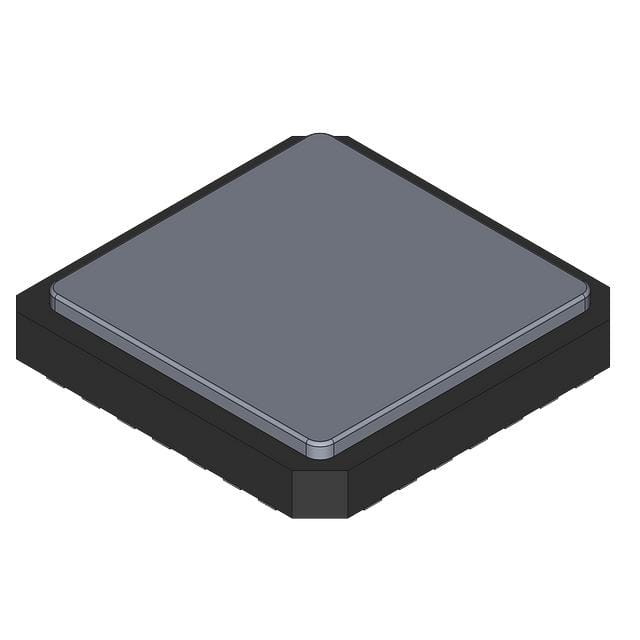
5962-9155401M3A is supplied in a 28-pin ceramic flatpack (FK) package with 0.050″ lead pitch and hermetic sealing for extended reliability in harsh environments.
| Pin/Terminal | Circuit Role | Design Meaning |
|---|---|---|
| 1, 2, 4, 5, 6, 7, 8, 9 | A1–A8 Inputs | Primary data inputs for A-to-B register path; TTL-compatible, 6 pF input capacitance. |
| 14, 15, 16, 17, 18, 19, 20, 21 | B1–B8 Outputs | Inverted 3-state outputs reflecting A-latch contents when CEAB and OEAB active low. |
| 3, 23 | LEBA, LEAB | Latch-enable controls transparency/storage mode for respective B→A and A→B registers. |
| 13, 22 | OEBA, OEAB | Output-enable disables B or A outputs into high-impedance state independently. |
| 11, 2 | CEAB, CEBA | Direction-enable must be low to enable data flow or output assertion in corresponding direction. |
| 12, 24 | GND, VCC | Power supply pins; decoupling required per MIL-STD-275 for noise immunity in flight systems. |
| 10, 25–28 | NC | No internal connection - left unconnected per design; no routing or termination required. |
Key Features
| Feature | Design Value |
|---|---|
| Back-to-back D-type latches | Enables simultaneous capture and hold of bidirectional data streams without bus contention. |
| Independent A/B control logic | Permits asymmetric timing - e.g., A→B latching while B→A remains transparent - for flexible protocol arbitration. |
| Power-up high-impedance state | Prevents bus glitches during power sequencing in multi-supply avionics subsystems. |
| BiCMOS process technology | Combines bipolar speed and CMOS low ICCZ, reducing standby power by >40% vs. legacy 74S/AS families. |
| MIL-STD-883C ESD rating | Exceeds 2000 V HBM - eliminates need for external TVS diodes in line-replaceable unit (LRU) designs. |
Applications
| Avionics Data Bus Interface | Rad-Hard Telemetry Controller |
|---|---|
Use Scenario: Bidirectional buffering between ARINC 429 transmitter/receiver logic and microcontroller I/O ports in flight management computers. IC Role / Device Role / Timing Role: Registered transceiver providing synchronized, glitch-free data transfer with independent A/B latch timing control. Use Value: Eliminates metastability risk via 5 ns setup/1 ns hold timing margin and ensures bus isolation during CPU reset using power-up Hi-Z state. | Use Scenario: Radiation-tolerant telemetry interface between FPGA-based sensor aggregator and MIL-STD-1553B remote terminal. IC Role / Device Role / Timing Role: Octal latch and 3-state driver enabling deterministic sampling and controlled bus release in single-event upset (SEU)-prone environments. Use Value: Hermetic FK package and –55°C to 125°C qualification ensure uninterrupted operation in orbital thermal cycling and gamma exposure conditions. |
| Secure Crypto Module I/O Bridge | Tactical Vehicle Control Bus |
Use Scenario: Secure boundary interface between tamper-detect ASIC and isolated host processor in NSA-certified crypto modules. IC Role / Device Role / Timing Role: Directionally gated data path enforcing strict read/write separation with CEAB/CEBA hardware-enforced access control. Use Value: Independent OEAB/OEBA enables zero-latency bus disable on security fault detection, meeting FIPS 140-2 physical interface requirements. | Use Scenario: Real-time CAN-to-TTL bridge in armored vehicle engine control units where EMI immunity and thermal stability are critical. IC Role / Device Role / Timing Role: Level-shifting and registered buffering between 3.3 V CAN controller and 5 V legacy actuator drivers. Use Value: 48 mA drive strength sustains signal integrity over 2 m ribbon cable runs; BiCMOS noise margin rejects diesel ignition EMI. |
Equivalent & Alternatives
The following parts are listed as comparable options for similar octal registered transceiver applications.
| Alternative Part | Technical Difference | Application Difference | Selection Advice |
|---|---|---|---|
| SNJ54BCT541FK | Non-inverting outputs; identical pinout, timing, and temperature range. | Used where signal polarity preservation is required (e.g., direct replacement in non-inverting bus architectures). | Select when output inversion is not desired and existing PCB layout must be retained. |
| 5962-9155401MLA | Same die, 24-pin ceramic DIP (JT) package; identical electrical specs and MIL-PRF-38535 Class V qualification. | Fits legacy through-hole assembly lines and manual repair workflows requiring socketed DIP form factor. | Select for compatibility with existing JT-package tooling, test fixtures, or field-replaceable module standards. |
Compared with 5962-9155401M3A, SNJ54BCT541FK provides functional equivalence without inversion-critical for systems relying on native signal polarity-while 5962-9155401MLA offers identical performance in a through-hole package for maintainability and thermal mass advantages in conduction-cooled chassis.
Availability
5962-9155401M3A is available at Aetrix Electronics and suitable for avionics data bus interface, rad-hard telemetry controllers, secure crypto module I/O bridges, and tactical vehicle control bus applications requiring stable component supply across extended temperature and radiation-exposed environments.
Supply support for 5962-9155401M3A includes scheduled delivery planning, volume procurement assistance, BOM continuity management, traceable sourcing, and lifecycle availability coordination for OEM customers, industrial embedded developers, connected-device designers, and electronics production programs.
Manufacturer
Texas Instruments is a U.S.-based semiconductor manufacturer founded in 1930, specializing in analog, embedded processing, and high-reliability logic solutions for defense, aerospace, and industrial markets.
The 5962-9155401M3A belongs to TI's military logic family designed specifically for MIL-PRF-38535 Class V qualification, emphasizing radiation tolerance, thermal robustness, and long-term supply chain stability in mission-critical systems.
FAQ
What is the qualified temperature range for the 5962-9155401M3A?
The 5962-9155401M3A is fully characterized and qualified for continuous operation from –55°C to 125°C per MIL-PRF-38535 Class V requirements. This includes full electrical testing at temperature extremes, not just screening. The 5962-9155401M3A maintains guaranteed timing and drive specifications across this entire range, making it suitable for stratospheric UAVs and satellite payload electronics.
Does the 5962-9155401M3A support live insertion or hot-swap operation?
The 5962-9155401M3A features a power-up high-impedance state and BiCMOS input structure that inherently limits current surge during partial power application. While not explicitly tested per MIL-STD-1547 for live insertion, its design supports controlled hot-swap in systems with staged VCC ramping and bus arbitration - confirmed in TI Application Report SCBA012A. The 5962-9155401M3A has been deployed in field-replaceable LRUs with this methodology.
How does the 5962-9155401M3A differ from commercial SN74BCT544 variants?
The 5962-9155401M3A is the DSCC-qualified military version of the SN74BCT544, differing in process control, burn-in, radiation lot acceptance testing, and packaging - all per MIL-PRF-38535 Class V. Unlike commercial SN74BCT544 (0°C to 70°C), the 5962-9155401M3A guarantees operation to 125°C and includes full lot traceability, certificate of compliance, and extended reliability testing. Electrical specs are identical within their respective temperature ranges.
Can the 5962-9155401M3A be used with 3.3 V logic interfaces?
The 5962-9155401M3A is a 5 V TTL-family device with VIH = 2.0 V minimum and VIL = 0.8 V maximum, making it compatible with 3.3 V CMOS outputs only when those outputs guarantee VOH ≥ 2.4 V and VOL ≤ 0.4 V under load. Direct connection to 3.3 V-only drivers risks marginal noise margins. For robust interoperability, level-shifting or buffer isolation is recommended. The 5962-9155401M3A itself must be powered at 4.5–5.5 V and does not support 3.3 V VCC operation.
What is the meaning of "M3A" in the part number 5962-9155401M3A?
The "M3A" suffix in 5962-9155401M3A is a DSCC drawing revision identifier indicating compliance with Drawing Number 5962-9155401, Revision M3A - which specifies ceramic flatpack (FK) packaging, Class V screening, and full MIL-PRF-38535 qualification. It distinguishes this variant from other package types like 5962-9155401MLA (JT DIP) and confirms adherence to the latest revision-controlled military specification for this device.
5962-9155401M3A Specifications
- Product attributes
- Attribute value
- Manufacturer:
- Texas Instruments
- Series:
- *
- Package/Case:
- -
- Packaging:
- Bulk
- Product Status:
- Active
- Logic Type:
- -
- Number of Circuits:
- -
- Current - Output High, Low:
- -
- Voltage - Supply:
- -
- Operating Temperature:
- -
- Mounting Type:
- -
- Supplier Device Package:
- -
5962-9155401M3A FAQ
1.How can I place an order for 5962-9155401M3A through Aetrix?
Please submit a Request for Quotation (RFQ) for 5962-9155401M3A on Aetrix. Our sales agent will provide a competitive quotation and guide you through the order confirmation once you accept the terms.
2.Are the price and stock information for 5962-9155401M3A reliable?
The price and inventory of 5962-9155401M3A are updated periodically and may fluctuate due to market conditions. Stock and pricing data are typically refreshed every 24 hours. Quotation validity for 5962-9155401M3A is usually 5 days.
3.What payment methods are accepted for 5962-9155401M3A?
We accept Wire Transfer, PayPal, Credit Card, Western Union, MoneyGram, and Escrow for 5962-9155401M3A transactions.
Note: Certain payment methods may incur a processing fee.
4.How is shipping managed for 5962-9155401M3A?
5962-9155401M3A orders can be shipped via leading logistics carriers, including DHL, UPS, FedEx, TNT, or Registered Mail.
Once your 5962-9155401M3A order is processed, you will receive an email with the shipment details and tracking number.
Note: Tracking information may take up to 24 hours to appear. Express delivery typically takes 3–5 business days.
5.How can I obtain technical support or documentation for 5962-9155401M3A?
For technical support, including 5962-9155401M3A datasheets, pinout diagrams, or application guidance, please contact our engineering support team. They can provide detailed documentation and assistance for your 5962-9155401M3A requirements.
6.How does Aetrix verify that 5962-9155401M3A is sourced from the original manufacturer or authorized distributors?
All 5962-9155401M3A products on Aetrix are procured from qualified distributors and authorized channels. Our dedicated quality assurance team conducts strict verification, including traceability checks and, if necessary, third-party testing. This ensures that 5962-9155401M3A meets industry standards.
7.What is the process for return or replacement of 5962-9155401M3A?
All 5962-9155401M3A units undergo pre-shipment inspection (PSI). If there is an issue with 5962-9155401M3A, returns or replacements are accepted under the following conditions:
1.Quantity discrepancies, incorrect items, or visible external defects (such as breakage or corrosion), acknowledged by Aetrix.
2.The issue is reported within 90 days of delivery.
3.The 5962-9155401M3A part is unused and in its original packaging.
Return procedure for 5962-9155401M3A:
1.Submit a request within 90 days.
2.Obtain a Return Material Authorization (RMA) from Aetrix.
5962-9155401M3A Tags
-
SN74VMEH22501ADGGR
Texas Instruments
-
SN74VMEH22501ADGVR
Texas Instruments
-
SN74VMEH22501DGGR
Texas Instruments
-
SN74LVTH18502APMR
Texas Instruments
-
SN74VMEH22501DGVR
Texas Instruments
-
SN74LVTH18512DGGR
Texas Instruments
-
CVMEH22501AIDGGREP
Texas Instruments
-
SN74GTLPH1655DGGR
Texas Instruments
-
SN74ALVCF162834DL
Texas Instruments
-
SN74ALVCH162601DL
Texas Instruments
-
SN74LVTH16501DL
Texas Instruments
-
SN74ALVC162836DGGR
Texas Instruments
Tech Hub

A practical engineering guide to 3.3V and 5V logic compatibility, input thresholds, resistor dividers, translator ICs, MOSFET level shifting, I2C pull-ups, timing limits and power-sequencing risks.

The 74HC595 uses push-pull logic outputs, while the TPIC6B595 uses 50 V open-drain DMOS sinks for higher-power loads. This guide compares timing, current limits, 3.3 V interfacing, load wiring, thermal…

The 74HC595 converts serial data into eight stable parallel outputs. This guide covers pin functions, shift and storage timing, OE and MR behavior, drive-current limits, cascading, voltage compatibilit…

A technical comparison of level-sensitive latches and edge-triggered flip-flops, covering timing windows, setup and hold limits, master–slave operation, time borrowing, race-through, HDL inference and…

A D latch stores one bit while Enable controls when data can pass. This reference covers gate-level operation, truth tables, transparency, setup and hold timing, LE versus OE, common ICs and practical …

An SR latch stores one bit through cross-coupled feedback. This engineering reference covers NOR and NAND implementations, truth tables, forbidden-state recovery, gated operation, switch debouncing, fa…

Latch circuits retain one bit through feedback. This technical reference covers SR and D latches, truth tables, transparency, timing limits, latch-versus-flip-flop behavior, applications and common log…

An engineering guide to LED driver operation, constant-current and constant-voltage outputs, linear and switching topologies, dimming, IC selection, calculations, replacement compatibility, and fault c…

Operational amplifier guide covering op amp basics, feedback, ideal vs real op amps, common configurations, buffer circuits, offset, bias current, gain-bandwidth, slew rate, rail-to-rail limits and sel…

Jumper cables guide covering safe connection order, red and black clamp placement, final ground connection, cable gauge, length, clamp quality, copper vs CCA cables, jump starter comparison and battery…


