
 My Inquiry
 My Account


Texas Instruments 5962-9172801Q3A
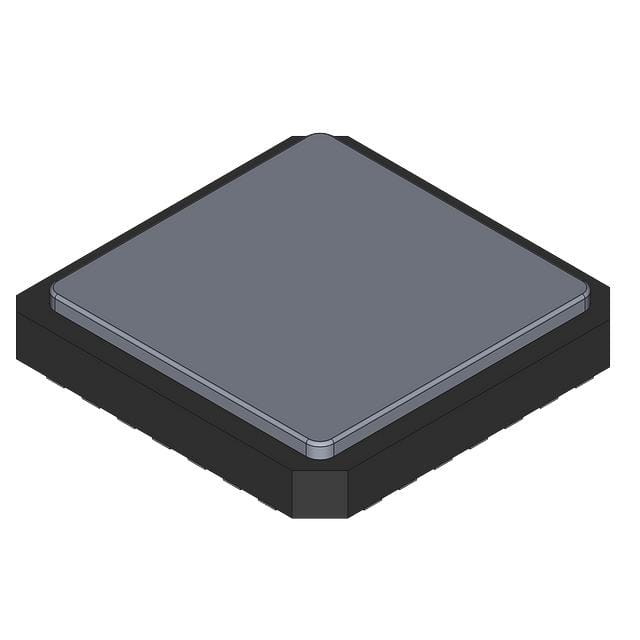
- Part No.:
- 5962-9172801Q3A
- Manufacturer:
- Texas Instruments
- Package:
- -
- Datasheet:
-
 5962-9172801Q3A.pdf
- Description:
- SN54BCT8245A SCAN TEST DEVICES W
- Quantity:
- Payment:

- Shipping:

Inventory:2,882
Please send an inquiry. Send us your inquiry, and we will respond immediately.
Product details
Overview
5962-9172801Q3A from Texas Instruments is a military-grade octal bus transceiver with integrated IEEE 1149.1 boundary-scan test circuitry, supporting JTAG-compliant board-level diagnostics. It operates over −55°C to 125°C, features dual 8-bit bidirectional A/B buses, and provides TAP-controlled test modes including EXTEST, INTEST, SAMPLE/PRELOAD, and RUNT with PSA/PRPG. It serves in high-reliability avionics and defense system interconnects.
For engineers reviewing the 5962-9172801Q3A datasheet, 5962-9172801Q3A pinout, 5962-9172801Q3A application, or 5962-9172801Q3A equivalent, key selection criteria include MIL-PRF-38535 qualification, full boundary-scan register (18-bit BSR), TMS-based double-high-level reset, DIR/OE-controlled bus direction and enable, and compatibility with 'F245/'BCT245 functional behavior in normal mode.
Technical Context
The 5962-9172801Q3A implements a synchronous TAP controller fully compliant with IEEE Std 1149.1-1990, with capture/shift/update timing aligned to rising/falling edges of TCK. Its test architecture includes an 8-bit instruction register (IR), 18-bit boundary-scan register (BSR), 2-bit boundary-control register (BCR), and 1-bit bypass register - all accessible via TDI/TDO serial scan path.
In normal mode, it functions as a TTL-compatible octal transceiver with internal pullups on DIR, OE, TMS, TDI, and TCK; in test mode, it supports parallel-signature analysis (PSA) and pseudo-random pattern generation (PRPG) under RUNT instruction, with BCR bits 1–0 selecting among TOPSIP, PRPG, PSA, or PSA/PRPG operation.
Key Specifications
| Parameter | Value and Actual Design Meaning |
|---|---|
| Temperature Range | −55°C to +125°C - qualified per MIL-PRF-38535 for extended environmental operation in aerospace and defense platforms. |
| Boundary-Scan Register | 18-bit - covers all 16 I/O pins (A1–A8, B1–B8), DIR, and OE for full pin-level observability and controllability. |
| TAP Clock (TCK) | Synchronous edge-triggered - data captured on rising edge, outputs updated on falling edge; enables deterministic scan timing. |
| Functional Equivalence | Matches 'F245 and 'BCT245 - allows drop-in replacement in legacy bus interface designs without logic redesign. |
| Test Reset Mechanism | Double-high-level (10 V) on TMS - provides hardware-initiated test reset independent of TCK sequence, enhancing debug reliability. |
| Supply Voltage | 5 V ±5% - compatible with standard TTL logic families and legacy military power rails. |
| Package Type | Ceramic DIP (JT) - hermetically sealed, MIL-STD-883 qualified, suitable for high-reliability PCB assembly. |
Pinout & Package
Ceramic Dual-In-Line Package (JT), 24-pin, 0.600-inch wide, with center index notch. Pin 1 located at top-left corner when viewed from top with notch up.
| Pin/Terminal | Circuit Role | Design Meaning |
|---|---|---|
| DIR | Direction control input | Determines data flow direction: low = B→A, high = A→B; internal pullup ensures defined state if unconnected. |
| OE | Output enable input | Low enables transceiver output drivers; high places A/B ports in high-impedance isolation state. |
| A1–A8 | A-bus I/O terminals | Bidirectional TTL-compatible ports; internal pullups hold high if floating - reduces need for external biasing. |
| B1–B8 | B-bus I/O terminals | Matched electrical characteristics to A-bus; supports symmetric bus interfacing between two subsystems. |
| TCK | Test clock input | Master clock for all boundary-scan operations; rising edge captures data, falling edge updates outputs. |
| TDI | Test data input | Serial input for instruction and data register loading; internal pullup prevents undefined logic level. |
| TDO | Test data output | Serial output for scan-out; high-impedance when inactive, driven only during Shift-IR/Shift-DR states. |
| TMS | Test mode select | Controls TAP state machine progression; double-high (10 V) triggers hardware reset - critical for field debug. |
| VCC, GND | Power supply terminals | Single 5 V supply with dedicated ground; decoupling required per MIL-STD-883 for noise immunity. |
Key Features
| Feature | Design Value |
|---|---|
| IEEE 1149.1 Compliance | Fully implements mandatory TAP signals (TCK/TMS/TDI/TDO), instruction set (EXTEST/INTEST/BYPASS/SAMPLE), and boundary-scan architecture for standardized board test. |
| 18-Bit Boundary-Scan Register | Covers all functional I/O plus DIR/OE - enables pin-level fault detection (stuck-at, bridging, open) without physical probe access. |
| Run-Time Test (RUNT) Support | Executes PSA or PRPG during Run-Test/Idle using BCR configuration - accelerates production test coverage without host intervention. |
| MIL-PRF-38535 Qualification | Includes screening, burn-in, and 100% parametric testing per Level S requirements - guarantees performance in mission-critical systems. |
| Functional Mode Compatibility | Pin- and logic-compatible with 'F245/'BCT245 - allows seamless integration into existing bus interface designs while adding testability. |
Applications
| Avionics Data Bus Interface | Defense System Backplane Interconnect |
|---|---|
Use Scenario: Bidirectional data routing between flight computer and sensor modules across a ruggedized backplane with limited physical test access. IC Role / Device Role / Timing Role: Octal bus transceiver enabling controlled A↔B data transfer; DIR/OE manage direction and isolation; TAP provides post-deployment diagnostic capability. Use Value: Eliminates need for bed-of-nails fixtures by enabling boundary-scan verification of solder joints and trace integrity after system integration. | Use Scenario: High-reliability communication between radar processor and display unit in airborne early warning platform operating under extreme thermal cycling. IC Role / Device Role / Timing Role: MIL-spec bus buffer with embedded test logic; operates across −55°C to +125°C; TMS double-high reset enables in-field recovery from test lockup. Use Value: Reduces field return rate by enabling automated PSA-based signature validation of interconnect health during maintenance cycles. |
| Secure Military Communication Node | Spacecraft Onboard Data Handling |
Use Scenario: Secure data exchange between crypto module and radio transceiver in tactical SATCOM terminal subject to EMI and radiation exposure. IC Role / Device Role / Timing Role: Isolation-capable transceiver with high-impedance disable (OE); boundary-scan registers verify signal integrity pre-launch and during orbit checkout. Use Value: Supports DO-254 compliance through traceable, repeatable structural test vectors generated from BSR definition. | Use Scenario: Command/data routing between star tracker and main processor in LEO satellite where repair is impossible and failure tolerance is zero. IC Role / Device Role / Timing Role: Radiation-tolerant (per MIL-PRF-38535) bus interface with built-in self-test via CELLTST and TOPSIP instructions. Use Value: Enables autonomous health monitoring via periodic RUNT+PSA execution - detects latent interconnect degradation before functional failure. |
Equivalent & Alternatives
The following parts are listed as comparable options for similar octal bus transceiver with boundary-scan applications.
| Alternative Part | Technical Difference | Application Difference | Selection Advice |
|---|---|---|---|
| SNJ54BCT8245FK | Same JT package, identical pinout and boundary-scan architecture; differs only in screening level (Class B vs QML-Q). | Qualified to MIL-STD-883 Class B rather than QML-Q; lacks full radiation hardness assurance and extended lot traceability. | Select when cost sensitivity outweighs requirement for QML-Q certification in non-flight hardware. |
| 5962-9172801QRA | Same die, identical functionality; differs only in temperature screening (−55°C to +125°C vs −55°C to +105°C) and test documentation format. | Rated for lower max operating temperature; used in subsystems with less severe thermal environments (e.g., ground support equipment). | Select when full 125°C operation is not required - offers same reliability at reduced test overhead. |
Compared with 5962-9172801Q3A, SNJ54BCT8245FK omits QML-Q process controls and radiation assurance, while 5962-9172801QRA relaxes thermal qualification - both retain identical boundary-scan capability and functional behavior but serve distinct assurance tiers within the same military ecosystem.
Availability
5962-9172801Q3A is available at Aetrix Electronics and suitable for avionics data bus interfaces, defense system backplane interconnects, and secure military communication nodes requiring stable component supply under ITAR-controlled logistics.
Supply support for 5962-9172801Q3A includes scheduled delivery planning, volume procurement assistance, BOM continuity management, traceable sourcing, and lifecycle availability coordination for OEM customers, industrial embedded developers, connected-device designers, and electronics production programs.
Manufacturer
Texas Instruments is a U.S.-based semiconductor company specializing in analog, embedded processing, and high-reliability military ICs with over 50 years of aerospace and defense heritage.
The SCOPE™ family - including 5962-9172801Q3A - was designed specifically to embed IEEE 1149.1 testability into military-grade logic devices without compromising speed, drive strength, or environmental robustness.
FAQ
What is the qualification standard for 5962-9172801Q3A?
The 5962-9172801Q3A is fully qualified to MIL-PRF-38535 QML-Q requirements, including screening, burn-in, and 100% parametric testing per Level S. It meets MIL-STD-883 test methods for vibration, shock, thermal cycling, and hermeticity - making it suitable for flight-critical avionics and defense applications where failure is not an option. This qualification is documented in the device's QML listing and certificate of conformance.
Does 5962-9172801Q3A support the full IEEE 1149.1 instruction set?
Yes, 5962-9172801Q3A supports all mandatory IEEE 1149.1-1990 instructions (EXTEST, INTEST, SAMPLE/PRELOAD, BYPASS, HIGHZ, CLAMP) plus optional RUNT, READBN, CELLTST, and TOPHIP. The instruction register is 8-bit with bit 7 as don't-care; unsupported SCOPE™ instructions default to BYPASS. Full opcode mapping is provided in the SCBS043E datasheet Table 2.
How does the double-high-level reset on TMS work in 5962-9172801Q3A?
The 5962-9172801Q3A implements IEEE 1149.1-1990 optional test reset by detecting a VIHH (10 V) voltage level on the TMS pin - independent of TCK timing. When sensed, it forces the TAP controller directly into Test-Logic-Reset state within one cycle, bypassing state-machine sequencing. This feature enables reliable recovery from test hangs in deployed systems without requiring power cycle or host intervention.
Can 5962-9172801Q3A be used as a direct replacement for SN74BCT8245A in commercial designs?
No - while 5962-9172801Q3A is functionally identical to SN74BCT8245A in normal mode and shares the same pinout, it is a QML-Q qualified military part with different screening, packaging (JT ceramic vs DW/NT plastic), temperature range (−55°C to +125°C), and ITAR-controlled distribution. It is not intended for commercial use and requires export authorization. For commercial applications, SN74BCT8245A remains the appropriate choice.
What is the purpose of the boundary-control register (BCR) in 5962-9172801Q3A?
The 2-bit boundary-control register (BCR) in 5962-9172801Q3A configures advanced test operations executed under the RUNT instruction during Run-Test/Idle state. BCR bits 1–0 select among four modes: sample inputs/toggle outputs (00), PRPG (01), PSA (10), or simultaneous PSA/PRPG (11). This enables automated structural testing without host software overhead - critical for high-volume manufacturing and field diagnostics.
5962-9172801Q3A Specifications
- Product attributes
- Attribute value
- Manufacturer:
- Texas Instruments
- Series:
- *
- Package/Case:
- -
- Packaging:
- Bulk
- Product Status:
- Active
- Logic Type:
- -
- Number of Elements:
- -
- Number of Bits per Element:
- -
- Input Type:
- -
- Output Type:
- -
- Current - Output High, Low:
- -
- Voltage - Supply:
- -
- Operating Temperature:
- -
- Grade:
- -
- Qualification:
- -
- Mounting Type:
- -
- Supplier Device Package:
- -
5962-9172801Q3A FAQ
1.How can I place an order for 5962-9172801Q3A through Aetrix?
Please submit a Request for Quotation (RFQ) for 5962-9172801Q3A on Aetrix. Our sales agent will provide a competitive quotation and guide you through the order confirmation once you accept the terms.
2.Are the price and stock information for 5962-9172801Q3A reliable?
The price and inventory of 5962-9172801Q3A are updated periodically and may fluctuate due to market conditions. Stock and pricing data are typically refreshed every 24 hours. Quotation validity for 5962-9172801Q3A is usually 5 days.
3.What payment methods are accepted for 5962-9172801Q3A?
We accept Wire Transfer, PayPal, Credit Card, Western Union, MoneyGram, and Escrow for 5962-9172801Q3A transactions.
Note: Certain payment methods may incur a processing fee.
4.How is shipping managed for 5962-9172801Q3A?
5962-9172801Q3A orders can be shipped via leading logistics carriers, including DHL, UPS, FedEx, TNT, or Registered Mail.
Once your 5962-9172801Q3A order is processed, you will receive an email with the shipment details and tracking number.
Note: Tracking information may take up to 24 hours to appear. Express delivery typically takes 3–5 business days.
5.How can I obtain technical support or documentation for 5962-9172801Q3A?
For technical support, including 5962-9172801Q3A datasheets, pinout diagrams, or application guidance, please contact our engineering support team. They can provide detailed documentation and assistance for your 5962-9172801Q3A requirements.
6.How does Aetrix verify that 5962-9172801Q3A is sourced from the original manufacturer or authorized distributors?
All 5962-9172801Q3A products on Aetrix are procured from qualified distributors and authorized channels. Our dedicated quality assurance team conducts strict verification, including traceability checks and, if necessary, third-party testing. This ensures that 5962-9172801Q3A meets industry standards.
7.What is the process for return or replacement of 5962-9172801Q3A?
All 5962-9172801Q3A units undergo pre-shipment inspection (PSI). If there is an issue with 5962-9172801Q3A, returns or replacements are accepted under the following conditions:
1.Quantity discrepancies, incorrect items, or visible external defects (such as breakage or corrosion), acknowledged by Aetrix.
2.The issue is reported within 90 days of delivery.
3.The 5962-9172801Q3A part is unused and in its original packaging.
Return procedure for 5962-9172801Q3A:
1.Submit a request within 90 days.
2.Obtain a Return Material Authorization (RMA) from Aetrix.
5962-9172801Q3A Tags
-
SN74LVC1G17DBVR
Texas Instruments
-
SN74LVC1G07DCKR
Texas Instruments
-
SN74LVC1G17DCKR
Texas Instruments
-
SN74LVC1G07DBVR
Texas Instruments
-
SN74LVC1G125DCKR
Texas Instruments
-
SN74AHCT1G126DBVR
Texas Instruments
-
SN74LVC1G125DBVR
Texas Instruments
-
SN74AHCT1G125DBVR
Texas Instruments

-
SN74LVC2G17DBVR
Texas Instruments
-
SN74LVC2G07DCKR
Texas Instruments
-
SN74LVC1G34DCKR
Texas Instruments
-
SN74LVC2G17DCKR
Texas Instruments
Tech Hub

A practical engineering guide to 3.3V and 5V logic compatibility, input thresholds, resistor dividers, translator ICs, MOSFET level shifting, I2C pull-ups, timing limits and power-sequencing risks.

The 74HC595 uses push-pull logic outputs, while the TPIC6B595 uses 50 V open-drain DMOS sinks for higher-power loads. This guide compares timing, current limits, 3.3 V interfacing, load wiring, thermal…

The 74HC595 converts serial data into eight stable parallel outputs. This guide covers pin functions, shift and storage timing, OE and MR behavior, drive-current limits, cascading, voltage compatibilit…

A technical comparison of level-sensitive latches and edge-triggered flip-flops, covering timing windows, setup and hold limits, master–slave operation, time borrowing, race-through, HDL inference and…

A D latch stores one bit while Enable controls when data can pass. This reference covers gate-level operation, truth tables, transparency, setup and hold timing, LE versus OE, common ICs and practical …

An SR latch stores one bit through cross-coupled feedback. This engineering reference covers NOR and NAND implementations, truth tables, forbidden-state recovery, gated operation, switch debouncing, fa…

Latch circuits retain one bit through feedback. This technical reference covers SR and D latches, truth tables, transparency, timing limits, latch-versus-flip-flop behavior, applications and common log…

An engineering guide to LED driver operation, constant-current and constant-voltage outputs, linear and switching topologies, dimming, IC selection, calculations, replacement compatibility, and fault c…

Operational amplifier guide covering op amp basics, feedback, ideal vs real op amps, common configurations, buffer circuits, offset, bias current, gain-bandwidth, slew rate, rail-to-rail limits and sel…

Jumper cables guide covering safe connection order, red and black clamp placement, final ground connection, cable gauge, length, clamp quality, copper vs CCA cables, jump starter comparison and battery…


