
 My Inquiry
 My Account


Renesas 7034S15PF
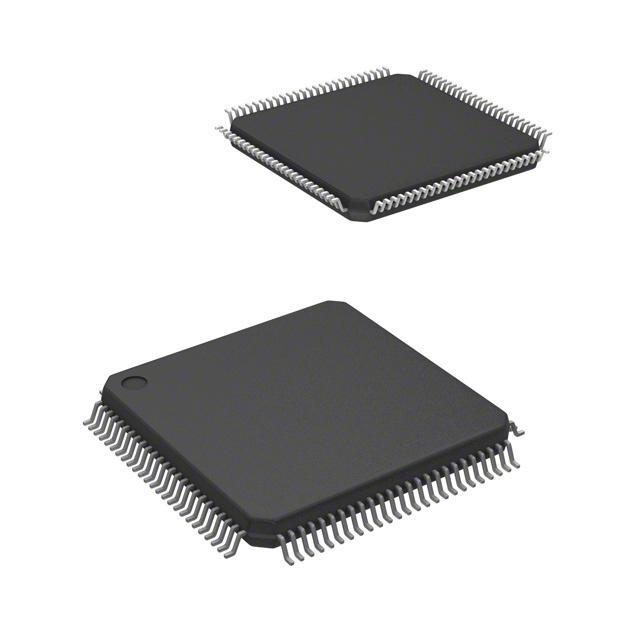
- Part No.:
- 7034S15PF
- Manufacturer:
- Renesas
- Category:
- Memory
- Package:
- 100-LQFP
- Datasheet:
-
 7034S15PF.pdf
- Description:
- IC SRAM 72KBIT PARALLEL 100TQFP
- Quantity:
- Payment:

- Shipping:

Inventory:3,012
Please send an inquiry. Send us your inquiry, and we will respond immediately.
Product details
Overview
IDT7034S15PF from Integrated Device Technology (IDT) is a high-speed, 4K × 18 true dual-port static RAM with independent left/right ports, 15 ns max access time (commercial grade), TTL-compatible 5V ±10% supply, and integrated hardware semaphore/INT/BUSY arbitration logic. It enables simultaneous asynchronous reads of the same memory location and supports master/slave cascading for 36-bit+ bus expansion in real-time inter-processor communication systems.
For engineers reviewing the IDT7034S15PF datasheet, IDT7034S15PF pinout, IDT7034S15PF application, or IDT7034S15PF equivalent, key selection considerations include dual-port contention resolution via BUSY flag timing (tBDD ≤ 18 ns), 18-bit byte-selectable I/O (UBL/LBL), on-chip semaphore arbitration (A0–A2 addressed), and industrial-grade thermal operation up to +85°C - all critical for deterministic shared-memory embedded control.
Technical Context
The IDT7034S15PF implements fully asynchronous dual-port architecture with separate address, control, and bidirectional I/O buses per port. Its on-chip arbitration logic resolves port-to-port contention using BUSY assertion based on address match and chip enable timing (tAPS = 5 ns setup), not R/W state - enabling deterministic write inhibition during simultaneous access.
It integrates three co-located but functionally distinct subsystems: (1) main 4K×18 SRAM array with independent CE/R/W/OE per port; (2) eight dedicated semaphore flags accessed via SEM = VIL and A0–A2; and (3) interrupt mailbox at addresses FFEh (left INTL) and FFFh (right INTR), each triggered by cross-port writes and cleared by local read-enable cycles.
Key Specifications
| Parameter | Value and Actual Design Meaning |
|---|---|
| Memory Organization | 4,096 × 18 bits (72 Kbit); supports 36-bit+ expansion via MASTER/SLAVE cascading with M/S pin |
| Access Time (max) | 15 ns (commercial temperature range 0°C to +70°C); defines minimum read cycle time tRC |
| Supply Voltage | 5.0 V ±10%; single-rail TTL-compatible operation without level shifters |
| Power Consumption | Active: 170 mA typ (850 mW); Standby (ISB3): 1.0 mA typ (5 mW) - enables low-power hold modes |
| Operating Temperature | Commercial grade only (0°C to +70°C); industrial variant IDT7034S20PF supports –40°C to +85°C |
| Package | 100-pin Thin Quad Flatpack (TQFP); 14 mm × 14 mm body; lead finish SnPb (EOL as of June 2018) |
| Data Retention | 2 V minimum VCC; supports battery backup with ICCDR ≤ 1500 µA (com'l) - preserves contents during main power loss |
Pinout & Package
100-pin TQFP (PN100), 14 mm × 14 mm × 1.4 mm body. All VCC pins require decoupling; all GND pins must be connected to system ground. Pin 1 marked by corner notch or dot.
| Pin/Terminal | Circuit Role | Design Meaning |
|---|---|---|
| A0L–A11L / A0R–A11R | Address Inputs (Left/Right) | 12-bit address per port; enables full 4K-word addressing independently on each side |
| I/O0L–I/O17L / I/O0R–I/O17R | Bidirectional Data Bus (Left/Right) | 18-bit parallel data path; supports parity bit allocation or full 18-bit word transfer |
| CEL / CER | Chip Enable (Left/Right) | Active-low per-port power gating; drives port into ISB3 standby (1.0 mA) when high |
| R/WL / R/WR | Read/Write Control (Left/Right) | Active-low write enable; determines direction of data flow on I/O bus during CE-active cycles |
| OEL / OER | Output Enable (Left/Right) | Active-low tri-state control; isolates I/O drivers during read cycles or bus sharing |
| UBL / UBR, LBL / LBR | Upper/Lower Byte Select | Enables 9-bit partial writes/reads; essential for multiplexed bus compatibility and byte-level granularity |
| SEML / SEMR | Semaphore Enable | Active-low gate to 8-flag semaphore register; accessed via A0–A2 with SEM = VIL |
| INTL / INTR | Interrupt Flag Output | Open-drain push-pull output; asserted when opposite port writes to FFEh (INTL) or FFFh (INTR) |
| BUSYL / BUSYR | Busy Flag (Master Output / Slave Input) | In master mode (M/S = VIH): push-pull output indicating port-to-port address conflict; in slave mode (M/S = VIL): write-inhibit input |
| M/S | Master/Slave Select | Configures BUSY pin function: VIH = BUSY output (arbitration master); VIL = BUSY input (slave write gate) |
Key Features
| Feature | Design Value |
|---|---|
| True Dual-Port Architecture | Simultaneous independent read/write access to identical memory locations - eliminates software synchronization overhead in multi-CPU systems |
| Hardware Semaphore Logic | Eight dedicated A0–A2-addressed flags with atomic read/write; enables lock-free resource sharing between processors without external logic |
| Programmable BUSY Arbitration | Configurable master/slave mode via M/S pin; provides deterministic write inhibition during contention with tBDD ≤ 18 ns (15 ns version) |
| Asynchronous Port Operation | No clock required; each port operates fully independently - left-port activity imposes zero timing penalty on right-port latency |
| Battery Backup Support | Valid data retention at VCC ≥ 2.0 V; ISB3 ≤ 1.0 mA ensures >1-year hold time on typical coin-cell backup |
Applications
| Industrial PLC Communication Module | Avionics Flight Control Interface |
|---|---|
|
Use Scenario: Two independent microcontrollers exchange sensor data and actuator commands via shared memory in a safety-critical real-time loop. IC Role / Device Role / Timing Role: IDT7034S15PF serves as deterministic inter-processor mailbox with hardware semaphore arbitration to prevent race conditions during concurrent access. Use Value: Eliminates need for external arbitration logic; 15 ns access time ensures sub-microsecond message latency between flight control and monitoring CPUs. |
Use Scenario: Redundant flight management computers share navigation state vectors and fault logs in a lock-step architecture. IC Role / Device Role / Timing Role: IDT7034S15PF acts as dual-port buffer with BUSY-driven write blocking, ensuring atomic updates to shared mission-critical variables. Use Value: Prevents data corruption during simultaneous writes; tBDD ≤ 18 ns guarantees bounded worst-case arbitration delay for DO-254 compliance. |
| Telecom Baseband Processor Bridge | Medical Imaging Real-Time Buffer |
|
Use Scenario: DSP and ARM host processor coordinate frame processing and DMA transfers across a high-throughput data pipeline. IC Role / Device Role / Timing Role: IDT7034S15PF functions as 72-Kbit ping-pong buffer with upper/lower byte enables (UBL/LBL) for partial-word updates. Use Value: Enables 9-bit granularity writes without disturbing adjacent bytes - reduces bus traffic and improves throughput in 100+ Mbps baseband links. |
Use Scenario: FPGA-accelerated image acquisition engine streams raw pixel data to ARM-based UI controller for display and storage. IC Role / Device Role / Timing Role: IDT7034S15PF operates as low-latency frame buffer with interrupt flags (INTL/INTR) signaling completion of full-frame transfers. Use Value: FFEh/FFFh mailbox interrupts eliminate polling overhead; 15 ns access sustains >60 fps real-time rendering of 1024×768 medical images. |
Equivalent & Alternatives
The following parts are listed as comparable options for similar dual-port SRAM applications.
| Alternative Part | Technical Difference | Application Difference | Selection Advice |
|---|---|---|---|
| Cypress CY7C024AV-15AXC | 4K × 16 organization; 15 ns access; 3.3 V core (5 V tolerant I/O); no built-in semaphore logic | Lacks hardware semaphores and BUSY arbitration - requires external logic for multi-processor sync | Choose when 3.3 V system integration and lower active power (120 mA) outweigh need for integrated arbitration |
| ISSI IS61LV25616AL-15TQLI | 256K × 16 async SRAM; 15 ns; 3.3 V only; no dual-port architecture - single port with no contention handling | Not a dual-port device; cannot support simultaneous access - unsuitable for inter-processor communication | Select only for high-density single-CPU buffering where dual-port functionality is unnecessary |
Compared with IDT7034S15PF, CY7C024AV-15AXC offers voltage flexibility but removes on-chip semaphore/BUSY logic, increasing BOM count and design complexity; IS61LV25616AL-15TQLI provides higher density but lacks dual-port capability entirely - making it incompatible for true inter-processor shared-memory use cases.
Availability
IDT7034S15PF is available at Aetrix Electronics and suitable for industrial PLC communication modules, avionics flight control interfaces, and telecom baseband processor bridges requiring stable component supply despite end-of-life status.
Supply support for IDT7034S15PF includes scheduled delivery planning, volume procurement assistance, BOM continuity management, traceable sourcing, and lifecycle availability coordination for OEM customers, industrial embedded developers, connected-device designers, and electronics production programs.
Manufacturer
Integrated Device Technology (IDT) was a fabless semiconductor company specializing in timing, memory interface, RF, and sensor solutions before its acquisition by Renesas in 2019. IDT pioneered high-performance dual-port SRAM architectures for real-time embedded systems.
The IDT7034S15PF belongs to IDT's legacy high-speed dual-port SRAM product line, designed specifically for deterministic inter-processor communication in safety-critical and low-latency embedded applications where hardware arbitration and sub-20 ns access are mandatory.
FAQ
What is the maximum operating temperature range for IDT7034S15PF?
IDT7034S15PF is rated for commercial temperature range only: 0°C to +70°C. The industrial-grade variant is IDT7034S20PF (20 ns access, –40°C to +85°C). Using IDT7034S15PF outside 0°C–70°C violates datasheet specifications and may cause timing violations or data retention failure.
Does IDT7034S15PF support battery backup operation?
Yes - IDT7034S15PF supports data retention at VCC ≥ 2.0 V with ICCDR ≤ 1500 µA (typical). This allows connection to a backup battery or supercapacitor to preserve memory contents during main power loss, critical for systems requiring non-volatile state hold.
How does the BUSY arbitration work on IDT7034S15PF?
When configured as master (M/S = VIH), IDT7034S15PF asserts BUSYL/BUSYR within tBAA ≤ 15 ns if both ports access the same address. The BUSY signal gates internal write paths - preventing corrupted writes during contention. In slave mode (M/S = VIL), BUSY becomes a write-inhibit input.
Can IDT7034S15PF be used in a 36-bit data bus configuration?
Yes - IDT7034S15PF supports width expansion via MASTER/SLAVE cascading. One device operates as master (M/S = VIH) to generate BUSY arbitration signals; others operate as slaves (M/S = VIL) using BUSY as write-enable gate. This scales data width to 36 bits or more without external glue logic.
What are the interrupt mailbox addresses for IDT7034S15PF?
IDT7034S15PF uses fixed interrupt mailbox addresses: left-port interrupt flag (INTL) is set when the right port writes to address FFEh, and right-port flag (INTR) is set when the left port writes to FFFh. Both are cleared by local read cycles with OE enabled at those addresses.
7034S15PF Specifications
- Product attributes
- Attribute value
- Manufacturer:
- Renesas
- Series:
- -
- Package/Case:
- 100-LQFP
- Packaging:
- Tray
- Product Status:
- Obsolete
- Programmable:
- Not Verified
- Memory Type:
- Volatile
- Memory Format:
- SRAM
- Technology:
- SRAM - Dual Port, Asynchronous
- Memory Size:
- 72Kbit
- Memory Organization:
- 4K x 18
- Memory Interface:
- Parallel
- Clock Frequency:
- -
- Write Cycle Time - Word, Page:
- 15ns
- Access Time:
- 15 ns
- Voltage - Supply:
- 4.5V ~ 5.5V
- Operating Temperature:
- 0°C ~ 70°C (TA)
- Grade:
- -
- Qualification:
- -
- Mounting Type:
- Surface Mount
- Supplier Device Package:
- 100-TQFP (14x14)
7034S15PF FAQ
1.How can I place an order for 7034S15PF through Aetrix?
Please submit a Request for Quotation (RFQ) for 7034S15PF on Aetrix. Our sales agent will provide a competitive quotation and guide you through the order confirmation once you accept the terms.
2.Are the price and stock information for 7034S15PF reliable?
The price and inventory of 7034S15PF are updated periodically and may fluctuate due to market conditions. Stock and pricing data are typically refreshed every 24 hours. Quotation validity for 7034S15PF is usually 5 days.
3.What payment methods are accepted for 7034S15PF?
We accept Wire Transfer, PayPal, Credit Card, Western Union, MoneyGram, and Escrow for 7034S15PF transactions.
Note: Certain payment methods may incur a processing fee.
4.How is shipping managed for 7034S15PF?
7034S15PF orders can be shipped via leading logistics carriers, including DHL, UPS, FedEx, TNT, or Registered Mail.
Once your 7034S15PF order is processed, you will receive an email with the shipment details and tracking number.
Note: Tracking information may take up to 24 hours to appear. Express delivery typically takes 3–5 business days.
5.How can I obtain technical support or documentation for 7034S15PF?
For technical support, including 7034S15PF datasheets, pinout diagrams, or application guidance, please contact our engineering support team. They can provide detailed documentation and assistance for your 7034S15PF requirements.
6.How does Aetrix verify that 7034S15PF is sourced from the original manufacturer or authorized distributors?
All 7034S15PF products on Aetrix are procured from qualified distributors and authorized channels. Our dedicated quality assurance team conducts strict verification, including traceability checks and, if necessary, third-party testing. This ensures that 7034S15PF meets industry standards.
7.What is the process for return or replacement of 7034S15PF?
All 7034S15PF units undergo pre-shipment inspection (PSI). If there is an issue with 7034S15PF, returns or replacements are accepted under the following conditions:
1.Quantity discrepancies, incorrect items, or visible external defects (such as breakage or corrosion), acknowledged by Aetrix.
2.The issue is reported within 90 days of delivery.
3.The 7034S15PF part is unused and in its original packaging.
Return procedure for 7034S15PF:
1.Submit a request within 90 days.
2.Obtain a Return Material Authorization (RMA) from Aetrix.
7034S15PF Tags
-
M24C02-WMN6TP
STMicroelectronics
-
AT24C02C-XHM-T
Microchip Technology
-
AT21CS01-STUM10-T
Microchip Technology

-
AT24C02C-SSHM-T
Microchip Technology
-
24LC01BT-I/OT
Microchip Technology
-
M24C02-FMC6TG
STMicroelectronics
-
AT24CS02-SSHM-T
Microchip Technology

-
93LC46BT-I/OT
Microchip Technology
-
AT24C04C-SSHM-T
Microchip Technology

-
24LC01BT-I/SN
Microchip Technology
-
24AA02UIDT-I/OT
Microchip Technology
-
AT24C08C-STUM-T
Microchip Technology
Tech Hub

TTL and CMOS logic families differ in thresholds, loading, output drive, power and timing. This engineering guide compares 74HC and 74HCT, calculates noise margins and checks 3.3 V/5 V compatibility.

A practical engineering guide to 3.3V and 5V logic compatibility, input thresholds, resistor dividers, translator ICs, MOSFET level shifting, I2C pull-ups, timing limits and power-sequencing risks.

The 74HC595 uses push-pull logic outputs, while the TPIC6B595 uses 50 V open-drain DMOS sinks for higher-power loads. This guide compares timing, current limits, 3.3 V interfacing, load wiring, thermal…

The 74HC595 converts serial data into eight stable parallel outputs. This guide covers pin functions, shift and storage timing, OE and MR behavior, drive-current limits, cascading, voltage compatibilit…

A technical comparison of level-sensitive latches and edge-triggered flip-flops, covering timing windows, setup and hold limits, master–slave operation, time borrowing, race-through, HDL inference and…

A D latch stores one bit while Enable controls when data can pass. This reference covers gate-level operation, truth tables, transparency, setup and hold timing, LE versus OE, common ICs and practical …

An SR latch stores one bit through cross-coupled feedback. This engineering reference covers NOR and NAND implementations, truth tables, forbidden-state recovery, gated operation, switch debouncing, fa…

Latch circuits retain one bit through feedback. This technical reference covers SR and D latches, truth tables, transparency, timing limits, latch-versus-flip-flop behavior, applications and common log…

An engineering guide to LED driver operation, constant-current and constant-voltage outputs, linear and switching topologies, dimming, IC selection, calculations, replacement compatibility, and fault c…

Operational amplifier guide covering op amp basics, feedback, ideal vs real op amps, common configurations, buffer circuits, offset, bias current, gain-bandwidth, slew rate, rail-to-rail limits and sel…


