
 My Inquiry
 My Account


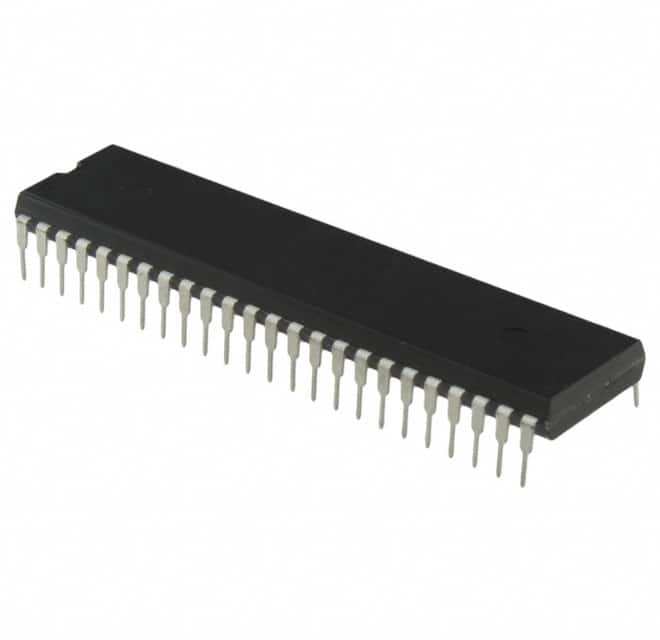
Renesas 7130SA100C
- Part No.:
- 7130SA100C
- Manufacturer:
- Renesas
- Category:
- Memory
- Package:
- 48-DIP (0.600", 15.24mm)
- Datasheet:
-
 7130SA100C.pdf
- Description:
- IC SRAM 8KBIT PARALLEL SB48
- Quantity:
- Payment:

- Shipping:

Inventory:1,501
Please send an inquiry. Send us your inquiry, and we will respond immediately.
Product details
Overview
7130SA100C from IDT (Integrated Device Technology) is a high-speed 1K × 8 dual-port static RAM configured as a MASTER device with on-chip arbitration logic, 100ns maximum read/write cycle time, open-drain BUSY outputs requiring pull-up resistors, and TTL-compatible 5V ±10% operation - used in real-time inter-processor communication buffers in industrial motion controllers.
For engineers reviewing the 7130SA100C datasheet, 7130SA100C pinout, 7130SA100C application, or 7130SA100C equivalent, this page delivers verified timing parameters, port arbitration behavior, BUSY/INT flag interaction, standby current values at 100ns speed grade, and exact package mapping for DIP/LCC/PLCC/TQFP variants.
Technical Context
The 7130SA100C implements fully asynchronous dual-port access with independent left/right address, control, and I/O buses. Its on-chip arbitration logic resolves simultaneous access to the same memory location via BUSY flag assertion, with tBDD = 65ns (max) for 100ns-grade devices.
It supports R/W-controlled and CE-controlled write cycles, features open-drain BUSYL/BUSYR outputs (requiring external pull-ups), and provides INTL/INTR flags for port-to-port interrupt signaling - all operating within commercial temperature range (0°C to +70°C) at VCC = 4.5–5.5V.
Key Specifications
| Parameter | Value and Actual Design Meaning |
|---|---|
| Memory Organization | 1K × 8 (1024 words × 8 bits), dual-port SRAM with independent left/right access paths |
| Max Read/Write Cycle Time | 100ns - defines minimum time between successive read or write operations on either port |
| Supply Voltage | 4.5V to 5.5V - TTL-compatible single supply; no separate VBB or backup rail required |
| Active Current (ICC) | 110mA (typ) - dynamic current when both ports active at fMAX, critical for thermal design in dense PCB layouts |
| Standby Current (ISB1) | 20mA (max) - TTL-level standby current with both CE pins high, enabling low-power idle states |
| Operating Temperature | 0°C to +70°C - commercial-grade rating; not rated for industrial (–40°C to +85°C) or military ranges |
| BUSY Output Type | Open-drain - requires external pull-up resistor; enables wired-OR arbitration across multiple masters |
Pinout & Package
7130SA100C is available in 48-pin DIP (PDG48/SB48), 48-pin LCC (LC48), 48-pin ceramic flatpack (FP48), 52-pin PLCC (PLG52), and 64-pin TQFP/STQFP (PPG64/PNG64) packages. Pin functions are identical across all packages; only mechanical dimensions and thermal characteristics differ.
| Pin/Terminal | Circuit Role | Design Meaning |
|---|---|---|
| A0L–A9L | Left port address inputs | 10-bit address bus for left-side memory access; latched internally on CEL or R/WL transition |
| A0R–A9R | Right port address inputs | 10-bit address bus for right-side memory access; independent timing from left port |
| I/O0L–I/O7L | Left port bidirectional data | 8-bit tri-state I/O bus; direction controlled by R/WL; high-impedance when OEL = VIH or CEL = VIH |
| I/O0R–I/O7R | Right port bidirectional data | 8-bit tri-state I/O bus; direction controlled by R/WR; high-impedance when OER = VIH or CER = VIH |
| CEL, CER | Chip enable inputs | Active-low enables for respective ports; disable port circuitry to reduce ISB1/ISB2 current |
| OEL, OER | Output enable inputs | Active-low controls I/O drivers; when high, forces I/O pins into high-impedance state |
| R/WL, R/WR | Read/write direction controls | High = read, low = write; determines data flow direction on I/O buses during CE-active cycles |
| BUSYL, BUSYR | Arbitration status outputs | Open-drain outputs indicating port contention; require external 4.7kΩ pull-up to VCC; asserted low during write conflict |
| INTL, INTR | Interrupt request outputs | Open-drain flags set/cleared by specific address writes (e.g., A9–A0 = 3FFH); used for inter-processor signaling |
| VCC, GND | Power and ground | Multiple VCC (pins 14, 27, 36, 45) and GND (pins 1, 26, 33, 48) pins ensure low-impedance supply distribution |
Key Features
| Feature | Design Value |
|---|---|
| On-chip arbitration logic | Resolves simultaneous access to same address without external logic; uses BUSY flag to stall conflicting writes |
| Port-to-port interrupt signaling | INTL/INTR flags set/reset via dedicated address writes (e.g., 3FFH), enabling deterministic inter-processor handshaking |
| Asynchronous dual-port operation | Independent timing on left/right ports eliminates synchronization overhead; supports mixed read/write concurrency |
| Open-drain BUSY outputs | Enable wired-OR arbitration across multiple 7130 devices; compatible with standard 5V pull-up networks |
| Low-power standby modes | ISB1 = 20mA (max) with both CE high; ISB3 = 1.0µA (typ) with CMOS-level CE inputs - reduces system power in idle states |
Applications
| Industrial Motion Controller Buffer | Real-Time Data Acquisition Node |
|---|---|
Use Scenario: Two microcontrollers share sensor data and motion commands via shared memory in a CNC machine controller. IC Role / Device Role / Timing Role: 7130SA100C acts as MASTER dual-port SRAM buffer; left port connects to motion CPU, right port to I/O manager; BUSY arbitration prevents write collisions during axis position updates. Use Value: Eliminates need for discrete arbitration logic and handshake signals; 100ns cycle time supports 10MHz servo loop rates with deterministic latency. | Use Scenario: High-speed analog-to-digital sampling system streams data from ADC to host processor while simultaneously accepting configuration commands. IC Role / Device Role / Timing Role: 7130SA100C serves as ping-pong buffer; left port receives ADC data bursts, right port feeds DMA engine; INTL/INTR flags signal buffer full/empty conditions. Use Value: Enables zero-wait-state data transfer between asynchronous clock domains; open-drain interrupts interface directly with FPGA or MCU GPIOs. |
| Communications Protocol Bridge | Redundant Control System Memory |
Use Scenario: Legacy RS-485 fieldbus node communicates with modern Ethernet gateway using protocol translation firmware running on dual-core SoC. IC Role / Device Role / Timing Role: 7130SA100C provides shared command/status table; core A writes command packets, core B reads and executes; BUSY flags prevent concurrent register overwrites. Use Value: Guarantees atomic access to shared control registers; 100ns timing ensures sub-microsecond inter-core coordination latency. | Use Scenario: Safety-critical PLC uses dual-channel architecture where primary and backup CPUs maintain synchronized state via shared memory. IC Role / Device Role / Timing Role: 7130SA100C stores mirrored process variables; primary CPU writes updates, backup CPU reads for validation; arbitration prevents inconsistent snapshots during write bursts. Use Value: Provides hardware-enforced consistency without software locks; open-drain BUSY outputs integrate with watchdog circuits monitoring arbitration health. |
Equivalent & Alternatives
The following parts are listed as comparable options for similar dual-port SRAM applications.
| Alternative Part | Technical Difference | Application Difference | Selection Advice |
|---|---|---|---|
| CY7C135-100AXC | 1K × 8, 100ns, 5V, but lacks on-chip arbitration logic and BUSY/INT flags; requires external logic for contention resolution | Suitable only in systems with dedicated arbitration controller or software-managed access; no hardware interrupt signaling | Select when cost sensitivity outweighs need for integrated arbitration; verify external logic fits timing budget (tBDD = 65ns not replicable) |
| IDT7140SA100C | SLAVE dual-port companion; identical speed/package but no arbitration logic; BUSY pins are inputs only; no INT flag generation | Used only in MASTER/SLAVE configurations where 7130SA100C handles arbitration; cannot operate stand-alone as MASTER | Choose only when expanding to 16-bit+ data width using 7130SA100C as MASTER; not a functional replacement |
Compared with CY7C135-100AXC and IDT7140SA100C, the 7130SA100C uniquely integrates arbitration, BUSY flag generation, and port-to-port interrupts - eliminating external components required by CY7C135 and enabling autonomous MASTER operation unlike IDT7140SA100C.
Availability
7130SA100C is available at Aetrix Electronics and suitable for industrial motion controllers, real-time data acquisition nodes, communications protocol bridges, and redundant control system memory requiring stable component supply across extended production lifecycles.
Supply support for 7130SA100C includes scheduled delivery planning, volume procurement assistance, BOM continuity management, traceable sourcing, and lifecycle availability coordination for OEM customers, industrial embedded developers, connected-device designers, and electronics production programs.
Manufacturer
IDT (Integrated Device Technology) is a semiconductor company specializing in timing, memory interface, RF, and sensor solutions, acquired by Renesas Electronics in 2019.
The 7130SA100C belongs to IDT's legacy dual-port SRAM product line designed for deterministic inter-processor communication in real-time embedded systems where hardware arbitration and low-latency shared memory access are critical.
FAQ
What is the maximum operating frequency supported by the 7130SA100C?
The 7130SA100C does not operate at a fixed clock frequency; it is an asynchronous device. Its 100ns maximum read/write cycle time (tRC) corresponds to a theoretical maximum sustained throughput of 10 MHz per port. Actual system bandwidth depends on address setup, hold, and enable timing margins - all specified in the AC Electrical Characteristics tables for 100ns-grade devices.
Does the 7130SA100C require external pull-up resistors on BUSY pins?
Yes, the 7130SA100C's BUSYL and BUSYR pins are open-drain outputs and require external pull-up resistors to VCC. The datasheet specifies a typical value of 4.7kΩ. Without pull-ups, BUSY signals cannot assert HIGH, breaking arbitration functionality and causing undefined write behavior during port contention.
Can the 7130SA100C be used without the arbitration logic enabled?
Yes - arbitration is inherent to the device architecture but only activates during simultaneous access to the same memory location. If software guarantees non-overlapping access (e.g., strict time-division multiplexing), BUSY flags remain deasserted and arbitration logic remains idle. However, the 7130SA100C still requires proper handling of BUSY outputs per Truth Table III to avoid unintended write inhibition.
What is the difference between 7130SA100C and 7130LA100C?
The 7130SA100C uses standard active power consumption (550mW typ) and lacks battery backup capability. The 7130LA100C variant adds data retention down to 2.0V with ICCDR ≤ 4000µA (military grade), enabling low-voltage holdover during main supply interruption - a feature absent in the SA version. Both share identical timing, pinout, and arbitration logic.
Is the 7130SA100C pin-compatible with other speed grades like 7130SA25C?
Yes - all 7130SA-xC variants (20ns, 25ns, 35ns, 55ns, 100ns) share identical pinout, package footprint, and DC/AC interface specifications. Only timing parameters differ. A 7130SA100C can replace a faster grade in lower-speed designs without PCB changes, though timing margins must be re-verified per application requirements.
7130SA100C Specifications
- Product attributes
- Attribute value
- Manufacturer:
- Renesas
- Series:
- -
- Package/Case:
- 48-DIP (0.600", 15.24mm)
- Packaging:
- Tube
- Product Status:
- Obsolete
- Programmable:
- Not Verified
- Memory Type:
- Volatile
- Memory Format:
- SRAM
- Technology:
- SRAM - Dual Port, Asynchronous
- Memory Size:
- 8Kbit
- Memory Organization:
- 1K x 8
- Memory Interface:
- Parallel
- Clock Frequency:
- -
- Write Cycle Time - Word, Page:
- 100ns
- Access Time:
- 100 ns
- Voltage - Supply:
- 4.5V ~ 5.5V
- Operating Temperature:
- 0°C ~ 70°C (TA)
- Grade:
- -
- Qualification:
- -
- Mounting Type:
- Through Hole
- Supplier Device Package:
- 48-SIDE BRAZED
7130SA100C FAQ
1.How can I place an order for 7130SA100C through Aetrix?
Please submit a Request for Quotation (RFQ) for 7130SA100C on Aetrix. Our sales agent will provide a competitive quotation and guide you through the order confirmation once you accept the terms.
2.Are the price and stock information for 7130SA100C reliable?
The price and inventory of 7130SA100C are updated periodically and may fluctuate due to market conditions. Stock and pricing data are typically refreshed every 24 hours. Quotation validity for 7130SA100C is usually 5 days.
3.What payment methods are accepted for 7130SA100C?
We accept Wire Transfer, PayPal, Credit Card, Western Union, MoneyGram, and Escrow for 7130SA100C transactions.
Note: Certain payment methods may incur a processing fee.
4.How is shipping managed for 7130SA100C?
7130SA100C orders can be shipped via leading logistics carriers, including DHL, UPS, FedEx, TNT, or Registered Mail.
Once your 7130SA100C order is processed, you will receive an email with the shipment details and tracking number.
Note: Tracking information may take up to 24 hours to appear. Express delivery typically takes 3–5 business days.
5.How can I obtain technical support or documentation for 7130SA100C?
For technical support, including 7130SA100C datasheets, pinout diagrams, or application guidance, please contact our engineering support team. They can provide detailed documentation and assistance for your 7130SA100C requirements.
6.How does Aetrix verify that 7130SA100C is sourced from the original manufacturer or authorized distributors?
All 7130SA100C products on Aetrix are procured from qualified distributors and authorized channels. Our dedicated quality assurance team conducts strict verification, including traceability checks and, if necessary, third-party testing. This ensures that 7130SA100C meets industry standards.
7.What is the process for return or replacement of 7130SA100C?
All 7130SA100C units undergo pre-shipment inspection (PSI). If there is an issue with 7130SA100C, returns or replacements are accepted under the following conditions:
1.Quantity discrepancies, incorrect items, or visible external defects (such as breakage or corrosion), acknowledged by Aetrix.
2.The issue is reported within 90 days of delivery.
3.The 7130SA100C part is unused and in its original packaging.
Return procedure for 7130SA100C:
1.Submit a request within 90 days.
2.Obtain a Return Material Authorization (RMA) from Aetrix.
7130SA100C Tags

-
M24C02-WMN6TP
STMicroelectronics
-
AT24C02C-XHM-T
Microchip Technology

-
AT21CS01-STUM10-T
Microchip Technology

-
AT24C02C-SSHM-T
Microchip Technology

-
24LC01BT-I/OT
Microchip Technology
-
M24C02-FMC6TG
STMicroelectronics
-
AT24CS02-SSHM-T
Microchip Technology

-
93LC46BT-I/OT
Microchip Technology
-
AT24C04C-SSHM-T
Microchip Technology

-
24LC01BT-I/SN
Microchip Technology
-
24AA02UIDT-I/OT
Microchip Technology
-
AT24C08C-STUM-T
Microchip Technology
Tech Hub

TTL and CMOS logic families differ in thresholds, loading, output drive, power and timing. This engineering guide compares 74HC and 74HCT, calculates noise margins and checks 3.3 V/5 V compatibility.

A practical engineering guide to 3.3V and 5V logic compatibility, input thresholds, resistor dividers, translator ICs, MOSFET level shifting, I2C pull-ups, timing limits and power-sequencing risks.

The 74HC595 uses push-pull logic outputs, while the TPIC6B595 uses 50 V open-drain DMOS sinks for higher-power loads. This guide compares timing, current limits, 3.3 V interfacing, load wiring, thermal…

The 74HC595 converts serial data into eight stable parallel outputs. This guide covers pin functions, shift and storage timing, OE and MR behavior, drive-current limits, cascading, voltage compatibilit…

A technical comparison of level-sensitive latches and edge-triggered flip-flops, covering timing windows, setup and hold limits, master–slave operation, time borrowing, race-through, HDL inference and…

A D latch stores one bit while Enable controls when data can pass. This reference covers gate-level operation, truth tables, transparency, setup and hold timing, LE versus OE, common ICs and practical …

An SR latch stores one bit through cross-coupled feedback. This engineering reference covers NOR and NAND implementations, truth tables, forbidden-state recovery, gated operation, switch debouncing, fa…

Latch circuits retain one bit through feedback. This technical reference covers SR and D latches, truth tables, transparency, timing limits, latch-versus-flip-flop behavior, applications and common log…

An engineering guide to LED driver operation, constant-current and constant-voltage outputs, linear and switching topologies, dimming, IC selection, calculations, replacement compatibility, and fault c…

Operational amplifier guide covering op amp basics, feedback, ideal vs real op amps, common configurations, buffer circuits, offset, bias current, gain-bandwidth, slew rate, rail-to-rail limits and sel…


