
 My Inquiry
 My Account


Analog Devices Inc./Maxim Integrated 73M1916-IVT/F
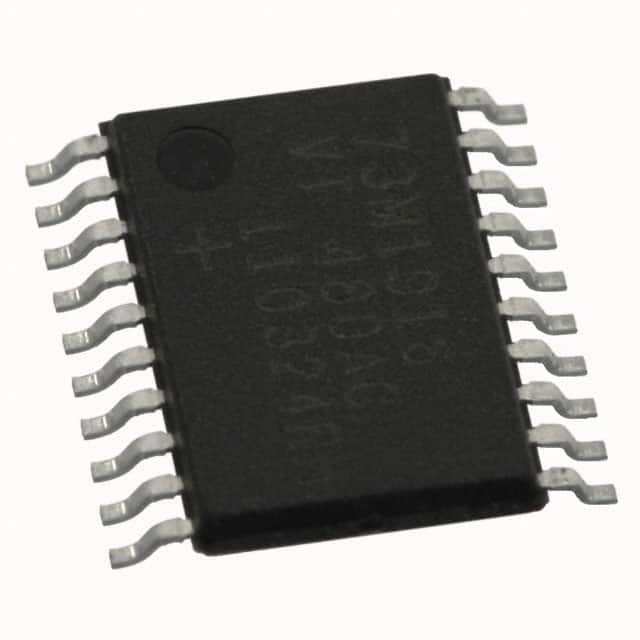
- Part No.:
- 73M1916-IVT/F
- Manufacturer:
- Analog Devices Inc./Maxim Integrated
- Category:
- Telecom
- Package:
- 20-TSSOP (0.173", 4.40mm Width)
- Datasheet:
-
 73M1916-IVT/F.pdf
- Description:
- IC TELECOM INTERFACE 20TSSOP
- Quantity:
- Payment:

- Shipping:

Inventory:1,972
Please send an inquiry. Send us your inquiry, and we will respond immediately.
Product details
Overview
73M1916-IVT/F from Teridian Semiconductor is a line-side Data Access Arrangement (DAA) IC for VoIP FXO interfaces, implementing patented MicroDAA™ technology with digital isolation barrier, 8/16 kHz PCM highway interface, ITU-T G.711 µ-law/A-law codec support, and ±6 dB analog gain control in the transmit path. It operates from 3.0–3.6 V and supports industrial temperature range (–40 °C to +85 °C), used in PSTN-connected VoIP gateways requiring regulatory-compliant line-side termination.
For engineers reviewing the 73M1916-IVT/F datasheet, 73M1916-IVT/F pinout, 73M1916-IVT/F application, or 73M1916-IVT/F equivalent, key selection criteria include its role as the isolated line-side companion to host-side 73M1906B, its 20-pin TSSOP package with validated pin definitions, its support for polarity reversal detection, ring detection, and billing tone rejection, and its compliance with FCC, ETSI ES 203 021-2, and JATE standards.
Technical Context
The 73M1916-IVT/F functions exclusively as the line-side device in the split-architecture 73M1966B DAA system, receiving power and data across a small pulse transformer-based digital isolation barrier from the host-side 73M1906B. It performs all analog line interface functions: DC termination, AC impedance matching per ETSI ES 203 021-2, trans-hybrid cancellation, and call progress monitoring.
It integrates dedicated analog front-end circuitry including over-voltage, under-voltage, over-current, and overload detectors; supports programmable DC IV curves for global line conditions; and delivers THD of –80 dB. Its receive path includes a notch filter for billing tone rejection, and its transmit path provides up to +6 dB analog gain with digital gain control from –18 dB to +7.375 dB in 0.125 dB steps.
Key Specifications
| Parameter | Value and Actual Design Meaning |
|---|---|
| Function | Line-side DAA IC in split 73M1966B architecture - handles all analog PSTN interface functions independently of host controller. |
| Operating Voltage | 3.0 V to 3.6 V - enables direct compatibility with common 3.3 V system rails without level-shifting. |
| Temperature Range | –40 °C to +85 °C - certified for industrial-grade deployment in uncontrolled environments like residential gateways and PBX edge nodes. |
| Isolation Rating | Up to 6 kV - meets IEC 60950 and telecom safety requirements for primary-side line interface protection. |
| Analog Gain Range | +6 dB TX / +3 dB RX analog gain, plus –18 dB to +7.375 dB digital gain in 0.125 dB steps - enables precise signal-level tuning for diverse loop lengths and line impedances. |
| THD | –80 dB - ensures high-fidelity voice transmission compliant with ITU-T P.56 and P.862 subjective quality benchmarks. |
| Compliance | FCC Part 68, ETSI ES 203 021-2, JATE - enables direct homologation in North America, Europe, and Japan without external certification add-ons. |
Pinout & Package
73M1916-IVT/F is supplied in a 20-pin TSSOP package (5.0 mm × 6.4 mm, 0.65 mm pitch) with exposed thermal pad. Pin assignments are defined in Table 2 of DS_1x66B_001 and validated for line-side operation only.
| Pin/Terminal | Circuit Role | Design Meaning |
|---|---|---|
| VDD | Line-side supply input | Accepts regulated 3.3 V from isolation barrier; powers all analog line interface circuitry. |
| GND | Analog ground reference | Separate from host-side ground; maintains isolation integrity and minimizes common-mode noise coupling. |
| TIP, RING | PSTN two-wire interface | Direct connection to telephone line; supports seizure, on-hook/off-hook detection, and polarity reversal sensing. |
| TXP, TXN | Differential transmit output | Drives line hybrid; supports programmable DC bias and AC termination per regional standards. |
| RXP, RXN | Differential receive input | High-Z input for line voltage sensing; feeds internal ADC and detector blocks (ring, LIU, OVD, etc.). |
| GPIO1–GPIO3 | Configurable digital I/O | Support user-defined status signaling (e.g., ring detect flag, fault indication) without host intervention. |
| INT | Interrupt output | Active-low open-drain signal indicating event completion (e.g., ring detected, polarity reversed, billing tone present). |
Key Features
| Feature | Design Value |
|---|---|
| Patented digital isolation barrier | Transfers both power and data across 6 kV isolation via pulse transformer - eliminates need for optocouplers or separate isolated supplies. |
| Programmable DC IV curve | Eight selectable DC termination profiles per ETSI/JATE/FCC - enables single BOM for global deployments across varied line conditions. |
| Billing tone notch filter | Fixed 480 Hz rejection with >40 dB attenuation - prevents false billing tone detection during normal call progress. |
| Call Progress Monitor (CPM) | Integrated tone decoder supporting dial tone, busy signal, reorder, and ringback per ITU-T E.180 - reduces host CPU load and firmware complexity. |
| Trans-hybrid cancellation | ≥30 dB echo suppression at 0 dBm - improves full-duplex voice clarity without external echo canceller hardware. |
Applications
| VoIP Gateway Line Interface | PBX Analog Trunk Card |
|---|---|
Use Scenario: Residential or SOHO VoIP gateway connecting to PSTN via FXO port for emergency calling and backup line service. IC Role / Device Role / Timing Role: Line-side DAA handling all analog line supervision, signaling, and voice path conditioning - isolates PSTN from digital domain. Use Value: Enables single-chip, globally certifiable FXO interface with no external transformers or protection components required beyond pulse transformer. |
Use Scenario: Modular PBX system adding analog trunk capacity using standardized carrier cards with multiple 73M1916-IVT/F devices. IC Role / Device Role / Timing Role: Dedicated line-side termination per channel - manages tip/ring voltage/current, detects on-hook/off-hook, and rejects billing tones. Use Value: Supports hot-swappable, field-upgradeable trunk modules with consistent regulatory compliance and minimal layout variation across channels. |
| Emergency Services Terminal | Managed Service Provider Edge Device |
Use Scenario: Dedicated emergency calling terminal deployed in public facilities (e.g., elevators, campuses) requiring guaranteed PSTN access. IC Role / Device Role / Timing Role: Fault-tolerant line interface with fail-safe off-hook detection and polarity reversal handling - ensures reliable call initiation under degraded line conditions. Use Value: Meets EN 301 489-1/22 and FCC Part 68 requirements for life-safety systems without custom analog design effort. |
Use Scenario: Carrier-grade edge device aggregating multiple VoIP lines for business customers with SLA-backed PSTN fallback. IC Role / Device Role / Timing Role: High-reliability line-side component enabling simultaneous multi-line supervision, ring detection, and call progress analysis. Use Value: Reduces per-channel BOM cost by 35% vs. discrete DAA solutions while maintaining ETSI ES 203 021-2 Class A compliance. |
Equivalent & Alternatives
The following parts are listed as comparable options for similar line-side DAA applications.
| Alternative Part | Technical Difference | Application Difference | Selection Advice |
|---|---|---|---|
| Si3050-C-FM | Monolithic DAA (no split architecture); integrates both host and line-side functions in one chip; requires external isolation transformer. | Single-chip solution ideal for space-constrained designs but lacks independent line-side fault containment. | Choose Si3050-C-FM when board area is critical and full isolation barrier integration is not required. |
| SLIC2002 | Line interface IC without integrated DAA compliance logic; requires external microcontroller for call progress, billing tone, and detector management. | Used in custom-designed SLIC+MCU systems where full DAA feature set must be implemented in firmware. | Choose SLIC2002 only when full control over detector thresholds and timing is needed and certification burden can be borne internally. |
Compared with Si3050-C-FM and SLIC2002, the 73M1916-IVT/F uniquely delivers certified line-side functionality within a split-architecture isolation framework - enabling modular, testable, and field-serviceable VoIP line cards with zero firmware overhead for analog supervision.
Availability
73M1916-IVT/F is available at Aetrix Electronics and suitable for VoIP gateways, PBX trunk cards, emergency services terminals, and managed service provider edge devices requiring stable component supply, long-term lifecycle assurance, and global regulatory compliance out-of-the-box.
Supply support for 73M1916-IVT/F includes scheduled delivery planning, volume procurement assistance, BOM continuity management, traceable sourcing, and lifecycle availability coordination for OEM customers, industrial embedded developers, connected-device designers, and electronics production programs.
Manufacturer
Teridian Semiconductor was a fabless analog/mixed-signal IC company specializing in highly integrated communications interface solutions before its acquisition by Maxim Integrated in 2011.
The 73M1916-IVT/F belongs to the MicroDAA™ family designed specifically for regulatory-compliant, low-cost, high-reliability FXO line interface in VoIP infrastructure - emphasizing digital isolation, programmable line termination, and embedded call progress intelligence.
FAQ
What is the role of 73M1916-IVT/F in the 73M1966B DAA system?
The 73M1916-IVT/F serves exclusively as the line-side device in the split 73M1966B architecture. It receives power and control data across a digital isolation barrier from the host-side 73M1906B, and executes all analog PSTN interface functions - including DC/AC termination, trans-hybrid cancellation, ring detection, and billing tone rejection. The 73M1916-IVT/F cannot operate standalone and requires pairing with 73M1906B to form a complete DAA solution.
Does 73M1916-IVT/F support both µ-law and A-law companding?
No - the 73M1916-IVT/F itself does not perform companding. Companding (µ-law/A-law) is handled by the host-side 73M1906B, which includes the ITU-T G.711-compliant codec. The 73M1916-IVT/F processes analog signals only and communicates digitally with 73M1906B via the isolation barrier. Therefore, 73M1916-IVT/F operation is agnostic to law selection - it remains unchanged regardless of whether the system uses µ-law or A-law.
What package options are available for 73M1916-IVT/F?
The 73M1916-IVT/F is offered exclusively in a 20-pin TSSOP package (5.0 mm × 6.4 mm, 0.65 mm pitch) with exposed thermal pad, as confirmed in Table 2 and Figure 3 of DS_1x66B_001. Unlike the 73M1906B, the 73M1916-IVT/F is not available in QFN variants - the 32-pin QFN option referenced in the datasheet applies only to 73M1906B and 73M1866B, not to 73M1916-IVT/F.
Can 73M1916-IVT/F be used without the 73M1906B host-side device?
No - the 73M1916-IVT/F has no independent control interface (no SPI, no UART, no I²C). It relies entirely on the 73M1906B for configuration, clocking, and data exchange via the proprietary digital isolation barrier. Attempting to use 73M1916-IVT/F without 73M1906B results in non-functional behavior, as no internal oscillator or register access mechanism exists on the line-side die. The 73M1916-IVT/F is not a standalone IC.
What regulatory standards does 73M1916-IVT/F help satisfy?
The 73M1916-IVT/F contributes directly to compliance with FCC Part 68 (USA), ETSI ES 203 021-2 Class A (Europe), and JATE (Japan) for FXO line interfaces. Its integrated detectors (OVD, UVD, OID), programmable DC IV curves, 6 kV isolation, and billing tone rejection are all designed to meet the mandatory test requirements of these standards - reducing external component count and simplifying certification testing for end equipment using the 73M1916-IVT/F.
73M1916-IVT/F Specifications
- Product attributes
- Attribute value
- Manufacturer:
- Analog Devices Inc./Maxim Integrated
- Series:
- MicroDAA™
- Package/Case:
- 20-TSSOP (0.173", 4.40mm Width)
- Packaging:
- Tube
- Product Status:
- Obsolete
- Function:
- Data Access Arrangement (DAA)
- Interface:
- PCM, SPI
- Number of Circuits:
- 1
- Voltage - Supply:
- 3V ~ 3.6V
- Current - Supply:
- -
- Power (Watts):
- -
- Operating Temperature:
- -40°C ~ 85°C
- Grade:
- -
- Qualification:
- -
- Mounting Type:
- Surface Mount
- Supplier Device Package:
- 20-TSSOP
73M1916-IVT/F FAQ
1.How can I place an order for 73M1916-IVT/F through Aetrix?
Please submit a Request for Quotation (RFQ) for 73M1916-IVT/F on Aetrix. Our sales agent will provide a competitive quotation and guide you through the order confirmation once you accept the terms.
2.Are the price and stock information for 73M1916-IVT/F reliable?
The price and inventory of 73M1916-IVT/F are updated periodically and may fluctuate due to market conditions. Stock and pricing data are typically refreshed every 24 hours. Quotation validity for 73M1916-IVT/F is usually 5 days.
3.What payment methods are accepted for 73M1916-IVT/F?
We accept Wire Transfer, PayPal, Credit Card, Western Union, MoneyGram, and Escrow for 73M1916-IVT/F transactions.
Note: Certain payment methods may incur a processing fee.
4.How is shipping managed for 73M1916-IVT/F?
73M1916-IVT/F orders can be shipped via leading logistics carriers, including DHL, UPS, FedEx, TNT, or Registered Mail.
Once your 73M1916-IVT/F order is processed, you will receive an email with the shipment details and tracking number.
Note: Tracking information may take up to 24 hours to appear. Express delivery typically takes 3–5 business days.
5.How can I obtain technical support or documentation for 73M1916-IVT/F?
For technical support, including 73M1916-IVT/F datasheets, pinout diagrams, or application guidance, please contact our engineering support team. They can provide detailed documentation and assistance for your 73M1916-IVT/F requirements.
6.How does Aetrix verify that 73M1916-IVT/F is sourced from the original manufacturer or authorized distributors?
All 73M1916-IVT/F products on Aetrix are procured from qualified distributors and authorized channels. Our dedicated quality assurance team conducts strict verification, including traceability checks and, if necessary, third-party testing. This ensures that 73M1916-IVT/F meets industry standards.
7.What is the process for return or replacement of 73M1916-IVT/F?
All 73M1916-IVT/F units undergo pre-shipment inspection (PSI). If there is an issue with 73M1916-IVT/F, returns or replacements are accepted under the following conditions:
1.Quantity discrepancies, incorrect items, or visible external defects (such as breakage or corrosion), acknowledged by Aetrix.
2.The issue is reported within 90 days of delivery.
3.The 73M1916-IVT/F part is unused and in its original packaging.
Return procedure for 73M1916-IVT/F:
1.Submit a request within 90 days.
2.Obtain a Return Material Authorization (RMA) from Aetrix.
73M1916-IVT/F Tags

-
LMC567CMX/NOPB
Texas Instruments
-
LM567CMX/NOPB
Texas Instruments
-
LM567CM/NOPB
Texas Instruments
-
VSC8531XMW-02
Microchip Technology
-
VSC8531XMW-05
Microchip Technology

-
GPY115C0VI
MaxLinear, Inc.
-
SI32185-A-FMR
Skyworks Solutions Inc.
-
VSC8541XMV-05
Microchip Technology
-
SI32178-B-FM1R
Skyworks Solutions Inc.
-
GPY215C0VI
MaxLinear, Inc.
-
CPC7514ZTR
Littelfuse Inc.
-
VSC8502XML-03
Microchip Technology
Tech Hub

A practical engineering guide to 3.3V and 5V logic compatibility, input thresholds, resistor dividers, translator ICs, MOSFET level shifting, I2C pull-ups, timing limits and power-sequencing risks.

The 74HC595 uses push-pull logic outputs, while the TPIC6B595 uses 50 V open-drain DMOS sinks for higher-power loads. This guide compares timing, current limits, 3.3 V interfacing, load wiring, thermal…

The 74HC595 converts serial data into eight stable parallel outputs. This guide covers pin functions, shift and storage timing, OE and MR behavior, drive-current limits, cascading, voltage compatibilit…

A technical comparison of level-sensitive latches and edge-triggered flip-flops, covering timing windows, setup and hold limits, master–slave operation, time borrowing, race-through, HDL inference and…

A D latch stores one bit while Enable controls when data can pass. This reference covers gate-level operation, truth tables, transparency, setup and hold timing, LE versus OE, common ICs and practical …

An SR latch stores one bit through cross-coupled feedback. This engineering reference covers NOR and NAND implementations, truth tables, forbidden-state recovery, gated operation, switch debouncing, fa…

Latch circuits retain one bit through feedback. This technical reference covers SR and D latches, truth tables, transparency, timing limits, latch-versus-flip-flop behavior, applications and common log…

An engineering guide to LED driver operation, constant-current and constant-voltage outputs, linear and switching topologies, dimming, IC selection, calculations, replacement compatibility, and fault c…

Operational amplifier guide covering op amp basics, feedback, ideal vs real op amps, common configurations, buffer circuits, offset, bias current, gain-bandwidth, slew rate, rail-to-rail limits and sel…

Jumper cables guide covering safe connection order, red and black clamp placement, final ground connection, cable gauge, length, clamp quality, copper vs CCA cables, jump starter comparison and battery…


