
 My Inquiry
 My Account


Analog Devices Inc./Maxim Integrated 73S1210F-68IM/F
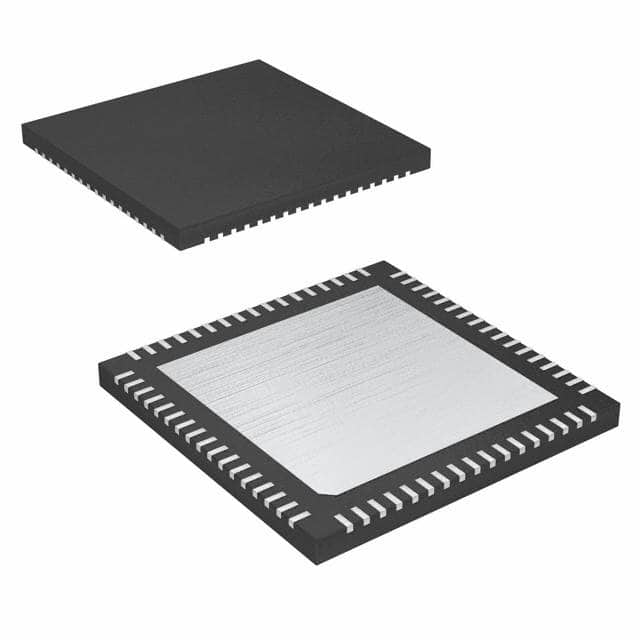
- Part No.:
- 73S1210F-68IM/F
- Manufacturer:
- Analog Devices Inc./Maxim Integrated
- Category:
- Microcontrollers
- Package:
- 68-VFQFN Exposed Pad
- Datasheet:
-
 73S1210F-68IM/F.pdf
- Description:
- IC MCU 8BIT 32KB FLASH 68QFN
- Quantity:
- Payment:

- Shipping:

Inventory:1,547
Please send an inquiry. Send us your inquiry, and we will respond immediately.
Product details
Overview
The 73S1210F-68IM/F from Teridian Semiconductor is a self-contained, ISO/EMV-compliant smart card reader SoC with integrated 80515 CPU core, on-chip DC-DC converter, 5×6 PINpad interface, and dual power supply support (VBUS/VBAT or VPC). It delivers up to 24 MIPS, 32KB Flash, 2KB XRAM, and full T=0/T=1 UART communication at 9600–115.2 kbps - enabling low-cost, battery-optimized PINpad readers for POS terminals and secure digital ID systems.
For engineers reviewing the 73S1210F-68IM/F datasheet, 73S1210F-68IM/F pinout, 73S1210F-68IM/F application, or 73S1210F-68IM/F equivalent, key selection criteria include its sub-µA OFF mode, built-in EMV4.1 firmware stack, 68-pin QFN package with hardware-debounced ON/OFF switch control, and support for multi-SAM architectures via I²C.
Technical Context
The 73S1210F-68IM/F integrates an 80515-compatible CPU core running at up to 24 MHz (24 MIPS), with dedicated FIFOs for ISO 7816 UART independent of user memory space. Its internal PLL generates all system clocks from a single 6–12 MHz crystal, eliminating external clock sources.
Power management includes automated VBUS/VBAT priority detection, an inductor-based DC-DC converter (requiring only one 10 µH inductor), and three distinct low-power states: IDLE, Power Down, and sub-µA OFF mode triggered by hardware ON/OFF switch or firmware command.
Key Specifications
| Parameter | Value and Actual Design Meaning |
|---|---|
| CPU Core | 80515-compatible, 1-cycle/instruction, 24 MHz max → enables real-time AES/DES/RSA encryption for PIN processing |
| Memory | 32 KB Flash (in-system programmable & lockable), 2 KB XRAM, 256 B IRAM → supports field-upgradable secure firmware |
| Smart Card Interface | ISO 7816 UART (9600–115.2 kbps), T=0/T=1 compliant, 7 kV ESD protection → meets EMV 4.1 activation/deactivation timing |
| Power Supply | VPC: 2.7–6.5 V; VBUS: 4.4–6.5 V; VBAT: 4.0–6.5 V → enables dual-source operation with automatic VBUS priority |
| Low-Power Mode | OFF mode current <1 µA → extends battery life in portable PINpad readers without external power gating |
| Peripheral Interfaces | I²C Master (400 kbps), 5×6 keypad scanner, 8 user I/Os, analog voltage input (1.0–2.5 V) → supports battery-level monitoring and secure HMI |
| Package | 68-pin QFN (10 mm × 10 mm, 0.5 mm pitch) → provides dedicated pins for card power (VCC), reset (RST), clock (CLK), I/O (I/O), and presence (PRES) |
Pinout & Package
68-pin QFN package (10 mm × 10 mm, 0.5 mm pitch), RoHS-compliant, with exposed thermal pad. Pinout validated per DS_1210F_001 Rev. 1.4 Figures 44 and Table 1.
| Pin/Terminal | Circuit Role | Design Meaning |
|---|---|---|
| VCC_CARD | Smart card power output | Programmable linear regulator supplying 1.8 V / 3 V / 5 V to card - eliminates external LDO |
| CLK | Smart card clock output | Generates precise ETU-synchronized clock per ISO 7816-3; supports synchronous and asynchronous modes |
| RST | Smart card reset output | Hardware-controlled activation/deactivation sequencer compliant with EMV 4.1 guard time requirements |
| I/O | Smart card data bidirectional | Full-duplex UART interface with 2-byte TX/RX FIFOs - decouples host software timing from card protocol |
| PRES | Card presence detection input | Dedicated comparator input detecting card insertion; debounced in hardware to prevent false triggers |
| ON_OFF | System power switch input | SPST momentary switch-to-ground interface with internal debouncing and firmware-coordinated power state transition |
Key Features
| Feature | Design Value |
|---|---|
| Turnkey EMV4.1 firmware | Pre-certified PC/SC-compliant stack with Windows XP/CE, Linux support - reduces certification timeline by ≥6 months |
| Integrated DC-DC converter | Single 10 µH inductor generates 3.3 V @ 20 mA for external circuits - eliminates discrete buck regulator and associated layout complexity |
| Hardware keypad scanner | 5×6 matrix scanning with debounce, scrambling, and interrupt-on-keypress - prevents side-channel timing attacks on PIN entry |
| Multi-SAM expansion | I²C Master interface drives external Teridian 73S8010 ICs - enables dual-card or dual-SAM configurations without additional microcontroller resources |
| Sub-µA OFF mode | Firmware- or switch-initiated deep sleep with retained register state - enables instant wake-on-insert for contactless-ready hybrid readers |
Applications
| POS Terminal PINpad | Government ID Reader |
|---|---|
Use Scenario: Low-cost, battery-backed point-of-sale terminal requiring EMV-compliant card reading and encrypted PIN capture. IC Role / Device Role / Timing Role: Self-contained smart card controller handling ISO 7816 protocol, PINpad scanning, power sequencing, and host serial communication. Use Value: Eliminates need for separate MCU, UART, LDO, and power management IC - reduces BOM count by ≥7 components. | Use Scenario: Portable national ID card reader used in field enrollment or border control with offline biometric verification. IC Role / Device Role / Timing Role: Secure execution environment for PIN validation and card ATR parsing; analog input monitors battery level during multi-hour deployments. Use Value: Sub-µA OFF mode extends single-charge operation beyond 30 days - critical for unattended field use. |
| SIM Card Reader Module | Vending Machine Controller |
Use Scenario: Embedded SIM reader in wireless payment gateway or M2M telemetry device requiring compact, low-power card interface. IC Role / Device Role / Timing Role: Dedicated smart card interface co-processor offloading ISO 7816 timing-critical tasks from main application processor. Use Value: Hardware UART FIFOs and EMV-timed activation ensure reliable SIM authentication even under host CPU load spikes. | Use Scenario: Coin- or card-activated vending machine needing tamper-resistant PIN entry for admin access and firmware updates. IC Role / Device Role / Timing Role: Secure HMI subsystem managing keypad, LED feedback, and card authentication independently of main vending logic. Use Value: On-chip watchdog timer and lockable Flash prevent unauthorized firmware modification - satisfies UL 3111-1 security requirements. |
Equivalent & Alternatives
The following parts are listed as comparable options for similar smart card reader controller applications.
| Alternative Part | Technical Difference | Application Difference | Selection Advice |
|---|---|---|---|
| Infineon SLE78CLX2040P | ARM Cortex-M0+ core, 128 KB Flash, no integrated PINpad interface - requires external keypad controller | Targets higher-security banking terminals with CC EAL5+ certification path; lacks turnkey EMV firmware | Choose when long-term security certification and ARM ecosystem tooling outweigh BOM simplification benefits of 73S1210F-68IM/F |
| NXP SLN10SE0101 | Secure Element + NFC frontend; no ISO 7816 UART or PINpad - designed for contactless-only use cases | Optimized for mobile wallet and transit ticketing; cannot replace contact smart card interface functionality | Choose only for NFC-first designs where contact card support is secondary or handled externally |
Compared with Infineon SLE78CLX2040P and NXP SLN10SE0101, the 73S1210F-68IM/F uniquely combines contact smart card interface, hardware PINpad, and pre-certified EMV firmware in a single chip - delivering fastest time-to-market for cost-sensitive, battery-powered contact readers.
Availability
The 73S1210F-68IM/F is available at Aetrix Electronics and suitable for POS terminals, government ID readers, SIM card modules, and vending machine controllers requiring stable component supply and long-lifecycle support.
Supply support for 73S1210F-68IM/F includes scheduled delivery planning, volume procurement assistance, BOM continuity management, traceable sourcing, and lifecycle availability coordination for OEM customers, industrial embedded developers, connected-device designers, and electronics production programs.
Manufacturer
Teridian Semiconductor Corporation was a fabless analog/mixed-signal IC designer specializing in metering, power management, and secure transaction solutions before its acquisition by Maxim Integrated in 2010.
The 73S1210F product line was engineered specifically for integrated smart card reader systems - combining secure processing, power efficiency, and EMV compliance into a single SoC to eliminate design complexity in payment and identity infrastructure.
FAQ
What is the primary function of the 73S1210F-68IM/F in a smart card system?
The 73S1210F-68IM/F serves as a complete, self-contained smart card reader controller. It handles ISO 7816 physical and protocol layers, manages PINpad input, regulates card power (1.8 V/3 V/5 V), executes EMV4.1-compliant firmware, and communicates with the host via UART - all within a single 68-pin QFN package. The 73S1210F-68IM/F eliminates the need for external microcontrollers, level shifters, or power regulators in certified reader designs.
Does the 73S1210F-68IM/F support both contact and contactless smart cards?
No, the 73S1210F-68IM/F supports contact smart cards only via its ISO 7816 interface (CLK, RST, I/O, VCC, PRES). It does not include NFC, RFID, or contactless protocol stacks. The 73S1210F-68IM/F is explicitly designed for EMV-compliant contact card transactions and PIN entry - not for ISO 14443 or FeliCa interfaces.
What power supply configurations does the 73S1210F-68IM/F support?
The 73S1210F-68IM/F supports three supply configurations: (1) VPC pin (2.7–6.5 V single source), (2) VBUS (4.4–6.5 V) with optional VBAT backup (4.0–6.5 V), or (3) VBAT-only operation. The chip automatically selects VBUS over VBAT when both are present. The 73S1210F-68IM/F integrates a DC-DC converter requiring only one 10 µH inductor to generate internal 3.3 V and card voltages.
Can the 73S1210F-68IM/F be programmed with custom firmware?
Yes, the 73S1210F-68IM/F supports in-system programming of its 32 KB Flash memory via a JTAG-like emulator port. Customers may develop proprietary firmware using Teridian's ANSI C API libraries for ISO 7816, EMV4.1, and low-level peripherals - or deploy Teridian's turnkey PC/SC-compliant firmware. Flash security fuses allow locking code against readout.
What is the significance of the "-68IM/F" suffix in the 73S1210F-68IM/F part number?
The "-68IM/F" suffix denotes the specific variant: "68" indicates the 68-pin QFN package, "I" specifies industrial temperature range (−40°C to +85°C), "M" signifies tape-and-reel packaging, and "F" confirms lead-free (RoHS-compliant) finish. This distinguishes it from the 44-pin QFN variant (73S1210F-44IM/F) and commercial-grade versions.
73S1210F-68IM/F Specifications
- Product attributes
- Attribute value
- Manufacturer:
- Analog Devices Inc./Maxim Integrated
- Package/Case:
- 68-VFQFN Exposed Pad
- Series:
- 73S12xx
- Packaging:
- Product Status:
- Obsolete
- Programmable:
- Not Verified
- Core Processor:
- 80515
- Core Size:
- 8-Bit
- Speed:
- 24MHz
- Connectivity:
- I2C, SmartCard, UART/USART
- Peripherals:
- LED, POR, WDT
- Number of I/O:
- 8
- Program Memory Size:
- 32KB (32K x 8)
- Program Memory Type:
- FLASH
- EEPROM Size:
- -
- RAM Size:
- 2K x 8
- Voltage - Supply (Vcc/Vdd):
- 2.7V ~ 6.5V
- Data Converters:
- -
- Oscillator Type:
- Internal
- Operating Temperature:
- -40°C ~ 85°C (TA)
- Grade:
- -
- Qualification:
- -
- Mounting Type:
- Surface Mount
- Supplier Device Package:
73S1210F-68IM/F FAQ
1.How can I place an order for 73S1210F-68IM/F through Aetrix?
Please submit a Request for Quotation (RFQ) for 73S1210F-68IM/F on Aetrix. Our sales agent will provide a competitive quotation and guide you through the order confirmation once you accept the terms.
2.Are the price and stock information for 73S1210F-68IM/F reliable?
The price and inventory of 73S1210F-68IM/F are updated periodically and may fluctuate due to market conditions. Stock and pricing data are typically refreshed every 24 hours. Quotation validity for 73S1210F-68IM/F is usually 5 days.
3.What payment methods are accepted for 73S1210F-68IM/F?
We accept Wire Transfer, PayPal, Credit Card, Western Union, MoneyGram, and Escrow for 73S1210F-68IM/F transactions.
Note: Certain payment methods may incur a processing fee.
4.How is shipping managed for 73S1210F-68IM/F?
73S1210F-68IM/F orders can be shipped via leading logistics carriers, including DHL, UPS, FedEx, TNT, or Registered Mail.
Once your 73S1210F-68IM/F order is processed, you will receive an email with the shipment details and tracking number.
Note: Tracking information may take up to 24 hours to appear. Express delivery typically takes 3–5 business days.
5.How can I obtain technical support or documentation for 73S1210F-68IM/F?
For technical support, including 73S1210F-68IM/F datasheets, pinout diagrams, or application guidance, please contact our engineering support team. They can provide detailed documentation and assistance for your 73S1210F-68IM/F requirements.
6.How does Aetrix verify that 73S1210F-68IM/F is sourced from the original manufacturer or authorized distributors?
All 73S1210F-68IM/F products on Aetrix are procured from qualified distributors and authorized channels. Our dedicated quality assurance team conducts strict verification, including traceability checks and, if necessary, third-party testing. This ensures that 73S1210F-68IM/F meets industry standards.
7.What is the process for return or replacement of 73S1210F-68IM/F?
All 73S1210F-68IM/F units undergo pre-shipment inspection (PSI). If there is an issue with 73S1210F-68IM/F, returns or replacements are accepted under the following conditions:
1.Quantity discrepancies, incorrect items, or visible external defects (such as breakage or corrosion), acknowledged by Aetrix.
2.The issue is reported within 90 days of delivery.
3.The 73S1210F-68IM/F part is unused and in its original packaging.
Return procedure for 73S1210F-68IM/F:
1.Submit a request within 90 days.
2.Obtain a Return Material Authorization (RMA) from Aetrix.
73S1210F-68IM/F Tags

-
ATTINY4-TSHR
Microchip Technology
-
ATTINY10-TSHR
Microchip Technology
-
ATTINY10-TS8R
Microchip Technology

-
ATTINY202-SSNR
Microchip Technology
-
ATTINY202-SSFR
Microchip Technology
-
ATTINY402-SSNR
Microchip Technology
-
PIC16F15213T-I/MF
Microchip Technology
-
PIC16F15213-E/MF
Microchip Technology

-
PIC10F200T-I/OT
Microchip Technology
-
ATTINY412-SSNR
Microchip Technology
-
PIC10F202T-I/OT
Microchip Technology
-
ATTINY404-SSNR
Microchip Technology
Tech Hub

A practical engineering guide to 3.3V and 5V logic compatibility, input thresholds, resistor dividers, translator ICs, MOSFET level shifting, I2C pull-ups, timing limits and power-sequencing risks.

The 74HC595 uses push-pull logic outputs, while the TPIC6B595 uses 50 V open-drain DMOS sinks for higher-power loads. This guide compares timing, current limits, 3.3 V interfacing, load wiring, thermal…

The 74HC595 converts serial data into eight stable parallel outputs. This guide covers pin functions, shift and storage timing, OE and MR behavior, drive-current limits, cascading, voltage compatibilit…

A technical comparison of level-sensitive latches and edge-triggered flip-flops, covering timing windows, setup and hold limits, master–slave operation, time borrowing, race-through, HDL inference and…

A D latch stores one bit while Enable controls when data can pass. This reference covers gate-level operation, truth tables, transparency, setup and hold timing, LE versus OE, common ICs and practical …

An SR latch stores one bit through cross-coupled feedback. This engineering reference covers NOR and NAND implementations, truth tables, forbidden-state recovery, gated operation, switch debouncing, fa…

Latch circuits retain one bit through feedback. This technical reference covers SR and D latches, truth tables, transparency, timing limits, latch-versus-flip-flop behavior, applications and common log…

An engineering guide to LED driver operation, constant-current and constant-voltage outputs, linear and switching topologies, dimming, IC selection, calculations, replacement compatibility, and fault c…

Operational amplifier guide covering op amp basics, feedback, ideal vs real op amps, common configurations, buffer circuits, offset, bias current, gain-bandwidth, slew rate, rail-to-rail limits and sel…

Jumper cables guide covering safe connection order, red and black clamp placement, final ground connection, cable gauge, length, clamp quality, copper vs CCA cables, jump starter comparison and battery…


