
 My Inquiry
 My Account


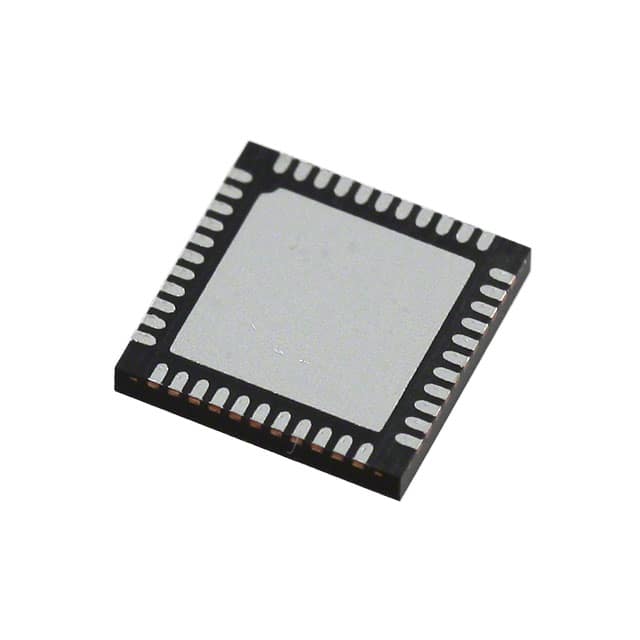
Analog Devices Inc./Maxim Integrated 73S1215F-44IM/F
- Part No.:
- 73S1215F-44IM/F
- Manufacturer:
- Analog Devices Inc./Maxim Integrated
- Category:
- Microcontrollers
- Package:
- 44-VFQFN Exposed Pad
- Datasheet:
-
 73S1215F-44IM/F.pdf
- Description:
- IC MCU 8BIT 64KB FLASH 44QFN
- Quantity:
- Payment:

- Shipping:

Inventory:3,328
Please send an inquiry. Send us your inquiry, and we will respond immediately.
Product details
Overview
73S1215F-44IM/F from Teridian Semiconductor is an 80515-based System-on-Chip for smart card reader systems, integrating ISO 7816/EMV 4.1-compliant smart card interface, USB 2.0 Full-Speed (12 Mbps) device controller, and hardware-scanned 5×6 PINpad. It delivers up to 20 MIPS at 24 MHz CPU clock, features 64 KB Flash, 2 KB XRAM, and operates from 2.7–3.6 V (3.0–3.6 V during USB operation), targeting handheld PINpad readers and ExpressCard® modules.
For engineers reviewing the 73S1215F-44IM/F datasheet, 73S1215F-44IM/F pinout, 73S1215F-44IM/F application, or 73S1215F-44IM/F equivalent, key selection considerations include EMV 4.1 compliance, dual-interface (USB + ISO 7816) coexistence, on-chip RTC with 32.768 kHz oscillator support, programmable LED current outputs, and CCID protocol stack readiness - all in a 44-pin QFN package.
Technical Context
The 73S1215F-44IM/F implements a single-cycle-per-instruction 80515 core clocked up to 24 MHz, enabling real-time AES/DES/3-DES and RSA-based PIN encryption. Its integrated USB 2.0 Full-Speed peripheral supports PC/SC compliance with four endpoints (Control, Interrupt IN, Bulk IN/OUT), each with dedicated FIFOs (16 B / 32 B / 128 B / 128 B).
Smart card interfacing is handled by a fully autonomous ISO 7816 UART supporting T=0/T=1 protocols, with built-in LDO delivering selectable 1.8 V / 3 V / 5 V card power, activation/deactivation sequencers, C4–C8 auxiliary I/O, and 6 kV ESD protection. A separate 5×6 keypad interface provides hardware scanning, debouncing, and scrambling.
Key Specifications
| Parameter | Value and Actual Design Meaning |
|---|---|
| CPU Core | 80515-compatible, 1-cycle/instruction execution, 24 MHz max clock → 20 MIPS throughput for cryptographic operations |
| Memory | 64 KB Flash (in-system programmable & lockable), 2 KB XRAM (user data), 256 B IRAM (register bank) |
| USB Interface | USB 2.0 Full-Speed (12 Mbps) device mode, PC/SC compliant, 4 endpoints with dedicated FIFOs |
| Smart Card Interface | ISO 7816-3/EMV 4.1 compliant, T=0/T=1 UART, 6 kV ESD protection, programmable VCC (1.8/3/5 V) |
| Keypad Support | Hardware-scanned 5×6 matrix with debounce, scrambling, and interrupt-driven key event reporting |
| Operating Voltage | 2.7–3.6 V supply (3.0–3.6 V required when USB active); 4.75–5.5 V for smart card VCC generation |
| Temperature Range | -40°C to +85°C industrial grade operation, validated across full voltage and load conditions |
Pinout & Package
73S1215F-44IM/F is housed in a 44-pin QFN (7 mm × 7 mm, 0.5 mm pitch) with exposed thermal pad. Pin functions are defined per datasheet Figure 45 and Table 1, including dedicated USB D+/D−, ISO 7816 I/O/CCLK, keypad row/column drivers, 9 user I/Os, and analog voltage input (AVIN).
| Pin/Terminal | Circuit Role | Design Meaning |
|---|---|---|
| VDD, VSS | Power supply and ground | Primary 2.7–3.6 V digital supply; separate VDDIO pins support USB I/O level integrity |
| D+, D− | USB differential pair | Full-Speed USB 2.0 physical layer interface; internal termination and slew-rate control |
| ICLKI, ICLKO | ISO 7816 clock I/O | Drives smart card CLK; supports synchronous/asynchronous modes per EMV 4.1 timing |
| ICIO | ISO 7816 bidirectional data | Half-duplex T=0/T=1 communication path with automatic direction control and ESD hardening |
| KR0–KR4 | Keypad row outputs | Open-drain drivers with programmable current; enable hardware matrix scan without external logic |
| KC0–KC5 | Keypad column inputs | Debounced, scrambled inputs with interrupt capability per key press; support anti-tamper detection |
| AVIN | Analog voltage input | Monitors 1.0–1.5 V range (e.g., battery level); used with internal comparator for low-battery alerts |
Key Features
| Feature | Design Value |
|---|---|
| EMV 4.1–compliant smart card interface | Integrated activation/deactivation sequencers, C4–C8 auxiliary signals, and 6 kV ESD protection ensure out-of-box EMV certification readiness |
| CCID-ready USB stack | Pre-validated USB firmware layers and reference Windows driver reduce time-to-certification for PC/SC readers |
| Hardware PINpad engine | 5×6 matrix scanning, key debouncing, and scrambling executed autonomously-no CPU overhead for key entry |
| Programmable LED drivers | Four independent current-sink outputs (up to 20 mA each) enable status indication without external drivers |
| Real-time clock subsystem | 32.768 kHz crystal interface with dedicated 16-bit timer and RTC counter supports standalone timekeeping in battery-backed applications |
Applications
| Hand-Held PINpad Readers | E-Banking Token Devices |
|---|---|
|
Use Scenario: Portable, battery-powered card readers used by consumers for online banking authentication. IC Role / Device Role / Timing Role: Central SoC managing USB host handshake, EMV-compliant card transaction, and secure PIN capture via hardware-scanned keypad. Use Value: Eliminates need for external microcontroller, USB transceiver, and smart card level-shifter - reducing BOM count and PCB area by >40%. |
Use Scenario: Compact, tamper-resistant tokens issued by banks for MasterCard CAP or similar challenge-response protocols. IC Role / Device Role / Timing Role: Secure execution environment for PIN entry, cryptographic signing, and USB HID/CCID communication with host PC. Use Value: On-chip Flash lockability and fuse-based security prevent firmware extraction; 20 MIPS enables real-time RSA-1024 signing within <500 ms. |
| ExpressCard® Smart Card Modules | Government ID Reader Terminals |
|
Use Scenario: Plug-in ExpressCard® modules for laptops enabling contact-based smart card logon and digital signature. IC Role / Device Role / Timing Role: USB device controller with CCID class compliance, ISO 7816 interface, and low-power idle states for hot-plug operation. Use Value: Single-chip integration meets ExpressCard® thermal envelope (≤1.5 W) and electrical spec (USB suspend/resume latency <10 ms). |
Use Scenario: Fixed-position desktop readers for national e-ID cards requiring FIPS 201 PIV or ICAO ePassport compliance. IC Role / Device Role / Timing Role: Trusted interface between smart card, host OS, and PKI middleware - handling ATR parsing, APDU routing, and secure channel establishment. Use Value: Built-in EMV 4.1 stack and pre-certified USB/CCID layers accelerate government lab validation cycles by ≥3 months. |
Equivalent & Alternatives
The following parts are listed as comparable options for similar smart card reader SoC applications.
| Alternative Part | Technical Difference | Application Difference | Selection Advice |
|---|---|---|---|
| Infineon SLE78CLX2040P | ARM Cortex-M0+ core (48 MHz), 256 KB Flash, no integrated PINpad; requires external keypad controller | Targets higher-security, multi-application eID terminals with extended crypto acceleration (AES-NI, TRNG) | Choose when migrating to ARM ecosystem or requiring >128 KB Flash; not drop-in due to different pinout, USB stack, and missing keypad logic |
| NXP SLN10SE401K1 | ARM Cortex-M0+, 128 KB Flash, integrated capacitive touch but no ISO 7816 interface; USB only | Suited for USB-only token designs without contact smart card support | Choose for cost-sensitive USB HID tokens lacking EMV requirements; lacks ISO 7816 PHY, VCC LDO, and EMV sequencers - cannot replace 73S1215F-44IM/F in dual-interface readers |
Compared with Infineon SLE78CLX2040P and NXP SLN10SE401K1, the 73S1215F-44IM/F uniquely combines EMV 4.1–ready smart card interface, hardware PINpad, and CCID USB in a single 44-pin QFN - enabling certified reader designs with minimal external components and no architectural migration.
Availability
73S1215F-44IM/F is available at Aetrix Electronics and suitable for hand-held PINpad readers, ExpressCard® modules, e-banking tokens, and government ID terminals requiring stable component supply, long-lifecycle support, and traceable sourcing.
Supply support for 73S1215F-44IM/F includes scheduled delivery planning, volume procurement assistance, BOM continuity management, traceable sourcing, and lifecycle availability coordination for OEM customers, industrial embedded developers, connected-device designers, and electronics production programs.
Manufacturer
Teridian Semiconductor was a fabless IC design company specializing in mixed-signal SoCs for secure transaction systems, later acquired by Maxim Integrated in 2010.
The 73S12xxF product line was engineered specifically for cost-optimized, high-volume smart card reader applications - integrating USB, ISO 7816, PINpad, and security peripherals into a single chip to eliminate system-level integration complexity.
FAQ
What is the maximum operating frequency of the 73S1215F-44IM/F CPU core?
The 73S1215F-44IM/F features an 80515-compatible core with a maximum CPU clock frequency of 24 MHz. This yields up to 20 MIPS performance, sufficient for real-time execution of EMV-compliant cryptographic operations such as AES, DES/3-DES, and RSA-based PIN encryption - all confirmed in the Rev. 1.4 datasheet Section 1.3.2 and Table 12.
Does the 73S1215F-44IM/F support both T=0 and T=1 smart card protocols?
Yes, the 73S1215F-44IM/F includes a dedicated ISO 7816 UART that natively supports both T=0 and T=1 protocols, as specified in Section 1.7.15 of the datasheet. It provides two 2-byte FIFOs (transmit and receive), automatic protocol switching, and full EMV 4.1 compliance - including activation/deactivation sequencing and C4–C8 auxiliary signal control.
What package type is used for the 73S1215F-44IM/F?
The 73S1215F-44IM/F uses a 44-pin QFN package (7 mm × 7 mm, 0.5 mm pitch) with exposed thermal pad, as documented in Section 6.2 and Figure 45 of the datasheet. This variant is distinct from the 68-pin QFN option and is optimized for compact handheld and ExpressCard® form factors.
Can the 73S1215F-44IM/F operate without an external crystal?
No - the 73S1215F-44IM/F requires an external 6–12 MHz crystal for main system clock generation, as stated in Section 1.7.1. An optional 32.768 kHz crystal may be added for RTC functionality, but neither oscillator is integrated. The internal PLL derives all required clocks (e.g., USB 48 MHz, smart card CLK) from the primary crystal input.
Is the 73S1215F-44IM/F USB interface PC/SC compliant?
Yes, the 73S1215F-44IM/F USB 2.0 Full-Speed interface is explicitly designed for PC/SC compliance, supporting the CCID class specification with four endpoints (Control, Interrupt IN, Bulk IN, Bulk OUT) and dedicated FIFO sizes (16 B / 32 B / 128 B / 128 B). Teridian provided a pre-validated CCID reference design and WHQL-certified Windows driver, as noted in the General Description and Software sections of the datasheet.
73S1215F-44IM/F Specifications
- Product attributes
- Attribute value
- Manufacturer:
- Analog Devices Inc./Maxim Integrated
- Package/Case:
- 44-VFQFN Exposed Pad
- Series:
- 73S12xx
- Packaging:
- Tube
- Product Status:
- Obsolete
- Programmable:
- Not Verified
- Core Processor:
- 80515
- Core Size:
- 8-Bit
- Speed:
- 24MHz
- Connectivity:
- I2C, SmartCard, UART/USART, USB
- Peripherals:
- LED, POR, WDT
- Number of I/O:
- 9
- Program Memory Size:
- 64KB (64K x 8)
- Program Memory Type:
- FLASH
- EEPROM Size:
- -
- RAM Size:
- 2K x 8
- Voltage - Supply (Vcc/Vdd):
- 2.7V ~ 5.5V
- Data Converters:
- -
- Oscillator Type:
- Internal
- Operating Temperature:
- -40°C ~ 85°C (TA)
- Grade:
- -
- Qualification:
- -
- Mounting Type:
- Surface Mount
- Supplier Device Package:
73S1215F-44IM/F FAQ
1.How can I place an order for 73S1215F-44IM/F through Aetrix?
Please submit a Request for Quotation (RFQ) for 73S1215F-44IM/F on Aetrix. Our sales agent will provide a competitive quotation and guide you through the order confirmation once you accept the terms.
2.Are the price and stock information for 73S1215F-44IM/F reliable?
The price and inventory of 73S1215F-44IM/F are updated periodically and may fluctuate due to market conditions. Stock and pricing data are typically refreshed every 24 hours. Quotation validity for 73S1215F-44IM/F is usually 5 days.
3.What payment methods are accepted for 73S1215F-44IM/F?
We accept Wire Transfer, PayPal, Credit Card, Western Union, MoneyGram, and Escrow for 73S1215F-44IM/F transactions.
Note: Certain payment methods may incur a processing fee.
4.How is shipping managed for 73S1215F-44IM/F?
73S1215F-44IM/F orders can be shipped via leading logistics carriers, including DHL, UPS, FedEx, TNT, or Registered Mail.
Once your 73S1215F-44IM/F order is processed, you will receive an email with the shipment details and tracking number.
Note: Tracking information may take up to 24 hours to appear. Express delivery typically takes 3–5 business days.
5.How can I obtain technical support or documentation for 73S1215F-44IM/F?
For technical support, including 73S1215F-44IM/F datasheets, pinout diagrams, or application guidance, please contact our engineering support team. They can provide detailed documentation and assistance for your 73S1215F-44IM/F requirements.
6.How does Aetrix verify that 73S1215F-44IM/F is sourced from the original manufacturer or authorized distributors?
All 73S1215F-44IM/F products on Aetrix are procured from qualified distributors and authorized channels. Our dedicated quality assurance team conducts strict verification, including traceability checks and, if necessary, third-party testing. This ensures that 73S1215F-44IM/F meets industry standards.
7.What is the process for return or replacement of 73S1215F-44IM/F?
All 73S1215F-44IM/F units undergo pre-shipment inspection (PSI). If there is an issue with 73S1215F-44IM/F, returns or replacements are accepted under the following conditions:
1.Quantity discrepancies, incorrect items, or visible external defects (such as breakage or corrosion), acknowledged by Aetrix.
2.The issue is reported within 90 days of delivery.
3.The 73S1215F-44IM/F part is unused and in its original packaging.
Return procedure for 73S1215F-44IM/F:
1.Submit a request within 90 days.
2.Obtain a Return Material Authorization (RMA) from Aetrix.
73S1215F-44IM/F Tags

-
ATTINY4-TSHR
Microchip Technology
-
ATTINY10-TSHR
Microchip Technology
-
ATTINY10-TS8R
Microchip Technology

-
ATTINY202-SSNR
Microchip Technology
-
ATTINY202-SSFR
Microchip Technology
-
ATTINY402-SSNR
Microchip Technology
-
PIC16F15213T-I/MF
Microchip Technology
-
PIC16F15213-E/MF
Microchip Technology

-
PIC10F200T-I/OT
Microchip Technology
-
ATTINY412-SSNR
Microchip Technology
-
PIC10F202T-I/OT
Microchip Technology
-
ATTINY404-SSNR
Microchip Technology
Tech Hub

A practical engineering guide to 3.3V and 5V logic compatibility, input thresholds, resistor dividers, translator ICs, MOSFET level shifting, I2C pull-ups, timing limits and power-sequencing risks.

The 74HC595 uses push-pull logic outputs, while the TPIC6B595 uses 50 V open-drain DMOS sinks for higher-power loads. This guide compares timing, current limits, 3.3 V interfacing, load wiring, thermal…

The 74HC595 converts serial data into eight stable parallel outputs. This guide covers pin functions, shift and storage timing, OE and MR behavior, drive-current limits, cascading, voltage compatibilit…

A technical comparison of level-sensitive latches and edge-triggered flip-flops, covering timing windows, setup and hold limits, master–slave operation, time borrowing, race-through, HDL inference and…

A D latch stores one bit while Enable controls when data can pass. This reference covers gate-level operation, truth tables, transparency, setup and hold timing, LE versus OE, common ICs and practical …

An SR latch stores one bit through cross-coupled feedback. This engineering reference covers NOR and NAND implementations, truth tables, forbidden-state recovery, gated operation, switch debouncing, fa…

Latch circuits retain one bit through feedback. This technical reference covers SR and D latches, truth tables, transparency, timing limits, latch-versus-flip-flop behavior, applications and common log…

An engineering guide to LED driver operation, constant-current and constant-voltage outputs, linear and switching topologies, dimming, IC selection, calculations, replacement compatibility, and fault c…

Operational amplifier guide covering op amp basics, feedback, ideal vs real op amps, common configurations, buffer circuits, offset, bias current, gain-bandwidth, slew rate, rail-to-rail limits and sel…

Jumper cables guide covering safe connection order, red and black clamp placement, final ground connection, cable gauge, length, clamp quality, copper vs CCA cables, jump starter comparison and battery…


