
 My Inquiry
 My Account


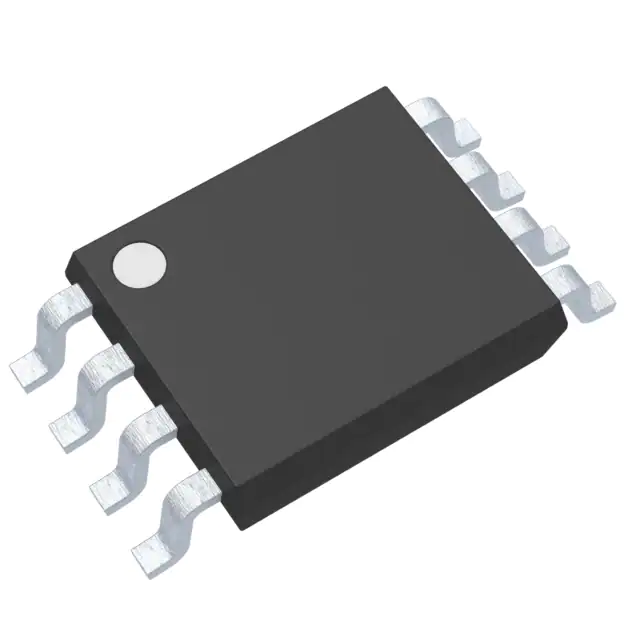
Nexperia USA Inc. 74AHCT3G14DC,125
- Part No.:
- 74AHCT3G14DC,125
- Manufacturer:
- Nexperia USA Inc.
- Category:
- Gates and Inverters
- Package:
- 8-VFSOP (0.091", 2.30mm Width)
- Datasheet:
-
 74AHCT3G14DC,125.pdf
- Description:
- IC INVERT SCHMITT 3CH 3IN 8VSSOP
- Quantity:
- Payment:

- Shipping:

Inventory:1,569
Please send an inquiry. Send us your inquiry, and we will respond immediately.
Product details
Overview
74AHCT3G14DC,125 from Nexperia is a triple inverting Schmitt trigger IC with TTL-compatible inputs, 8-pin VSSOP package, -40 °C to +125 °C operating range, and overvoltage-tolerant inputs up to 5.5 V - used for noise-immune signal conditioning in industrial sensor interfaces and digital timing circuits.
For engineers reviewing the 74AHCT3G14DC,125 datasheet, 74AHCT3G14DC,125 pinout, 74AHCT3G14DC,125 application, or 74AHCT3G14DC,125 equivalent, key selection criteria include Schmitt-trigger hysteresis (0.4–1.6 V), propagation delay (≤9.0 ns at 5 V/50 pF), input threshold compatibility with 5 V TTL logic, and VSSOP8 footprint suitability for high-density PCB layouts.
Technical Context
This device integrates three independent inverting Schmitt triggers on a single die, each featuring asymmetric input thresholds (VT+ = 2.0 V, VT− = 0.6 V at VCC = 5.5 V) and hysteresis (VH = 0.4–1.6 V) to reject slow-rising noise and prevent metastability. Its TTL-level input compatibility enables direct interfacing with legacy 5 V logic families without level-shifting.
The IC operates across 4.5–5.5 V supply range with symmetrical output drive (±8 mA), low static current (≤40 μA at 5.5 V), and input capacitance of 1.5–10 pF - optimized for reliable oscillation generation and waveform shaping in mixed-signal embedded systems.
Key Specifications
| Parameter | Value and Actual Design Meaning |
|---|---|
| Logic Function | Triple inverting Schmitt trigger - provides noise-immune digital inversion with built-in hysteresis for stable switching in noisy environments |
| Supply Voltage Range | 4.5 V to 5.5 V - ensures compatibility with standard 5 V TTL systems and robust operation under rail variation |
| Input Thresholds (VCC = 5.5 V) | VT+ = 2.0 V, VT− = 0.6 V - defines 1.4 V hysteresis window to suppress false triggering from EMI or slow edges |
| Propagation Delay (CL = 50 pF) | ≤11.0 ns max at −40 °C to +125 °C - guarantees deterministic timing in monostable/multivibrator circuits |
| Output Drive Capability | ±8.0 mA at VOH/VOL - supports direct fan-out to multiple 74-series TTL inputs without buffering |
| Operating Temperature | −40 °C to +125 °C - qualified for under-hood automotive modules and industrial control enclosures |
| Input Overvoltage Tolerance | Up to 5.5 V - allows safe interfacing with higher-voltage signals in mixed-supply systems |
Pinout & Package
VSSOP8 plastic very thin shrink small outline package (SOT765-1); 8 leads; body width 2.3 mm; pin 1 indicator located below marking code in lower-left corner.
| Pin/Terminal | Circuit Role | Design Meaning |
|---|---|---|
| 1A, 2A, 3A (Pins 1, 3, 6) | Independent input terminals | Accept TTL-level signals; overvoltage tolerant to 5.5 V; each drives one Schmitt inverter stage |
| 1Y, 2Y, 3Y (Pins 7, 5, 2) | Corresponding inverted outputs | Provide complementary logic levels with symmetrical rise/fall times and ±8 mA drive strength |
| VCC (Pin 8) | Positive supply rail | Must be decoupled locally; supports 4.5–5.5 V operation; powers all three inverters |
| GND (Pin 4) | Ground reference | Common return path for all inputs, outputs, and internal circuitry; requires low-impedance connection |
Key Features
| Feature | Design Value |
|---|---|
| TTL-compatible input thresholds | VT+ = 2.0 V, VT− = 0.6 V at VCC = 5.5 V - enables direct connection to 5 V microcontroller GPIOs and legacy logic without level shifters |
| Overvoltage-tolerant inputs | Rated to 5.5 V regardless of VCC - eliminates need for external clamping diodes when interfacing with higher-voltage sensors or buses |
| High noise immunity | Hysteresis ≥0.4 V across full temperature range - rejects common-mode noise up to ~100 mV peak-to-peak on input lines |
| Low power consumption | ICC ≤ 40 μA at VCC = 5.5 V and TA = +125 °C - reduces thermal load in sealed industrial enclosures |
| Wide temperature qualification | Specified from −40 °C to +125 °C - meets extended industrial and under-hood automotive ambient requirements |
Applications
| Waveform Shaping | Astable Multivibrator |
|---|---|
|
Use Scenario: Converting slow-rising analog sensor outputs (e.g., thermistor-based voltage dividers) into clean digital pulses for microcontroller capture. IC Role / Device Role / Timing Role: Schmitt trigger inverter providing hysteresis-based edge sharpening and noise rejection before MCU input capture. Use Value: Eliminates contact bounce and EMI-induced glitches, enabling reliable zero-crossing detection without software debouncing. |
Use Scenario: Generating precise square-wave clock signals for LED flashers or simple timing sequencers using only passive RC components. IC Role / Device Role / Timing Role: Core oscillator element where feedback through resistor-capacitor network sets frequency via Schmitt thresholds. Use Value: Achieves stable oscillation from 10 Hz to >1 MHz with predictable duty cycle determined by VT+/VT− asymmetry. |
| Monostable Multivibrator | Noise-Immune Switch Interface |
|
Use Scenario: Creating fixed-duration pulses from momentary mechanical switch closures in industrial HMI panels. IC Role / Device Role / Timing Role: Inverter-based pulse stretcher triggered by switch bounce; RC time constant sets output pulse width. Use Value: Produces jitter-free, repeatable 10–100 ms output pulses independent of switch actuation speed or contact chatter. |
Use Scenario: Conditioning push-button or limit-switch signals in factory automation PLC input modules exposed to motor-drive EMI. IC Role / Device Role / Timing Role: Input buffer that filters electromagnetic interference while preserving true logic transitions. Use Value: Prevents spurious interrupts caused by fast transients (<10 ns), reducing firmware error-handling overhead and system resets. |
Equivalent & Alternatives
The following parts are listed as comparable options for similar triple Schmitt trigger applications.
| Alternative Part | Technical Difference | Application Difference | Selection Advice |
|---|---|---|---|
| 74AHC3G14DC,125 | CMOS-input version; VT+ = 4.4 V, VT− = 0.1 V at VCC = 4.5 V; lower ICC (≤10 μA) | Better suited for 3.3 V–5 V mixed-supply systems requiring higher noise margin on rising edge | Select when interfacing with CMOS microcontrollers or battery-powered systems prioritizing ultra-low quiescent current |
| SN74LVC3G14DCUR | TI part; 1.65–5.5 V supply; VT+ = 1.7 V, VT− = 0.8 V at VCC = 3.3 V; 32 mA drive | Higher output drive and broader voltage range; not qualified to +125 °C | Prefer for consumer-grade designs needing wider VCC flexibility and stronger fan-out, but verify thermal derating above 85 °C |
Compared with 74AHC3G14DC,125 and SN74LVC3G14DCUR, the 74AHCT3G14DC,125 uniquely balances TTL compatibility, +125 °C operation, and proven industrial reliability - making it optimal for legacy 5 V systems where input noise immunity and temperature resilience are critical.
Availability
74AHCT3G14DC,125 is available at Aetrix Electronics and suitable for industrial control panels, automotive body electronics, sensor signal conditioning, and high-reliability embedded timing circuits requiring stable component supply across extended temperature ranges.
Supply support for 74AHCT3G14DC,125 includes scheduled delivery planning, volume procurement assistance, BOM continuity management, traceable sourcing, and lifecycle availability coordination for OEM customers, industrial embedded developers, connected-device designers, and electronics production programs.
Manufacturer
Nexperia is a global semiconductor expert delivering high-performance, reliable discrete, logic, and MOSFET devices with leadership in efficiency, miniaturization, and quality assurance.
The 74AHCT series targets industrial and automotive applications requiring robust 5 V TTL interoperability, extended temperature operation, and high noise immunity - specifically engineered for signal integrity in electrically harsh environments.
FAQ
Can 74AHCT3G14DC,125 operate at 3.3 V supply?
No. The 74AHCT3G14DC,125 is specified only for 4.5–5.5 V operation per its recommended conditions table. At 3.3 V, input thresholds fall outside TTL specification (VT+ < 2.0 V), risking unreliable switching and increased propagation delay variability. Use 74AHC3G14DC,125 instead for 3.3 V–5 V systems.
What is the maximum capacitive load this device can drive reliably?
The device is characterized up to 50 pF load capacitance with guaranteed timing (tpd ≤ 11.0 ns). Driving >50 pF increases propagation delay nonlinearly and may cause output ringing due to limited slew rate. For loads >50 pF, add a series resistor (10–33 Ω) near the output to dampen reflections and maintain signal integrity.
How does the overvoltage tolerance work on the inputs?
Inputs tolerate up to 5.5 V regardless of VCC value because internal protection structures (clamping diodes to VCC and GND) limit voltage excursion. This allows safe connection to 5 V signals even when VCC = 4.5 V, eliminating external protection components in mixed-voltage signal routing paths.
Is this device suitable for use in automotive under-hood applications?
Yes - it is qualified for −40 °C to +125 °C operation and meets JESD78 Class II Level A latch-up immunity (>100 mA). However, it is not AEC-Q100 qualified. For production automotive use, confirm system-level validation including board-level thermal cycling and EMC testing per ISO 16750.
74AHCT3G14DC,125 Specifications
- Product attributes
- Attribute value
- Manufacturer:
- Nexperia USA Inc.
- Series:
- 74AHCT
- Package/Case:
- 8-VFSOP (0.091", 2.30mm Width)
- Packaging:
- Tape & Reel (TR)
- Product Status:
- Active
- Logic Type:
- Inverter
- Number of Circuits:
- 3
- Number of Inputs:
- 3
- Features:
- Schmitt Trigger
- Voltage - Supply:
- 4.5V ~ 5.5V
- Current - Quiescent (Max):
- 1 µA
- Current - Output High, Low:
- 8mA, 8mA
- Input Logic Level - Low:
- 0.5V ~ 0.6V
- Input Logic Level - High:
- 2V
- Max Propagation Delay @ V, Max CL:
- 8.5ns @ 5V, 50pF
- Operating Temperature:
- -40°C ~ 125°C
- Grade:
- -
- Qualification:
- -
- Mounting Type:
- Surface Mount
- Supplier Device Package:
- 8-VSSOP
74AHCT3G14DC,125 FAQ
1.How can I place an order for 74AHCT3G14DC,125 through Aetrix?
Please submit a Request for Quotation (RFQ) for 74AHCT3G14DC,125 on Aetrix. Our sales agent will provide a competitive quotation and guide you through the order confirmation once you accept the terms.
2.Are the price and stock information for 74AHCT3G14DC,125 reliable?
The price and inventory of 74AHCT3G14DC,125 are updated periodically and may fluctuate due to market conditions. Stock and pricing data are typically refreshed every 24 hours. Quotation validity for 74AHCT3G14DC,125 is usually 5 days.
3.What payment methods are accepted for 74AHCT3G14DC,125?
We accept Wire Transfer, PayPal, Credit Card, Western Union, MoneyGram, and Escrow for 74AHCT3G14DC,125 transactions.
Note: Certain payment methods may incur a processing fee.
4.How is shipping managed for 74AHCT3G14DC,125?
74AHCT3G14DC,125 orders can be shipped via leading logistics carriers, including DHL, UPS, FedEx, TNT, or Registered Mail.
Once your 74AHCT3G14DC,125 order is processed, you will receive an email with the shipment details and tracking number.
Note: Tracking information may take up to 24 hours to appear. Express delivery typically takes 3–5 business days.
5.How can I obtain technical support or documentation for 74AHCT3G14DC,125?
For technical support, including 74AHCT3G14DC,125 datasheets, pinout diagrams, or application guidance, please contact our engineering support team. They can provide detailed documentation and assistance for your 74AHCT3G14DC,125 requirements.
6.How does Aetrix verify that 74AHCT3G14DC,125 is sourced from the original manufacturer or authorized distributors?
All 74AHCT3G14DC,125 products on Aetrix are procured from qualified distributors and authorized channels. Our dedicated quality assurance team conducts strict verification, including traceability checks and, if necessary, third-party testing. This ensures that 74AHCT3G14DC,125 meets industry standards.
7.What is the process for return or replacement of 74AHCT3G14DC,125?
All 74AHCT3G14DC,125 units undergo pre-shipment inspection (PSI). If there is an issue with 74AHCT3G14DC,125, returns or replacements are accepted under the following conditions:
1.Quantity discrepancies, incorrect items, or visible external defects (such as breakage or corrosion), acknowledged by Aetrix.
2.The issue is reported within 90 days of delivery.
3.The 74AHCT3G14DC,125 part is unused and in its original packaging.
Return procedure for 74AHCT3G14DC,125:
1.Submit a request within 90 days.
2.Obtain a Return Material Authorization (RMA) from Aetrix.
74AHCT3G14DC,125 Tags
-
SN74LVC1G14DBVR
Texas Instruments
-
SN74LVC1G14DCKR
Texas Instruments
-
SN74AHC1G14DBVR
Texas Instruments
-
SN74LVC1G08DBVR
Texas Instruments
-
SN74LVC1G08DCKR
Texas Instruments
-
SN74LVC1G32DCKR
Texas Instruments
-
SN74LVC1G04DBVR
Texas Instruments
.jpg)
-
74LVC1G08GW,125
Nexperia USA Inc.
-
SN74LVC1G04DCKR
Texas Instruments
-
SN74AHC1G08DBVR
Texas Instruments
-
SN74LVC1G32DBVR
Texas Instruments
-
SN74AHCT1G08DBVR
Texas Instruments
Tech Hub

Operational amplifier guide covering op amp basics, feedback, ideal vs real op amps, common configurations, buffer circuits, offset, bias current, gain-bandwidth, slew rate, rail-to-rail limits and sel…

Jumper cables guide covering safe connection order, red and black clamp placement, final ground connection, cable gauge, length, clamp quality, copper vs CCA cables, jump starter comparison and battery…

LDO regulator guide covering low dropout voltage, power dissipation, thermal design, PSRR, output noise, capacitor stability, adjustable LDO circuits, LDO vs buck converter and datasheet selection chec…

Conditional Access Module guide covering CAM meaning, CI/CI+ interface, smart card authorization, DVB security workflow, TV and set-top box compatibility, internal electronics, ESD protection, connecto…

Guide to electronic component obsolescence covering EOL risk, PCN/PDN notices, last-time buy planning, replacement options, form-fit-function validation, counterfeit risk and BOM lifecycle management.

18650 battery guide covering lithium-ion cell basics, 3.6V/3.7V voltage, 4.2V charging, mAh and Wh capacity, protected cells, chargers, BMS, series-parallel packs, holders, welding and sourcing checks.…

Hall effect sensor guide covering working principle, linear and digital sensors, Arduino circuits, current sensing, speed detection, automotive applications, A3144 examples, signal filtering and datash…

Product Change Notification guide for electronic components, covering PCN meaning, PCN vs PDN/EOL, common change types, risk levels, form-fit-function review, engineering validation, BOM control, LTB/L…

A practical guide to blend door actuators, covering HVAC function, symptoms, location, AC and heater issues, reset and calibration, replacement cost, electrical diagnosis, compatibility checks, and rep…

Engineering guide to Raspberry Pi alternatives, covering chip-level differences, Orange Pi, ROCK, Jetson, Banana Pi, NanoPi, Compute Module, Pico, GPIO, camera, HAT compatibility, and replacement risks…


