
 My Inquiry
 My Account


NXP Semiconductors 74HC163PW,112
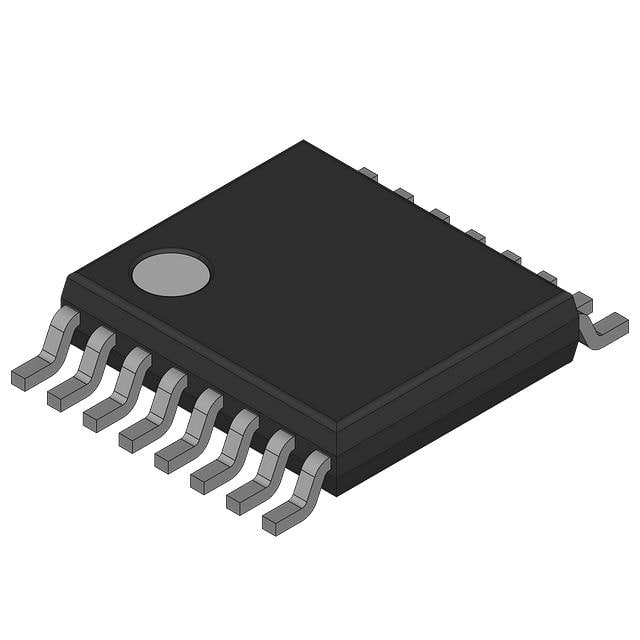
- Part No.:
- 74HC163PW,112
- Manufacturer:
- NXP Semiconductors
- Category:
- Counters, Dividers
- Package:
- 16-TSSOP (0.173", 4.40mm Width)
- Datasheet:
-
 74HC163PW,112.pdf
- Description:
- IC BINARY COUNTER 4-BIT 16TSSOP
- Quantity:
- Payment:

- Shipping:

Inventory:9,216
Please send an inquiry. Send us your inquiry, and we will respond immediately.
Product details
Overview
74HC163PW,112 from Nexperia is a synchronous presettable 4-bit binary counter with internal look-ahead carry, synchronous reset (active LOW on MR), and dual count-enable inputs (CEP/CET) for cascading. It operates at up to 55 MHz (VCC = 6.0 V), supports CMOS-level inputs, and delivers glitch-free counting in industrial temperature range (−40 °C to +125 °C). Used in digital timing control, address generation, and modulo-N counter design.
For engineers reviewing the 74HC163PW,112 datasheet, 74HC163PW,112 pinout, 74HC163PW,112 application, or 74HC163PW,112 equivalent, this device is selected for synchronous load-and-count precision, deterministic terminal count (TC) pulse timing, low-power 74HC logic compatibility, and TSSOP16 footprint suitability in space-constrained PCB layouts.
Technical Context
The 74HC163PW,112 implements four edge-triggered D-type flip-flops clocked synchronously on the positive-going edge of CP. Counting occurs only when both CEP and CET are HIGH; TC asserts HIGH only at terminal count (Q3–Q0 = 1111) while CET remains HIGH - enabling precise ripple-carry chaining without race conditions.
Parallel loading is unconditional: a LOW on PE forces D0–D3 into Q0–Q3 on the next CP edge, overriding CE states. Synchronous reset via MR clears all outputs to LOW after one CP edge, allowing clean modulus reconfiguration using external NAND logic - eliminating asynchronous reset metastability.
Key Specifications
| Parameter | Value and Actual Design Meaning |
|---|---|
| Logic Family | 74HC CMOS - compatible with 2.0 V to 6.0 V supply; TTL-input-compatible variant is 74HCT163. |
| Count Width | 4-bit binary (0 to 15); terminal count (TC) pulses on Q3Q2Q1Q0 = 1111. |
| Max Clock Frequency | 55 MHz at VCC = 6.0 V - enables high-speed timing in digital control loops. |
| Propagation Delay | CP to Qn: 16 ns (typ), CP to TC: 20 ns (typ) at VCC = 6.0 V - ensures tight timing margins in cascaded counters. |
| Supply Range | 2.0 V to 6.0 V - supports battery-powered and mixed-voltage system integration. |
| Operating Temperature | −40 °C to +125 °C - qualified for automotive under-hood and industrial motor-control environments. |
| Package | TSSOP16 (SOT403-1), 4.4 mm body width - surface-mount, fine-pitch footprint for compact PCBs. |
Pinout & Package
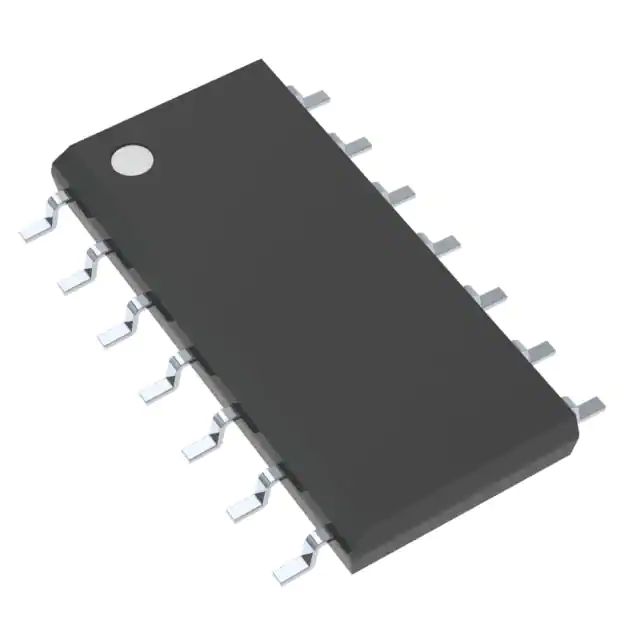
TSSOP16 plastic thin shrink small outline package (SOT403-1), 16-pin, 0.65 mm pitch, 4.4 mm body width, lead-free and RoHS compliant.
| Pin/Terminal | Circuit Role | Design Meaning |
|---|---|---|
| 1 MR | Synchronous master reset | Active-LOW; clears Q0–Q3 to 0000 on next CP rising edge - enables deterministic modulus reconfiguration. |
| 2 CP | Clock input | Positive-edge triggered; all flip-flops update simultaneously - eliminates ripple delay and output glitches. |
| 3–6 D0–D3 | Data inputs | Loaded into Q0–Q3 when PE = LOW - supports programmable initial state for non-power-of-two counters. |
| 7 CEP | Count enable parallel | Enables counting only when HIGH; used with CET to gate count action - essential for multi-stage enable logic. |
| 8 GND | Ground reference | 0 V return path for logic and power - must be low-impedance to maintain noise margin. |
| 9 PE | Parallel enable | Active-LOW; forces synchronous load regardless of CEP/CET state - decouples preset control from count gating. |
| 10 CET | Count enable carry | Enables TC output and feeds forward to next stage - required HIGH for TC assertion and cascade enable. |
| 11–14 Q3–Q0 | Flip-flop outputs | Q0 LSB to Q3 MSB; outputs reflect current count value - used for feedback, decode, or display drivers. |
| 15 TC | Terminal count output | HIGH pulse ≈ duration of Q0 HIGH - directly clocks next cascaded counter stage without external delay compensation. |
| 16 VCC | Supply voltage | 2.0 V to 6.0 V; powers all logic - bypassing with 100 nF ceramic near pin critical for stable high-frequency operation. |
Key Features
| Feature | Design Value |
|---|---|
| Synchronous reset | Eliminates metastability and race conditions during modulus change - no external debounce or synchronization logic needed. |
| Look-ahead carry | TC output enables next-stage clock without propagation delay accumulation - supports >16-bit counters with uniform timing. |
| Two independent count enables | CEP and CET allow hierarchical enable control - e.g., CEP driven by system enable, CET by upstream TC - simplifying complex sequencing. |
| CMOS input levels | VIH = 3.15 V (min at VCC = 4.5 V); permits direct interfacing with 3.3 V microcontrollers without level shifters. |
| ESD protection | HBM > 2000 V, MM > 200 V - enhances robustness during board assembly and field handling. |
Applications
| Industrial PLC Timer Module | Digital Panel Meter Counter |
|---|---|
|
Use Scenario: Precise 0–9999 cycle count for batch processing in factory automation. IC Role / Device Role / Timing Role: Primary 4-bit counter stage in cascaded 16-bit counter; TC drives carry to next 74HC163. Use Value: Synchronous reset allows instant zeroing between batches; look-ahead carry ensures accurate total count without ripple error. |
Use Scenario: 4-digit LED display driver for process variable monitoring (e.g., flow rate pulses). IC Role / Device Role / Timing Role: BCD-compatible counter stage feeding 7-segment decoder; preset via D0–D3 for offset calibration. Use Value: Parallel load (PE) enables real-time zero-offset adjustment; TC pulse triggers display refresh synchronously. |
| Motor Commutation Sequencer | Test Equipment Pulse Generator |
|
Use Scenario: Generating 16-state commutation pattern for BLDC motor drive logic. IC Role / Device Role / Timing Role: State register providing Q3–Q0 as phase index; MR resets sequence at hall sensor edge. Use Value: Deterministic synchronous reset ensures repeatable startup alignment; low propagation delay (<20 ns) maintains timing integrity at 20 kHz PWM. |
Use Scenario: Programmable delay generator producing calibrated pulse trains for IC validation. IC Role / Device Role / Timing Role: Modulo-N counter controlling pulse repetition interval; D0–D3 set via MCU GPIO for dynamic period change. Use Value: Synchronous load enables sub-microsecond period reconfiguration; TC output drives precision analog switch or DAC trigger. |
Equivalent & Alternatives
The following parts are listed as comparable options for similar 4-bit synchronous counter applications.
| Alternative Part | Technical Difference | Application Difference | Selection Advice |
|---|---|---|---|
| 74HCT163PW,112 | TTL-compatible inputs (VIH = 2.0 V min); identical pinout, timing, and function. | Better suited for mixed 5 V TTL/CMOS systems; higher input drive capability but slightly higher ICC. | Select when interfacing legacy 5 V TTL logic or driving heavier capacitive loads. |
| SN74LS163N | Bipolar TTL technology; 4.75–5.25 V only; slower (max 30 MHz); higher power (ICC ≈ 30 mA). | Limited to 5 V systems; incompatible with 3.3 V logic; requires pull-ups on open-collector outputs. | Choose only for drop-in replacement in legacy LS-based designs where voltage and speed constraints permit. |
Compared with 74HCT163PW,112, the 74HC163PW,112 offers lower static power and wider VCC range but requires CMOS-level drive; versus SN74LS163N, it delivers 80% higher speed and 95% lower quiescent current at 5 V, with full 3.3 V compatibility.
Availability
74HC163PW,112 is available at Aetrix Electronics and suitable for industrial PLC timer modules, digital panel meter counters, motor commutation sequencers, and test equipment pulse generators requiring stable component supply across extended temperature ranges.
Supply support for 74HC163PW,112 includes scheduled delivery planning, volume procurement assistance, BOM continuity management, traceable sourcing, and lifecycle availability coordination for OEM customers, industrial embedded developers, connected-device designers, and electronics production programs.
Manufacturer
Nexperia is a global semiconductor expert delivering high-performance logic, discrete, and MOSFET solutions with focus on efficiency, reliability, and miniaturization.
The 74HC163PW,112 belongs to Nexperia's 74HC logic family - engineered for low-power, high-noise-immunity digital control in industrial, automotive, and consumer applications.
FAQ
What is the minimum supply voltage for reliable operation of the 74HC163PW,112?
The 74HC163PW,112 is specified down to 2.0 V per its recommended operating conditions. At VCC = 2.0 V, VIH is 1.5 V (min), VOL is 0.1 V (max), and fmax is 6 MHz - sufficient for low-power battery-operated counters. Operation below 2.0 V risks undefined logic states and increased propagation delay.
Can the 74HC163PW,112 be used to build a modulo-10 counter without external gates?
No - the 74HC163PW,112 has fixed modulo-16 behavior and requires external combinational logic (e.g., NAND gate decoding Q3Q1) to force synchronous reset at count=9. Its synchronous reset (MR) and parallel load (PE) enable clean modulo-N implementation, but no internal modulus programming capability exists.
How does the TC output behave when CET is LOW?
When CET is LOW, the TC output remains LOW regardless of counter state - even at Q3Q2Q1Q0 = 1111. TC only goes HIGH when both CET = HIGH and the counter reaches terminal count, making it safe for cascading: upstream TC can directly drive downstream CET without risk of spurious enable.
Is the TSSOP16 package of 74HC163PW,112 compatible with standard reflow profiles?
Yes - the 74HC163PW,112 in SOT403-1 (TSSOP16) is qualified for IPC/JEDEC J-STD-020 moisture sensitivity level 1 and supports standard Pb-free reflow profiles (peak 260 °C, 60 s max above 217 °C). Its 0.65 mm pitch and exposed pad-free construction ensure reliable solder joint formation with standard stencil design.
74HC163PW,112 Specifications
- Product attributes
- Attribute value
- Manufacturer:
- NXP Semiconductors
- Series:
- 74HC
- Package/Case:
- 16-TSSOP (0.173", 4.40mm Width)
- Packaging:
- Tube
- Product Status:
- Active
- Logic Type:
- Binary Counter
- Direction:
- Up
- Number of Elements:
- 1
- Number of Bits per Element:
- 4
- Reset:
- Synchronous
- Timing:
- Synchronous
- Count Rate:
- 55 MHz
- Trigger Type:
- Positive Edge
- Voltage - Supply:
- 2 V ~ 6 V
- Operating Temperature:
- -40°C ~ 125°C
- Grade:
- -
- Qualification:
- -
- Mounting Type:
- Surface Mount
- Supplier Device Package:
- 16-TSSOP
74HC163PW,112 FAQ
1.How can I place an order for 74HC163PW,112 through Aetrix?
Please submit a Request for Quotation (RFQ) for 74HC163PW,112 on Aetrix. Our sales agent will provide a competitive quotation and guide you through the order confirmation once you accept the terms.
2.Are the price and stock information for 74HC163PW,112 reliable?
The price and inventory of 74HC163PW,112 are updated periodically and may fluctuate due to market conditions. Stock and pricing data are typically refreshed every 24 hours. Quotation validity for 74HC163PW,112 is usually 5 days.
3.What payment methods are accepted for 74HC163PW,112?
We accept Wire Transfer, PayPal, Credit Card, Western Union, MoneyGram, and Escrow for 74HC163PW,112 transactions.
Note: Certain payment methods may incur a processing fee.
4.How is shipping managed for 74HC163PW,112?
74HC163PW,112 orders can be shipped via leading logistics carriers, including DHL, UPS, FedEx, TNT, or Registered Mail.
Once your 74HC163PW,112 order is processed, you will receive an email with the shipment details and tracking number.
Note: Tracking information may take up to 24 hours to appear. Express delivery typically takes 3–5 business days.
5.How can I obtain technical support or documentation for 74HC163PW,112?
For technical support, including 74HC163PW,112 datasheets, pinout diagrams, or application guidance, please contact our engineering support team. They can provide detailed documentation and assistance for your 74HC163PW,112 requirements.
6.How does Aetrix verify that 74HC163PW,112 is sourced from the original manufacturer or authorized distributors?
All 74HC163PW,112 products on Aetrix are procured from qualified distributors and authorized channels. Our dedicated quality assurance team conducts strict verification, including traceability checks and, if necessary, third-party testing. This ensures that 74HC163PW,112 meets industry standards.
7.What is the process for return or replacement of 74HC163PW,112?
All 74HC163PW,112 units undergo pre-shipment inspection (PSI). If there is an issue with 74HC163PW,112, returns or replacements are accepted under the following conditions:
1.Quantity discrepancies, incorrect items, or visible external defects (such as breakage or corrosion), acknowledged by Aetrix.
2.The issue is reported within 90 days of delivery.
3.The 74HC163PW,112 part is unused and in its original packaging.
Return procedure for 74HC163PW,112:
1.Submit a request within 90 days.
2.Obtain a Return Material Authorization (RMA) from Aetrix.
74HC163PW,112 Tags
-
74HC393BQ,115
Nexperia USA Inc.
-
SN74LV8154PWR
Texas Instruments
-
MC14516BDR2G
onsemi
-
MC14020BDR2G
onsemi
-
MC100EP32DTR2G
onsemi
-
MC100EP016AMNG
onsemi
-
MC100EP016AFAG
onsemi
-
SN74LV163ADR
Texas Instruments

-
SN74LV163APWR
Texas Instruments
-
SN74HC393DR
Texas Instruments
-
SN74HC161DR
Texas Instruments
-
SN74HC163DR
Texas Instruments
Tech Hub

Operational amplifier guide covering op amp basics, feedback, ideal vs real op amps, common configurations, buffer circuits, offset, bias current, gain-bandwidth, slew rate, rail-to-rail limits and sel…

Jumper cables guide covering safe connection order, red and black clamp placement, final ground connection, cable gauge, length, clamp quality, copper vs CCA cables, jump starter comparison and battery…

LDO regulator guide covering low dropout voltage, power dissipation, thermal design, PSRR, output noise, capacitor stability, adjustable LDO circuits, LDO vs buck converter and datasheet selection chec…

Conditional Access Module guide covering CAM meaning, CI/CI+ interface, smart card authorization, DVB security workflow, TV and set-top box compatibility, internal electronics, ESD protection, connecto…

Guide to electronic component obsolescence covering EOL risk, PCN/PDN notices, last-time buy planning, replacement options, form-fit-function validation, counterfeit risk and BOM lifecycle management.

18650 battery guide covering lithium-ion cell basics, 3.6V/3.7V voltage, 4.2V charging, mAh and Wh capacity, protected cells, chargers, BMS, series-parallel packs, holders, welding and sourcing checks.…

Hall effect sensor guide covering working principle, linear and digital sensors, Arduino circuits, current sensing, speed detection, automotive applications, A3144 examples, signal filtering and datash…

Product Change Notification guide for electronic components, covering PCN meaning, PCN vs PDN/EOL, common change types, risk levels, form-fit-function review, engineering validation, BOM control, LTB/L…

A practical guide to blend door actuators, covering HVAC function, symptoms, location, AC and heater issues, reset and calibration, replacement cost, electrical diagnosis, compatibility checks, and rep…

Engineering guide to Raspberry Pi alternatives, covering chip-level differences, Orange Pi, ROCK, Jetson, Banana Pi, NanoPi, Compute Module, Pico, GPIO, camera, HAT compatibility, and replacement risks…


