
 My Inquiry
 My Account


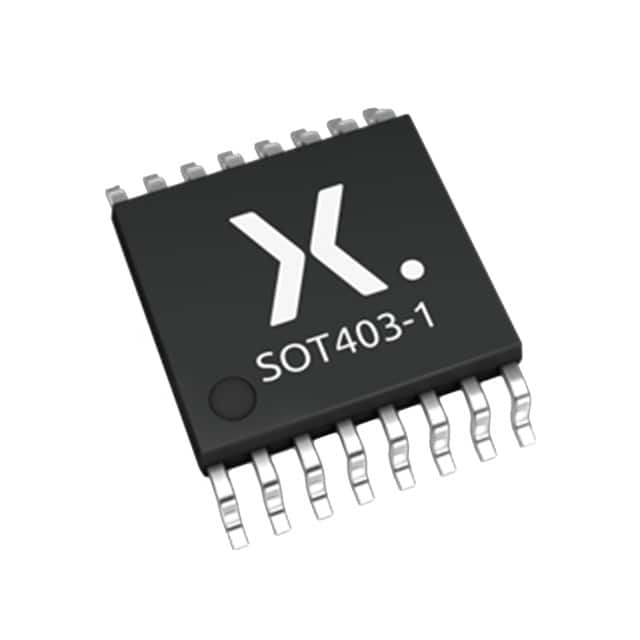
Nexperia USA Inc. 74HC163PW-Q100J
- Part No.:
- 74HC163PW-Q100J
- Manufacturer:
- Nexperia USA Inc.
- Category:
- Counters, Dividers
- Package:
- 16-TSSOP (0.173", 4.40mm Width)
- Datasheet:
-
 74HC163PW-Q100J.pdf
- Description:
- IC BINARY COUNTER 4-BIT 16TSSOP
- Quantity:
- Payment:

- Shipping:

Inventory:2,225
Please send an inquiry. Send us your inquiry, and we will respond immediately.
Product details
Overview
74HC163PW-Q100 from Nexperia is an AEC-Q100 Grade 1 qualified, synchronous presettable 4-bit binary counter with internal look-ahead carry, synchronous reset (MR), parallel load (PE), and dual count-enable inputs (CEP/CET). It operates from 2.0 V to 6.0 V, delivers glitch-free counting up to 55 MHz at VCC = 6.0 V, and features TTL-compatible input thresholds in the 74HCT variant. It is used in automotive timing control, odometer logic, and modular counter design requiring precise modulus adjustment.
For engineers reviewing the 74HC163PW-Q100 datasheet, 74HC163PW-Q100 pinout, 74HC163PW-Q100 application, or 74HC163PW-Q100 equivalent, key selection criteria include synchronous reset behavior, TSSOP16 thermal performance at +125 °C ambient, CP-to-TC propagation delay (≤37 ns @ VCC = 4.5 V), and compatibility with cascaded counter topologies using CET/TC handshaking.
Technical Context
This device implements four edge-triggered D-type flip-flops with synchronous clocking on the positive-going edge of CP. Count enable logic requires both CEP and CET HIGH to advance; CET directly gates the TC output, enabling clean inter-stage carry signaling without ripple delay. The synchronous MR input forces Q0–Q3 LOW on the next CP edge, independent of PE, CEP, or CET states-enabling deterministic zero-reset in safety-critical automotive sequences.
Parallel loading occurs when PE is LOW, capturing D0–D3 values on the rising CP edge regardless of count-enable status. Input clamp diodes allow safe interfacing to voltages exceeding VCC when used with current-limiting resistors. The look-ahead carry architecture eliminates cumulative propagation delay in multi-stage counters, supporting reliable high-speed cascading up to 16-bit or higher moduli.
Key Specifications
| Parameter | Value and Actual Design Meaning |
|---|---|
| Logic Family | 74HC (CMOS-level inputs); supports rail-to-rail operation from 2.0 V to 6.0 V |
| Count Width | 4-bit binary (Q0–Q3); terminal count (TC) asserts HIGH at 1111 state when CET = HIGH |
| Max Clock Frequency | 55 MHz @ VCC = 6.0 V, CL = 50 pF; enables real-time automotive event counting |
| CP to TC Delay | ≤37 ns @ VCC = 4.5 V; ensures tight timing margin for multi-stage carry propagation |
| Operating Temp Range | −40 °C to +125 °C; qualified per AEC-Q100 Grade 1 for engine bay and ADAS modules |
| Package | TSSOP16 (SOT403-1); 4.4 mm body width, 0.65 mm pitch, optimized for automated SMT assembly |
| ESD Robustness | HBM >2000 V; protects against handling damage during automotive PCB manufacturing |
Pinout & Package
TSSOP16 plastic thin shrink small outline package (SOT403-1), 16-pin, 0.65 mm pitch, 4.4 mm body width, lead finish matte tin, RoHS-compliant.
| Pin/Terminal | Circuit Role | Design Meaning |
|---|---|---|
| 1 (MR) | Synchronous master reset | Active-LOW; resets Q0–Q3 to 0000 on next CP rising edge, independent of other controls |
| 2 (CP) | Clock input | Positive-edge triggered; all flip-flops update simultaneously, eliminating ripple glitches |
| 3–6 (D0–D3) | Data inputs | Loaded into counter outputs on rising CP when PE = LOW; support arbitrary preset value |
| 7 (CEP) | Count enable parallel | Must be HIGH with CET to enable counting; used for hierarchical enable gating |
| 8 (GND) | Ground reference | 0 V return path; decoupling capacitor placement critical for noise immunity in automotive EMI environments |
| 9 (PE) | Parallel enable | Active-LOW; enables synchronous loading of D0–D3 regardless of CEP/CET state |
| 10 (CET) | Count enable carry | Gates TC output; TC = HIGH only when CET = HIGH and counter = 1111 |
| 11–14 (Q3–Q0) | Flip-flop outputs | Q0 LSB, Q3 MSB; outputs drive subsequent logic or display drivers with 4 mA sink/source capability |
| 15 (TC) | Terminal count | Pulse-width ≈ Q0 HIGH time; used to cascade to next stage or trigger interrupt on overflow |
| 16 (VCC) | Supply voltage | 2.0–6.0 V; supports wide-input automotive battery range with internal regulation tolerance |
Key Features
| Feature | Design Value |
|---|---|
| Synchronous reset (MR) | Enables deterministic zeroing without race conditions; required for ISO 26262 ASIL-B timing integrity |
| Look-ahead carry (CET/TC) | Eliminates ripple delay in cascaded counters; supports >100 MHz effective modulo-N counting |
| AEC-Q100 Grade 1 qualification | Validated for −40 °C to +125 °C operation; meets automotive reliability and lifetime requirements |
| Input clamp diodes | Permits safe interface to 12 V or 24 V signals via series resistors-no external protection needed |
| Two count-enable inputs (CEP/CET) | Enables hierarchical counter enable schemes (e.g., system-level vs. stage-level gating) |
Applications
| Automotive Instrument Cluster | ADAS Sensor Timing Module |
|---|---|
|
Use Scenario: Odometer and trip meter accumulation using wheel speed pulses. IC Role / Device Role / Timing Role: Synchronous 4-bit counter cascaded to form 16-bit distance accumulator; MR resets on ignition cycle. Use Value: Glitch-free counting prevents erroneous mileage increments during EMI-rich vehicle startup/shutdown transients. |
Use Scenario: Time-of-flight measurement windowing for ultrasonic parking sensors. IC Role / Device Role / Timing Role: Presettable counter generating precise gate windows synchronized to sensor excitation pulses. Use Value: Synchronous load (PE) allows dynamic window width reconfiguration mid-operation without metastability. |
| Engine Control Unit (ECU) Diagnostic Timer | Infotainment System Keypad Debounce Logic |
|
Use Scenario: Monitoring crankshaft position sensor pulse intervals for misfire detection. IC Role / Device Role / Timing Role: Modulo-12 counter tracking 12-pulse-per-revolution events; TC triggers diagnostic sampling. Use Value: Look-ahead carry ensures accurate multi-cycle timing across temperature extremes (−40 °C to +125 °C). |
Use Scenario: Hardware-based keypress stabilization in climate control panel. IC Role / Device Role / Timing Role: 4-bit counter debouncing each key line; counts 16 clock cycles before registering press/release. Use Value: Low-power HC logic draws <160 µA at 125 °C, extending module standby life without MCU intervention. |
Equivalent & Alternatives
The following parts are listed as comparable options for similar synchronous 4-bit counter applications.
| Alternative Part | Technical Difference | Application Difference | Selection Advice |
|---|---|---|---|
| 74HCT163PW-Q100 | TTL-compatible inputs (VIH = 2.0 V min); identical pinout, timing, and packaging | Better interoperability with legacy 5 V microcontrollers lacking CMOS-level drive strength | Select when interfacing with older MCU families or mixed-voltage boards where input threshold matching is critical |
| SN74LV163APWRE4 | Lower VCC range (1.65–5.5 V); LV logic family; slightly slower max fCLK (40 MHz @ 5 V) | Higher noise immunity in low-voltage embedded systems; not AEC-Q100 qualified | Use in non-automotive industrial controllers where cost and 3.3 V compatibility outweigh qualification needs |
Compared with 74HC163PW-Q100, the 74HCT163PW-Q100 offers superior input compatibility with 5 V TTL sources but shares identical automotive qualification and thermal specs, while the SN74LV163APWRE4 trades AEC-Q100 compliance for broader low-voltage operation and lower static power-making it suitable only for non-safety-critical commercial designs.
Availability
74HC163PW-Q100 is available at Aetrix Electronics and suitable for automotive instrument clusters, ADAS sensor timing modules, and engine control unit diagnostic timers requiring stable component supply across extended temperature ranges and long production lifecycles.
Supply support for 74HC163PW-Q100 includes scheduled delivery planning, volume procurement assistance, BOM continuity management, traceable sourcing, and lifecycle availability coordination for OEM customers, industrial embedded developers, connected-device designers, and electronics production programs.
Manufacturer
Nexperia is a global semiconductor expert delivering high-performance logic, analog, and MOSFET solutions with focus on automotive, industrial, and mobile applications.
The 74HC163-Q100 belongs to Nexperia's automotive-qualified logic portfolio, designed specifically for robust, glitch-free digital timing functions in harsh-temperature automotive subsystems.
FAQ
What is the maximum clock frequency supported by the 74HC163PW-Q100 at 125 °C?
At VCC = 6.0 V and TA = +125 °C, the maximum guaranteed clock frequency is 21 MHz, as specified in Table 7 under "−40 °C to +125 °C" column for fmax. This derating ensures reliable operation under worst-case automotive thermal stress while maintaining synchronous timing integrity.
Can the 74HC163PW-Q100 be used in a 3.3 V system?
Yes-the 74HC163PW-Q100 supports VCC from 2.0 V to 6.0 V, and its CMOS inputs are fully compatible with 3.3 V logic levels. VIH(min) = 1.5 V at VCC = 2.0 V and scales linearly; at 3.3 V, VIH(min) ≈ 2.3 V, safely exceeded by standard 3.3 V outputs.
How does the synchronous reset differ from asynchronous reset in practical circuit design?
Synchronous reset (MR) only takes effect on the next rising CP edge, ensuring no metastability or partial-state updates. This enables predictable state transitions in pipelined automotive control logic, unlike asynchronous reset which can violate setup/hold timing and cause race conditions in multi-clock-domain systems.
Is there a recommended decoupling strategy for the 74HC163PW-Q100 in automotive PCB layouts?
Place a 100 nF X7R ceramic capacitor between VCC (pin 16) and GND (pin 8), located ≤2 mm from the package, plus a 4.7 µF tantalum or polymer capacitor per power rail segment. This suppresses switching noise and maintains stable VCC during high-frequency CP transitions in noisy automotive harness environments.
74HC163PW-Q100J Specifications
- Product attributes
- Attribute value
- Manufacturer:
- Nexperia USA Inc.
- Series:
- 74HC
- Package/Case:
- 16-TSSOP (0.173", 4.40mm Width)
- Packaging:
- Tape & Reel (TR)
- Product Status:
- Obsolete
- Logic Type:
- Binary Counter
- Direction:
- Up
- Number of Elements:
- 1
- Number of Bits per Element:
- 4
- Reset:
- Synchronous
- Timing:
- Synchronous
- Count Rate:
- 55 MHz
- Trigger Type:
- Positive Edge
- Voltage - Supply:
- 2 V ~ 6 V
- Operating Temperature:
- -40°C ~ 125°C
- Grade:
- Automotive
- Qualification:
- AEC-Q100
- Mounting Type:
- Surface Mount
- Supplier Device Package:
- 16-TSSOP
74HC163PW-Q100J FAQ
1.How can I place an order for 74HC163PW-Q100J through Aetrix?
Please submit a Request for Quotation (RFQ) for 74HC163PW-Q100J on Aetrix. Our sales agent will provide a competitive quotation and guide you through the order confirmation once you accept the terms.
2.Are the price and stock information for 74HC163PW-Q100J reliable?
The price and inventory of 74HC163PW-Q100J are updated periodically and may fluctuate due to market conditions. Stock and pricing data are typically refreshed every 24 hours. Quotation validity for 74HC163PW-Q100J is usually 5 days.
3.What payment methods are accepted for 74HC163PW-Q100J?
We accept Wire Transfer, PayPal, Credit Card, Western Union, MoneyGram, and Escrow for 74HC163PW-Q100J transactions.
Note: Certain payment methods may incur a processing fee.
4.How is shipping managed for 74HC163PW-Q100J?
74HC163PW-Q100J orders can be shipped via leading logistics carriers, including DHL, UPS, FedEx, TNT, or Registered Mail.
Once your 74HC163PW-Q100J order is processed, you will receive an email with the shipment details and tracking number.
Note: Tracking information may take up to 24 hours to appear. Express delivery typically takes 3–5 business days.
5.How can I obtain technical support or documentation for 74HC163PW-Q100J?
For technical support, including 74HC163PW-Q100J datasheets, pinout diagrams, or application guidance, please contact our engineering support team. They can provide detailed documentation and assistance for your 74HC163PW-Q100J requirements.
6.How does Aetrix verify that 74HC163PW-Q100J is sourced from the original manufacturer or authorized distributors?
All 74HC163PW-Q100J products on Aetrix are procured from qualified distributors and authorized channels. Our dedicated quality assurance team conducts strict verification, including traceability checks and, if necessary, third-party testing. This ensures that 74HC163PW-Q100J meets industry standards.
7.What is the process for return or replacement of 74HC163PW-Q100J?
All 74HC163PW-Q100J units undergo pre-shipment inspection (PSI). If there is an issue with 74HC163PW-Q100J, returns or replacements are accepted under the following conditions:
1.Quantity discrepancies, incorrect items, or visible external defects (such as breakage or corrosion), acknowledged by Aetrix.
2.The issue is reported within 90 days of delivery.
3.The 74HC163PW-Q100J part is unused and in its original packaging.
Return procedure for 74HC163PW-Q100J:
1.Submit a request within 90 days.
2.Obtain a Return Material Authorization (RMA) from Aetrix.
74HC163PW-Q100J Tags
-
74HC393BQ,115
Nexperia USA Inc.
-
SN74LV8154PWR
Texas Instruments
-
MC14516BDR2G
onsemi
-
MC14020BDR2G
onsemi
-
MC100EP32DTR2G
onsemi
-
MC100EP016AMNG
onsemi
-
MC100EP016AFAG
onsemi
-
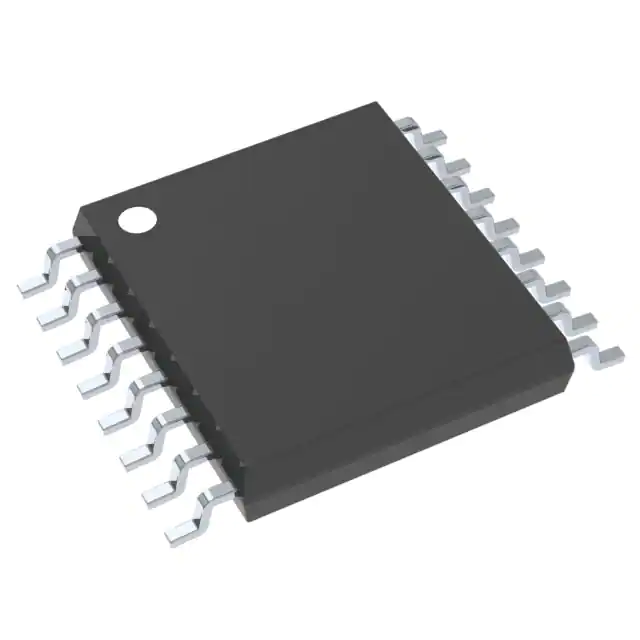
SN74LV163ADR
Texas Instruments
-
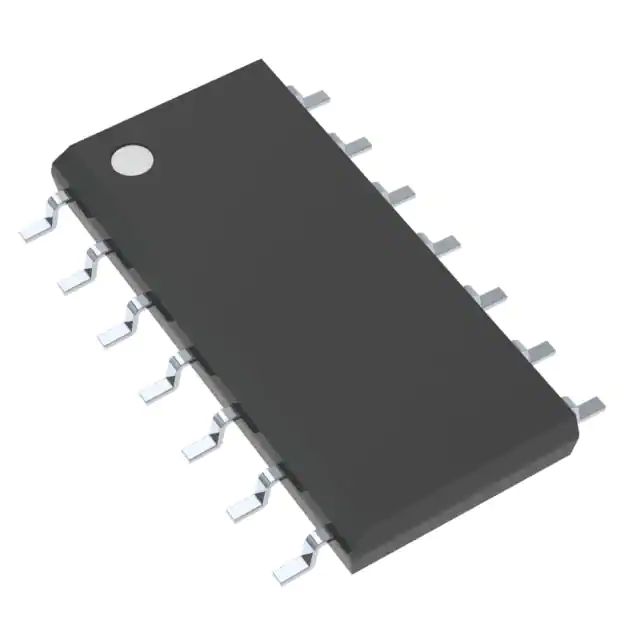
SN74LV163APWR
Texas Instruments
-
SN74HC393DR
Texas Instruments
-
SN74HC161DR
Texas Instruments
-
SN74HC163DR
Texas Instruments
Tech Hub

Jumper cables guide covering safe connection order, red and black clamp placement, final ground connection, cable gauge, length, clamp quality, copper vs CCA cables, jump starter comparison and battery…

LDO regulator guide covering low dropout voltage, power dissipation, thermal design, PSRR, output noise, capacitor stability, adjustable LDO circuits, LDO vs buck converter and datasheet selection chec…

Conditional Access Module guide covering CAM meaning, CI/CI+ interface, smart card authorization, DVB security workflow, TV and set-top box compatibility, internal electronics, ESD protection, connecto…

Guide to electronic component obsolescence covering EOL risk, PCN/PDN notices, last-time buy planning, replacement options, form-fit-function validation, counterfeit risk and BOM lifecycle management.

18650 battery guide covering lithium-ion cell basics, 3.6V/3.7V voltage, 4.2V charging, mAh and Wh capacity, protected cells, chargers, BMS, series-parallel packs, holders, welding and sourcing checks.…

Hall effect sensor guide covering working principle, linear and digital sensors, Arduino circuits, current sensing, speed detection, automotive applications, A3144 examples, signal filtering and datash…

Product Change Notification guide for electronic components, covering PCN meaning, PCN vs PDN/EOL, common change types, risk levels, form-fit-function review, engineering validation, BOM control, LTB/L…

A practical guide to blend door actuators, covering HVAC function, symptoms, location, AC and heater issues, reset and calibration, replacement cost, electrical diagnosis, compatibility checks, and rep…

Engineering guide to Raspberry Pi alternatives, covering chip-level differences, Orange Pi, ROCK, Jetson, Banana Pi, NanoPi, Compute Module, Pico, GPIO, camera, HAT compatibility, and replacement risks…
Engineering guide to dynamic load response testing for high-current buck converters, covering load step setup, slew rate, Vcore undershoot, overshoot, recovery time, probe location, output capacitors a…


