
 My Inquiry
 My Account


Toshiba Semiconductor and Storage 74HC4538D
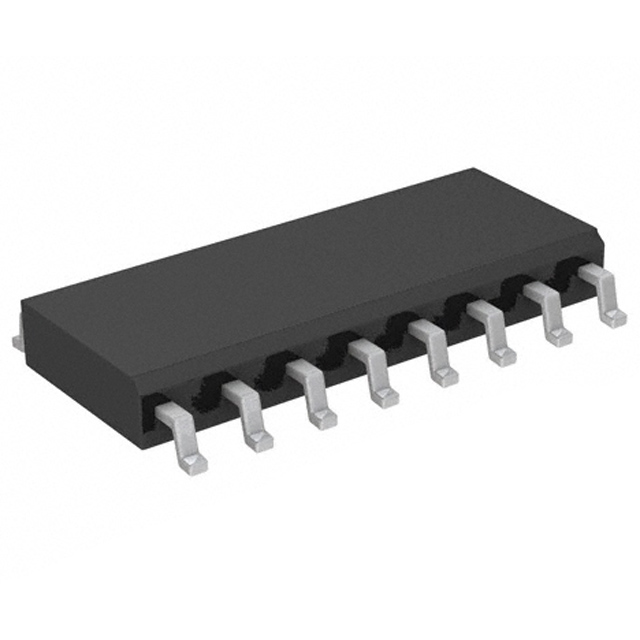
- Part No.:
- 74HC4538D
- Manufacturer:
- Toshiba Semiconductor and Storage
- Category:
- Multivibrators
- Package:
- 16-SOIC (0.154", 3.90mm Width)
- Datasheet:
-
 74HC4538D.pdf
- Description:
- IC MULTIVIBRATOR 25NS 16SOIC
- Quantity:
- Payment:

- Shipping:

Inventory:10,000
Please send an inquiry. Send us your inquiry, and we will respond immediately.
Product details
Overview
74HC4538D from Toshiba is a dual high-speed CMOS monostable multivibrator in SOIC16 package, featuring independent A (positive-edge) and B (negative-edge) Schmitt-trigger inputs, retriggerable one-shot operation per channel, 2.0–6.0 V supply range, and typical propagation delay of 25 ns at 5 V. It generates precise timing pulses using external RX/CX networks-e.g., for debouncing mechanical switches in industrial control panels.
For engineers reviewing the 74HC4538D datasheet, 74HC4538D pinout, 74HC4538D application, or 74HC4538D equivalent, this device supports stable pulse generation with low quiescent current (4.0 µA max), balanced tPLH/tPHL delays, wide temperature operation (–40 to +125 °C), and robust input protection-key for noise-prone embedded timing designs.
Technical Context
The 74HC4538D implements two independent monostable circuits, each with dual-edge-trigger capability via separate A (rising-edge sensitive) and B (falling-edge sensitive) Schmitt inputs. Triggering initiates capacitor CX discharge through internal transistor QN, followed by controlled recharge via RX to determine output pulse width (twOUT ≈ 0.7 × CX × RX).
Each circuit includes a dedicated CD (clear/disable) input that forces Q low and rapidly charges CX to VCC when asserted low. Retriggering extends the monostable period only if the new trigger arrives during the rising phase of T2 node voltage-enabling flexible pulse stretching in event-driven systems.
Key Specifications
| Parameter | Value and Actual Design Meaning |
|---|---|
| Propagation delay (A/B → Q) | 25 ns typ. at VCC = 5 V, CL = 15 pF - enables sub-40-MHz timing resolution in digital logic interfaces |
| Supply voltage range | 2.0–6.0 V - interoperable with 3.3 V and 5 V logic families without level shifting |
| Quiescent supply current | 4.0 µA max at Ta = 25 °C - suitable for battery-backed or low-power standby modes |
| Output drive strength | ±4 mA at VCC = 4.5 V - directly drives standard TTL/CMOS loads without buffering |
| Operating temperature | –40 to +125 °C - qualified for under-hood automotive and industrial ambient environments |
| Input hysteresis | Integrated Schmitt triggers on A/B inputs - rejects slow-rising/falling signals up to tr/tf = 1 µs |
| Pulse width formula | twOUT ≈ 0.7 × CX × RX - deterministic analog timing with no software overhead |
Pinout & Package
74HC4538D is housed in a 16-pin Small Outline Integrated Circuit (SOIC16) package, 7.5 mm wide, with 1.27 mm pitch and 0.15 g typical mass. Pin numbering follows standard JEDEC MS-012 outline.
| Pin/Terminal | Circuit Role | Design Meaning |
|---|---|---|
| 1, 2, 3, 4, 5, 6, 7, 9, 10, 11, 12, 13, 14, 15 | Functional I/O (A1/B1/CD1/Q1/Q1/A2/B2/CD2/Q2/Q2/T1/T2/RX1/CX1/RX2/CX2) | Dual-channel monostable interface: A/B trigger inputs, CD clear, Q/Q complementary outputs, T1/T2 internal timing nodes, RX/CX external timing network connections |
| 8 | GND | Ground reference for all internal circuitry and external timing components |
| 16 | VCC | Positive supply rail (2.0–6.0 V); powers both monostable channels and internal comparators |
Key Features
| Feature | Design Value |
|---|---|
| Dual independent monostables | Two fully isolated timing channels share only VCC/GND-enables synchronized or asynchronous pulse generation without crosstalk |
| Retriggerable operation | New trigger during active pulse extends duration-ideal for variable-width pulse shaping in sensor signal conditioning |
| Schmitt-trigger inputs | A/B inputs tolerate slow edges (tr/tf ≤ 1 µs) and reject noise-eliminates need for external RC filtering in noisy industrial settings |
| Wide voltage operation | 2.0–6.0 V supply range allows direct use across 3.3 V microcontrollers and legacy 5 V systems |
| Low power standby | 4.0 µA max ICC in quiescent state-reduces system-level power budget in always-on timing applications |
Applications
| Switch Debouncing | Timing Pulse Generation |
|---|---|
Use Scenario: Mechanical pushbutton or relay contact closure in PLC I/O modules introduces bounce lasting 1–10 ms. IC Role / Device Role / Timing Role: 74HC4538D acts as hardware-based one-shot timer per channel, generating clean, fixed-duration logic pulses after first edge detection. Use Value: Eliminates firmware polling or software debounce delays; ensures deterministic 10–100 ms pulse width with <±5% variation over temperature. |
Use Scenario: Microcontroller needs precise, jitter-free strobe pulses to trigger ADC sampling or gate external memory access. IC Role / Device Role / Timing Role: 74HC4538D provides externally programmable pulse width (via RX/CX) with sub-30 ns propagation delay and matched tPLH/tPHL. Use Value: Offloads timing-critical functions from CPU; avoids interrupt latency and clock-domain skew in mixed-signal systems. |
| Event Synchronization | Power Sequencing Control |
Use Scenario: Asynchronous sensor interrupts (e.g., motion detector) must be aligned to a system clock domain before processing. IC Role / Device Role / Timing Role: 74HC4538D converts irregular external events into synchronous, fixed-width enable pulses synchronized to local clock edge. Use Value: Prevents metastability in downstream flip-flops; guarantees minimum pulse width for reliable clock-gating logic. |
Use Scenario: Multi-rail power supplies (e.g., 12 V, 5 V, 3.3 V) require staggered turn-on to limit inrush current in embedded computing modules. IC Role / Device Role / Timing Role: 74HC4538D generates cascaded delay intervals using CD-controlled retriggering between channels. Use Value: Enables precise, passive, component-count-minimized sequencing without microcontroller intervention or complex PMIC configuration. |
Equivalent & Alternatives
The following parts are listed as comparable options for similar monostable multivibrator applications.
| Alternative Part | Technical Difference | Application Difference | Selection Advice |
|---|---|---|---|
| SN74LV4538D | Lower VCC range (2.0–5.5 V); 20 ns typ. tpd at 3.3 V; higher ICC(opr) (500 µA max) | Better suited for 3.3 V-only systems with tighter timing budgets; less tolerant of 5 V operation | Select when operating exclusively at 3.3 V and requiring faster propagation than 74HC4538D offers at that rail |
| 74HCT4538D | TTL-compatible input thresholds (VIH = 2.0 V min); identical pinout and timing; higher ICC in active state (500 µA max) | Enables direct interfacing with legacy 5 V TTL outputs without level shifters | Choose when integrating with older 5 V TTL logic families where HC input thresholds would cause marginal recognition |
Compared with SN74LV4538D and 74HCT4538D, the 74HC4538D delivers broader supply flexibility (up to 6.0 V), lower quiescent current, and proven thermal stability across –40 to +125 °C-making it optimal for mixed-voltage industrial and automotive timing where reliability outweighs marginal speed gains.
Availability
74HC4538D is available at Aetrix Electronics and suitable for industrial control panels, automotive body electronics, test equipment timing modules, and medical device signal conditioning requiring stable component supply across extended temperature ranges and long production lifecycles.
Supply support for 74HC4538D includes scheduled delivery planning, volume procurement assistance, BOM continuity management, traceable sourcing, and lifecycle availability coordination for OEM customers, industrial embedded developers, connected-device designers, and electronics production programs.
Manufacturer
Toshiba Electronic Devices & Storage Corporation designs and manufactures high-reliability semiconductor solutions for industrial, automotive, and consumer applications, with emphasis on logic, power, and analog ICs.
The 74HC4538D belongs to Toshiba's HC-series high-speed CMOS logic family, engineered for low-power, noise-immune timing functions in harsh environments-targeting applications where deterministic pulse generation replaces software-based delays.
FAQ
What is the maximum external resistor value supported by the 74HC4538D?
The 74HC4538D does not specify an upper limit for RX, but Toshiba cautions that susceptibility to externally induced noise increases significantly when RX exceeds 1 MΩ. For stable operation across temperature and voltage, design with RX ≤ 1 MΩ and ensure board layout minimizes leakage paths. The minimum RX is 5 kΩ at VCC = 2.0 V and 1 kΩ at VCC ≥ 3.0 V per the datasheet's operating ranges table.
Can the 74HC4538D operate reliably at 3.3 V supply?
Yes, the 74HC4538D is fully specified for operation at 3.3 V (within its 2.0–6.0 V range). At VCC = 3.3 V, DC parameters such as VOH (≥2.97 V), VOL (≤0.33 V), and VIH (≥2.31 V) meet standard 3.3 V CMOS logic levels. Propagation delay increases to ~35 ns typ. (vs. 25 ns at 5 V), and active supply current remains below 350 µA max-making it suitable for mixed-voltage 3.3 V systems.
How does the retrigger function behave when multiple triggers occur rapidly?
The 74HC4538D retriggering is effective only if a new A/B trigger arrives while the T2 node voltage is rising-i.e., during the recharge phase of CX through RX. If a second trigger occurs during the initial discharge phase or within the minimum retrigger time (trr(min) = 0.7 µs at VCC = 6.0 V), it is ignored. This prevents pulse collapse and ensures monotonic extension of the output high time.
Is the 74HC4538D pin-compatible with other 74xx4538 variants like the 74LS4538?
No, the 74HC4538D is not pin-compatible with bipolar 74LS4538. While both share the same SOIC16 footprint and functional pin assignments (A/B/CD/Q/Q/etc.), the LS version uses different internal architecture, lacks Schmitt inputs, requires higher drive current, and operates only at 5 V. Direct substitution risks incorrect triggering, excessive loading, or failure to meet timing specs-always verify logic family compatibility before replacement.
What is the recommended practice for unused inputs on the 74HC4538D?
All unused inputs on the 74HC4538D-including A, B, CD, and T1/T2-must be tied to either VCC or GND to prevent floating states that cause increased ICC, erratic triggering, or ESD vulnerability. Per Toshiba's datasheet note, unused A/B inputs should connect to VCC or GND; CD should be tied to VCC for normal operation; T1/T2 pins must remain unconnected (OPEN) unless used in custom timing configurations.
74HC4538D Specifications
- Product attributes
- Attribute value
- Manufacturer:
- Toshiba Semiconductor and Storage
- Series:
- 74HC
- Package/Case:
- 16-SOIC (0.154", 3.90mm Width)
- Packaging:
- Tape & Reel (TR)
- Product Status:
- Active
- Logic Type:
- Monostable
- Independent Circuits:
- 2
- Schmitt Trigger Input:
- Yes
- Propagation Delay:
- 25 ns
- Current - Output High, Low:
- 5.2mA, 5.2mA
- Voltage - Supply:
- 2 V ~ 6 V
- Operating Temperature:
- -40°C ~ 125°C (TA)
- Grade:
- -
- Qualification:
- -
- Mounting Type:
- Surface Mount
- Supplier Device Package:
- 16-SOIC
74HC4538D FAQ
1.How can I place an order for 74HC4538D through Aetrix?
Please submit a Request for Quotation (RFQ) for 74HC4538D on Aetrix. Our sales agent will provide a competitive quotation and guide you through the order confirmation once you accept the terms.
2.Are the price and stock information for 74HC4538D reliable?
The price and inventory of 74HC4538D are updated periodically and may fluctuate due to market conditions. Stock and pricing data are typically refreshed every 24 hours. Quotation validity for 74HC4538D is usually 5 days.
3.What payment methods are accepted for 74HC4538D?
We accept Wire Transfer, PayPal, Credit Card, Western Union, MoneyGram, and Escrow for 74HC4538D transactions.
Note: Certain payment methods may incur a processing fee.
4.How is shipping managed for 74HC4538D?
74HC4538D orders can be shipped via leading logistics carriers, including DHL, UPS, FedEx, TNT, or Registered Mail.
Once your 74HC4538D order is processed, you will receive an email with the shipment details and tracking number.
Note: Tracking information may take up to 24 hours to appear. Express delivery typically takes 3–5 business days.
5.How can I obtain technical support or documentation for 74HC4538D?
For technical support, including 74HC4538D datasheets, pinout diagrams, or application guidance, please contact our engineering support team. They can provide detailed documentation and assistance for your 74HC4538D requirements.
6.How does Aetrix verify that 74HC4538D is sourced from the original manufacturer or authorized distributors?
All 74HC4538D products on Aetrix are procured from qualified distributors and authorized channels. Our dedicated quality assurance team conducts strict verification, including traceability checks and, if necessary, third-party testing. This ensures that 74HC4538D meets industry standards.
7.What is the process for return or replacement of 74HC4538D?
All 74HC4538D units undergo pre-shipment inspection (PSI). If there is an issue with 74HC4538D, returns or replacements are accepted under the following conditions:
1.Quantity discrepancies, incorrect items, or visible external defects (such as breakage or corrosion), acknowledged by Aetrix.
2.The issue is reported within 90 days of delivery.
3.The 74HC4538D part is unused and in its original packaging.
Return procedure for 74HC4538D:
1.Submit a request within 90 days.
2.Obtain a Return Material Authorization (RMA) from Aetrix.
74HC4538D Tags
-
SN74LVC1G123DCUR
Texas Instruments
-
CD4047BM96
Texas Instruments
-
SN74LVC1G123DCTR
Texas Instruments
-
CD74HC221M96
Texas Instruments
-
CD14538BE
Texas Instruments
-
SN74LVC1G123YZPR
Texas Instruments
-
SN74LVC1G123DCUT
Texas Instruments
-
MC14538BDR2G
onsemi
-
74VHC123AMX
onsemi
-
LTC6993CS6-2#TRMPBF
Analog Devices Inc.
-
LTC6993CS6-3#TRMPBF
Analog Devices Inc.
-
LTC6993CS6-1#TRMPBF
Analog Devices Inc.
Tech Hub
Counterfeit components can hide behind convincing markings and passing basic function tests. This engineering reference covers source traceability, external inspection, X-ray, XRF, electrical testing, …

A practical engineering and sourcing framework covering lifecycle verification, lifetime-buy calculations, replacement qualification, supplier checks and counterfeit-risk controls.

TTL and CMOS logic families differ in thresholds, loading, output drive, power and timing. This engineering guide compares 74HC and 74HCT, calculates noise margins and checks 3.3 V/5 V compatibility.

A practical engineering guide to 3.3V and 5V logic compatibility, input thresholds, resistor dividers, translator ICs, MOSFET level shifting, I2C pull-ups, timing limits and power-sequencing risks.

The 74HC595 uses push-pull logic outputs, while the TPIC6B595 uses 50 V open-drain DMOS sinks for higher-power loads. This guide compares timing, current limits, 3.3 V interfacing, load wiring, thermal…

The 74HC595 converts serial data into eight stable parallel outputs. This guide covers pin functions, shift and storage timing, OE and MR behavior, drive-current limits, cascading, voltage compatibilit…

A technical comparison of level-sensitive latches and edge-triggered flip-flops, covering timing windows, setup and hold limits, master–slave operation, time borrowing, race-through, HDL inference and…

A D latch stores one bit while Enable controls when data can pass. This reference covers gate-level operation, truth tables, transparency, setup and hold timing, LE versus OE, common ICs and practical …

An SR latch stores one bit through cross-coupled feedback. This engineering reference covers NOR and NAND implementations, truth tables, forbidden-state recovery, gated operation, switch debouncing, fa…

Latch circuits retain one bit through feedback. This technical reference covers SR and D latches, truth tables, transparency, timing limits, latch-versus-flip-flop behavior, applications and common log…


