
 My Inquiry
 My Account


Diodes Incorporated 74HC594S16-13
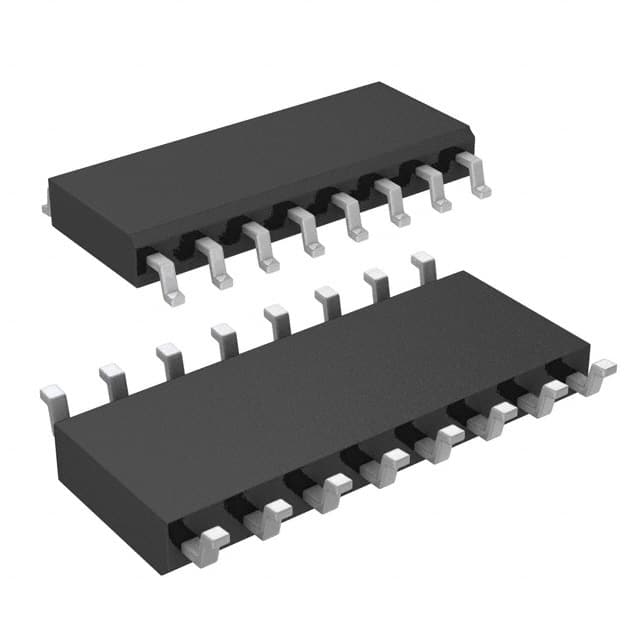
- Part No.:
- 74HC594S16-13
- Manufacturer:
- Diodes Incorporated
- Category:
- Shift Registers
- Package:
- 16-SOIC (0.154", 3.90mm Width)
- Datasheet:
-
 74HC594S16-13.pdf
- Description:
- HC HIGH PIN COUNT SO-16
- Quantity:
- Payment:

- Shipping:

Inventory:17,564
Please send an inquiry. Send us your inquiry, and we will respond immediately.
Product details
Overview
74HC594S16-13 from Diodes Incorporated is an 8-bit serial-in, parallel-out shift register with separate storage register and active-low asynchronous reset for both shift and storage stages. It operates from 2.0V to 6.0V, features Schmitt-trigger inputs, push-pull Q0–Q7 outputs (±35 mA drive), and cascading Q7S output. Used in microcontroller GPIO expansion for LED matrix control and industrial I/O buffering.
For engineers reviewing the 74HC594S16-13 datasheet, 74HC594S16-13 pinout, 74HC594S16-13 application, or 74HC594S16-13 equivalent, key selection criteria include dual-clock timing independence (SHCP/STCP), simultaneous parallel output latching, active-low asynchronous reset per register stage, and SO-16 package compatibility with legacy 74HC595 designs requiring Q7S feedback.
Technical Context
The device implements two synchronized but independent 8-bit registers: a serial shift register clocked by SHCP (rising edge) and a parallel storage register clocked by STCP (rising edge). Data propagates from DS through the shift register, then transfers to the storage register on STCP, enabling glitch-free output updates.
Both SHR and STR are active-low asynchronous resets, clearing their respective registers independently of clock edges. All outputs change on the falling edge of STCP after data capture on its rising edge - ensuring deterministic timing alignment across Q0–Q7 and Q7S.
Key Specifications
| Parameter | Value and Actual Design Meaning |
|---|---|
| Supply Voltage | 2.0V to 6.0V - supports direct interfacing with 3.3V and 5V logic domains without level shifters. |
| Output Drive | ±35 mA per Qn bus output - sufficient to directly drive LEDs or small relays without external buffers. |
| Max Clock Frequency | 109 MHz at VCC = 6.0V - enables high-speed serial loading for real-time display refresh or data streaming. |
| Propagation Delay | 14 ns (typ) SHCP→Q7S and STCP→Qn at 6.0V - ensures tight timing margins in synchronous multi-device chains. |
| Input Hysteresis | Schmitt-trigger action on all inputs - rejects noise on long PCB traces or unshielded cables in industrial environments. |
| ESD Protection | 2 kV HBM, 1 kV CDM, 200 V MM - exceeds JEDEC standards for robustness in manufacturing and field deployment. |
Pinout & Package
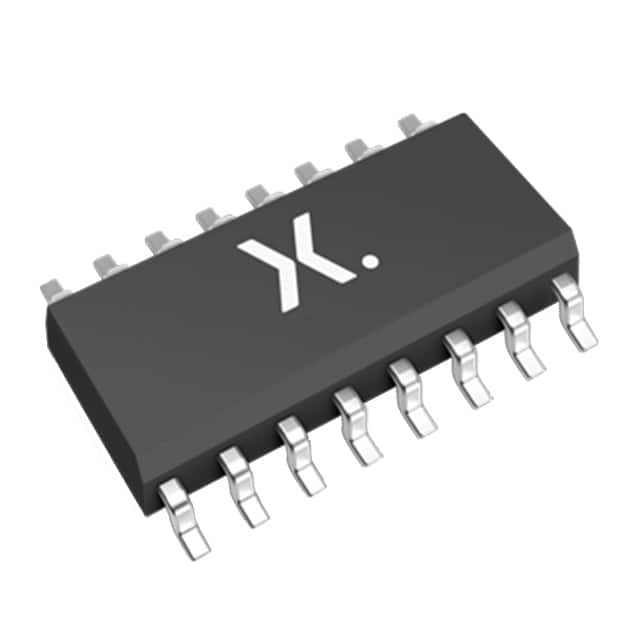
74HC594S16-13 is housed in a 16-pin SOIC (SO-16) package with standard 1.27 mm pitch, 10.0 mm × 4.0 mm body, and 1.5 mm height - compatible with automated SMT placement and reflow profiles per J-STD-020.
| Pin/Terminal | Circuit Role | Design Meaning |
|---|---|---|
| 1, 2, 3, 4, 5, 6, 7, 15 | Q1–Q7, Q0 | Parallel output terminals - driven low/high simultaneously upon STCP rising edge; each capable of ±35 mA sink/source. |
| 9 | Q7S | Serial output of shift register stage 7 - used to daisy-chain multiple 74HC594s without external logic. |
| 10, 13 | SHR, STR | Active-low asynchronous reset inputs - clear shift register (SHR) or storage register (STR) immediately, regardless of clock state. |
| 11, 12 | SHCP, STCP | Rising-edge clock inputs - SHCP advances serial data; STCP latches shift register contents to outputs Q0–Q7. |
| 14 | DS | Serial data input - sampled on SHCP rising edge; accepts 0–6.0V logic levels due to overvoltage-tolerant inputs. |
| 8, 16 | GND, VCC | Power supply terminals - decoupling capacitor (0.1 µF) required near pin 16 for stable high-speed operation. |
Key Features
| Feature | Design Value |
|---|---|
| Dual-register architecture | Independent shift and storage registers enable non-disruptive data loading and atomic output updates - critical for flicker-free LED displays. |
| Asynchronous reset per stage | SHR and STR allow selective zeroing of internal state without affecting clock synchronization or requiring full system reset. |
| Q7S cascading output | Enables seamless multi-device serial chaining - one microcontroller pin controls up to N×8 outputs with no additional glue logic. |
| Overvoltage-tolerant inputs | All inputs accept up to 6.0V regardless of VCC - simplifies mixed-voltage board design and eliminates level-shifter components. |
Applications
| LED Matrix Display Driver | Microcontroller GPIO Expander |
|---|---|
Use Scenario: Driving 8×8 monochrome LED arrays in signage or instrumentation panels using SPI-connected microcontrollers. IC Role / Device Role / Timing Role: Serial-to-parallel converter that buffers and latches column/row data; Q7S enables vertical stacking of display modules. Use Value: Eliminates need for dedicated display controllers - reduces BOM cost and firmware complexity while maintaining precise scan timing via STCP edge control. | Use Scenario: Extending limited GPIO count on ARM Cortex-M0+ MCUs for industrial sensor interface boards with 24+ digital I/O lines. IC Role / Device Role / Timing Role: Parallel output latch synchronized to MCU SPI frame end; SHR/STR support safe initialization and fault recovery. Use Value: Enables deterministic I/O state restoration after brownout or watchdog reset - prevents spurious actuator activation during boot. |
| Industrial PLC Output Module | Appliance Control Panel Interface |
Use Scenario: Isolated digital output stage in DIN-rail mounted PLCs, driving 24V solenoids and indicator lamps via optocouplers. IC Role / Device Role / Timing Role: Level-translated shift register feeding discrete driver transistors; Schmitt inputs reject EMI on long field wiring. Use Value: Provides noise-immune serial configuration of 8-channel outputs with hardware reset capability - meets IEC 61000-4-4 surge immunity requirements. | Use Scenario: Keypad backlight and status LED control in smart washing machines, where MCU resources are constrained by motor control algorithms. IC Role / Device Role / Timing Role: Low-power GPIO expander operating at 3.3V; Q0–Q7 drive current-limited LEDs directly without external resistors. Use Value: Reduces component count by 8× current-limiting resistors per device - improves assembly yield and thermal performance in sealed enclosures. |
Equivalent & Alternatives
The following parts are listed as comparable options for similar serial-in/parallel-out shift register applications.
| Alternative Part | Technical Difference | Application Difference | Selection Advice |
|---|---|---|---|
| 74HC595N,112 (NXP) | Lacks separate SHR/STR pins; single SRCLR active-low reset affects both registers; no Q7S output - requires external feedback for cascading. | Less suitable for systems requiring independent register reset or guaranteed glitch-free output updates during load cycles. | Select when cost sensitivity outweighs need for dual-reset control or daisy-chain simplicity. |
| SN74HC595PWR (TI) | Same pinout and function but TSSOP-16 only; no SO-16 variant; slightly higher ICC (160 µA max vs. 80 µA at 6V). | Requires PCB redesign for SO-16 footprint compatibility; higher quiescent current impacts battery-powered applications. | Select only if TSSOP-16 layout is already committed and thermal dissipation is not limiting. |
Compared with 74HC595 variants, 74HC594S16-13 provides hardware-enforced separation between data shifting and output updating - reducing firmware overhead for time-critical I/O and enabling safer fail-safe reset behavior in safety-aware systems.
Availability
74HC594S16-13 is available at Aetrix Electronics and suitable for LED display drivers, microcontroller GPIO expansion, industrial PLC output modules, and appliance control panel interfaces requiring stable component supply and long-term manufacturability.
Supply support for 74HC594S16-13 includes scheduled delivery planning, volume procurement assistance, BOM continuity management, traceable sourcing, and lifecycle availability coordination for OEM customers, industrial embedded developers, connected-device designers, and electronics production programs.
Manufacturer
Diodes Incorporated is a global manufacturer of discrete semiconductors and analog ICs, specializing in high-reliability power management, signal integrity, and protection solutions for industrial, automotive, and consumer markets.
The 74HC594 belongs to Diodes' HC logic family - designed for robust serial-to-parallel conversion in noise-prone environments where deterministic timing, overvoltage tolerance, and dual-stage register control are essential.
FAQ
Can 74HC594S16-13 operate reliably at 3.3V supply?
Yes. The device is fully specified from 2.0V to 6.0V, with VIH(min) = 2.4V and VIL(max) = 1.35V at VCC = 4.5V, and guaranteed operation down to 2.0V. At 3.3V, input thresholds scale proportionally, and output drive remains ≥±24 mA - sufficient for driving LEDs or interfacing with 3.3V CMOS logic.
What is the functional difference between SHR and STR pins?
SHR (Shift Register Reset) clears only the 8-bit shift register, leaving the storage register and outputs unchanged. STR (Storage Register Reset) clears only the 8-bit storage register, setting Q0–Q7 to low while preserving shift register contents. This allows independent initialization of data path and output state without disrupting ongoing serial loading.
Is Q7S output buffered, and what load can it drive?
Q7S is a standard CMOS output with same drive strength as other Qn pins: ±4 mA at 4.5V and ±5.2 mA at 6.0V. It is not specially buffered but designed for direct connection to DS of the next 74HC594 in cascade - verified to meet setup/hold timing even at 109 MHz with typical PCB trace capacitance (<10 pF).
Does 74HC594S16-13 support hot insertion or live swapping?
No. The device lacks Ioff protection or power-off isolation. Applying signals to any pin while VCC is unpowered may forward-bias internal ESD diodes, causing latch-up or damage. Power sequencing must ensure VCC is stable before applying input signals, per Absolute Maximum Ratings (VI < –0.5V or > VCC + 0.5V prohibited).
74HC594S16-13 Specifications
- Product attributes
- Attribute value
- Manufacturer:
- Diodes Incorporated
- Series:
- 74HC
- Package/Case:
- 16-SOIC (0.154", 3.90mm Width)
- Packaging:
- Tape & Reel (TR)
- Product Status:
- Active
- Logic Type:
- Shift Register
- Output Type:
- Push-Pull
- Number of Elements:
- 1
- Number of Bits per Element:
- 8
- Function:
- Serial to Parallel, Serial
- Voltage - Supply:
- 2V ~ 6V
- Operating Temperature:
- -40°C ~ 125°C
- Grade:
- -
- Qualification:
- -
- Mounting Type:
- Surface Mount
- Supplier Device Package:
- 16-SO
74HC594S16-13 FAQ
1.How can I place an order for 74HC594S16-13 through Aetrix?
Please submit a Request for Quotation (RFQ) for 74HC594S16-13 on Aetrix. Our sales agent will provide a competitive quotation and guide you through the order confirmation once you accept the terms.
2.Are the price and stock information for 74HC594S16-13 reliable?
The price and inventory of 74HC594S16-13 are updated periodically and may fluctuate due to market conditions. Stock and pricing data are typically refreshed every 24 hours. Quotation validity for 74HC594S16-13 is usually 5 days.
3.What payment methods are accepted for 74HC594S16-13?
We accept Wire Transfer, PayPal, Credit Card, Western Union, MoneyGram, and Escrow for 74HC594S16-13 transactions.
Note: Certain payment methods may incur a processing fee.
4.How is shipping managed for 74HC594S16-13?
74HC594S16-13 orders can be shipped via leading logistics carriers, including DHL, UPS, FedEx, TNT, or Registered Mail.
Once your 74HC594S16-13 order is processed, you will receive an email with the shipment details and tracking number.
Note: Tracking information may take up to 24 hours to appear. Express delivery typically takes 3–5 business days.
5.How can I obtain technical support or documentation for 74HC594S16-13?
For technical support, including 74HC594S16-13 datasheets, pinout diagrams, or application guidance, please contact our engineering support team. They can provide detailed documentation and assistance for your 74HC594S16-13 requirements.
6.How does Aetrix verify that 74HC594S16-13 is sourced from the original manufacturer or authorized distributors?
All 74HC594S16-13 products on Aetrix are procured from qualified distributors and authorized channels. Our dedicated quality assurance team conducts strict verification, including traceability checks and, if necessary, third-party testing. This ensures that 74HC594S16-13 meets industry standards.
7.What is the process for return or replacement of 74HC594S16-13?
All 74HC594S16-13 units undergo pre-shipment inspection (PSI). If there is an issue with 74HC594S16-13, returns or replacements are accepted under the following conditions:
1.Quantity discrepancies, incorrect items, or visible external defects (such as breakage or corrosion), acknowledged by Aetrix.
2.The issue is reported within 90 days of delivery.
3.The 74HC594S16-13 part is unused and in its original packaging.
Return procedure for 74HC594S16-13:
1.Submit a request within 90 days.
2.Obtain a Return Material Authorization (RMA) from Aetrix.
74HC594S16-13 Tags
-
SN74HC164DR
Texas Instruments
-
SN74HC595DR
Texas Instruments
-
74HC595PW,118
Nexperia USA Inc.

-
SN74HC165PWR
Texas Instruments
-
HEF4094BT,653
Nexperia USA Inc.
-
74HC595D,118
Nexperia USA Inc.
-
SN74HC595PWR
Texas Instruments
-
74HC165D,653
Nexperia USA Inc.
-
SN74LV165APWR
Texas Instruments
-
74HC595BQ,115
Nexperia USA Inc.
-
74HC165BQ,115
Nexperia USA Inc.
-
CD4094BPWR
Texas Instruments
Tech Hub

An engineering guide to LED driver operation, constant-current and constant-voltage outputs, linear and switching topologies, dimming, IC selection, calculations, replacement compatibility, and fault c…

Operational amplifier guide covering op amp basics, feedback, ideal vs real op amps, common configurations, buffer circuits, offset, bias current, gain-bandwidth, slew rate, rail-to-rail limits and sel…

Jumper cables guide covering safe connection order, red and black clamp placement, final ground connection, cable gauge, length, clamp quality, copper vs CCA cables, jump starter comparison and battery…

LDO regulator guide covering low dropout voltage, power dissipation, thermal design, PSRR, output noise, capacitor stability, adjustable LDO circuits, LDO vs buck converter and datasheet selection chec…

Conditional Access Module guide covering CAM meaning, CI/CI+ interface, smart card authorization, DVB security workflow, TV and set-top box compatibility, internal electronics, ESD protection, connecto…

Guide to electronic component obsolescence covering EOL risk, PCN/PDN notices, last-time buy planning, replacement options, form-fit-function validation, counterfeit risk and BOM lifecycle management.

18650 battery guide covering lithium-ion cell basics, 3.6V/3.7V voltage, 4.2V charging, mAh and Wh capacity, protected cells, chargers, BMS, series-parallel packs, holders, welding and sourcing checks.…

Hall effect sensor guide covering working principle, linear and digital sensors, Arduino circuits, current sensing, speed detection, automotive applications, A3144 examples, signal filtering and datash…

Product Change Notification guide for electronic components, covering PCN meaning, PCN vs PDN/EOL, common change types, risk levels, form-fit-function review, engineering validation, BOM control, LTB/L…

A practical guide to blend door actuators, covering HVAC function, symptoms, location, AC and heater issues, reset and calibration, replacement cost, electrical diagnosis, compatibility checks, and rep…


