
 My Inquiry
 My Account


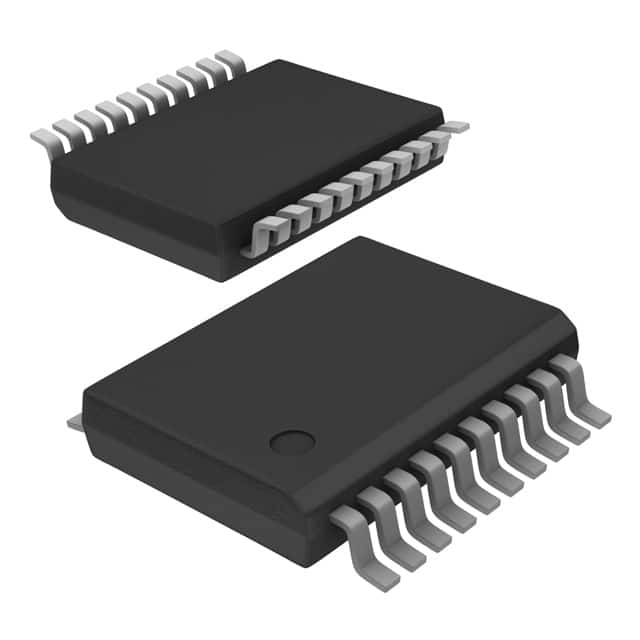
NXP Semiconductors 74HC640DB,118
- Part No.:
- 74HC640DB,118
- Manufacturer:
- NXP Semiconductors
- Package:
- 20-SSOP (0.209", 5.30mm Width)
- Datasheet:
-
 74HC640DB,118.pdf
- Description:
- IC TRANSCEIVER INVERT 6V 20SSOP
- Quantity:
- Payment:

- Shipping:

Inventory:3,139
Please send an inquiry. Send us your inquiry, and we will respond immediately.
Product details
Overview
74HC640DB,118 from Nexperia (formerly Philips Semiconductors) is an octal inverting bus transceiver with 3-state outputs, designed for bidirectional data flow control between two 8-bit buses. It features direction control (DIR), active-low output enable (OE), propagation delay of 9 ns at VCC = 5 V, 3.5 pF input capacitance, and operates across −40 °C to +125 °C - used in industrial backplane interface and legacy TTL-compatible system upgrades.
For engineers reviewing the 74HC640DB,118 datasheet, 74HC640DB,118 pinout, 74HC640DB,118 application, or 74HC640DB,118 equivalent, key selection criteria include verified 3-state timing (tPZH/tPHZ ≤ 45 ns), inverting logic behavior, SO20 package compatibility, and direct LSTTL-level interoperability without level-shifting.
Technical Context
The 74HC640DB,118 implements dual-directional inverting data transfer using complementary CMOS logic, where DIR selects signal path (A→B or B→A) and OE places all outputs in high-impedance state. Its architecture supports cascading via shared OE/DIR lines and isolates buses during idle cycles.
It complies with JEDEC standard No. 7A and matches LSTTL pinout and voltage thresholds (HCT variant supports TTL-compatible inputs). Propagation delays are symmetric for both directions (An↔Bn), and output transition times remain under 18 ns at 5 V, enabling reliable operation in synchronous bus arbitration systems.
Key Specifications
| Parameter | Value and Actual Design Meaning |
|---|---|
| Logic Family | 74HC high-speed CMOS - ensures low static power and TTL-compatible drive strength |
| Propagation Delay (tPLH/tPHL) | 9 ns typical at VCC = 5 V, CL = 15 pF - enables ≤35 MHz bus clocking in point-to-point links |
| 3-State Enable/Disable Time | 18–45 ns max over temperature - guarantees clean bus release before next cycle's data setup |
| Input Capacitance (CI) | 3.5 pF - minimizes loading on upstream drivers and preserves signal integrity in daisy-chained topologies |
| Supply Voltage Range | 2.0 V to 6.0 V - supports mixed-voltage system integration including 3.3 V and 5 V domains |
| Operating Temperature | −40 °C to +125 °C - qualified for under-hood automotive and industrial control environments |
| Output Drive Capability | Bus driver (±6 mA at VCC = 4.5 V) - directly interfaces with multiple LSTTL loads without buffers |
Pinout & Package
74HC640DB,118 is housed in a 20-pin small-outline (SO) package (SO20), 7.5 mm body width, 1.27 mm pitch, with gull-wing leads and moisture sensitivity level MSL3. Pin 1 is marked by a bevelled corner or notch.
| Pin/Terminal | Circuit Role | Design Meaning |
|---|---|---|
| 1 | DIR | Direction control input: LOW enables A→B transfer; HIGH enables B→A transfer |
| 2–9 | A0–A7 | Bidirectional I/O port A - connects to source bus; inverted data appears at B when DIR = LOW |
| 10 | GND | Ground reference for all internal logic and output stages |
| 11–18 | B0–B7 | Bidirectional I/O port B - connects to destination bus; inverted data appears at A when DIR = HIGH |
| 19 | OE | Active-low output enable: HIGH forces all A/B pins into high-impedance state for bus isolation |
| 20 | VCC | Positive supply input: powers internal logic and output drivers; decoupling required near pin |
Key Features
| Feature | Design Value |
|---|---|
| Inverting bidirectional data path | Ensures polarity consistency across bus segments without external inverters - reduces component count in memory-mapped I/O designs |
| Pin compatibility with 74LS640 and 74ALS640 | Enables drop-in replacement in legacy TTL-based systems without PCB redesign or firmware changes |
| Independent DIR and OE controls | Allows simultaneous bus isolation (via OE) and direction reversal (via DIR) - critical for dynamic DMA channel switching |
| Low dynamic power dissipation (CPD = 35 pF) | Reduces thermal load in dense logic arrays; enables >100 transceivers per 1 W power budget at 1 MHz toggle rate |
| JEDEC 7A compliance | Guarantees interoperability with industry-standard test equipment, socket adapters, and automated handling systems |
Applications
| Industrial Backplane Interface | Legacy System Bus Extension |
|---|---|
Use Scenario: Connecting microcontroller peripherals to a multi-slot ISA-style backplane with shared address/data lines. IC Role / Device Role / Timing Role: Bidirectional inverting transceiver managing data flow between CPU and expansion cards while maintaining signal polarity alignment. Use Value: Eliminates need for discrete inverters and enables hot-swap-safe bus isolation via OE control during card insertion/removal. | Use Scenario: Upgrading aging minicomputer I/O subsystems using 74LS640-based designs without replacing PCBs. IC Role / Device Role / Timing Role: Direct pin-compatible CMOS replacement delivering lower power and higher noise immunity than original TTL parts. Use Value: Extends system lifetime by replacing obsolete 74LS640 with 74HC640DB,118 while preserving timing margins and layout integrity. |
| Automotive ECU Data Multiplexing | Test Equipment Signal Routing |
Use Scenario: Isolating CAN controller and ADC interface buses inside engine control units operating at 125 °C ambient. IC Role / Device Role / Timing Role: High-temp-rated bus transceiver enabling time-multiplexed access to shared sensor registers and flash programming ports. Use Value: Maintains functional safety through guaranteed 3-state disable timing (≤45 ns) during fault-handling transitions. | Use Scenario: Configurable signal routing matrix in automated test fixtures for mixed-logic digital boards. IC Role / Device Role / Timing Role: Reconfigurable bidirectional path selector controlled by FPGA-generated DIR/OE signals for stimulus/response sequencing. Use Value: Reduces fixture complexity by consolidating eight independent directional paths into one IC with deterministic inversion behavior. |
Equivalent & Alternatives
The following parts are listed as comparable options for similar octal inverting bus transceiver applications.
| Alternative Part | Technical Difference | Application Difference | Selection Advice |
|---|---|---|---|
| 74HCT640DB,118 | TTL-compatible input thresholds (VIH = 2.0 V min); identical AC specs and pinout | Required when interfacing with 5 V TTL or LSTTL drivers without level shifters | Select when upstream logic is strictly TTL-family; otherwise 74HC640DB,118 offers wider VCC range |
| SN74LVTH16245DGGR | 16-bit non-inverting, 3.3 V only, LVCMOS-compatible; different pin count (48-pin TSSOP) | Used in modern low-voltage parallel interfaces where polarity preservation is mandatory | Not pin-compatible; choose only for new 3.3 V designs requiring higher bandwidth and non-inverting behavior |
Compared with 74HCT640DB,118 and SN74LVTH16245DGGR, the 74HC640DB,118 provides optimal balance of voltage flexibility (2–6 V), proven industrial temperature support, and exact 74LS640 pinout - making it the preferred choice for retrofitting and mixed-supply embedded systems.
Availability
74HC640DB,118 is available at Aetrix Electronics and suitable for industrial backplane interface, legacy system bus extension, and automotive ECU data multiplexing requiring stable component supply and long-term lifecycle assurance.
Supply support for 74HC640DB,118 includes scheduled delivery planning, volume procurement assistance, BOM continuity management, traceable sourcing, and lifecycle availability coordination for OEM customers, industrial embedded developers, connected-device designers, and electronics production programs.
Manufacturer
Nexperia is a global semiconductor expert delivering high-performance, reliable logic, analog, and discrete components - spun off from Philips Semiconductors in 2017 with full IP and manufacturing continuity.
The 74HC640DB,118 belongs to Nexperia's 74HC logic family, engineered for robustness in industrial and automotive applications where pin compatibility, wide supply range, and extended temperature operation are essential design requirements.
FAQ
What is the maximum clock frequency supported by the 74HC640DB,118 in a bidirectional bus application?
The 74HC640DB,118 does not operate on a clock signal - it is an asynchronous transceiver. Its usable data rate depends on propagation delay (9 ns typical) and system timing margins. For reliable operation with 15 pF load, maximum toggle rate is approximately 35 MHz in point-to-point configurations. The 74HC640DB,118 must be synchronized externally via DIR and OE control signals aligned to system timing constraints.
Does the 74HC640DB,118 support 3.3 V operation, and what are the implications for input thresholds?
Yes, the 74HC640DB,118 supports 3.3 V operation within its 2.0 V–6.0 V VCC range. At 3.3 V, input thresholds are CMOS-compatible (VIH ≈ 2.1 V, VIL ≈ 1.2 V), requiring compatible 3.3 V logic drivers. Unlike the HCT variant, the 74HC640DB,118 does not guarantee TTL-level input recognition at 3.3 V - use 74HCT640DB,118 if interfacing with legacy 5 V TTL sources.
How does the inverting behavior of the 74HC640DB,118 affect system-level data integrity?
The 74HC640DB,118 inverts data on both A→B and B→A paths - meaning two passes restore original polarity. This behavior simplifies designs where bus polarity must match legacy hardware (e.g., certain memory controllers). System-level integrity is preserved because inversion is deterministic and symmetrical; no additional logic is needed to compensate, and timing remains consistent across directions.
Can the 74HC640DB,118 replace a 74LS640 in an existing PCB layout without modifications?
Yes - the 74HC640DB,118 is pin-compatible with 74LS640 and uses the same SO20 footprint. However, verify that the board's VCC rail is regulated to 4.5–5.5 V and that decoupling capacitors (≥100 nF per VCC pin) are present. The 74HC640DB,118 draws significantly less quiescent current, reducing thermal load but requiring attention to unused input termination to prevent floating nodes.
What is the recommended PCB layout practice for minimizing noise coupling on the DIR and OE control lines of the 74HC640DB,118?
Route DIR and OE as short, direct traces adjacent to GND planes; avoid crossing noisy clocks or switching power lines. Use series 33 Ω resistors near the 74HC640DB,118 inputs to dampen ringing, and tie unused inputs (if any) to VCC or GND with 10 kΩ resistors. Ensure local 100 nF ceramic decoupling between VCC and GND pins 10 and 20, placed within 3 mm of the 74HC640DB,118 body.
74HC640DB,118 Specifications
- Product attributes
- Attribute value
- Manufacturer:
- NXP Semiconductors
- Series:
- 74HC
- Package/Case:
- 20-SSOP (0.209", 5.30mm Width)
- Packaging:
- Tape & Reel (TR)
- Product Status:
- Obsolete
- Logic Type:
- Transceiver, Inverting
- Number of Elements:
- 1
- Number of Bits per Element:
- 8
- Input Type:
- -
- Output Type:
- 3-State
- Current - Output High, Low:
- 7.8mA, 7.8mA
- Voltage - Supply:
- 2V ~ 6V
- Operating Temperature:
- -40°C ~ 125°C (TA)
- Grade:
- -
- Qualification:
- -
- Mounting Type:
- Surface Mount
- Supplier Device Package:
- 20-SSOP
74HC640DB,118 FAQ
1.How can I place an order for 74HC640DB,118 through Aetrix?
Please submit a Request for Quotation (RFQ) for 74HC640DB,118 on Aetrix. Our sales agent will provide a competitive quotation and guide you through the order confirmation once you accept the terms.
2.Are the price and stock information for 74HC640DB,118 reliable?
The price and inventory of 74HC640DB,118 are updated periodically and may fluctuate due to market conditions. Stock and pricing data are typically refreshed every 24 hours. Quotation validity for 74HC640DB,118 is usually 5 days.
3.What payment methods are accepted for 74HC640DB,118?
We accept Wire Transfer, PayPal, Credit Card, Western Union, MoneyGram, and Escrow for 74HC640DB,118 transactions.
Note: Certain payment methods may incur a processing fee.
4.How is shipping managed for 74HC640DB,118?
74HC640DB,118 orders can be shipped via leading logistics carriers, including DHL, UPS, FedEx, TNT, or Registered Mail.
Once your 74HC640DB,118 order is processed, you will receive an email with the shipment details and tracking number.
Note: Tracking information may take up to 24 hours to appear. Express delivery typically takes 3–5 business days.
5.How can I obtain technical support or documentation for 74HC640DB,118?
For technical support, including 74HC640DB,118 datasheets, pinout diagrams, or application guidance, please contact our engineering support team. They can provide detailed documentation and assistance for your 74HC640DB,118 requirements.
6.How does Aetrix verify that 74HC640DB,118 is sourced from the original manufacturer or authorized distributors?
All 74HC640DB,118 products on Aetrix are procured from qualified distributors and authorized channels. Our dedicated quality assurance team conducts strict verification, including traceability checks and, if necessary, third-party testing. This ensures that 74HC640DB,118 meets industry standards.
7.What is the process for return or replacement of 74HC640DB,118?
All 74HC640DB,118 units undergo pre-shipment inspection (PSI). If there is an issue with 74HC640DB,118, returns or replacements are accepted under the following conditions:
1.Quantity discrepancies, incorrect items, or visible external defects (such as breakage or corrosion), acknowledged by Aetrix.
2.The issue is reported within 90 days of delivery.
3.The 74HC640DB,118 part is unused and in its original packaging.
Return procedure for 74HC640DB,118:
1.Submit a request within 90 days.
2.Obtain a Return Material Authorization (RMA) from Aetrix.
74HC640DB,118 Tags
-
SN74LVC1G17DBVR
Texas Instruments
-
SN74LVC1G07DCKR
Texas Instruments
-
SN74LVC1G17DCKR
Texas Instruments
-
SN74LVC1G07DBVR
Texas Instruments
-
SN74LVC1G125DCKR
Texas Instruments
-
SN74AHCT1G126DBVR
Texas Instruments
-
SN74LVC1G125DBVR
Texas Instruments
-
SN74AHCT1G125DBVR
Texas Instruments

-
SN74LVC2G17DBVR
Texas Instruments
-
SN74LVC2G07DCKR
Texas Instruments
-
SN74LVC1G34DCKR
Texas Instruments
-
SN74LVC2G17DCKR
Texas Instruments
Tech Hub

A practical engineering guide to 3.3V and 5V logic compatibility, input thresholds, resistor dividers, translator ICs, MOSFET level shifting, I2C pull-ups, timing limits and power-sequencing risks.

The 74HC595 uses push-pull logic outputs, while the TPIC6B595 uses 50 V open-drain DMOS sinks for higher-power loads. This guide compares timing, current limits, 3.3 V interfacing, load wiring, thermal…

The 74HC595 converts serial data into eight stable parallel outputs. This guide covers pin functions, shift and storage timing, OE and MR behavior, drive-current limits, cascading, voltage compatibilit…

A technical comparison of level-sensitive latches and edge-triggered flip-flops, covering timing windows, setup and hold limits, master–slave operation, time borrowing, race-through, HDL inference and…

A D latch stores one bit while Enable controls when data can pass. This reference covers gate-level operation, truth tables, transparency, setup and hold timing, LE versus OE, common ICs and practical …

An SR latch stores one bit through cross-coupled feedback. This engineering reference covers NOR and NAND implementations, truth tables, forbidden-state recovery, gated operation, switch debouncing, fa…

Latch circuits retain one bit through feedback. This technical reference covers SR and D latches, truth tables, transparency, timing limits, latch-versus-flip-flop behavior, applications and common log…

An engineering guide to LED driver operation, constant-current and constant-voltage outputs, linear and switching topologies, dimming, IC selection, calculations, replacement compatibility, and fault c…

Operational amplifier guide covering op amp basics, feedback, ideal vs real op amps, common configurations, buffer circuits, offset, bias current, gain-bandwidth, slew rate, rail-to-rail limits and sel…

Jumper cables guide covering safe connection order, red and black clamp placement, final ground connection, cable gauge, length, clamp quality, copper vs CCA cables, jump starter comparison and battery…


