
 My Inquiry
 My Account


Diodes Incorporated 74HCT138T16-13
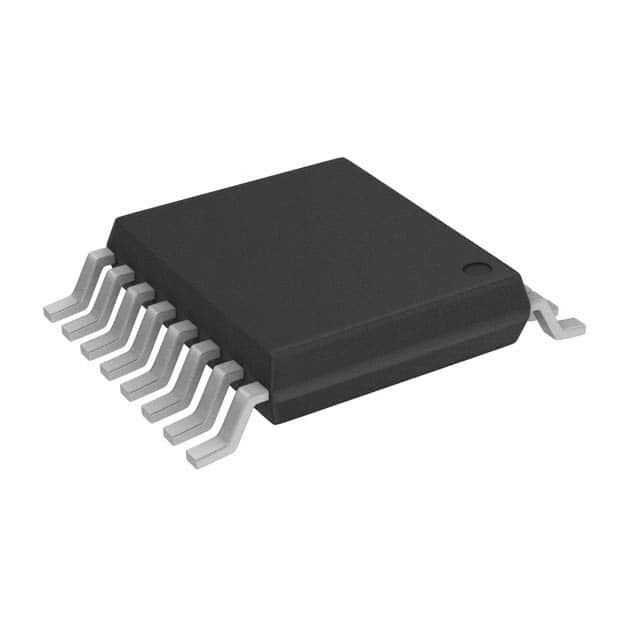
- Part No.:
- 74HCT138T16-13
- Manufacturer:
- Diodes Incorporated
- Category:
- Signal Switches, Multiplexers, Decoders
- Package:
- 16-TSSOP (0.173", 4.40mm Width)
- Datasheet:
-
 74HCT138T16-13.pdf
- Description:
- IC DECODER/DEMUX 1X3:8 16TSSOP
- Quantity:
- Payment:

- Shipping:

Inventory:2,317
Please send an inquiry. Send us your inquiry, and we will respond immediately.
Product details
Overview
74HCT138T16-13 from Diodes Incorporated is a high-speed CMOS 3-to-8 line decoder/demultiplexer with active-low outputs, three binary address inputs (A0–A2), and three enable inputs (E1, E2 low-active; E3 high-active). It operates from 4.5 V to 5.5 V, sinks 4 mA at VO = 0.26 V, and delivers propagation delays as low as 17 ns at 5.0 V. It is used in memory chip select decoding and peripheral demultiplexing in industrial microcontroller systems.
For engineers reviewing the 74HCT138T16-13 datasheet, 74HCT138T16-13 pinout, 74HCT138T16-13 application, or 74HCT138T16-13 equivalent, key selection criteria include enable logic configuration (dual low + single high), output drive capability under 4 mA load, guaranteed operation from –40°C to +125°C, and TSSOP-16 package compatibility with high-density PCB layouts.
Technical Context
The 74HCT138T16-13 implements combinational logic decoding using standard TTL-compatible input thresholds (VIH ≥ 2.0 V, VIL ≤ 0.8 V) and Schmitt-trigger action on all inputs for noise immunity. Its output stage is designed for active-low open-drain–like behavior with defined VOL (0.26 V @ 4 mA) and VOH (3.7 V @ –4 mA).
Enable architecture supports hierarchical expansion: parallel connection of multiple units enables 4-to-16 or 5-to-32 decoding without external gates-E1/E2/E3 logic allows cascading via Y outputs driving downstream E inputs while maintaining deterministic high-Z disable state (all outputs high when disabled).
Key Specifications
| Parameter | Value and Actual Design Meaning |
|---|---|
| Supply Voltage | 4.5 V to 5.5 V - ensures interoperability with legacy 5 V TTL and modern 5 V CMOS systems |
| Propagation Delay | 17 ns typical (5.0 V) - enables reliable decoding in sub-60 MHz address bus timing windows |
| Output Drive | Sinks 4 mA @ VOL = 0.26 V - directly drives LED indicators or TTL inputs without external pull-ups |
| Input Thresholds | VIH = 2.0 V min, VIL = 0.8 V max - guarantees robust logic-level recognition across voltage and temperature |
| Operating Temperature | –40°C to +125°C - supports extended industrial and automotive under-hood applications |
| ESD Protection | HBM > 2 kV, CDM > 1 kV - meets IEC 61000-4-2 Level 3 for board-level reliability |
Pinout & Package
TSSOP-16 package: 4.9 mm × 6.4 mm body, 0.65 mm pitch, 1.08 mm max height, lead-free and RoHS-compliant.
| Pin/Terminal | Circuit Role | Design Meaning |
|---|---|---|
| 1 (A0) | Binary Address Input 0 | LSB of 3-bit address; sampled synchronously with enable assertion |
| 4 (E1), 5 (E2) | Active-Low Enable Inputs | Both must be low for decode activation; enables daisy-chaining with upstream decoders |
| 6 (E3) | Active-High Enable Input | Must be high to activate; provides polarity flexibility in multi-stage enable trees |
| 7–15 (Y7–Y0) | Active-Low Decoder Outputs | Exactly one output goes low per valid address/enable combination; all high when disabled |
| 8 (GND), 16 (VCC) | Power Terminals | Decoupling required within 5 mm of pins due to 17 ns switching transients |
Key Features
| Feature | Design Value |
|---|---|
| Schmitt-trigger inputs | Eliminates false triggering from slow-rising or noisy address/enable signals in industrial environments |
| 6.0 V tolerant inputs | Allows direct interfacing with 5 V logic even when VCC = 4.5 V, simplifying mixed-voltage board design |
| Low ICC standby current | 8 μA typical at 5.5 V - reduces system power budget in always-on control modules |
| Latch-up immunity | Exceeds 250 mA per JESD78 Class II - prevents destructive failure during transient overvoltage events |
Applications
| Memory Chip Select Decoding | Microcontroller Peripheral Demux |
|---|---|
Use Scenario: Selecting one of eight SRAM or Flash ICs on a shared data/address bus in an industrial PLC controller. IC Role / Device Role / Timing Role: Address decoder mapping A0–A2 to individual /CS lines; activated only when /CE and /OE are asserted. Use Value: Reduces GPIO count by 7 pins versus discrete transistor arrays; eliminates timing skew between chip selects. | Use Scenario: Expanding a 3-pin GPIO port to control eight independent peripherals (e.g., sensors, actuators, displays) via serial bitstream. IC Role / Device Role / Timing Role: Demultiplexer converting 3-bit parallel output from MCU into eight dedicated enable lines. Use Value: Enables single-wire firmware updates to peripherals without adding shift registers or I²C expanders. |
| Bus Isolation Control | Legacy System Interface Adapter |
Use Scenario: Enabling/disabling signal paths between two isolated CAN or RS-485 transceivers based on master arbitration status. IC Role / Device Role / Timing Role: Logic-controlled bus gate; E1/E2 tied to arbitration flags, E3 to system clock domain sync signal. Use Value: Prevents bus contention during hot-swap transitions; meets ISO 11898-2 timing requirements for <100 ns enable latency. | Use Scenario: Adapting a vintage 74LS138-based schematic to modern HCMOS supply and noise margins in retro-computing restoration. IC Role / Device Role / Timing Role: Pin-compatible drop-in replacement with identical pinout and truth table but improved VIH/VIL and ESD robustness. Use Value: Eliminates need for level-shifting resistors or external clamps while preserving original board layout. |
Equivalent & Alternatives
The following parts are listed as comparable options for similar 3-to-8 decoder applications.
| Alternative Part | Technical Difference | Application Difference | Selection Advice |
|---|---|---|---|
| SN74HCT138DR | SOIC-16 package; 20% higher ICC (160 μA max); identical logic and timing specs | Less suitable for space-constrained layouts; requires larger pad footprint | Select when board rework favors through-hole or SOIC assembly infrastructure |
| 74VHC138MTCX | Wider VCC range (2.0–5.5 V); lower drive (±8 mA); 23 ns typical tPD at 5 V | Enables dual-supply systems (e.g., 3.3 V MCU + 5 V peripherals) but lacks 125°C rating | Select when mixed-voltage operation is required and ambient temperature stays below 85°C |
Compared with SN74HCT138DR and 74VHC138MTCX, the 74HCT138T16-13 offers optimal trade-off of compact TSSOP-16 footprint, full industrial temperature support, and proven 5 V system interoperability-making it preferred for new designs targeting high-reliability embedded control.
Availability
74HCT138T16-13 is available at Aetrix Electronics and suitable for memory decoding, peripheral demultiplexing, bus isolation control, and legacy interface adaptation requiring stable component supply across industrial temperature ranges and long production lifecycles.
Supply support for 74HCT138T16-13 includes scheduled delivery planning, volume procurement assistance, BOM continuity management, traceable sourcing, and lifecycle availability coordination for OEM customers, industrial embedded developers, connected-device designers, and electronics production programs.
Manufacturer
Diodes Incorporated is a global manufacturer of discrete semiconductors and analog ICs, specializing in high-reliability components for industrial, computing, and consumer applications.
The 74HCT logic family targets pin-compatible upgrades of legacy TTL systems, delivering CMOS power efficiency with guaranteed 5 V TTL signal compatibility and enhanced ESD/latch-up robustness.
FAQ
What is the maximum clock frequency supported for address changes?
The 74HCT138T16-13 is a purely combinational device with no internal clock; its usable frequency depends on propagation delay and system setup/hold timing. With 17 ns typical tPD at 5.0 V, it reliably supports address bus toggling up to ~30 MHz in synchronous systems where enable signals are stable before address transitions.
Can E1, E2, and E3 be driven directly from a 3.3 V microcontroller?
Yes-inputs tolerate up to 6.0 V and recognize VIH ≥ 2.0 V. A 3.3 V logic high exceeds the 2.0 V minimum VIH threshold across all temperature ranges, making direct connection safe without level shifting, provided VCC remains at 4.5–5.5 V.
What happens to outputs during power-up or brown-out conditions?
During VCC ramp-up, outputs remain in high-impedance until VCC exceeds ~1.5 V, then default to high state once internal biasing stabilizes (~100 μs after VCC > 2.0 V). All outputs stay high if any enable input is inactive, preventing spurious peripheral activation during power sequencing.
Is thermal derating required above 85°C ambient?
Yes-the datasheet specifies absolute max junction temperature of 150°C and recommends limiting power dissipation. At 125°C ambient, total power (ICC × VCC + switching losses) must be kept below ~300 mW to maintain TJ < 150°C, requiring careful PCB copper area and airflow consideration in sealed enclosures.
74HCT138T16-13 Specifications
- Product attributes
- Attribute value
- Manufacturer:
- Diodes Incorporated
- Series:
- 74HCT
- Package/Case:
- 16-TSSOP (0.173", 4.40mm Width)
- Packaging:
- Tape & Reel (TR)
- Product Status:
- Active
- Type:
- Decoder/Demultiplexer
- Circuit:
- 1 x 3:8
- Independent Circuits:
- 1
- Current - Output High, Low:
- 4mA, 4mA
- Voltage Supply Source:
- Single Supply
- Voltage - Supply:
- 4.5V ~ 5.5V
- Operating Temperature:
- -40°C ~ 125°C
- Grade:
- -
- Qualification:
- -
- Mounting Type:
- Surface Mount
- Supplier Device Package:
- 16-TSSOP
74HCT138T16-13 FAQ
1.How can I place an order for 74HCT138T16-13 through Aetrix?
Please submit a Request for Quotation (RFQ) for 74HCT138T16-13 on Aetrix. Our sales agent will provide a competitive quotation and guide you through the order confirmation once you accept the terms.
2.Are the price and stock information for 74HCT138T16-13 reliable?
The price and inventory of 74HCT138T16-13 are updated periodically and may fluctuate due to market conditions. Stock and pricing data are typically refreshed every 24 hours. Quotation validity for 74HCT138T16-13 is usually 5 days.
3.What payment methods are accepted for 74HCT138T16-13?
We accept Wire Transfer, PayPal, Credit Card, Western Union, MoneyGram, and Escrow for 74HCT138T16-13 transactions.
Note: Certain payment methods may incur a processing fee.
4.How is shipping managed for 74HCT138T16-13?
74HCT138T16-13 orders can be shipped via leading logistics carriers, including DHL, UPS, FedEx, TNT, or Registered Mail.
Once your 74HCT138T16-13 order is processed, you will receive an email with the shipment details and tracking number.
Note: Tracking information may take up to 24 hours to appear. Express delivery typically takes 3–5 business days.
5.How can I obtain technical support or documentation for 74HCT138T16-13?
For technical support, including 74HCT138T16-13 datasheets, pinout diagrams, or application guidance, please contact our engineering support team. They can provide detailed documentation and assistance for your 74HCT138T16-13 requirements.
6.How does Aetrix verify that 74HCT138T16-13 is sourced from the original manufacturer or authorized distributors?
All 74HCT138T16-13 products on Aetrix are procured from qualified distributors and authorized channels. Our dedicated quality assurance team conducts strict verification, including traceability checks and, if necessary, third-party testing. This ensures that 74HCT138T16-13 meets industry standards.
7.What is the process for return or replacement of 74HCT138T16-13?
All 74HCT138T16-13 units undergo pre-shipment inspection (PSI). If there is an issue with 74HCT138T16-13, returns or replacements are accepted under the following conditions:
1.Quantity discrepancies, incorrect items, or visible external defects (such as breakage or corrosion), acknowledged by Aetrix.
2.The issue is reported within 90 days of delivery.
3.The 74HCT138T16-13 part is unused and in its original packaging.
Return procedure for 74HCT138T16-13:
1.Submit a request within 90 days.
2.Obtain a Return Material Authorization (RMA) from Aetrix.
74HCT138T16-13 Tags
-
SN74HC138DR
Texas Instruments
-
TC7SB3157CFU,LF(CT
Toshiba Semiconductor and Storage
-
74CBTLV3257PW,118
Nexperia USA Inc.
-
SN74CBTLV3257PWR
Texas Instruments
-
74CBTLV3257GUX
Nexperia USA Inc.
-
74HC154BQ,118
Nexperia USA Inc.

-
P3S0200GMX
NXP USA Inc.
-
SN74CB3Q3245PWR
Texas Instruments
-
SN74CB3Q3257RGYR
Texas Instruments
-
TCA9543APWR
Texas Instruments
-
TCA9546APWR
Texas Instruments
-
SN74HC138N
Texas Instruments
Tech Hub

An engineering guide to LED driver operation, constant-current and constant-voltage outputs, linear and switching topologies, dimming, IC selection, calculations, replacement compatibility, and fault c…

Operational amplifier guide covering op amp basics, feedback, ideal vs real op amps, common configurations, buffer circuits, offset, bias current, gain-bandwidth, slew rate, rail-to-rail limits and sel…

Jumper cables guide covering safe connection order, red and black clamp placement, final ground connection, cable gauge, length, clamp quality, copper vs CCA cables, jump starter comparison and battery…

LDO regulator guide covering low dropout voltage, power dissipation, thermal design, PSRR, output noise, capacitor stability, adjustable LDO circuits, LDO vs buck converter and datasheet selection chec…

Conditional Access Module guide covering CAM meaning, CI/CI+ interface, smart card authorization, DVB security workflow, TV and set-top box compatibility, internal electronics, ESD protection, connecto…

Guide to electronic component obsolescence covering EOL risk, PCN/PDN notices, last-time buy planning, replacement options, form-fit-function validation, counterfeit risk and BOM lifecycle management.

18650 battery guide covering lithium-ion cell basics, 3.6V/3.7V voltage, 4.2V charging, mAh and Wh capacity, protected cells, chargers, BMS, series-parallel packs, holders, welding and sourcing checks.…

Hall effect sensor guide covering working principle, linear and digital sensors, Arduino circuits, current sensing, speed detection, automotive applications, A3144 examples, signal filtering and datash…

Product Change Notification guide for electronic components, covering PCN meaning, PCN vs PDN/EOL, common change types, risk levels, form-fit-function review, engineering validation, BOM control, LTB/L…

A practical guide to blend door actuators, covering HVAC function, symptoms, location, AC and heater issues, reset and calibration, replacement cost, electrical diagnosis, compatibility checks, and rep…


