
 My Inquiry
 My Account


Nexperia USA Inc. 74HCT193D,652
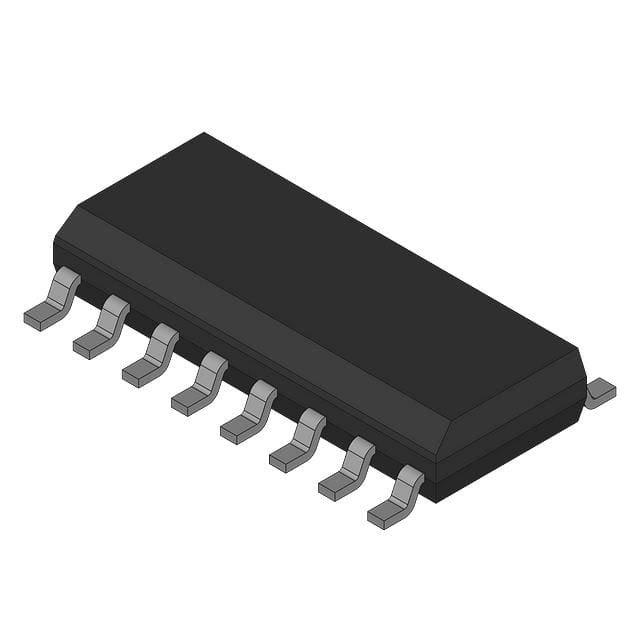
- Part No.:
- 74HCT193D,652
- Manufacturer:
- Nexperia USA Inc.
- Category:
- Counters, Dividers
- Package:
- -
- Datasheet:
-
 74HCT193D,652.pdf
- Description:
- NEXPERIA 74HCT193D - BINARY COUN
- Quantity:
- Payment:

- Shipping:

Inventory:20,933
Please send an inquiry. Send us your inquiry, and we will respond immediately.
Product details
Overview
74HCT193D,652 from Nexperia is a TTL-level-compatible, presettable synchronous 4-bit binary up/down counter in SO16 package. It features separate CPU/CPD clocks, asynchronous master reset (MR), asynchronous parallel load (PL), and active-low terminal count outputs (TCU/TCD) for multistage cascading. Operates from 4.5 V to 5.5 V across –40 °C to +125 °C, supporting industrial timing and control logic in programmable logic controllers and digital instrumentation.
For engineers reviewing the 74HCT193D,652 datasheet, 74HCT193D,652 pinout, 74HCT193D,652 application, or 74HCT193D,652 equivalent, key selection criteria include TTL input compatibility, guaranteed asynchronous load/reset timing at full temperature range, propagation delay ≤65 ns (VCC = 4.5 V), terminal count output waveform duplication, and SO16 package thermal performance under sustained counting loads.
Technical Context
This device implements four edge-triggered D-type flip-flops with synchronous up/down counting logic controlled by mutually exclusive CPU and CPD inputs. Count direction is determined solely by which clock line is pulsed while the other remains HIGH - no internal state machine governs mode switching.
Terminal count outputs TCU and TCD are fully asynchronous, driven LOW on terminal transitions (15→0 and 0→15 respectively) and duplicating the corresponding clock edge's timing characteristics. Asynchronous PL and MR override all clock activity and guarantee deterministic output states independent of clock phase or frequency.
Key Specifications
| Parameter | Value and Actual Design Meaning |
|---|---|
| Logic Family | 74HCT - TTL-compatible input thresholds (VIH ≥ 2.0 V, VIL ≤ 0.8 V at VCC = 4.5–5.5 V) |
| Supply Voltage Range | 4.5 V to 5.5 V - ensures interoperability with legacy 5 V TTL systems without level translation |
| Operating Temperature | –40 °C to +125 °C - qualified for under-hood automotive and industrial control environments |
| Max Clock Frequency | 16 MHz at –40 °C to +85 °C - supports real-time counting in high-speed digital sequencers |
| Propagation Delay (CPU→Qn) | ≤65 ns at VCC = 4.5 V, –40 °C to +125 °C - enables tight timing budgets in multistage synchronous counters |
| Output Drive Strength | ±4.0 mA at VOH/VOL - sufficient to drive 10 LSTTL loads or directly interface with 74HCT-series inputs |
| Power Dissipation Capacitance | 26 pF - used to calculate dynamic power: PD = 26 × VCC² × fIN × N (N = switching inputs) |
Pinout & Package
74HCT193D,652 uses the SOT109-1 package: plastic small outline, 16-pin, 3.9 mm body width, standard SO16 footprint compatible with IPC-7351B.
| Pin/Terminal | Circuit Role | Design Meaning |
|---|---|---|
| 1, 9, 10, 15 | D0–D3 | Asynchronous parallel data inputs - loaded into Q0–Q3 when PL = LOW, regardless of clock state |
| 2, 3, 6, 7 | Q0–Q3 | 4-bit binary counter outputs - reflect current count value with synchronous update on CPU/CPD rising edge |
| 4 | CPD | Count-down clock input - LOW-to-HIGH transition decrements counter only if CPU = HIGH |
| 5 | CPU | Count-up clock input - LOW-to-HIGH transition increments counter only if CPD = HIGH |
| 8 | GND | Ground reference - must be low-impedance return path for all internal logic and output switching currents |
| 11 | PL | Asynchronous parallel load enable - active LOW; overrides counting and forces Qn = Dn immediately |
| 12 | TCU | Terminal count up output - active LOW pulse synchronized to CPU edge when count transitions 15 → 0 |
| 13 | TCD | Terminal count down output - active LOW pulse synchronized to CPD edge when count transitions 0 → 15 |
| 14 | MR | Master reset - active HIGH; forces Q0–Q3 = 0000 and disables PL/CPU/CPD until MR returns LOW |
| 16 | VCC | Positive supply - must be decoupled locally (e.g., 100 nF ceramic) to suppress switching noise on shared rail |
Key Features
| Feature | Design Value |
|---|---|
| Synchronous reversible counting | Independent CPU/CPD inputs eliminate mode-control logic; direction set by clock routing, not state register |
| Asynchronous parallel load | Q outputs update within 69 ns (max, VCC = 4.5 V) after PL assertion - enables instant presetting without clock dependency |
| Asynchronous master reset | Q outputs settle to 0000 within 60 ns (max, VCC = 4.5 V) after MR assertion - guarantees known state on power-up or fault recovery |
| Expandable terminal count outputs | TCU/TCD replicate CPU/CPD edge timing and polarity - allows direct connection to next-stage clock without external gating or delay matching |
| Robust input protection | Clamp diodes on all inputs permit safe interfacing to voltages > VCC using series current-limiting resistors |
Applications
| Industrial Programmable Logic Controller (PLC) Timer Module | Digital Panel Meter Counter |
|---|---|
|
Use Scenario: Precise 4-digit up/down counting of encoder pulses in motor position feedback loops with manual preset via HMI. IC Role / Device Role / Timing Role: Primary counting engine with parallel load for zero-offset calibration and MR for emergency stop reset. Use Value: Asynchronous PL enables immediate re-zeroing without waiting for clock edges; TCU/TCD provide clean carry/borrow signals to higher-order BCD converters. |
Use Scenario: Bidirectional tally display for production line part counting, supporting both additive and subtractive inventory adjustments. IC Role / Device Role / Timing Role: Core counter IC driving 7-segment decoder; CPU/CPD accept pushbutton debounced inputs; MR clears batch totals. Use Value: TTL-compatible inputs eliminate external level shifters; SO16 package allows dense PCB layout in space-constrained front-panel assemblies. |
| Automotive Body Control Unit (BCU) Window Position Tracker | Test Equipment Pulse Sequence Generator |
|
Use Scenario: Monitoring window glass position via quadrature encoder, counting pulses to detect obstruction or limit switch activation. IC Role / Device Role / Timing Role: Up/down counter tracking absolute position; TCD triggers auto-reverse on bottom limit; TCU triggers stall detection at top limit. Use Value: –40 °C to +125 °C rating ensures operation in door module ambient; MR provides fail-safe reset during ECU wake-up sequences. |
Use Scenario: Generating precise multi-cycle test waveforms with variable up/down sequences and repeatable start points. IC Role / Device Role / Timing Role: Programmable sequence generator stage; PL sets initial test pattern; CPU/CPD controlled by FPGA state machine. Use Value: Propagation delay consistency (±5 ns variation over temp) ensures deterministic timing across test cycles; SO16 facilitates socketed replacement during debug. |
Equivalent & Alternatives
The following parts are listed as comparable options for similar 4-bit synchronous up/down counter applications.
| Alternative Part | Technical Difference | Application Difference | Selection Advice |
|---|---|---|---|
| 74HC193D,652 | CMOS input thresholds (VIH ≥ 3.15 V @ VCC = 4.5 V); wider 2.0–6.0 V supply range | Better suited for mixed-voltage systems (e.g., 3.3 V control + 5 V peripherals) where level translation is undesirable | Select when interfacing with CMOS or wide-VCC microcontrollers; avoid in pure 5 V TTL-only systems due to marginal VIH margin |
| SN74LS193N | Bipolar TTL technology; higher ICC (40 mA typical), slower (tPD ≈ 25 ns min), narrower temp range (0–70 °C) | Limited to commercial-grade applications; incompatible with modern low-power designs or extended temperature requirements | Only consider for legacy board repairs or cost-sensitive non-automotive applications where power and temp specs are secondary |
Compared with 74HC193D,652 and SN74LS193N, the 74HCT193D,652 uniquely balances TTL input compatibility, industrial temperature support, and low dynamic power - making it optimal for new designs requiring robust 5 V logic integration without redesigning signal conditioning.
Availability
74HCT193D,652 is available at Aetrix Electronics and suitable for industrial automation, automotive body electronics, and test equipment requiring stable component supply with guaranteed long-term availability and traceable lot documentation.
Supply support for 74HCT193D,652 includes scheduled delivery planning, volume procurement assistance, BOM continuity management, traceable sourcing, and lifecycle availability coordination for OEM customers, industrial embedded developers, connected-device designers, and electronics production programs.
Manufacturer
Nexperia is a global semiconductor expert delivering high-performance, reliable logic, discrete, and MOSFET solutions with focus on efficiency and sustainability.
The 74HCT193 belongs to Nexperia's industry-standard 74-series logic family, engineered for drop-in compatibility with legacy TTL systems while delivering CMOS power efficiency and extended temperature resilience.
FAQ
Can 74HCT193D,652 operate reliably at 5.5 V supply?
Yes - the device is rated for VCC = 4.5 V to 5.5 V per Table 5. At 5.5 V, VOH remains ≥4.4 V (IO = –4.0 mA) and VOL stays ≤0.26 V (IO = 4.0 mA), ensuring full noise margin against 5 V TTL thresholds. Derated timing (e.g., tPD ≤73 ns max) and increased ICC (≤160 μA) apply per Table 7.
What happens if both CPU and CPD are pulsed simultaneously?
Simultaneous LOW-to-HIGH transitions on CPU and CPD violate the "only one clock HIGH" condition specified in Section 1. The behavior is undefined: outputs may glitch, lock, or produce metastable states. Design must enforce mutual exclusion via external logic or controller sequencing - no internal arbitration exists.
Is the SO16 package (SOT109-1) RoHS compliant and lead-free?
Yes - Nexperia confirms SOT109-1 packaging for 74HCT193D,652 meets RoHS Directive 2011/65/EU and JEDEC J-STD-609A Class 3 marking for lead-free terminations. The device carries the "Pb-free" marking on the package body and is compatible with standard SnAgCu reflow profiles (peak 260 °C).
How does TCU/TCD behave during asynchronous load or reset?
During PL = LOW or MR = HIGH, TCU and TCD remain HIGH (inactive) regardless of internal count state. They only assert LOW upon terminal transitions occurring *after* PL/MR deassertion and subsequent valid CPU/CPD edges - confirmed by Function Table row 3 (Parallel load) and row 1 (Reset) in Table 3.
74HCT193D,652 Specifications
- Product attributes
- Attribute value
- Manufacturer:
- Nexperia USA Inc.
- Series:
- *
- Package/Case:
- -
- Packaging:
- Bulk
- Product Status:
- Active
- Logic Type:
- -
- Direction:
- -
- Number of Elements:
- -
- Number of Bits per Element:
- -
- Reset:
- -
- Timing:
- -
- Count Rate:
- -
- Trigger Type:
- -
- Voltage - Supply:
- -
- Operating Temperature:
- -
- Grade:
- -
- Qualification:
- -
- Mounting Type:
- -
- Supplier Device Package:
- -
74HCT193D,652 FAQ
1.How can I place an order for 74HCT193D,652 through Aetrix?
Please submit a Request for Quotation (RFQ) for 74HCT193D,652 on Aetrix. Our sales agent will provide a competitive quotation and guide you through the order confirmation once you accept the terms.
2.Are the price and stock information for 74HCT193D,652 reliable?
The price and inventory of 74HCT193D,652 are updated periodically and may fluctuate due to market conditions. Stock and pricing data are typically refreshed every 24 hours. Quotation validity for 74HCT193D,652 is usually 5 days.
3.What payment methods are accepted for 74HCT193D,652?
We accept Wire Transfer, PayPal, Credit Card, Western Union, MoneyGram, and Escrow for 74HCT193D,652 transactions.
Note: Certain payment methods may incur a processing fee.
4.How is shipping managed for 74HCT193D,652?
74HCT193D,652 orders can be shipped via leading logistics carriers, including DHL, UPS, FedEx, TNT, or Registered Mail.
Once your 74HCT193D,652 order is processed, you will receive an email with the shipment details and tracking number.
Note: Tracking information may take up to 24 hours to appear. Express delivery typically takes 3–5 business days.
5.How can I obtain technical support or documentation for 74HCT193D,652?
For technical support, including 74HCT193D,652 datasheets, pinout diagrams, or application guidance, please contact our engineering support team. They can provide detailed documentation and assistance for your 74HCT193D,652 requirements.
6.How does Aetrix verify that 74HCT193D,652 is sourced from the original manufacturer or authorized distributors?
All 74HCT193D,652 products on Aetrix are procured from qualified distributors and authorized channels. Our dedicated quality assurance team conducts strict verification, including traceability checks and, if necessary, third-party testing. This ensures that 74HCT193D,652 meets industry standards.
7.What is the process for return or replacement of 74HCT193D,652?
All 74HCT193D,652 units undergo pre-shipment inspection (PSI). If there is an issue with 74HCT193D,652, returns or replacements are accepted under the following conditions:
1.Quantity discrepancies, incorrect items, or visible external defects (such as breakage or corrosion), acknowledged by Aetrix.
2.The issue is reported within 90 days of delivery.
3.The 74HCT193D,652 part is unused and in its original packaging.
Return procedure for 74HCT193D,652:
1.Submit a request within 90 days.
2.Obtain a Return Material Authorization (RMA) from Aetrix.
74HCT193D,652 Tags
-
74HC393BQ,115
Nexperia USA Inc.
-
SN74LV8154PWR
Texas Instruments
-
MC14516BDR2G
onsemi
-
MC14020BDR2G
onsemi
-
MC100EP32DTR2G
onsemi
-
MC100EP016AMNG
onsemi
-
MC100EP016AFAG
onsemi
-
SN74LV163ADR
Texas Instruments
-
SN74LV163APWR
Texas Instruments
-
SN74HC393DR
Texas Instruments
-
SN74HC161DR
Texas Instruments
-
SN74HC163DR
Texas Instruments
Tech Hub

Jumper cables guide covering safe connection order, red and black clamp placement, final ground connection, cable gauge, length, clamp quality, copper vs CCA cables, jump starter comparison and battery…

LDO regulator guide covering low dropout voltage, power dissipation, thermal design, PSRR, output noise, capacitor stability, adjustable LDO circuits, LDO vs buck converter and datasheet selection chec…

Conditional Access Module guide covering CAM meaning, CI/CI+ interface, smart card authorization, DVB security workflow, TV and set-top box compatibility, internal electronics, ESD protection, connecto…

Guide to electronic component obsolescence covering EOL risk, PCN/PDN notices, last-time buy planning, replacement options, form-fit-function validation, counterfeit risk and BOM lifecycle management.

18650 battery guide covering lithium-ion cell basics, 3.6V/3.7V voltage, 4.2V charging, mAh and Wh capacity, protected cells, chargers, BMS, series-parallel packs, holders, welding and sourcing checks.…

Hall effect sensor guide covering working principle, linear and digital sensors, Arduino circuits, current sensing, speed detection, automotive applications, A3144 examples, signal filtering and datash…

Product Change Notification guide for electronic components, covering PCN meaning, PCN vs PDN/EOL, common change types, risk levels, form-fit-function review, engineering validation, BOM control, LTB/L…

A practical guide to blend door actuators, covering HVAC function, symptoms, location, AC and heater issues, reset and calibration, replacement cost, electrical diagnosis, compatibility checks, and rep…

Engineering guide to Raspberry Pi alternatives, covering chip-level differences, Orange Pi, ROCK, Jetson, Banana Pi, NanoPi, Compute Module, Pico, GPIO, camera, HAT compatibility, and replacement risks…
Engineering guide to dynamic load response testing for high-current buck converters, covering load step setup, slew rate, Vcore undershoot, overshoot, recovery time, probe location, output capacitors a…


