
 My Inquiry
 My Account


Nexperia USA Inc. 74HCT238D,652
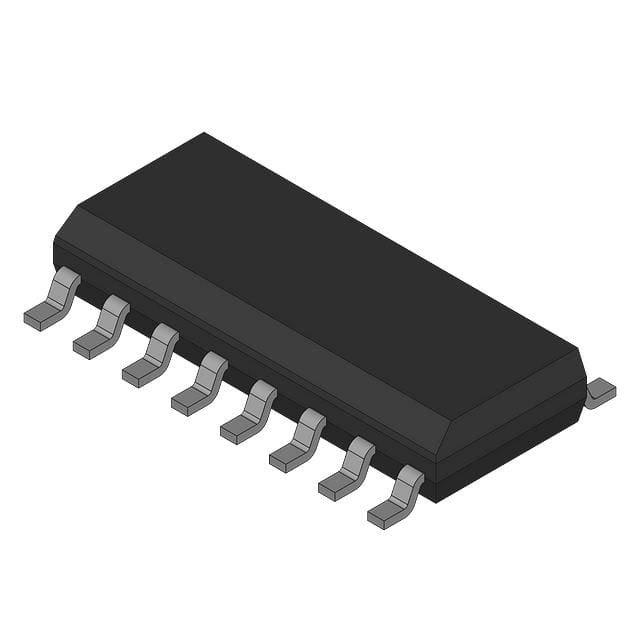
- Part No.:
- 74HCT238D,652
- Manufacturer:
- Nexperia USA Inc.
- Category:
- Signal Switches, Multiplexers, Decoders
- Package:
- 16-SOIC (0.154", 3.90mm Width)
- Datasheet:
-
 74HCT238D,652.pdf
- Description:
- IC DECODER/DEMUX 1 X 3:8 16SO
- Quantity:
- Payment:

- Shipping:

Inventory:1,968
Please send an inquiry. Send us your inquiry, and we will respond immediately.
Product details
Overview
74HCT238D,652 from Nexperia is a 3-to-8 line decoder/demultiplexer in SO16 package, featuring three binary address inputs (A0–A2), eight active-HIGH mutually exclusive outputs (Y0–Y7), and three enable inputs (E1, E2 active LOW; E3 active HIGH) for parallel expansion to 1-of-32 decoding. It operates from 4.5 V to 5.5 V, supports TTL-level inputs, and is rated for -40 °C to +125 °C - used in memory chip select decoding and address routing in industrial microcontroller systems.
For engineers reviewing the 74HCT238D,652 datasheet, 74HCT238D,652 pinout, 74HCT238D,652 application, or 74HCT238D,652 equivalent, key selection criteria include TTL-compatible input thresholds (VIH = 2.0 V min, VIL = 0.8 V max at VCC = 5 V), propagation delay of 19–53 ns across temperature, SO16 pin mapping with GND on pin 8 and VCC on pin 16, and functional equivalence to 74HCT138 with expanded enable logic.
Technical Context
The 74HCT238D implements combinational logic decoding with strict mutual exclusivity: only one output goes HIGH when all enables are satisfied (E1 = LOW, E2 = LOW, E3 = HIGH) and a unique 3-bit address is applied. Its enable architecture allows cascading via inverted E3 to build larger decoders without external logic.
Input clamping diodes permit interfacing with voltages exceeding VCC when current-limiting resistors are used. Static characteristics confirm TTL-compatible VIH/VIL thresholds and rail-to-rail VOH/VOL performance under ±4 mA loads at 5 V, ensuring robust noise immunity and compatibility with legacy 5 V logic families.
Key Specifications
| Parameter | Value and Actual Design Meaning |
|---|---|
| Supply Voltage | 4.5 V to 5.5 V - ensures compatibility with standard 5 V TTL and mixed-voltage systems without level shifting. |
| Propagation Delay (tpd) | 19 ns (typ) to 53 ns (max) - defines maximum clock-to-output timing for synchronous address decoding in MCU peripheral selection. |
| Input Thresholds | VIH = 2.0 V min, VIL = 0.8 V max - guarantees reliable recognition of standard TTL logic levels across full temperature range. |
| Output Drive | ±4.0 mA - sufficient to directly drive multiple 74-series inputs or small LED indicators without buffering. |
| Operating Temperature | -40 °C to +125 °C - qualified for under-hood automotive modules and industrial control environments requiring extended thermal stability. |
| Power Dissipation | 160 μA ICC (max at 125 °C) - enables low-static-power operation in always-on embedded subsystems. |
| ESD Protection | HBM > 2000 V, CDM > 1000 V - reduces risk of handling damage during PCB assembly and field service. |
Pinout & Package
74HCT238D,652 uses the SO16 (SOT109-1) plastic small outline package: 16-pin, 3.9 mm body width, 1.27 mm lead pitch, gull-wing leads, JEDEC MS-012 compliant.
| Pin/Terminal | Circuit Role | Design Meaning |
|---|---|---|
| 1, 2, 3 | A0, A1, A2 | Binary address inputs - determine which of eight outputs activates when enables are asserted. |
| 4, 5 | E1, E2 | Active-LOW enable inputs - both must be LOW for decoding to occur; used for hierarchical chip select partitioning. |
| 6 | E3 | Active-HIGH enable input - complements E1/E2 to form three-input AND gate enabling logic; enables demux mode when used as data input. |
| 7, 9–15 | Y7, Y6, Y5, Y4, Y3, Y2, Y1, Y0 | Active-HIGH decoded outputs - only one asserts HIGH per valid address/enable combination; mutually exclusive behavior prevents bus contention. |
| 8 | GND | Ground reference - common return path for all internal logic and output currents; must be low-impedance for noise immunity. |
| 16 | VCC | Positive supply - powers CMOS circuitry; requires local 100 nF ceramic decoupling adjacent to pin. |
Key Features
| Feature | Design Value |
|---|---|
| Multiple enable architecture | Three independent enables (E1/E2 LOW + E3 HIGH) allow modular system-level decoding and seamless 1-of-32 expansion with one inverter. |
| TTL-compatible input levels | VIH ≥ 2.0 V and VIL ≤ 0.8 V at 5 V supply - eliminates need for level translators when interfacing with legacy 5 V microcontrollers or FPGAs. |
| Demultiplexing capability | One enable input (e.g., E1) accepts serial data while A0–A2 select output channel - enables single-line-to-8-channel signal distribution. |
| Clamp diode protection | Internal input diodes allow safe interface to signals up to VCC + 0.5 V using series resistors - simplifies mixed-voltage board design. |
| Industrial temperature grade | Specified from -40 °C to +125 °C - supports deployment in motor drives, PLC I/O modules, and power supply supervision circuits. |
Applications
| Memory Chip Select Decoding | Microcontroller Peripheral Selection |
|---|---|
|
Use Scenario: Selecting one of eight SRAM or EEPROM chips in a multi-bank memory subsystem. IC Role / Device Role / Timing Role: Address decoder that translates upper address bits into individual chip-enable signals synchronized with CPU read/write strobes. Use Value: Eliminates discrete logic gates and reduces PCB footprint versus NAND-based decoding; enables deterministic access timing with <53 ns worst-case propagation. |
Use Scenario: Routing UART, SPI, or GPIO peripherals to dedicated interrupt lines in an ARM Cortex-M4-based industrial controller. IC Role / Device Role / Timing Role: Peripheral address decoder asserting unique enable signals based on AXI/APB address decode window. Use Value: Provides glitch-free, mutually exclusive enables with TTL-level compatibility - avoids metastability in interrupt arbitration logic. |
| LED Segment Driver Enable | Test Equipment Signal Routing |
|
Use Scenario: Driving eight 7-segment LED displays in a bench multimeter front panel using multiplexed digit scanning. IC Role / Device Role / Timing Role: Digit-select demultiplexer where E3 carries the scan clock and A0–A2 sequence through display positions. Use Value: Delivers clean, rail-to-rail output drive (±4 mA) capable of sinking LED current directly - removes need for external transistor arrays. |
Use Scenario: Configuring signal paths between DUT ports and measurement instruments in automated test fixtures. IC Role / Device Role / Timing Role: Low-latency signal router selecting one of eight analog or digital test channels under microcontroller control. Use Value: Sub-20 ns typical propagation delay ensures precise timing alignment in high-speed parametric testing; SO16 package supports reflow-compatible layout. |
Equivalent & Alternatives
The following parts are listed as comparable options for similar 3-to-8 decoder applications.
| Alternative Part | Technical Difference | Application Difference | Selection Advice |
|---|---|---|---|
| 74HCT138D,653 | Two active-LOW enables (E1, E2) and one active-HIGH enable (E3); identical pinout and timing but lacks E2 input inversion logic of '238. | Requires external inverter for 1-of-32 expansion; less flexible enable hierarchy than '238. | Prefer when existing designs already use '138 footprint and only basic decoding is needed. |
| SN74HCT238N | DIP-16 package; same electrical specs but through-hole mounting and wider body (6.35 mm). | Suitable for prototyping and low-volume manual assembly; not compatible with SO16 reflow processes. | Select only for breadboard evaluation or legacy through-hole production lines. |
Compared with 74HCT138D,653, the 74HCT238D,652 offers superior expandability via its native three-enable structure, while SN74HCT238N trades surface-mount reliability for hand-soldering convenience - making the SO16 variant optimal for high-density, automated industrial PCBs.
Availability
74HCT238D,652 is available at Aetrix Electronics and suitable for memory decoding, microcontroller peripheral selection, LED multiplexing, and automated test equipment requiring stable component supply across extended temperature ranges.
Supply support for 74HCT238D,652 includes scheduled delivery planning, volume procurement assistance, BOM continuity management, traceable sourcing, and lifecycle availability coordination for OEM customers, industrial embedded developers, connected-device designers, and electronics production programs.
Manufacturer
Nexperia is a global semiconductor expert delivering high-performance, reliable logic, analog, and MOSFET solutions with focus on efficiency, miniaturization, and robustness for industrial and automotive markets.
The 74HCT238 belongs to Nexperia's high-speed TTL-compatible logic family, designed specifically for noise-immune address decoding and signal routing in resource-constrained embedded systems operating across harsh thermal environments.
FAQ
What is the function of the E1, E2, and E3 enable inputs on the 74HCT238D,652?
E1 and E2 are active-LOW enables; E3 is active-HIGH. All three must be simultaneously asserted (E1 = LOW, E2 = LOW, E3 = HIGH) for the decoder to respond to address inputs A0–A2. This triple-enable structure allows hierarchical system partitioning and direct 1-of-32 expansion using four '238 ICs and one inverter - no additional logic required.
Can the 74HCT238D,652 be used as a demultiplexer, and how?
Yes - configure one enable input (e.g., E1) as the data input (LOW = data '0', HIGH = data '1') and use A0–A2 as the 3-bit channel select. With E2 held LOW and E3 held HIGH, the data appears inverted on the selected Yx output. This provides true 1-to-8 demux functionality with sub-53 ns switching and TTL-compatible control timing.
How does the 74HCT238D,652 differ from the 74HCT138 in practical design?
The 74HCT238D,652 replaces the 74HCT138's single active-LOW strobe (G1) and dual active-LOW enables (G2A/G2B) with three independent enables (E1/E2 LOW, E3 HIGH), enabling more flexible cascading without external inverters. Its pinout differs: Y0–Y7 occupy pins 15–7 (vs. 1–7, 15 on '138), and E3 is on pin 6 instead of G1 on pin 1 - requiring PCB layout revision.
Is the 74HCT238D,652 suitable for automotive applications?
No - although rated for -40 °C to +125 °C, this device is not AEC-Q100 qualified and lacks automotive-specific validation (e.g., HTOL, ESD stress beyond HBM 2 kV). Nexperia explicitly states non-automotive qualification in its legal disclaimers; use only in industrial, commercial, or consumer systems where automotive-grade reliability is not mandated.
74HCT238D,652 Specifications
- Product attributes
- Attribute value
- Manufacturer:
- Nexperia USA Inc.
- Series:
- 74HCT
- Package/Case:
- 16-SOIC (0.154", 3.90mm Width)
- Packaging:
- Tube
- Product Status:
- Obsolete
- Type:
- Decoder/Demultiplexer
- Circuit:
- 1 x 3:8
- Independent Circuits:
- 1
- Current - Output High, Low:
- 4mA, 4mA
- Voltage Supply Source:
- Single Supply
- Voltage - Supply:
- 4.5V ~ 5.5V
- Operating Temperature:
- -40°C ~ 125°C
- Grade:
- -
- Qualification:
- -
- Mounting Type:
- Surface Mount
- Supplier Device Package:
- 16-SO
74HCT238D,652 FAQ
1.How can I place an order for 74HCT238D,652 through Aetrix?
Please submit a Request for Quotation (RFQ) for 74HCT238D,652 on Aetrix. Our sales agent will provide a competitive quotation and guide you through the order confirmation once you accept the terms.
2.Are the price and stock information for 74HCT238D,652 reliable?
The price and inventory of 74HCT238D,652 are updated periodically and may fluctuate due to market conditions. Stock and pricing data are typically refreshed every 24 hours. Quotation validity for 74HCT238D,652 is usually 5 days.
3.What payment methods are accepted for 74HCT238D,652?
We accept Wire Transfer, PayPal, Credit Card, Western Union, MoneyGram, and Escrow for 74HCT238D,652 transactions.
Note: Certain payment methods may incur a processing fee.
4.How is shipping managed for 74HCT238D,652?
74HCT238D,652 orders can be shipped via leading logistics carriers, including DHL, UPS, FedEx, TNT, or Registered Mail.
Once your 74HCT238D,652 order is processed, you will receive an email with the shipment details and tracking number.
Note: Tracking information may take up to 24 hours to appear. Express delivery typically takes 3–5 business days.
5.How can I obtain technical support or documentation for 74HCT238D,652?
For technical support, including 74HCT238D,652 datasheets, pinout diagrams, or application guidance, please contact our engineering support team. They can provide detailed documentation and assistance for your 74HCT238D,652 requirements.
6.How does Aetrix verify that 74HCT238D,652 is sourced from the original manufacturer or authorized distributors?
All 74HCT238D,652 products on Aetrix are procured from qualified distributors and authorized channels. Our dedicated quality assurance team conducts strict verification, including traceability checks and, if necessary, third-party testing. This ensures that 74HCT238D,652 meets industry standards.
7.What is the process for return or replacement of 74HCT238D,652?
All 74HCT238D,652 units undergo pre-shipment inspection (PSI). If there is an issue with 74HCT238D,652, returns or replacements are accepted under the following conditions:
1.Quantity discrepancies, incorrect items, or visible external defects (such as breakage or corrosion), acknowledged by Aetrix.
2.The issue is reported within 90 days of delivery.
3.The 74HCT238D,652 part is unused and in its original packaging.
Return procedure for 74HCT238D,652:
1.Submit a request within 90 days.
2.Obtain a Return Material Authorization (RMA) from Aetrix.
74HCT238D,652 Tags
-
SN74HC138DR
Texas Instruments
-
TC7SB3157CFU,LF(CT
Toshiba Semiconductor and Storage
-
74CBTLV3257PW,118
Nexperia USA Inc.
-
SN74CBTLV3257PWR
Texas Instruments
-
74CBTLV3257GUX
Nexperia USA Inc.
-
74HC154BQ,118
Nexperia USA Inc.

-
P3S0200GMX
NXP USA Inc.
-
SN74CB3Q3245PWR
Texas Instruments
-
SN74CB3Q3257RGYR
Texas Instruments
-
TCA9543APWR
Texas Instruments
-
TCA9546APWR
Texas Instruments
-
SN74HC138N
Texas Instruments
Tech Hub

An engineering guide to LED driver operation, constant-current and constant-voltage outputs, linear and switching topologies, dimming, IC selection, calculations, replacement compatibility, and fault c…

Operational amplifier guide covering op amp basics, feedback, ideal vs real op amps, common configurations, buffer circuits, offset, bias current, gain-bandwidth, slew rate, rail-to-rail limits and sel…

Jumper cables guide covering safe connection order, red and black clamp placement, final ground connection, cable gauge, length, clamp quality, copper vs CCA cables, jump starter comparison and battery…

LDO regulator guide covering low dropout voltage, power dissipation, thermal design, PSRR, output noise, capacitor stability, adjustable LDO circuits, LDO vs buck converter and datasheet selection chec…

Conditional Access Module guide covering CAM meaning, CI/CI+ interface, smart card authorization, DVB security workflow, TV and set-top box compatibility, internal electronics, ESD protection, connecto…

Guide to electronic component obsolescence covering EOL risk, PCN/PDN notices, last-time buy planning, replacement options, form-fit-function validation, counterfeit risk and BOM lifecycle management.

18650 battery guide covering lithium-ion cell basics, 3.6V/3.7V voltage, 4.2V charging, mAh and Wh capacity, protected cells, chargers, BMS, series-parallel packs, holders, welding and sourcing checks.…

Hall effect sensor guide covering working principle, linear and digital sensors, Arduino circuits, current sensing, speed detection, automotive applications, A3144 examples, signal filtering and datash…

Product Change Notification guide for electronic components, covering PCN meaning, PCN vs PDN/EOL, common change types, risk levels, form-fit-function review, engineering validation, BOM control, LTB/L…

A practical guide to blend door actuators, covering HVAC function, symptoms, location, AC and heater issues, reset and calibration, replacement cost, electrical diagnosis, compatibility checks, and rep…


