
 My Inquiry
 My Account


Nexperia USA Inc. 74LVC86ADB,118
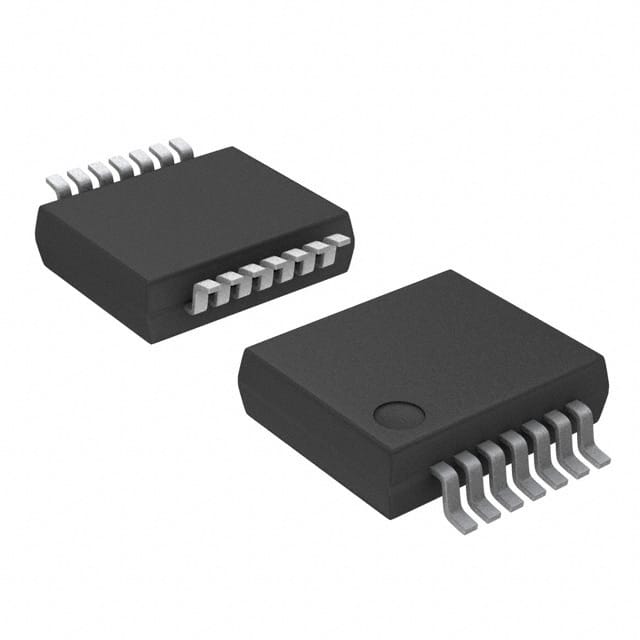
- Part No.:
- 74LVC86ADB,118
- Manufacturer:
- Nexperia USA Inc.
- Category:
- Gates and Inverters
- Package:
- 14-SSOP (0.209", 5.30mm Width)
- Datasheet:
-
 74LVC86ADB,118.pdf
- Description:
- IC GATE XOR 4CH 2-INP 14SSOP
- Quantity:
- Payment:

- Shipping:

Inventory:165
Please send an inquiry. Send us your inquiry, and we will respond immediately.
Product details
Overview
74LVC86ADB,118 from Nexperia is a quad 2-input XOR gate in SO14 (SOT108-1) package, operating from 1.2 V to 3.6 V supply, with overvoltage-tolerant inputs up to 5.5 V and Schmitt-trigger inputs for noise immunity. It enables level translation between 3.3 V and 5 V logic domains and delivers propagation delay as low as 2.2 ns at 3.3 V. Used in digital interface arbitration, parity generation, and mixed-voltage bus control.
For engineers reviewing the 74LVC86ADB,118 datasheet, 74LVC86ADB,118 pinout, 74LVC86ADB,118 application, or 74LVC86ADB,118 equivalent, key selection criteria include input voltage tolerance, propagation delay across VCC range, output drive strength at 3.3 V, and SO14 thermal derating behavior above 100 °C.
Technical Context
This device implements four independent CMOS-based XOR gates with Schmitt-trigger inputs, enabling robust operation with slow-rising or noisy signals. Each gate exhibits symmetrical HIGH/LOW output voltage thresholds defined by VIL ≤ 0.8 V and VIH ≥ 2.0 V at VCC = 3.3 V.
It supports JEDEC-compliant voltage interfaces across three ranges: JESD8-7A (1.65–1.95 V), JESD8-5A (2.3–2.7 V), and JESD8-C/JESD36 (2.7–3.6 V). Output skew is guaranteed ≤ 1.0 ns between any two outputs switching in the same direction.
Key Specifications
| Parameter | Value and Actual Design Meaning |
|---|---|
| Logic Function | Quad 2-input exclusive-OR (XOR); outputs HIGH only when inputs differ. |
| Supply Voltage Range | 1.2 V to 3.6 V - supports battery-powered and low-power embedded systems. |
| Input Voltage Tolerance | Up to 5.5 V - allows direct interfacing with 5 V TTL sources without external level shifters. |
| Propagation Delay | 2.2 ns typical at VCC = 3.3 V - enables use in sub-200 MHz synchronous logic paths. |
| Output Drive Strength | ±24 mA at VCC = 3.0 V - sufficient to drive 50 pF loads with <7 ns delay under standard test conditions. |
| Operating Temperature | −40 °C to +125 °C - qualified for industrial and extended-temperature applications. |
| ESD Protection | HBM >2000 V, CDM >1000 V - meets IEC 61000-4-2 system-level robustness requirements. |
Pinout & Package
74LVC86ADB,118 uses the SO14 plastic small outline package (SOT108-1), 14-pin, 3.9 mm body width, with standard 1.27 mm lead pitch and gull-wing leads. Thermal derating begins at 100 °C (10.1 mW/K).
| Pin | Circuit Role | Design Meaning |
|---|---|---|
| 1, 4, 9, 12 | 1A, 2A, 3A, 4A | First input per XOR gate; accepts 0–5.5 V, Schmitt-triggered. |
| 2, 5, 10, 13 | 1B, 2B, 3B, 4B | Second input per XOR gate; identical electrical behavior to A inputs. |
| 3, 6, 8, 11 | 1Y, 2Y, 3Y, 4Y | Respective XOR outputs; CMOS push-pull, rail-to-rail swing. |
| 7 | GND | Ground reference (0 V); must be connected to system ground plane. |
| 14 | VCC | Primary power supply; decoupling capacitor (100 nF) required within 5 mm. |
Key Features
| Feature | Design Value |
|---|---|
| Overvoltage-tolerant inputs | Withstands 5.5 V regardless of VCC (1.2–3.6 V), enabling safe 5 V ↔ 3.3 V translation. |
| Schmitt-trigger inputs | Hysteresis ≥ 0.3 V at VCC = 3.3 V - rejects noise on slow edges and improves signal integrity. |
| Low dynamic power | CPD = 19.7 pF at VCC = 3.3 V - limits switching power to <210 μW per gate at 10 MHz. |
| Wide temperature qualification | Specified from −40 °C to +125 °C - suitable for under-hood or industrial control environments. |
| JEDEC-compliant interfaces | Fully compliant with JESD8-7A, JESD8-5A, and JESD8-C standards - ensures interoperability with legacy and modern logic families. |
Applications
| Parity Generator / Checker | Digital Bus Arbitration |
|---|---|
|
Use Scenario: Generating odd/even parity bits across 4-bit data buses in UART or SPI peripheral interfaces. IC Role / Device Role / Timing Role: XOR gate performing bitwise comparison of data bits to produce single parity output. Use Value: Enables real-time error detection with <7 ns propagation delay at 3.3 V, supporting >100 Mbps serial throughput. |
Use Scenario: Resolving bus contention between two microcontrollers sharing a common I²C or GPIO-controlled resource. IC Role / Device Role / Timing Role: Logic-level combiner detecting conflicting address or enable signals to assert priority arbitration. Use Value: Schmitt-trigger inputs tolerate slow-rising bus pull-ups; 5.5 V input tolerance allows direct connection to 5 V master controllers. |
| Mixed-Voltage Level Translation | Secure Key XOR Masking |
|
Use Scenario: Interfacing 5 V legacy sensors with 3.3 V MCU GPIOs in industrial monitoring systems. IC Role / Device Role / Timing Role: Bidirectional voltage translator using XOR's input tolerance and CMOS output swing. Use Value: Eliminates need for discrete resistor dividers or dedicated level shifters; maintains timing integrity with <10 ns max skew. |
Use Scenario: Performing bitwise XOR masking of cryptographic keys during secure boot or firmware update verification. IC Role / Device Role / Timing Role: Hardware-based deterministic XOR engine for lightweight obfuscation in tamper-resistant designs. Use Value: Low leakage (<10 μA ICC) and no internal state ensure side-channel silent operation; operates reliably at 125 °C in sealed enclosures. |
Equivalent & Alternatives
The following parts are listed as comparable options for similar XOR gate applications.
| Alternative Part | Technical Difference | Application Difference | Selection Advice |
|---|---|---|---|
| SN74LVC86APWR | TSSOP14 package (SOT402-1); 7.3 mW/K thermal derating above 81 °C; identical logic and DC specs. | Better board space efficiency but lower thermal mass; requires tighter reflow profile control. | Select when PCB area is constrained and ambient temperature remains ≤ 80 °C. |
| 74LVX86M | Lower VCC range (2.0–3.6 V); no 1.2 V operation; higher VIH threshold (≥ 2.0 V at 3.3 V); no 5.5 V input tolerance. | Not suitable for 1.2 V systems or 5 V interface translation; limited to pure 3.3 V domains. | Choose only if design exclusively uses 3.3 V and does not require mixed-voltage interoperability. |
Compared with SN74LVC86APWR, 74LVC86ADB,118 offers superior thermal stability above 100 °C due to SO14 package construction; compared with 74LVX86M, it provides broader voltage flexibility and true 5 V input compatibility essential for legacy integration.
Availability
74LVC86ADB,118 is available at Aetrix Electronics and suitable for industrial control panels, automotive body electronics modules, and medical diagnostic equipment requiring stable component supply across extended temperature ranges and long production lifecycles.
Supply support for 74LVC86ADB,118 includes scheduled delivery planning, volume procurement assistance, BOM continuity management, traceable sourcing, and lifecycle availability coordination for OEM customers, industrial embedded developers, connected-device designers, and electronics production programs.
Manufacturer
Nexperia is a global semiconductor expert focused on high-volume, high-reliability logic, analog, and MOSFET solutions for industrial, automotive, and consumer markets.
The 74LVC series targets low-voltage, mixed-signal interface applications where power efficiency, voltage flexibility, and robustness across temperature extremes are critical design requirements.
FAQ
Can 74LVC86ADB,118 operate at 1.2 V while driving a 50 pF load?
Yes. At VCC = 1.2 V, the device is fully specified with tpd ≤ 11.0 ns into a 30 pF load (per datasheet Table 7). With 50 pF, delay increases predictably per CPD = 12.5 pF (VCC = 1.65 V) scaling; actual measured delay remains within functional timing budgets for sub-20 MHz applications.
Is the exposed pad on the DHVQFN variant (74LVC86ABQ) electrically connected?
No. The thermal pad on SOT762-1 (DHVQFN14) is not an electrical pin. Datasheet section 5.1 explicitly states it has no electrical or mechanical requirement to be soldered; if connected, it must remain floating or tied to GND - it is not internally bonded to VCC or GND.
Does 74LVC86ADB,118 support hot insertion?
No. The device lacks explicit hot-swap protection circuitry. While inputs tolerate 5.5 V, the absence of power-on reset, input current limiting, or VCC sequencing control means uncontrolled hot insertion may cause transient latch-up or excessive ICC surge beyond 100 mA absolute maximum rating.
What is the minimum input transition rate supported with Schmitt-trigger inputs?
At VCC = 3.3 V, the recommended input transition rate is ≥ 10 ns/V (Table 5), meaning a 3.3 V swing should occur within ≥33 ns. Schmitt action ensures reliable switching even below this rate, but propagation delay variance increases beyond ±1.5 ns when rise/fall times exceed 100 ns.
74LVC86ADB,118 Specifications
- Product attributes
- Attribute value
- Manufacturer:
- Nexperia USA Inc.
- Series:
- 74LVC
- Package/Case:
- 14-SSOP (0.209", 5.30mm Width)
- Packaging:
- Tape & Reel (TR)
- Product Status:
- Obsolete
- Logic Type:
- XOR (Exclusive OR)
- Number of Circuits:
- 4
- Number of Inputs:
- 2
- Features:
- -
- Voltage - Supply:
- 1.2V ~ 3.6V
- Current - Quiescent (Max):
- 40 µA
- Current - Output High, Low:
- 24mA, 24mA
- Input Logic Level - Low:
- 0.58V ~ 0.8V
- Input Logic Level - High:
- 1.07V ~ 2V
- Max Propagation Delay @ V, Max CL:
- 5ns @ 3.3V, 50pF
- Operating Temperature:
- -40°C ~ 125°C
- Grade:
- -
- Qualification:
- -
- Mounting Type:
- Surface Mount
- Supplier Device Package:
- 14-SSOP
74LVC86ADB,118 FAQ
1.How can I place an order for 74LVC86ADB,118 through Aetrix?
Please submit a Request for Quotation (RFQ) for 74LVC86ADB,118 on Aetrix. Our sales agent will provide a competitive quotation and guide you through the order confirmation once you accept the terms.
2.Are the price and stock information for 74LVC86ADB,118 reliable?
The price and inventory of 74LVC86ADB,118 are updated periodically and may fluctuate due to market conditions. Stock and pricing data are typically refreshed every 24 hours. Quotation validity for 74LVC86ADB,118 is usually 5 days.
3.What payment methods are accepted for 74LVC86ADB,118?
We accept Wire Transfer, PayPal, Credit Card, Western Union, MoneyGram, and Escrow for 74LVC86ADB,118 transactions.
Note: Certain payment methods may incur a processing fee.
4.How is shipping managed for 74LVC86ADB,118?
74LVC86ADB,118 orders can be shipped via leading logistics carriers, including DHL, UPS, FedEx, TNT, or Registered Mail.
Once your 74LVC86ADB,118 order is processed, you will receive an email with the shipment details and tracking number.
Note: Tracking information may take up to 24 hours to appear. Express delivery typically takes 3–5 business days.
5.How can I obtain technical support or documentation for 74LVC86ADB,118?
For technical support, including 74LVC86ADB,118 datasheets, pinout diagrams, or application guidance, please contact our engineering support team. They can provide detailed documentation and assistance for your 74LVC86ADB,118 requirements.
6.How does Aetrix verify that 74LVC86ADB,118 is sourced from the original manufacturer or authorized distributors?
All 74LVC86ADB,118 products on Aetrix are procured from qualified distributors and authorized channels. Our dedicated quality assurance team conducts strict verification, including traceability checks and, if necessary, third-party testing. This ensures that 74LVC86ADB,118 meets industry standards.
7.What is the process for return or replacement of 74LVC86ADB,118?
All 74LVC86ADB,118 units undergo pre-shipment inspection (PSI). If there is an issue with 74LVC86ADB,118, returns or replacements are accepted under the following conditions:
1.Quantity discrepancies, incorrect items, or visible external defects (such as breakage or corrosion), acknowledged by Aetrix.
2.The issue is reported within 90 days of delivery.
3.The 74LVC86ADB,118 part is unused and in its original packaging.
Return procedure for 74LVC86ADB,118:
1.Submit a request within 90 days.
2.Obtain a Return Material Authorization (RMA) from Aetrix.
74LVC86ADB,118 Tags

-
SN74LVC1G14DBVR
Texas Instruments
-
SN74LVC1G14DCKR
Texas Instruments
-
SN74AHC1G14DBVR
Texas Instruments
-
SN74LVC1G08DBVR
Texas Instruments
-
SN74LVC1G08DCKR
Texas Instruments
-
SN74LVC1G32DCKR
Texas Instruments
-
SN74LVC1G04DBVR
Texas Instruments
.jpg)
-
74LVC1G08GW,125
Nexperia USA Inc.
-
SN74LVC1G04DCKR
Texas Instruments
-
SN74AHC1G08DBVR
Texas Instruments
-
SN74LVC1G32DBVR
Texas Instruments
-
SN74AHCT1G08DBVR
Texas Instruments
Tech Hub

Operational amplifier guide covering op amp basics, feedback, ideal vs real op amps, common configurations, buffer circuits, offset, bias current, gain-bandwidth, slew rate, rail-to-rail limits and sel…

Jumper cables guide covering safe connection order, red and black clamp placement, final ground connection, cable gauge, length, clamp quality, copper vs CCA cables, jump starter comparison and battery…

LDO regulator guide covering low dropout voltage, power dissipation, thermal design, PSRR, output noise, capacitor stability, adjustable LDO circuits, LDO vs buck converter and datasheet selection chec…

Conditional Access Module guide covering CAM meaning, CI/CI+ interface, smart card authorization, DVB security workflow, TV and set-top box compatibility, internal electronics, ESD protection, connecto…

Guide to electronic component obsolescence covering EOL risk, PCN/PDN notices, last-time buy planning, replacement options, form-fit-function validation, counterfeit risk and BOM lifecycle management.

18650 battery guide covering lithium-ion cell basics, 3.6V/3.7V voltage, 4.2V charging, mAh and Wh capacity, protected cells, chargers, BMS, series-parallel packs, holders, welding and sourcing checks.…

Hall effect sensor guide covering working principle, linear and digital sensors, Arduino circuits, current sensing, speed detection, automotive applications, A3144 examples, signal filtering and datash…

Product Change Notification guide for electronic components, covering PCN meaning, PCN vs PDN/EOL, common change types, risk levels, form-fit-function review, engineering validation, BOM control, LTB/L…

A practical guide to blend door actuators, covering HVAC function, symptoms, location, AC and heater issues, reset and calibration, replacement cost, electrical diagnosis, compatibility checks, and rep…

Engineering guide to Raspberry Pi alternatives, covering chip-level differences, Orange Pi, ROCK, Jetson, Banana Pi, NanoPi, Compute Module, Pico, GPIO, camera, HAT compatibility, and replacement risks…


