
 My Inquiry
 My Account


onsemi 74LVT245MTC
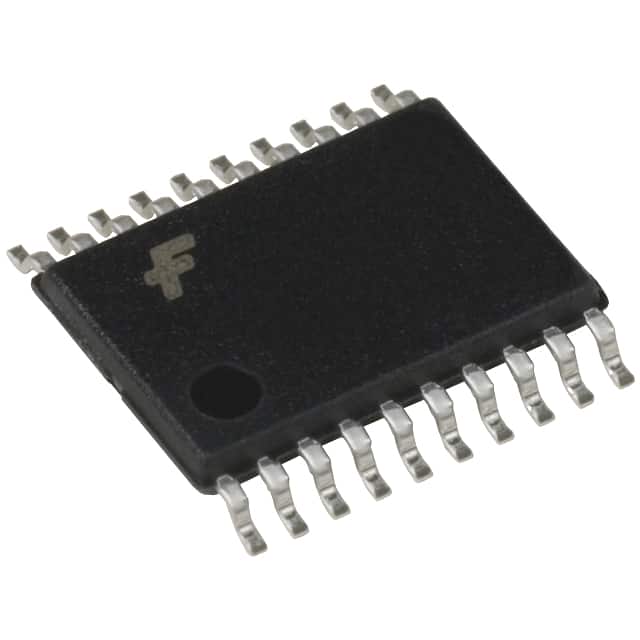
- Part No.:
- 74LVT245MTC
- Manufacturer:
- onsemi
- Package:
- 20-TSSOP (0.173", 4.40mm Width)
- Datasheet:
-
 74LVT245MTC.pdf
- Description:
- IC TXRX NON-INVERT 3.6V 20TSSOP
- Quantity:
- Payment:

- Shipping:

Inventory:1,624
Please send an inquiry. Send us your inquiry, and we will respond immediately.
Product details
Overview
74LVT245MTC from ON Semiconductor is a low-voltage octal bidirectional transceiver with 3-STATE inputs/outputs, designed for bus interface between 3.3V logic and 5V TTL systems. It features 20-pin TSSOP packaging, ±32mA/64mA output drive capability, –40°C to +85°C operating temperature, and supports live insertion/extraction in backplane or hot-swap applications.
For engineers reviewing the 74LVT245MTC datasheet, pinout, applications, or equivalent options, this device serves as a voltage-level translating transceiver for bidirectional data buses in industrial control, telecom line cards, and embedded computing where 3.3V core logic must interoperate with legacy 5V peripherals.
Technical Context
The 74LVT245MTC implements eight non-inverting bidirectional buffers controlled by separate Transmit/Receive (T/R) and Output Enable (OE) signals. Direction control is asynchronous: T/R HIGH enables A→B data flow; T/R LOW enables B→A flow; OE HIGH forces both sides into high-impedance state.
It uses advanced BiCMOS technology to achieve 1.2–4.0 ns propagation delay at 3.3V while maintaining low power dissipation. Power-up/down high-impedance behavior prevents bus glitches during supply ramping, and input clamping allows safe interfacing to 5V signals without external level shifters.
Key Specifications
| Parameter | Value and Actual Design Meaning |
|---|---|
| VCC Range | 2.7V to 3.6V - Operates within standard 3.3V ±10% supply rails; supports mixed-voltage system compatibility. |
| IOH / IOL | –32mA / +64mA - Sinks up to 64mA per output, enabling direct drive of multiple TTL loads or termination resistors. |
| tPLH / tPHL | 1.2ns to 4.0ns - Ensures sub-5ns signal transit across 8-bit data paths, suitable for high-speed parallel bus timing budgets. |
| VI Input Range | 0V to 5.5V - Accepts 5V-tolerant inputs without damage or external protection, simplifying 3.3V/5V bridging. |
| ICCZ (3-STATE) | 0.19mA - Ultra-low standby current when outputs disabled, critical for power-sensitive portable or battery-backed modules. |
| ESD Rating | HBM > 2000V - Robust handling during board assembly and field service, reducing risk of latent ESD damage. |
| Operating Temp | –40°C to +85°C - Qualified for industrial-grade environments including factory automation and outdoor telecom equipment. |
Pinout & Package
74LVT245MTC is housed in a 20-lead Thin Shrink Small Outline Package (TSSOP), JEDEC MO-153 compliant, 4.4mm wide, with 0.65mm lead pitch. The package supports fine-pitch PCB layouts and automated reflow assembly.
| Pin/Terminal | Circuit Role | Design Meaning |
|---|---|---|
| 1 (OE) | Output Enable Input | Active-HIGH control: asserts high-impedance on both A and B ports when driven HIGH; enables bidirectional flow when LOW. |
| 2–9 (A0–A7) | Side A I/O Terminals | Bidirectional data lines for one bus side; internally buffered with 3-STATE drivers and 5V-tolerant inputs. |
| 10 (GND) | Ground Reference | Primary ground return path for all internal circuitry and I/O drivers; requires low-inductance PCB connection. |
| 11–18 (B0–B7) | Side B I/O Terminals | Bidirectional data lines for second bus side; electrically identical to A-side pins with same voltage tolerance and drive strength. |
| 19 (T/R) | Transmit/Receive Control | Direction select: HIGH enables A→B data transfer; LOW enables B→A transfer; asynchronous with respect to clock. |
| 20 (VCC) | Power Supply | 3.3V nominal supply input; decoupling capacitor (0.1µF ceramic) required within 5mm of pin for noise suppression. |
Key Features
| Feature | Design Value |
|---|---|
| 5V-Tolerant Inputs | Accepts 0–5.5V input signals without damage or level-shifting components, enabling seamless integration with legacy 5V peripherals. |
| Live Insertion Support | High-impedance power-up/down behavior prevents bus contention during hot-plug events in modular backplanes or carrier boards. |
| Low Propagation Delay | 1.2ns typical tPLH/tPHL ensures minimal timing skew across all 8 channels, preserving data integrity in synchronous parallel interfaces. |
| High Drive Strength | 64mA sink capability per output meets TTL fan-out requirements (up to 10 LS-TTL loads), eliminating need for external buffers. |
| Industrial Temperature Range | Rated for continuous operation from –40°C to +85°C, validated for use in uncontrolled ambient environments like factory floors or outdoor enclosures. |
Applications
| Industrial PLC Backplane Interface | Telecom Line Card Data Bridge |
|---|---|
|
Use Scenario: Connecting 3.3V FPGA-based control logic to legacy 5V I/O modules in programmable logic controllers. IC Role / Device Role / Timing Role: Bidirectional voltage-translating transceiver managing data flow direction via T/R signal and isolating buses via OE control. Use Value: Eliminates discrete level shifters and pull-up networks, reducing BOM count and PCB area while maintaining full 8-bit parallel throughput. |
Use Scenario: Interfacing 3.3V DSP processors to 5V analog front-end ASICs in multi-channel telecom line cards. IC Role / Device Role / Timing Role: Low-skew, high-drive transceiver synchronizing control/status data between voltage-domain islands with deterministic timing. Use Value: Enables reliable 8-bit parallel handshaking at >25MHz effective rate without timing closure issues or signal integrity degradation. |
| Embedded Computing Memory Expansion | Automated Test Equipment Bus Extender |
|
Use Scenario: Expanding address/data bus of a 3.3V ARM-based SoM to support legacy 5V SRAM or flash memory modules. IC Role / Device Role / Timing Role: Octal bidirectional buffer providing direction-controlled data path with glitch-free enable/disable transitions. Use Value: Maintains signal integrity across extended trace lengths due to low output capacitance (8pF) and strong drive, minimizing reflections. |
Use Scenario: Extending parallel test bus from main controller to modular DUT interface boards in rack-mounted ATE systems. IC Role / Device Role / Timing Role: Hot-swap-capable transceiver allowing module replacement without powering down master controller or other slots. Use Value: Reduces system downtime during calibration or repair cycles by supporting live insertion/extraction without bus lockup or reset events. |
Equivalent & Alternatives
The following parts are listed as comparable options for similar bidirectional bus transceiver applications.
| Alternative Part | Technical Difference | Application Difference | Selection Advice |
|---|---|---|---|
| SN74LVC245APWR | Lower drive (±24mA), 1.65–3.6V VCC range, no 5V-tolerant inputs - requires external level shifting for 5V interfaces. | Suitable only for 3.3V-to-3.3V or 3.3V-to-2.5V translation; not drop-in for 5V-tolerant designs. | Select when interfacing exclusively within 3.3V domains and lower power consumption is prioritized over drive strength. |
| 74LVTH245MTC | Includes bushold inputs (eliminates external pull-ups on unused pins); otherwise identical pinout, timing, and drive specs. | Preferred where floating inputs must be avoided without board-level resistors - e.g., high-density PCBs with limited routing space. | Choose when input stability on unterminated lines is critical and board real estate prohibits adding pull-up resistors. |
Compared with SN74LVC245APWR and 74LVTH245MTC, the 74LVT245MTC uniquely balances 5V-tolerant input robustness, ±32mA/64mA drive, and industrial temperature rating - making it optimal for mixed-voltage industrial bus bridging where reliability under voltage mismatch is essential.
Availability
74LVT245MTC is available at Aetrix Electronics and suitable for industrial PLC backplanes, telecom line card data bridges, and embedded computing memory expansion requiring stable component supply, long-term lifecycle assurance, and consistent parametric performance across production batches.
Supply support for 74LVT245MTC includes scheduled delivery planning, volume procurement assistance, BOM continuity management, traceable sourcing, and lifecycle availability coordination for OEM customers, industrial embedded developers, connected-device designers, and electronics production programs.
Manufacturer
ON Semiconductor is a global semiconductor manufacturer specializing in energy-efficient power management, analog, sensor, and logic solutions for automotive, industrial, cloud, and consumer markets.
The 74LVT245MTC belongs to ON Semiconductor's legacy LVT logic family, engineered for high-speed, low-voltage bidirectional bus interfacing in mixed-signal systems where 3.3V logic must reliably communicate with 5V legacy infrastructure.
FAQ
What is the maximum input voltage the 74LVT245MTC can tolerate on its data pins?
The 74LVT245MTC supports DC input voltages from 0V to 5.5V on all data pins (A0–A7 and B0–B7), as specified in the Recommended Operating Conditions table. This 5V-tolerance allows direct connection to 5V TTL outputs without external level-shifting circuitry, simplifying design and improving system reliability in mixed-voltage environments.
Does the 74LVT245MTC have bushold functionality on its inputs?
No, the 74LVT245MTC does not include bushold circuitry. Bushold is exclusive to the 74LVTH245MTC variant, which eliminates the need for external pull-up resistors on unused inputs. The 74LVT245MTC requires proper termination or biasing of unused inputs to prevent floating states and potential noise susceptibility.
What is the typical propagation delay of the 74LVT245MTC at 3.3V supply?
At VCC = 3.3V ± 0.3V and TA = 25°C with CL = 50pF, the 74LVT245MTC exhibits a typical propagation delay of 1.2ns for both tPLH and tPHL. Over the full industrial temperature range (–40°C to +85°C), the maximum guaranteed delay is 4.0ns, ensuring predictable timing in synchronous parallel bus applications.
Can the 74LVT245MTC be used in hot-swap applications?
Yes, the 74LVT245MTC supports live insertion and extraction due to its power-up/down high-impedance feature. When VCC is ramping or absent, both A and B ports remain in a high-impedance state, preventing bus contention or signal corruption during hot-plug events in modular backplane or carrier board systems.
What package type is used for the 74LVT245MTC and what are its key mechanical dimensions?
The 74LVT245MTC uses a 20-lead Thin Shrink Small Outline Package (TSSOP) per JEDEC MO-153, measuring 4.4mm wide with 0.65mm lead pitch. Its compact footprint and low profile (1.2mm max height) support high-density PCB layouts and automated surface-mount assembly processes common in industrial and telecom equipment.
74LVT245MTC Specifications
- Product attributes
- Attribute value
- Manufacturer:
- onsemi
- Series:
- 74LVT
- Package/Case:
- 20-TSSOP (0.173", 4.40mm Width)
- Packaging:
- Tube
- Product Status:
- Obsolete
- Logic Type:
- Transceiver, Non-Inverting
- Number of Elements:
- 1
- Number of Bits per Element:
- 8
- Input Type:
- -
- Output Type:
- 3-State
- Current - Output High, Low:
- 32mA, 64mA
- Voltage - Supply:
- 2.7V ~ 3.6V
- Operating Temperature:
- -40°C ~ 85°C (TA)
- Grade:
- -
- Qualification:
- -
- Mounting Type:
- Surface Mount
- Supplier Device Package:
- 20-TSSOP
74LVT245MTC FAQ
1.How can I place an order for 74LVT245MTC through Aetrix?
Please submit a Request for Quotation (RFQ) for 74LVT245MTC on Aetrix. Our sales agent will provide a competitive quotation and guide you through the order confirmation once you accept the terms.
2.Are the price and stock information for 74LVT245MTC reliable?
The price and inventory of 74LVT245MTC are updated periodically and may fluctuate due to market conditions. Stock and pricing data are typically refreshed every 24 hours. Quotation validity for 74LVT245MTC is usually 5 days.
3.What payment methods are accepted for 74LVT245MTC?
We accept Wire Transfer, PayPal, Credit Card, Western Union, MoneyGram, and Escrow for 74LVT245MTC transactions.
Note: Certain payment methods may incur a processing fee.
4.How is shipping managed for 74LVT245MTC?
74LVT245MTC orders can be shipped via leading logistics carriers, including DHL, UPS, FedEx, TNT, or Registered Mail.
Once your 74LVT245MTC order is processed, you will receive an email with the shipment details and tracking number.
Note: Tracking information may take up to 24 hours to appear. Express delivery typically takes 3–5 business days.
5.How can I obtain technical support or documentation for 74LVT245MTC?
For technical support, including 74LVT245MTC datasheets, pinout diagrams, or application guidance, please contact our engineering support team. They can provide detailed documentation and assistance for your 74LVT245MTC requirements.
6.How does Aetrix verify that 74LVT245MTC is sourced from the original manufacturer or authorized distributors?
All 74LVT245MTC products on Aetrix are procured from qualified distributors and authorized channels. Our dedicated quality assurance team conducts strict verification, including traceability checks and, if necessary, third-party testing. This ensures that 74LVT245MTC meets industry standards.
7.What is the process for return or replacement of 74LVT245MTC?
All 74LVT245MTC units undergo pre-shipment inspection (PSI). If there is an issue with 74LVT245MTC, returns or replacements are accepted under the following conditions:
1.Quantity discrepancies, incorrect items, or visible external defects (such as breakage or corrosion), acknowledged by Aetrix.
2.The issue is reported within 90 days of delivery.
3.The 74LVT245MTC part is unused and in its original packaging.
Return procedure for 74LVT245MTC:
1.Submit a request within 90 days.
2.Obtain a Return Material Authorization (RMA) from Aetrix.
74LVT245MTC Tags

-
SN74LVC1G17DBVR
Texas Instruments
-
SN74LVC1G07DCKR
Texas Instruments
-
SN74LVC1G17DCKR
Texas Instruments
-
SN74LVC1G07DBVR
Texas Instruments
-
SN74LVC1G125DCKR
Texas Instruments
-
SN74AHCT1G126DBVR
Texas Instruments
-
SN74LVC1G125DBVR
Texas Instruments
-
SN74AHCT1G125DBVR
Texas Instruments

-
SN74LVC2G17DBVR
Texas Instruments
-
SN74LVC2G07DCKR
Texas Instruments
-
SN74LVC1G34DCKR
Texas Instruments
-
SN74LVC2G17DCKR
Texas Instruments
Tech Hub
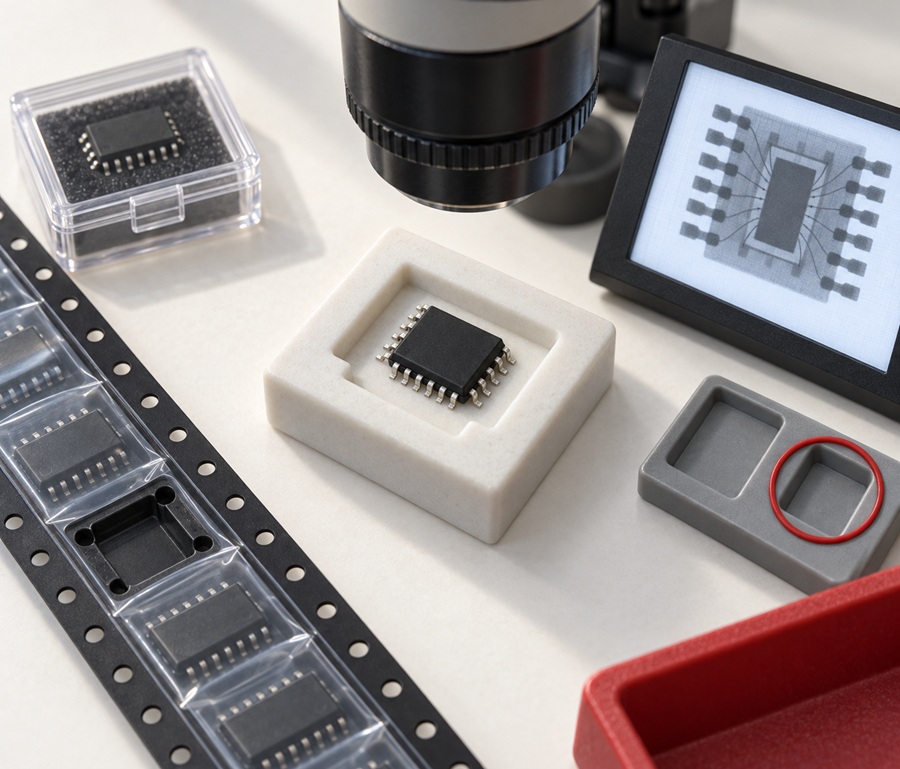
Counterfeit components can hide behind convincing markings and passing basic function tests. This engineering reference covers source traceability, external inspection, X-ray, XRF, electrical testing, …

A practical engineering and sourcing framework covering lifecycle verification, lifetime-buy calculations, replacement qualification, supplier checks and counterfeit-risk controls.

TTL and CMOS logic families differ in thresholds, loading, output drive, power and timing. This engineering guide compares 74HC and 74HCT, calculates noise margins and checks 3.3 V/5 V compatibility.

A practical engineering guide to 3.3V and 5V logic compatibility, input thresholds, resistor dividers, translator ICs, MOSFET level shifting, I2C pull-ups, timing limits and power-sequencing risks.

The 74HC595 uses push-pull logic outputs, while the TPIC6B595 uses 50 V open-drain DMOS sinks for higher-power loads. This guide compares timing, current limits, 3.3 V interfacing, load wiring, thermal…

The 74HC595 converts serial data into eight stable parallel outputs. This guide covers pin functions, shift and storage timing, OE and MR behavior, drive-current limits, cascading, voltage compatibilit…

A technical comparison of level-sensitive latches and edge-triggered flip-flops, covering timing windows, setup and hold limits, master–slave operation, time borrowing, race-through, HDL inference and…

A D latch stores one bit while Enable controls when data can pass. This reference covers gate-level operation, truth tables, transparency, setup and hold timing, LE versus OE, common ICs and practical …

An SR latch stores one bit through cross-coupled feedback. This engineering reference covers NOR and NAND implementations, truth tables, forbidden-state recovery, gated operation, switch debouncing, fa…

Latch circuits retain one bit through feedback. This technical reference covers SR and D latches, truth tables, transparency, timing limits, latch-versus-flip-flop behavior, applications and common log…


