
 My Inquiry
 My Account


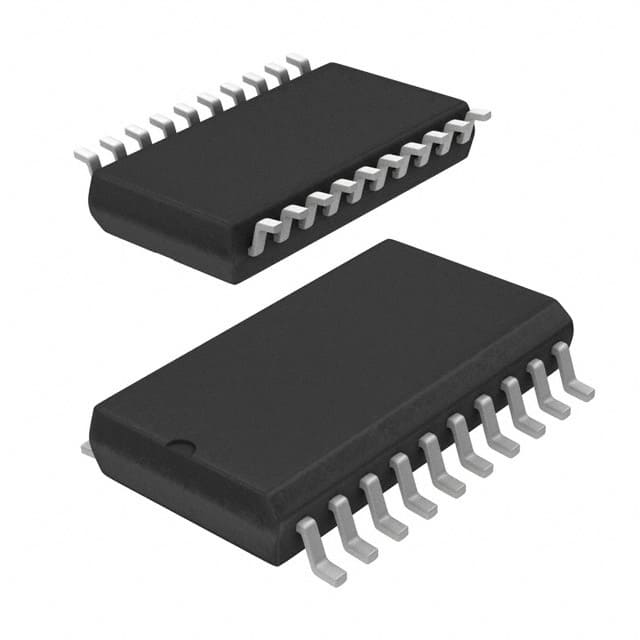
STMicroelectronics 74LVX245MTR
- Part No.:
- 74LVX245MTR
- Manufacturer:
- STMicroelectronics
- Package:
- 20-SOIC (0.295", 7.50mm Width)
- Datasheet:
-
 74LVX245MTR.pdf
- Description:
- IC TXRX NON-INVERT 3.6V 20SO
- Quantity:
- Payment:

- Shipping:

Inventory:4,389
Please send an inquiry. Send us your inquiry, and we will respond immediately.
Product details
Overview
74LVX245MTR from STMicroelectronics is a low-voltage CMOS octal bus transceiver (3-state) with 5V-tolerant inputs, operating from 2V to 3.6V supply. It provides bidirectional data flow between two 8-bit buses controlled by DIR and G inputs, delivers 4.7ns typical propagation delay at 3.3V, supports 4mA symmetrical output drive, and features power-down input protection enabling safe 0–7V input acceptance regardless of VCC. It is used in 3.3V/5V mixed-voltage system interfacing, such as FPGA-to-microcontroller data bridges.
For engineers reviewing the 74LVX245MTR datasheet, 74LVX245MTR pinout, 74LVX245MTR application, or 74LVX245MTR equivalent, key selection criteria include 5V-tolerant input compatibility, 3.3V operation with sub-5ns timing, 3-state bus isolation behavior, and SO-20 package mechanical fit for legacy 74-series board layouts.
Technical Context
The device implements asynchronous bidirectional bus communication using a single DIR control line to determine data direction (A→B or B→A), while the active-low G input enables/disables all outputs into high-impedance state. Its input structure includes clamping diodes and ESD protection, allowing 0–7V input voltage range independent of VCC - critical for level-shifting between 5V peripherals and 3.3V logic.
It uses sub-micron C2MOS technology to achieve true CMOS low quiescent current (4µA max) alongside high-speed performance. Propagation delays tPLH and tPHL are balanced (≈4.7ns typ. at 3.3V), and output skew is limited to 1.5ns max, ensuring deterministic timing across all eight channels under load.
Key Specifications
| Parameter | Value and Actual Design Meaning |
|---|---|
| VCC Operating Range | 2.0V to 3.6V - supports battery-powered and low-noise 3.3V systems; retains data down to 1.2V |
| tPD Propagation Delay | 4.7ns (typ.) at VCC = 3.3V - enables >100MHz bus operation with margin |
| Input Voltage Tolerance | 0V to 7V on all inputs - allows direct interface to 5V logic without external level shifters |
| Output Drive Strength | |IOH| = |IOL| = 4mA (min) at VCC = 3V - sufficient to drive standard TTL loads and 50pF traces |
| Quiescent ICC | 4µA (max) at TA = 25°C - enables ultra-low-power standby in portable applications |
| ESD Immunity | 2kV HBM - protects against handling-induced static discharge during assembly and field use |
| Bus Isolation Leakage | IOZ = ±5µA max at VCC = 3.6V - ensures minimal leakage current when outputs are in high-Z state |
Pinout & Package
74LVX245MTR is housed in a 20-pin SOIC (Small Outline Integrated Circuit) package, 7.6mm wide, with 1.27mm pitch, compliant with JEDEC MS-013. Pin 1 is marked by a beveled corner or dot; pin 10 is GND, pin 20 is VCC.
| Pin/Terminal | Circuit Role | Design Meaning |
|---|---|---|
| 1 | DIR | Direction control: LOW = A→B, HIGH = B→A; determines real-time data flow path |
| 2–9 | A1–A8 | Port A bidirectional I/O: connects to local bus (e.g., microcontroller side) |
| 11–18 | B1–B8 | Port B bidirectional I/O: connects to remote bus (e.g., peripheral or memory side) |
| 19 | G | Active-low output enable: LOW enables transceiver, HIGH forces all A/B pins to high-Z |
| 10 | GND | Ground reference for all internal circuitry and I/O thresholds |
| 20 | VCC | Positive supply: powers internal logic and defines output voltage swing (0 to VCC) |
Key Features
| Feature | Design Value |
|---|---|
| 5V-tolerant inputs | Accepts 0–7V input signals regardless of VCC - eliminates need for external level translators in mixed-voltage designs |
| Power-down input protection | Inputs remain protected and non-latching even when VCC = 0V - prevents backfeeding and latch-up during hot-swap or power sequencing |
| Symmetrical output drive | IOH and IOL both ≥4mA at VCC = 3V - ensures consistent rise/fall times and noise margin across logic transitions |
| Low dynamic noise | VOLP = 0.5V (typ.) at VCC = 3.3V - reduces ground bounce and crosstalk in dense PCB layouts |
| Pin-compatible with 74-series 245 | SO-20 footprint matches legacy 74HC245/74LS245 - enables drop-in upgrade to lower voltage and power without board redesign |
Applications
| Industrial PLC Backplane Interface | FPGA-to-ASIC Data Bridge |
|---|---|
Use Scenario: Interfacing 5V I/O modules to a 3.3V programmable logic controller CPU backplane. IC Role / Device Role / Timing Role: Bidirectional level-shifting transceiver managing synchronous data exchange between legacy 5V sensors and modern low-voltage control logic. Use Value: Eliminates discrete resistor-divider or dedicated level shifter ICs; maintains signal integrity with <5ns skew across all 8 data lines. | Use Scenario: Connecting an FPGA's 3.3V I/O bank to an ASIC running at 2.5V with 5V-tolerant test access ports. IC Role / Device Role / Timing Role: Direction-controlled bus buffer enabling JTAG or parallel configuration data transfer with precise timing alignment. Use Value: Provides guaranteed 4.7ns propagation delay and 1.5ns max output skew - critical for meeting setup/hold timing at >80MHz clock rates. |
| Portable Medical Device Bus Isolation | Automotive Infotainment Subsystem Link |
Use Scenario: Isolating a low-power 3.3V microcontroller bus from higher-voltage display driver circuits in handheld diagnostic equipment. IC Role / Device Role / Timing Role: 3-state-enabled bus isolator activated only during data bursts, minimizing standby current draw. Use Value: Quiescent ICC ≤4µA extends battery life; high-Z leakage <5µA prevents unintended signal coupling during sleep mode. | Use Scenario: Routing audio control commands between a 3.3V SoC and 5V CAN transceiver or display backlight controller in dashboard electronics. IC Role / Device Role / Timing Role: Voltage-agile bus transceiver supporting hot-plug detection and fail-safe isolation during power rail brownouts. Use Value: Input tolerance up to 7V withstands automotive load-dump transients; latch-up immunity prevents system lockup during ESD events. |
Equivalent & Alternatives
The following parts are listed as comparable options for similar octal bus transceiver applications.
| Alternative Part | Technical Difference | Application Difference | Selection Advice |
|---|---|---|---|
| 74LVC245ADTR | Lower VCC min (1.65V), higher speed (tPD = 3.2ns typ.), but only 5.5V input tolerant - not 7V | Preferred for 1.8V–3.3V-only systems requiring tighter timing margins | Select when full 7V input tolerance is unnecessary and lowest possible propagation delay is prioritized |
| SN74AVC8T245RHLR | Supports 1.2V–3.6V VCC, 12mA drive, auto-direction sensing, but requires external bias resistors for DIR control | Used where dynamic direction detection is needed, e.g., USB or PCIe auxiliary links | Choose when automatic direction control is required and board space allows for pull-up/pull-down components |
Compared with 74LVC245ADTR and SN74AVC8T245RHLR, the 74LVX245MTR uniquely combines 7V input tolerance, 4.7ns timing, and zero-external-component 3-state control - making it optimal for robust, fixed-direction mixed-voltage interconnects where reliability trumps marginal speed gain.
Availability
74LVX245MTR is available at Aetrix Electronics and suitable for industrial PLC backplanes, FPGA-to-ASIC data bridges, and portable medical device bus isolation requiring stable component supply across extended temperature ranges (–55°C to +125°C).
Supply support for 74LVX245MTR includes scheduled delivery planning, volume procurement assistance, BOM continuity management, traceable sourcing, and lifecycle availability coordination for OEM customers, industrial embedded developers, connected-device designers, and electronics production programs.
Manufacturer
STMicroelectronics is a global semiconductor leader headquartered in Geneva, Switzerland, specializing in automotive, industrial, and power management ICs, with strong heritage in analog, mixed-signal, and discrete technologies.
The 74LVX series was designed specifically for low-voltage, low-noise, battery-operated 3.3V systems requiring interoperability with legacy 5V logic - emphasizing ESD robustness, power-down safety, and timing predictability.
FAQ
Can 74LVX245MTR operate with VCC = 2.5V and still meet timing specifications?
Yes. The device is fully specified from 2.0V to 3.6V. At VCC = 2.5V, tPLH/tPHL increases to ≤13.5ns (max) with CL = 15pF, and output drive remains ≥4mA. VIH/VIL thresholds scale proportionally, maintaining reliable logic interpretation across the full operating range.
What happens to inputs when VCC = 0V?
Inputs remain protected and non-latching due to built-in power-down protection circuitry. The device accepts 0–7V on all inputs regardless of VCC state, preventing backfeeding, latch-up, or damage during hot-swap or unpowered insertion - a key feature for modular system architectures.
Is the SO-20 package of 74LVX245MTR RoHS-compliant and lead-free?
Yes. Per STMicroelectronics documentation (Doc ID 12125, Rev 5), the 74LVX245MTR in SO-20 tape-and-reel packaging is RoHS-compliant and lead-free, with matte tin finish on leads and halogen-free molding compound, meeting JEDEC J-STD-020 moisture sensitivity level 3.
How does the 74LVX245MTR handle floating bus lines in high-impedance state?
All A and B bus terminals must be externally held HIGH or LOW during high-Z state - no internal pull-ups or pull-downs are provided. Uncontrolled floating lines can cause increased ICC, noise coupling, or undefined logic states; design requires external termination (e.g., 10kΩ to VCC or GND) on unused or unterminated bus segments.
74LVX245MTR Specifications
- Product attributes
- Attribute value
- Manufacturer:
- STMicroelectronics
- Series:
- 74LVX
- Package/Case:
- 20-SOIC (0.295", 7.50mm Width)
- Packaging:
- Tape & Reel (TR)
- Product Status:
- Obsolete
- Logic Type:
- Transceiver, Non-Inverting
- Number of Elements:
- 1
- Number of Bits per Element:
- 8
- Input Type:
- -
- Output Type:
- 3-State
- Current - Output High, Low:
- 4mA, 4mA
- Voltage - Supply:
- 2V ~ 3.6V
- Operating Temperature:
- -55°C ~ 125°C (TA)
- Grade:
- -
- Qualification:
- -
- Mounting Type:
- Surface Mount
- Supplier Device Package:
- 20-SO
74LVX245MTR FAQ
1.How can I place an order for 74LVX245MTR through Aetrix?
Please submit a Request for Quotation (RFQ) for 74LVX245MTR on Aetrix. Our sales agent will provide a competitive quotation and guide you through the order confirmation once you accept the terms.
2.Are the price and stock information for 74LVX245MTR reliable?
The price and inventory of 74LVX245MTR are updated periodically and may fluctuate due to market conditions. Stock and pricing data are typically refreshed every 24 hours. Quotation validity for 74LVX245MTR is usually 5 days.
3.What payment methods are accepted for 74LVX245MTR?
We accept Wire Transfer, PayPal, Credit Card, Western Union, MoneyGram, and Escrow for 74LVX245MTR transactions.
Note: Certain payment methods may incur a processing fee.
4.How is shipping managed for 74LVX245MTR?
74LVX245MTR orders can be shipped via leading logistics carriers, including DHL, UPS, FedEx, TNT, or Registered Mail.
Once your 74LVX245MTR order is processed, you will receive an email with the shipment details and tracking number.
Note: Tracking information may take up to 24 hours to appear. Express delivery typically takes 3–5 business days.
5.How can I obtain technical support or documentation for 74LVX245MTR?
For technical support, including 74LVX245MTR datasheets, pinout diagrams, or application guidance, please contact our engineering support team. They can provide detailed documentation and assistance for your 74LVX245MTR requirements.
6.How does Aetrix verify that 74LVX245MTR is sourced from the original manufacturer or authorized distributors?
All 74LVX245MTR products on Aetrix are procured from qualified distributors and authorized channels. Our dedicated quality assurance team conducts strict verification, including traceability checks and, if necessary, third-party testing. This ensures that 74LVX245MTR meets industry standards.
7.What is the process for return or replacement of 74LVX245MTR?
All 74LVX245MTR units undergo pre-shipment inspection (PSI). If there is an issue with 74LVX245MTR, returns or replacements are accepted under the following conditions:
1.Quantity discrepancies, incorrect items, or visible external defects (such as breakage or corrosion), acknowledged by Aetrix.
2.The issue is reported within 90 days of delivery.
3.The 74LVX245MTR part is unused and in its original packaging.
Return procedure for 74LVX245MTR:
1.Submit a request within 90 days.
2.Obtain a Return Material Authorization (RMA) from Aetrix.
74LVX245MTR Tags

-
SN74LVC1G17DBVR
Texas Instruments
-
SN74LVC1G07DCKR
Texas Instruments
-
SN74LVC1G17DCKR
Texas Instruments
-
SN74LVC1G07DBVR
Texas Instruments
-
SN74LVC1G125DCKR
Texas Instruments
-
SN74AHCT1G126DBVR
Texas Instruments
-
SN74LVC1G125DBVR
Texas Instruments
-
SN74AHCT1G125DBVR
Texas Instruments

-
SN74LVC2G17DBVR
Texas Instruments
-
SN74LVC2G07DCKR
Texas Instruments
-
SN74LVC1G34DCKR
Texas Instruments
-
SN74LVC2G17DCKR
Texas Instruments
Tech Hub

A practical engineering and sourcing framework covering lifecycle verification, lifetime-buy calculations, replacement qualification, supplier checks and counterfeit-risk controls.

TTL and CMOS logic families differ in thresholds, loading, output drive, power and timing. This engineering guide compares 74HC and 74HCT, calculates noise margins and checks 3.3 V/5 V compatibility.

A practical engineering guide to 3.3V and 5V logic compatibility, input thresholds, resistor dividers, translator ICs, MOSFET level shifting, I2C pull-ups, timing limits and power-sequencing risks.

The 74HC595 uses push-pull logic outputs, while the TPIC6B595 uses 50 V open-drain DMOS sinks for higher-power loads. This guide compares timing, current limits, 3.3 V interfacing, load wiring, thermal…

The 74HC595 converts serial data into eight stable parallel outputs. This guide covers pin functions, shift and storage timing, OE and MR behavior, drive-current limits, cascading, voltage compatibilit…

A technical comparison of level-sensitive latches and edge-triggered flip-flops, covering timing windows, setup and hold limits, master–slave operation, time borrowing, race-through, HDL inference and…

A D latch stores one bit while Enable controls when data can pass. This reference covers gate-level operation, truth tables, transparency, setup and hold timing, LE versus OE, common ICs and practical …

An SR latch stores one bit through cross-coupled feedback. This engineering reference covers NOR and NAND implementations, truth tables, forbidden-state recovery, gated operation, switch debouncing, fa…

Latch circuits retain one bit through feedback. This technical reference covers SR and D latches, truth tables, transparency, timing limits, latch-versus-flip-flop behavior, applications and common log…

An engineering guide to LED driver operation, constant-current and constant-voltage outputs, linear and switching topologies, dimming, IC selection, calculations, replacement compatibility, and fault c…


