
 My Inquiry
 My Account


Texas Instruments 78027012A
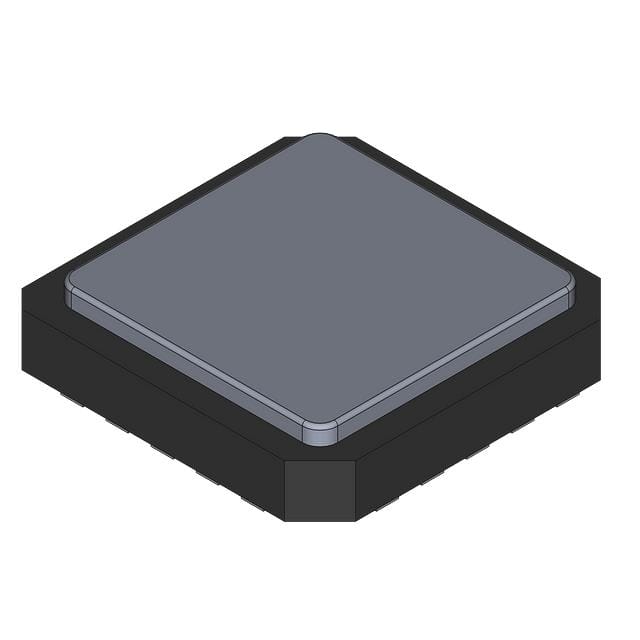
- Part No.:
- 78027012A
- Manufacturer:
- Texas Instruments
- Category:
- Signal Switches, Multiplexers, Decoders
- Package:
- 20-CLCC
- Datasheet:
-
 78027012A.pdf
- Description:
- 10-LINE TO 4-LINE AND 8-LINE TO
- Quantity:
- Payment:

- Shipping:

Inventory:1,283
Please send an inquiry. Send us your inquiry, and we will respond immediately.
Product details
Overview
78027012A from Texas Instruments is a military-grade TTL priority encoder that converts eight active-low data inputs (0–7) into three-bit active-low binary (A0, A1, A2), with enable input (EI), group signal (GS), and enable output (EO). It operates across −55°C to +125°C, delivers 15 ns typical propagation delay, consumes 12 mA max supply current, and features priority encoding to resolve input contention in real time - used in avionics control panels and missile launch sequencers.
For engineers reviewing the 78027012A datasheet, 78027012A pinout, 78027012A application, or 78027012A equivalent, key selection considerations include its LCCC-20 package, −55°C to +125°C operating range, active-low input/output logic, cascading capability via EI/EO, and compatibility with legacy 54LS-series TTL systems requiring radiation-tolerant encoding.
Technical Context
The 78027012A implements combinational priority encoding using bipolar TTL logic, where only the highest-priority asserted (low) input determines the output code. Its internal architecture includes buffered inputs (18 kΩ nominal pull-up for non-0 inputs), totem-pole outputs, and dedicated cascading logic enabling multi-stage octal expansion without external gates.
It supports full TTL voltage thresholds (VIH = 2 V min, VIL = 0.7 V max), drives ±4 mA output current, and maintains stable operation under transient conditions - though designers must account for GS output glitches during EI transitions when all inputs are high, as specified in TI's application guidance.
Key Specifications
| Parameter | Value and Actual Design Meaning |
|---|---|
| Function | 8-line to 3-line priority encoder with EI, EO, and GS outputs |
| Logic Family | TTL LS (Low-power Schottky), compatible with 54LS series |
| Propagation Delay | 15 ns typical (tPHL/tPLH from EI or input to A0/A1/A2), critical for real-time interrupt prioritization |
| Supply Voltage | 4.5 V to 5.5 V - requires stable 5 V rail; not 3.3 V compatible |
| Operating Temperature | −55°C to +125°C - qualified for extended military and aerospace environments |
| Input Resistance | 18 kΩ nominal (non-0 inputs); 9 kΩ nominal (inputs 1–7) - defines pull-up sizing for open-collector interfacing |
| Output Drive | IOL = 4 mA / IOH = −400 µA - sufficient to drive 10 LS-TTL loads directly |
Pinout & Package
LCCC (Leadless Ceramic Chip Carrier) package, 20-pin, hermetically sealed, ceramic body with solderable metallized perimeter terminations. Designed for high-reliability mounting on ceramic substrates or metal-core PCBs in harsh-environment applications.
| Pin/Terminal | Circuit Role | Design Meaning |
|---|---|---|
| 1, 2, 3, 4, 5, 6, 7, 8 | Data Inputs (0–7) | Active-low priority inputs; input 0 has highest priority, input 7 lowest |
| 9 | Enable Input (EI) | Active-low enable; disables encoding and forces GS high and EO high when deasserted |
| 10, 11, 12 | Binary Outputs (A0, A1, A2) | Active-low 3-bit binary code representing highest-priority asserted input |
| 13 | Group Signal (GS) | Active-low flag indicating any input (0–7) is asserted; used for interrupt request generation |
| 14 | Enable Output (EO) | Active-low cascading output; goes low when EI is low and all inputs are high |
| 15, 16, 17, 18 | No Connect (NC) | No internal connection - must remain unconnected per TI datasheet |
| 19 | VCC | Positive supply terminal (4.5–5.5 V) |
| 20 | GND | Ground reference terminal |
Key Features
| Feature | Design Value |
|---|---|
| Priority Encoding Logic | Guarantees single-output resolution even when multiple inputs assert simultaneously - essential for fault-tolerant interrupt arbitration |
| Cascadable Architecture | EI/EO signals allow stacking multiple 78027012A devices to encode >8 lines without external logic or timing penalties |
| Military Temperature Range | Qualified from −55°C to +125°C per MIL-PRF-38535 - validated for flight-critical and ground-vehicle control systems |
| LS-TTL Compatibility | Meets SN54LS148 electrical specs: VIH/VIL thresholds, output drive, and noise margins - ensures drop-in replacement in legacy designs |
| Hermetic LCCC Packaging | 20-pin leadless ceramic construction provides superior moisture resistance, thermal cycling endurance, and EMI shielding vs. plastic packages |
Applications
| Avionics Control Panel Interface | Missile Launch Sequencer |
|---|---|
Use Scenario: Encoding discrete switch closures from cockpit panel pushbuttons into digital interrupt vectors for flight computer processing. IC Role / Device Role / Timing Role: Priority encoder resolving simultaneous button presses into unique 3-bit codes; GS triggers CPU interrupt, A0–A2 identify source. Use Value: Eliminates software polling overhead and guarantees deterministic response to highest-priority command within 15 ns. | Use Scenario: Converting status signals from 8 independent arming/firing subsystems into a unified readiness code for launch control logic. IC Role / Device Role / Timing Role: Real-time hardware arbitration of safety interlocks; EO enables downstream stage validation only when all upstream checks pass. Use Value: Enables fail-safe, hardware-gated sequencing with sub-20 ns decision latency - critical for mission-critical timing windows. |
| Rad-Hard Telemetry Preprocessor | Secure Ground Station I/O Hub |
Use Scenario: Aggregating sensor fault flags (temperature, pressure, voltage) from radiation-exposed modules before transmission to shielded processors. IC Role / Device Role / Timing Role: Priority encoder compressing 8 fault lines into 3 bits; GS indicates "any fault active", enabling immediate telemetry alert. Use Value: Reduces telemetry bandwidth by 62.5% while preserving fault hierarchy - vital for constrained downlink capacity. | Use Scenario: Managing input prioritization across 8 encrypted comms channel status indicators in a classified communications hub. IC Role / Device Role / Timing Role: Hardware-level channel arbitration; cascaded EO/GS signals feed FPGA-based scheduler to allocate processing resources. Use Value: Offloads real-time priority decisions from firmware, reducing attack surface and ensuring deterministic channel access. |
Equivalent & Alternatives
The following parts are listed as comparable options for similar priority encoder applications.
| Alternative Part | Technical Difference | Application Difference | Selection Advice |
|---|---|---|---|
| SNJ54LS148J | Same function, CDIP-16 package; 16-pin dual-in-line with through-hole leads | Requires PCB layout change (16-pin DIP vs. 20-pin LCCC); lower thermal performance (θJA = 67°C/W vs. LCCC's ~120°C/W) | Select when legacy through-hole assembly or manual prototyping is required; verify mechanical fit and thermal derating. |
| JM38510/36001B2A | Identical LCCC-20 package, same electrical specs, but procured under MIL-PRF-38535 Class B screening | Same footprint and pinout; differs only in test rigor and traceability - intended for higher assurance programs (e.g., DoD Class H) | Select when full QML-38535 Class B qualification, lot traceability, or extended reliability testing is mandated. |
Compared with SNJ54LS148J and JM38510/36001B2A, the 78027012A offers identical functional behavior and LCCC-20 packaging but is designated under Texas Instruments' proprietary military part numbering system - making it suitable for programs requiring TI-sourced, non-MIL-spec-labeled components with full TI warranty and support.
Availability
78027012A is available at Aetrix Electronics and suitable for avionics control panels, missile launch sequencers, rad-hard telemetry preprocessors, and secure ground station I/O hubs requiring stable component supply across extended temperature ranges and long production lifecycles.
Supply support for 78027012A includes scheduled delivery planning, volume procurement assistance, BOM continuity management, traceable sourcing, and lifecycle availability coordination for OEM customers, industrial embedded developers, connected-device designers, and electronics production programs.
Manufacturer
Texas Instruments is a U.S.-based semiconductor company founded in 1930, specializing in analog, embedded processing, and high-reliability logic solutions for industrial, automotive, and defense markets.
The 78027012A belongs to TI's legacy 54LS logic family, designed specifically for military and aerospace applications demanding wide-temperature operation, hermetic packaging, and proven field reliability in mission-critical systems.
FAQ
What is the operating temperature range of the 78027012A?
The 78027012A is rated for operation from −55°C to +125°C, meeting military environmental requirements per MIL-PRF-38535. This range is validated through temperature cycling, burn-in, and parametric testing - making it suitable for deployment in jet engine bays, space vehicle electronics bays, and desert-deployed ground systems where ambient extremes exceed commercial-grade limits. The 78027012A maintains full functionality across this span without derating.
Does the 78027012A support cascading with other priority encoders?
Yes, the 78027012A supports hardware cascading via its dedicated EI (enable input) and EO (enable output) pins. When multiple 78027012A devices are stacked, the EO of a higher-priority stage connects to the EI of the next stage, allowing seamless expansion to 16-, 24-, or more-input systems without external logic gates or timing penalties. This feature is explicitly documented in the TI SDLS053B datasheet Figure 3 and function table.
Is the 78027012A pin-compatible with standard SN74LS148 variants?
No - the 78027012A uses a 20-pin LCCC (FK) package, whereas commercial SN74LS148 variants use 16-pin packages (PDIP-N, SOIC-D, SOP-NS, CDIP-J, CFP-W). Pin count, layout, and thermal pad structure differ fundamentally. While logic function and electrical behavior match SN54LS148, direct PCB replacement requires redesign. Always verify footprint and thermal interface against TI's FK package drawing SLMA007.
What is the purpose of the Group Signal (GS) output on the 78027012A?
The GS (Group Signal) output on the 78027012A is an active-low flag that asserts when any of the eight data inputs (0–7) is low - indicating "at least one valid input is active." It serves as a ready/interrupt signal to microcontrollers or FPGAs, eliminating the need for software polling of individual inputs. In the 78027012A, GS is fully synchronized to input transitions and is specified to respond within 15–55 ns depending on signal path, per SDLS053B switching characteristics tables.
Can the 78027012A be used with 3.3 V logic systems?
No - the 78027012A is a 5 V-only TTL device requiring VCC between 4.5 V and 5.5 V. Its input thresholds (VIH = 2.0 V min, VIL = 0.7 V max) and output levels (VOH ≈ 2.5 V min, VOL ≈ 0.25 V max at 4 mA) are incompatible with 3.3 V CMOS logic families without level-shifting. Interfacing to 3.3 V systems requires discrete translators or bus switches; TI does not specify or guarantee 3.3 V operation for the 78027012A.
78027012A Specifications
- Product attributes
- Attribute value
- Manufacturer:
- Texas Instruments
- Series:
- 54LS
- Package/Case:
- 20-CLCC
- Packaging:
- Tube
- Product Status:
- Active
- Type:
- Priority Encoder
- Circuit:
- 1 x 8:3
- Independent Circuits:
- 1
- Current - Output High, Low:
- 400µA, 4mA
- Voltage Supply Source:
- Single Supply
- Voltage - Supply:
- 4.5V ~ 5.5V
- Operating Temperature:
- -55°C ~ 125°C
- Grade:
- -
- Qualification:
- -
- Mounting Type:
- Surface Mount
- Supplier Device Package:
- 20-LCCC (8.89x8.89)
78027012A FAQ
1.How can I place an order for 78027012A through Aetrix?
Please submit a Request for Quotation (RFQ) for 78027012A on Aetrix. Our sales agent will provide a competitive quotation and guide you through the order confirmation once you accept the terms.
2.Are the price and stock information for 78027012A reliable?
The price and inventory of 78027012A are updated periodically and may fluctuate due to market conditions. Stock and pricing data are typically refreshed every 24 hours. Quotation validity for 78027012A is usually 5 days.
3.What payment methods are accepted for 78027012A?
We accept Wire Transfer, PayPal, Credit Card, Western Union, MoneyGram, and Escrow for 78027012A transactions.
Note: Certain payment methods may incur a processing fee.
4.How is shipping managed for 78027012A?
78027012A orders can be shipped via leading logistics carriers, including DHL, UPS, FedEx, TNT, or Registered Mail.
Once your 78027012A order is processed, you will receive an email with the shipment details and tracking number.
Note: Tracking information may take up to 24 hours to appear. Express delivery typically takes 3–5 business days.
5.How can I obtain technical support or documentation for 78027012A?
For technical support, including 78027012A datasheets, pinout diagrams, or application guidance, please contact our engineering support team. They can provide detailed documentation and assistance for your 78027012A requirements.
6.How does Aetrix verify that 78027012A is sourced from the original manufacturer or authorized distributors?
All 78027012A products on Aetrix are procured from qualified distributors and authorized channels. Our dedicated quality assurance team conducts strict verification, including traceability checks and, if necessary, third-party testing. This ensures that 78027012A meets industry standards.
7.What is the process for return or replacement of 78027012A?
All 78027012A units undergo pre-shipment inspection (PSI). If there is an issue with 78027012A, returns or replacements are accepted under the following conditions:
1.Quantity discrepancies, incorrect items, or visible external defects (such as breakage or corrosion), acknowledged by Aetrix.
2.The issue is reported within 90 days of delivery.
3.The 78027012A part is unused and in its original packaging.
Return procedure for 78027012A:
1.Submit a request within 90 days.
2.Obtain a Return Material Authorization (RMA) from Aetrix.
78027012A Tags
-
SN74HC138DR
Texas Instruments
-
TC7SB3157CFU,LF(CT
Toshiba Semiconductor and Storage
-
74CBTLV3257PW,118
Nexperia USA Inc.
-
SN74CBTLV3257PWR
Texas Instruments
-
74CBTLV3257GUX
Nexperia USA Inc.
-
74HC154BQ,118
Nexperia USA Inc.

-
P3S0200GMX
NXP USA Inc.
-
SN74CB3Q3245PWR
Texas Instruments
-
SN74CB3Q3257RGYR
Texas Instruments
-
TCA9543APWR
Texas Instruments
-
TCA9546APWR
Texas Instruments
-
SN74HC138N
Texas Instruments
Tech Hub

A practical engineering guide to 3.3V and 5V logic compatibility, input thresholds, resistor dividers, translator ICs, MOSFET level shifting, I2C pull-ups, timing limits and power-sequencing risks.

The 74HC595 uses push-pull logic outputs, while the TPIC6B595 uses 50 V open-drain DMOS sinks for higher-power loads. This guide compares timing, current limits, 3.3 V interfacing, load wiring, thermal…

The 74HC595 converts serial data into eight stable parallel outputs. This guide covers pin functions, shift and storage timing, OE and MR behavior, drive-current limits, cascading, voltage compatibilit…

A technical comparison of level-sensitive latches and edge-triggered flip-flops, covering timing windows, setup and hold limits, master–slave operation, time borrowing, race-through, HDL inference and…

A D latch stores one bit while Enable controls when data can pass. This reference covers gate-level operation, truth tables, transparency, setup and hold timing, LE versus OE, common ICs and practical …

An SR latch stores one bit through cross-coupled feedback. This engineering reference covers NOR and NAND implementations, truth tables, forbidden-state recovery, gated operation, switch debouncing, fa…

Latch circuits retain one bit through feedback. This technical reference covers SR and D latches, truth tables, transparency, timing limits, latch-versus-flip-flop behavior, applications and common log…

An engineering guide to LED driver operation, constant-current and constant-voltage outputs, linear and switching topologies, dimming, IC selection, calculations, replacement compatibility, and fault c…

Operational amplifier guide covering op amp basics, feedback, ideal vs real op amps, common configurations, buffer circuits, offset, bias current, gain-bandwidth, slew rate, rail-to-rail limits and sel…

Jumper cables guide covering safe connection order, red and black clamp placement, final ground connection, cable gauge, length, clamp quality, copper vs CCA cables, jump starter comparison and battery…


