
 My Inquiry
 My Account


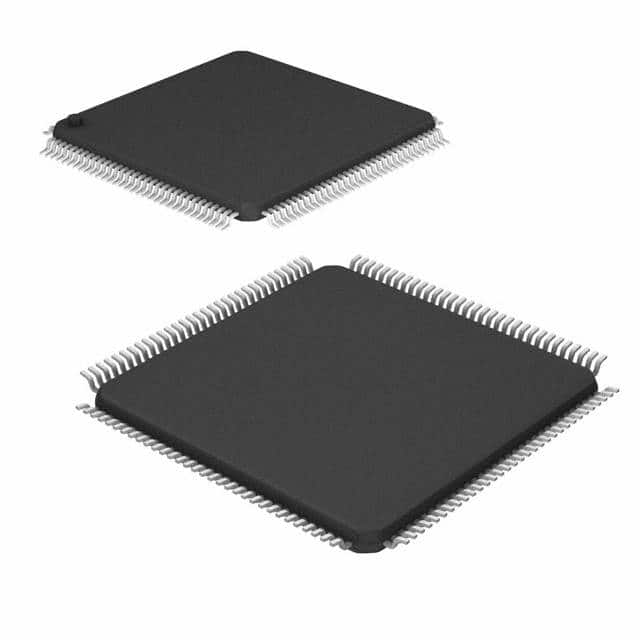
Analog Devices Inc./Maxim Integrated 78P2352-IEL/F
- Part No.:
- 78P2352-IEL/F
- Manufacturer:
- Analog Devices Inc./Maxim Integrated
- Category:
- Telecom
- Package:
- 128-LQFP Exposed Pad
- Datasheet:
-
 78P2352-IEL/F.pdf
- Description:
- IC TELECOM INTERFACE 128LQFP
- Quantity:
- Payment:

- Shipping:

Inventory:4,222
Please send an inquiry. Send us your inquiry, and we will respond immediately.
Product details
Overview
78P2352-IEL/F from Teridian Semiconductor is a dual-channel Line Interface Unit (LIU) for OC-3/STM-1-E (155.52 Mbps) and E4 (139.264 Mbps) telecom interfaces, integrating CDR-based NRZ-to-CMI conversion, adaptive receive equalization, and LVPECL/CMOS host interfacing in a single 128-pin LQFP package. It supports coaxial (75Ω CMI) and fiber (NRZ) media paths with full ITU-T G.703, G.751, G.823, and Telcordia GR-253-CORE compliance.
For engineers reviewing the 78P2352-IEL/F datasheet, 78P2352-IEL/F pinout, 78P2352-IEL/F application, or 78P2352-IEL/F equivalent, key selection considerations include dual-channel jitter performance (±100 ppm Rx loss-of-lock threshold), configurable serial/parallel interface timing modes (synchronous, plesiochronous, loop-timing), and hardware/software mode selection via SPSL, SDO_E4, and SEN_CMI pins.
Technical Context
The 78P2352-IEL/F implements two independent channel paths, each with a Delay Locked Loop (DLL)-based CDR for both transmit and receive clock recovery. The Rx path includes an adaptive equalizer handling ≥12.7 dB cable loss and ITU-T G.783-compliant Loss of Signal detection with 110 UI assertion/clear thresholds.
In transmit, the device supports three serial timing modes (synchronous re-timing, plesiochronous, loop-timing) and two parallel modes (master/slave), all using a 4×8 FIFO for clock decoupling. The Tx CDR synthesizes a 278.528 MHz (E4) or 311.04 MHz (OC-3) clock, available at TXxCKP/N for system synchronization.
Key Specifications
| Parameter | Value and Actual Design Meaning |
|---|---|
| Data Rate | 155.52 Mbps (OC-3/STM-1) or 139.264 Mbps (E4); supports dual-channel independent operation with rate selection per channel via SDO_E4/E4 bit. |
| Media Interface | CMI-coded 75Ω coaxial (ITU-T G.703 compliant) or NRZ optical (LVPECL-level ECLxP/N outputs); media selection per channel via SEN_CMI/CMI bit. |
| Host Interface | 4-bit parallel CMOS (34.816/38.88 MHz) or serial LVPECL (SIxDP/N, SIxCKP/N); interface type selected by SDI_PAR/PAR bit. |
| Jitter Performance | Compliant with ITU-T G.823/G.825, Telcordia GR-253-CORE; Rx jitter tolerance ≥0.7 UIpp (155.52 Mbps), Tx output jitter ≤0.3 UIpp (RMS). |
| Power Supply | Single 3.3 V supply; operates across industrial temperature range (–40°C to +85°C) in thermally enhanced 128-pin LQFP package. |
| Control Interface | Configurable via hardware pins (SPSL, SDO_E4, SEN_CMI, SDI_PAR) or 4-wire serial port; supports programmable interrupts and register-based status monitoring. |
Pinout & Package
78P2352-IEL/F is housed in a standard and thermally enhanced 128-pin JEDEC LQFP package (20 mm × 20 mm, 0.5 mm pitch). Pin functions are validated per datasheet Pages 16–21 and include dual-channel differential I/O (RXxP/N, CMIxP/N, ECLxP/N), reference clock inputs (CKREFP/N), serial control (SDI, SDO, SCLK, CS), and power/ground distribution across multiple VCC/GND pairs.
| Pin/Terminal | Circuit Role | Design Meaning |
|---|---|---|
| RX1P/N, RX2P/N | Differential receive data input | Accept 155.52/139.264 Mbps CMI or NRZ signals; terminated internally at 75Ω (CMI) or 100Ω (NRZ); bypass equalizer in NRZ mode. |
| CMI1P/N, CMI2P/N | Differential CMI transmit output | Drive 75Ω coax via external transformer; tri-statable during power-down; meet ITU-T G.703 analog template. |
| ECL1P/N, ECL2P/N | Differential NRZ transmit output | LVPECL-level outputs for direct connection to optical transceivers; CMI encoder/decoder disabled in NRZ mode. |
| CKREFP/N | Differential reference clock input | Accepts 77.76 MHz (CMOS single-ended if ≤77.76 MHz) or 139.264/155.52 MHz (LVPECL differential); used for Rx/Tx DLL and FIFO re-timing. |
| SPSL | Serial/Parallel mode select | Low = hardware configuration mode; High = software configuration via 4-wire serial port; disables control pins when asserted. |
| SDO_E4 | Data rate select | High = E4 (139.264 Mbps); Low = STM-1/OC-3 (155.52 Mbps); sets global reference clock frequency via CKSL mapping. |
| SEN_CMI | Media coding select | High = CMI coax mode (enable encoder/decoder/equalizer); Low = NRZ fiber mode (bypass CMI blocks, use ECLxP/N). |
Key Features
| Feature | Design Value |
|---|---|
| Adaptive receive equalization | Compensates ≥12.7 dB of inter-symbol interference on coaxial cable, enabling reliable long-haul CMI reception without external equalizers. |
| Dual-mode media interface | Hardware-selectable CMI (coax) or NRZ (fiber) per channel, eliminating need for separate LIUs for electrical vs. optical line cards. |
| Flexible host timing architecture | Supports synchronous re-timing, plesiochronous, and loop-timing transmit modes - critical for mezzanine cards where reference clock sync is unavailable. |
| Integrated 4×8 transmit FIFO | Handles ±25.6 ns clock phase drift between host and reference clocks; asserts FERRx interrupt on overflow/underflow for real-time error detection. |
| Full loopback capability | Local analog, remote analog, and full digital (FLBK) loopbacks enable comprehensive bring-up, diagnostics, and framer interoperability testing. |
Applications
| Central Office Interconnects | DSLAMs |
|---|---|
|
Use Scenario: Aggregating multiple E4/STM-1 streams between central office switches and upstream transport nodes using 75Ω coax or fiber links. IC Role / Device Role / Timing Role: Dual-channel LIU providing physical layer framing, clock recovery, and jitter filtering for SONET/SDH line-side interface. Use Value: Enables single-chip support for two independent OC-3 or E4 ports, reducing board space and BOM count versus discrete solutions. |
Use Scenario: Backhauling DSL subscriber traffic over legacy PDH/E4 infrastructure in DSL access multiplexers. IC Role / Device Role / Timing Role: Line interface unit converting framer-generated parallel/nibble data into CMI-coded 139.264 Mbps coax signals. Use Value: Adaptive equalization maintains signal integrity over aging copper plant with >10 dB loss, extending equipment lifetime. |
| Add Drop Multiplexers (ADMs) | Digital Microwave Radios |
|
Use Scenario: Inserting/dropping OC-3 tributaries in ring-based metro networks with redundant line interfaces. IC Role / Device Role / Timing Role: Dual-channel LIU delivering independent Rx LOS detection, Tx power-down, and jitter-compliant transmission per channel. Use Value: Independent channel control allows one port to remain active during maintenance or failure of the other, improving system uptime. |
Use Scenario: Transmitting high-reliability STM-1 data over microwave links where phase noise and jitter must meet strict Telcordia GR-253 limits. IC Role / Device Role / Timing Role: Line interface unit performing CDR-based jitter cleanup and low-jitter 311.04 MHz clock synthesis for RF modulator sync. Use Value: Meets G.825 transfer function and <0.3 UIpp RMS output jitter, ensuring minimal BER degradation over multi-hop radio hops. |
Equivalent & Alternatives
The following parts are listed as comparable options for similar Line Interface Unit applications.
| Alternative Part | Technical Difference | Application Difference | Selection Advice |
|---|---|---|---|
| 78P2351-IEL/F | Single-channel variant of same family; identical electrical specs, pinout, and register map per channel; lacks second channel's I/O and control logic. | Suitable only for single-port designs; cannot replace dual-channel functionality without board redesign. | Select when only one OC-3/E4 port is required - reduces cost and power vs. underutilized 78P2352-IEL/F. |
| ICS87302AG-01LF | Single-channel CDR-only IC (no integrated LIU driver/encoder); requires external CMI encoder, driver, and equalizer; no LOS/LOL monitoring. | Used in custom hybrid LIU designs where flexibility outweighs integration; not drop-in compatible. | Choose only for highly specialized systems requiring modular clock/data recovery with discrete media interface design. |
Compared with 78P2352-IEL/F, the 78P2351-IEL/F offers identical per-channel performance at lower cost and power but eliminates dual-port capability, while the ICS87302AG-01LF provides CDR functionality only - requiring additional components to achieve full LIU functionality and increasing PCB area and validation effort.
Availability
78P2352-IEL/F is available at Aetrix Electronics and suitable for Central Office Interconnects, DSLAMs, and Add Drop Multiplexers requiring stable component supply, long-lifecycle support, and telecom-grade reliability.
Supply support for 78P2352-IEL/F includes scheduled delivery planning, volume procurement assistance, BOM continuity management, traceable sourcing, and lifecycle availability coordination for OEM customers, industrial embedded developers, connected-device designers, and electronics production programs.
Manufacturer
Teridian Semiconductor was a fabless analog/mixed-signal IC company specializing in precision metrology and telecom interface solutions before its acquisition by Maxim Integrated in 2010.
The 78P2352-IEL/F belongs to Teridian's second-generation LIU product line, designed specifically for carrier-grade OC-3/STM-1 and E4 line interface applications in central office and access network equipment.
FAQ
What is the primary function of the 78P2352-IEL/F in telecom systems?
The 78P2352-IEL/F serves as a dual-channel Line Interface Unit (LIU) that bridges digital framer ASICs to physical telecom media - supporting both 155.52 Mbps OC-3/STM-1 and 139.264 Mbps E4 rates. It performs clock and data recovery, CMI encoding/decoding, adaptive equalization, and jitter-compliant transmission. Its role is to ensure robust, standards-compliant signal integrity across coaxial and optical line interfaces in carrier infrastructure.
Does the 78P2352-IEL/F support independent configuration of each channel?
Yes, the 78P2352-IEL/F supports independent per-channel configuration for media type (CMI vs. NRZ), interface mode (serial LVPECL vs. 4-bit parallel), and timing mode (synchronous, plesiochronous, loop-timing) via dedicated register bits (CMI, PAR, SMOD[1:0]). Hardware pins like SDO_E4 and SEN_CMI set global defaults, but register-level control enables asymmetric operation - e.g., one channel on coax (CMI), the other on fiber (NRZ).
What reference clock frequencies does the 78P2352-IEL/F require for OC-3 and E4 operation?
For OC-3/STM-1 (155.52 Mbps), the 78P2352-IEL/F requires a 155.52 MHz differential LVPECL reference clock on CKREFP/N. For E4 (139.264 Mbps), it requires 139.264 MHz on the same pins. Lower-frequency options (77.76 MHz, 19.44 MHz, 17.408 MHz) are supported depending on CKSL and SDO_E4 settings, but full-rate operation mandates the corresponding line-rate clock.
How does the 78P2352-IEL/F handle Loss of Signal (LOS) detection?
The 78P2352-IEL/F implements ITU-T G.783-compliant LOS detection: in CMI mode, LOS asserts when peak signal drops ~19 dB below nominal for 110 unit intervals (UI), and clears at ~18 dB below nominal for 110 UI. In NRZ (fiber) mode, LOS triggers after >2.3 µs without transitions and clears after >4 transitions within 32 UI. LOS detection is disabled during local/remote loopback and monitor modes.
Can the 78P2352-IEL/F operate with a single-ended reference clock?
Yes - for reference frequencies ≤77.76 MHz, the 78P2352-IEL/F accepts a single-ended CMOS clock applied to CKREFP with CKREFN grounded. However, at full line rates (139.264/155.52 MHz), a differential LVPECL clock on CKREFP/N is mandatory to meet jitter and timing margin requirements specified in the datasheet.
78P2352-IEL/F Specifications
- Product attributes
- Attribute value
- Manufacturer:
- Analog Devices Inc./Maxim Integrated
- Series:
- -
- Package/Case:
- 128-LQFP Exposed Pad
- Packaging:
- Tube
- Product Status:
- Obsolete
- Function:
- Line Interface Unit (LIU)
- Interface:
- CMOS
- Number of Circuits:
- 2
- Voltage - Supply:
- 3.15V ~ 3.45V
- Current - Supply:
- 325mA
- Power (Watts):
- -
- Operating Temperature:
- -40°C ~ 85°C
- Grade:
- -
- Qualification:
- -
- Mounting Type:
- Surface Mount
- Supplier Device Package:
- 128-LQFP-EP (14x14)
78P2352-IEL/F FAQ
1.How can I place an order for 78P2352-IEL/F through Aetrix?
Please submit a Request for Quotation (RFQ) for 78P2352-IEL/F on Aetrix. Our sales agent will provide a competitive quotation and guide you through the order confirmation once you accept the terms.
2.Are the price and stock information for 78P2352-IEL/F reliable?
The price and inventory of 78P2352-IEL/F are updated periodically and may fluctuate due to market conditions. Stock and pricing data are typically refreshed every 24 hours. Quotation validity for 78P2352-IEL/F is usually 5 days.
3.What payment methods are accepted for 78P2352-IEL/F?
We accept Wire Transfer, PayPal, Credit Card, Western Union, MoneyGram, and Escrow for 78P2352-IEL/F transactions.
Note: Certain payment methods may incur a processing fee.
4.How is shipping managed for 78P2352-IEL/F?
78P2352-IEL/F orders can be shipped via leading logistics carriers, including DHL, UPS, FedEx, TNT, or Registered Mail.
Once your 78P2352-IEL/F order is processed, you will receive an email with the shipment details and tracking number.
Note: Tracking information may take up to 24 hours to appear. Express delivery typically takes 3–5 business days.
5.How can I obtain technical support or documentation for 78P2352-IEL/F?
For technical support, including 78P2352-IEL/F datasheets, pinout diagrams, or application guidance, please contact our engineering support team. They can provide detailed documentation and assistance for your 78P2352-IEL/F requirements.
6.How does Aetrix verify that 78P2352-IEL/F is sourced from the original manufacturer or authorized distributors?
All 78P2352-IEL/F products on Aetrix are procured from qualified distributors and authorized channels. Our dedicated quality assurance team conducts strict verification, including traceability checks and, if necessary, third-party testing. This ensures that 78P2352-IEL/F meets industry standards.
7.What is the process for return or replacement of 78P2352-IEL/F?
All 78P2352-IEL/F units undergo pre-shipment inspection (PSI). If there is an issue with 78P2352-IEL/F, returns or replacements are accepted under the following conditions:
1.Quantity discrepancies, incorrect items, or visible external defects (such as breakage or corrosion), acknowledged by Aetrix.
2.The issue is reported within 90 days of delivery.
3.The 78P2352-IEL/F part is unused and in its original packaging.
Return procedure for 78P2352-IEL/F:
1.Submit a request within 90 days.
2.Obtain a Return Material Authorization (RMA) from Aetrix.
78P2352-IEL/F Tags

-
LMC567CMX/NOPB
Texas Instruments
-
LM567CMX/NOPB
Texas Instruments
-
LM567CM/NOPB
Texas Instruments
-
VSC8531XMW-02
Microchip Technology
-
VSC8531XMW-05
Microchip Technology

-
GPY115C0VI
MaxLinear, Inc.
-
SI32185-A-FMR
Skyworks Solutions Inc.
-
VSC8541XMV-05
Microchip Technology
-
SI32178-B-FM1R
Skyworks Solutions Inc.
-
GPY215C0VI
MaxLinear, Inc.
-
CPC7514ZTR
Littelfuse Inc.
-
VSC8502XML-03
Microchip Technology
Tech Hub

A practical engineering guide to 3.3V and 5V logic compatibility, input thresholds, resistor dividers, translator ICs, MOSFET level shifting, I2C pull-ups, timing limits and power-sequencing risks.

The 74HC595 uses push-pull logic outputs, while the TPIC6B595 uses 50 V open-drain DMOS sinks for higher-power loads. This guide compares timing, current limits, 3.3 V interfacing, load wiring, thermal…

The 74HC595 converts serial data into eight stable parallel outputs. This guide covers pin functions, shift and storage timing, OE and MR behavior, drive-current limits, cascading, voltage compatibilit…

A technical comparison of level-sensitive latches and edge-triggered flip-flops, covering timing windows, setup and hold limits, master–slave operation, time borrowing, race-through, HDL inference and…

A D latch stores one bit while Enable controls when data can pass. This reference covers gate-level operation, truth tables, transparency, setup and hold timing, LE versus OE, common ICs and practical …

An SR latch stores one bit through cross-coupled feedback. This engineering reference covers NOR and NAND implementations, truth tables, forbidden-state recovery, gated operation, switch debouncing, fa…

Latch circuits retain one bit through feedback. This technical reference covers SR and D latches, truth tables, transparency, timing limits, latch-versus-flip-flop behavior, applications and common log…

An engineering guide to LED driver operation, constant-current and constant-voltage outputs, linear and switching topologies, dimming, IC selection, calculations, replacement compatibility, and fault c…

Operational amplifier guide covering op amp basics, feedback, ideal vs real op amps, common configurations, buffer circuits, offset, bias current, gain-bandwidth, slew rate, rail-to-rail limits and sel…

Jumper cables guide covering safe connection order, red and black clamp placement, final ground connection, cable gauge, length, clamp quality, copper vs CCA cables, jump starter comparison and battery…


