
 My Inquiry
 My Account


Analog Devices Inc. 7B27-E-04-1

- Part No.:
- 7B27-E-04-1
- Manufacturer:
- Analog Devices Inc.
- Category:
- Sensor, Transducer Amplifiers
- Package:
- Datasheet:
-
 7B27-E-04-1.pdf
- Description:
- MODULE ISOL THERMO-IN NON-LIN
- Quantity:
- Payment:

- Shipping:

Inventory:2,421
Please send an inquiry. Send us your inquiry, and we will respond immediately.
Product details
Overview
7B27-E-04-1 from Analog Devices is a single-channel isolated thermocouple input signal conditioner for Type E thermocouples, delivering factory-configured +1 V to +5 V output linear with 0°C to +900°C input range, ±0.01% initial accuracy, and 100 Vrms continuous input-to-output isolation. It operates from +14 VDC to +35 VDC supply and is designed for industrial process control systems requiring high noise immunity and cold junction compensation.
For engineers reviewing the 7B27-E-04-1 datasheet, 7B27-E-04-1 pinout, 7B27-E-04-1 application, or 7B27-E-04-1 equivalent, key selection criteria include thermocouple type (E), output range (+1 V to +5 V), cold junction compensation accuracy (±1.0°C over +5°C to +45°C), 3 Hz bandwidth, and compatibility with 7B Series backplanes (AC1363) using universal 6-pin screw-terminal interface.
Technical Context
The 7B27-E-04-1 implements transformer-based isolation (100 Vrms) with internal DC/DC conversion for front-end power, amplitude modulation for signal transfer, and demodulation in the output stage. Its analog signal path includes a one-pole 3 Hz anti-alias filter pre-amplification and a two-pole low-pass output filter (–3 dB @ 3 Hz).
Cold junction compensation uses an embedded thermistor under the input terminal block, referenced to the backplane's CJC sensor; zero suppression and span stability are specified at ±0.005% (Vz)/°C and ±35 ppm/°C respectively. Input protection supports ±30 VDC continuous and meets ANSI/IEEE C37.90.1-1989 transient standards.
Key Specifications
| Parameter | Value and Actual Design Meaning |
|---|---|
| Input Type | Type E thermocouple, 0°C to +900°C range, linearized output |
| Output Range | +1 V to +5 V, low-impedance (<1 Ω), drives ≥2 kΩ loads |
| Accuracy | ±0.01% Span initial @ +25°C (±0.1% max); includes repeatability, hysteresis, nonlinearity |
| Isolation Rating | 100 Vrms continuous input-to-output common-mode voltage |
| Bandwidth | 3 Hz (–3 dB), two-pole low-pass output filter ensures stable step response |
| Cold Junction Comp. | ±1.0°C max error over +5°C to +45°C ambient, requires 7B Series backplane CJC sensor |
| Power Supply | +14 VDC to +35 VDC nominal +24 VDC; max 25 mA current draw |
Pinout & Package
7B27-E-04-1 uses a compact 6-pin screw-terminal module package (42.24 mm × 53.6 mm × 14.3 mm) compatible with 7B Series backplanes (e.g., AC1363). Pin assignments follow universal 7B Series layout with field-wireable terminals.
| Pin/Terminal | Circuit Role | Design Meaning |
|---|---|---|
| 0 | SENSOR INPUT | Direct connection point for Type E thermocouple leads; no internal biasing |
| 1 | INPUT HIGH | Positive thermocouple lead terminal; protected to ±30 VDC continuous |
| 2 | INPUT LOW | Negative thermocouple lead terminal; referenced to terminal 5 (common) |
| 3 | POWER SUPPLY (DC) | +14 VDC to +35 VDC input; powers isolated input and output circuitry |
| 4 | OUTPUT VOLTAGE | +1 V to +5 V analog output; buffered, low-noise, low-impedance source |
| 5 | OUTPUT & POWER COMMON | Shared return for power supply and output signal; establishes reference for isolation barrier |
Key Features
| Feature | Design Value |
|---|---|
| Thermocouple Support | Factory-configured for Type E only (0°C to +900°C); no user reconfiguration |
| Isolated Output | Transformer-coupled 100 Vrms continuous isolation eliminates ground loops in multi-sensor systems |
| Cold Junction Compensation | Integrated thermistor-based CJC on backplane-dependent design; enables accurate absolute temperature measurement |
| Noise Performance | 0.4 mVrms (10 Hz–100 kHz), 0.6 µVpeak (0.1 Hz–10 Hz) output noise supports precision thermal monitoring |
| Hot-Swappable Operation | Validated for insertion/removal under full +24 VDC power without disrupting field wiring or adjacent modules |
Applications
| Industrial Process Monitoring | Furnace Temperature Control |
|---|---|
|
Use Scenario: Continuous temperature logging of molten metal handling equipment in foundries using Type E thermocouples exposed to thermal cycling and EMI. IC Role / Device Role / Timing Role: Signal conditioner providing isolated, linearized, cold-junction-compensated voltage output for PLC analog inputs. Use Value: Enables direct integration with 1–5 V input PLCs while rejecting common-mode noise up to 100 Vrms and maintaining ±1.0°C CJC accuracy across ambient shifts. |
Use Scenario: Closed-loop temperature regulation in ceramic kilns where Type E sensors operate from ambient to +900°C with rapid ramp rates. IC Role / Device Role / Timing Role: Isolated analog interface converting thermocouple EMF into stable +1 V to +5 V control signal for PID controllers. Use Value: Delivers 3 Hz bandwidth sufficient for thermal inertia response, ±0.01% initial accuracy for setpoint fidelity, and hot-swap capability for maintenance without system shutdown. |
| Chemical Reactor Safety System | Power Generation Boiler Monitoring |
|
Use Scenario: Redundant temperature sensing in exothermic chemical reactors where sensor failure must trigger immediate shutdown. IC Role / Device Role / Timing Role: Fault-tolerant signal conditioner with upscale open-circuit indication and ±30 VDC input protection against wiring faults. Use Value: Provides predictable open-circuit detection via current-source-driven upscale output, eliminating undetected sensor break failures in safety-critical loops. |
Use Scenario: Distributed temperature monitoring across boiler tube banks in utility-scale steam generation, subject to vibration and electromagnetic interference. IC Role / Device Role / Timing Role: Isolated channel-level conditioner interfacing multiple Type E sensors to centralized DCS via shared 7B Series backplane. Use Value: Leverages 160 dB CMR @ 50/60 Hz and 60 dB normal-mode rejection to suppress grid-frequency noise in high-voltage plant environments. |
Equivalent & Alternatives
The following parts are listed as comparable options for similar thermocouple signal conditioning applications.
| Alternative Part | Technical Difference | Application Difference | Selection Advice |
|---|---|---|---|
| ADAM-4018-BE | 8-channel Ethernet-enabled module; 16-bit ADC; no internal CJC sensor-relies on external reference | Designed for distributed remote I/O over TCP/IP; not rack-mountable or hot-swappable in 19″ chassis | Choose when network connectivity and multi-channel consolidation outweigh need for backplane integration and true channel-to-channel isolation |
| OMEGA iDRN-TC | Single-channel DIN-rail mount; 24-bit resolution; CJC via internal sensor; 1500 Vrms isolation | Self-contained enclosure with built-in display and configuration buttons; no backplane dependency | Choose for standalone deployment in panel-mounted applications where 7B Series rack infrastructure is unavailable |
Compared with ADAM-4018-BE and OMEGA iDRN-TC, the 7B27-E-04-1 delivers deterministic 3 Hz bandwidth, guaranteed ±1.0°C CJC accuracy when used with 7B Series backplanes, and true mix-and-match hot-swap operation-making it optimal for legacy 19″ rack-based industrial control systems requiring modularity and field-serviceability.
Availability
7B27-E-04-1 is available at Aetrix Electronics and suitable for industrial process monitoring, furnace temperature control, chemical reactor safety systems, and power generation boiler monitoring requiring stable component supply, long-term lifecycle support, and seamless integration with 7B Series backplanes.
Supply support for 7B27-E-04-1 includes scheduled delivery planning, volume procurement assistance, BOM continuity management, traceable sourcing, and lifecycle availability coordination for OEM customers, industrial embedded developers, connected-device designers, and electronics production programs.
Manufacturer
Analog Devices is a global semiconductor company specializing in high-performance analog, mixed-signal, and digital signal processing technologies for industrial, automotive, and communications markets.
The 7B27-E-04-1 belongs to the 7B Series signal conditioning family, engineered for rugged industrial environments requiring isolation, noise immunity, and precise thermocouple linearization in process control and factory-floor automation.
FAQ
What thermocouple types does the 7B27-E-04-1 support?
The 7B27-E-04-1 is factory-configured exclusively for Type E thermocouples covering 0°C to +900°C. It does not support J, K, T, R, S, or B types-those require distinct model variants (e.g., 7B27-K-22-1). The internal linearization and cold junction compensation algorithms are calibrated specifically for Type E thermoelectric properties.
Does the 7B27-E-04-1 require an external cold junction sensor?
No-the 7B27-E-04-1 relies on the thermistor-based cold junction compensation (CJC) sensor embedded in the 7B Series backplane (e.g., AC1363), not an on-module sensor. Accurate CJC performance (±1.0°C max) is only guaranteed when installed in a compliant 7B backplane with functional channel-level CJC hardware.
Can the 7B27-E-04-1 output range be changed from +1 V to +5 V to 0 V to +10 V in the field?
No-the output range of the 7B27-E-04-1 is factory-configured and fixed. To obtain 0 V to +10 V output for Type E thermocouples, the correct part is 7B27-E-04-2. No jumper, DIP switch, or software configuration can alter the output range after manufacture.
What is the warm-up time required for the 7B27-E-04-1 to meet full specifications?
The 7B27-E-04-1 requires approximately 10 minutes of power-on time to stabilize thermal gradients and achieve full accuracy specifications, including ±0.01% Span initial accuracy and ±1.0°C cold junction compensation performance. This is documented in the Rev. 0 datasheet, Page 5.
Is the 7B27-E-04-1 compatible with non-Analog Devices 7B Series backplanes?
The 7B27-E-04-1 is mechanically and electrically designed for Analog Devices' 7B Series backplanes (e.g., AC1363) with standardized pinout, power delivery, and CJC interface. Compatibility with third-party backplanes is not validated or supported; use requires adherence to the official 7B mechanical and electrical interface specifications.
7B27-E-04-1 Specifications
- Product attributes
- Attribute value
- Manufacturer:
- Analog Devices Inc.
- Series:
- -
- Packaging:
- Bulk
- Product Status:
- Obsolete
- Amplifier Type:
- -
- Voltage - Supply:
- -
- Output Type:
- -
- Current - Supply:
- -
- Operating Temperature:
- -
- Mounting Type:
- -
7B27-E-04-1 FAQ
1.How can I place an order for 7B27-E-04-1 through Aetrix?
Please submit a Request for Quotation (RFQ) for 7B27-E-04-1 on Aetrix. Our sales agent will provide a competitive quotation and guide you through the order confirmation once you accept the terms.
2.Are the price and stock information for 7B27-E-04-1 reliable?
The price and inventory of 7B27-E-04-1 are updated periodically and may fluctuate due to market conditions. Stock and pricing data are typically refreshed every 24 hours. Quotation validity for 7B27-E-04-1 is usually 5 days.
3.What payment methods are accepted for 7B27-E-04-1?
We accept Wire Transfer, PayPal, Credit Card, Western Union, MoneyGram, and Escrow for 7B27-E-04-1 transactions.
Note: Certain payment methods may incur a processing fee.
4.How is shipping managed for 7B27-E-04-1?
7B27-E-04-1 orders can be shipped via leading logistics carriers, including DHL, UPS, FedEx, TNT, or Registered Mail.
Once your 7B27-E-04-1 order is processed, you will receive an email with the shipment details and tracking number.
Note: Tracking information may take up to 24 hours to appear. Express delivery typically takes 3–5 business days.
5.How can I obtain technical support or documentation for 7B27-E-04-1?
For technical support, including 7B27-E-04-1 datasheets, pinout diagrams, or application guidance, please contact our engineering support team. They can provide detailed documentation and assistance for your 7B27-E-04-1 requirements.
6.How does Aetrix verify that 7B27-E-04-1 is sourced from the original manufacturer or authorized distributors?
All 7B27-E-04-1 products on Aetrix are procured from qualified distributors and authorized channels. Our dedicated quality assurance team conducts strict verification, including traceability checks and, if necessary, third-party testing. This ensures that 7B27-E-04-1 meets industry standards.
7.What is the process for return or replacement of 7B27-E-04-1?
All 7B27-E-04-1 units undergo pre-shipment inspection (PSI). If there is an issue with 7B27-E-04-1, returns or replacements are accepted under the following conditions:
1.Quantity discrepancies, incorrect items, or visible external defects (such as breakage or corrosion), acknowledged by Aetrix.
2.The issue is reported within 90 days of delivery.
3.The 7B27-E-04-1 part is unused and in its original packaging.
Return procedure for 7B27-E-04-1:
1.Submit a request within 90 days.
2.Obtain a Return Material Authorization (RMA) from Aetrix.
7B27-E-04-1 Tags
-
SEN-13879
SparkFun Electronics
-
GA-311
Panasonic Industrial Automation Sales
-
E32-T11N 2M
Omron Automation and Safety
-
FX-501P
Panasonic Industrial Automation Sales
-
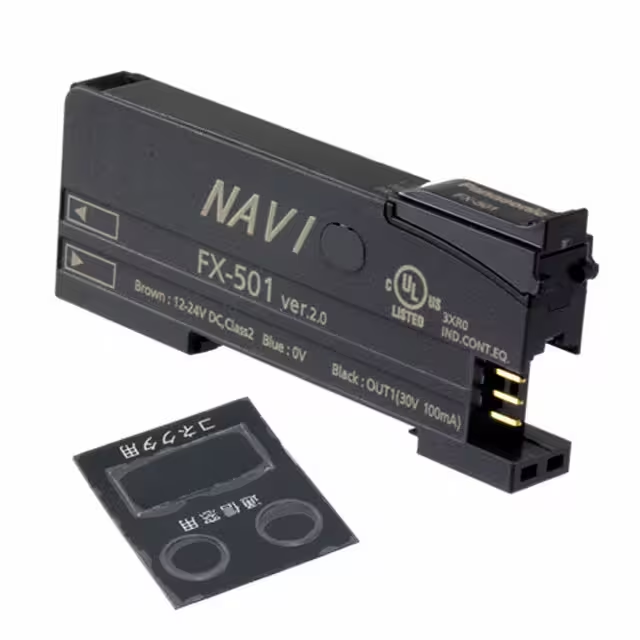
FX-501
Panasonic Industrial Automation Sales
-
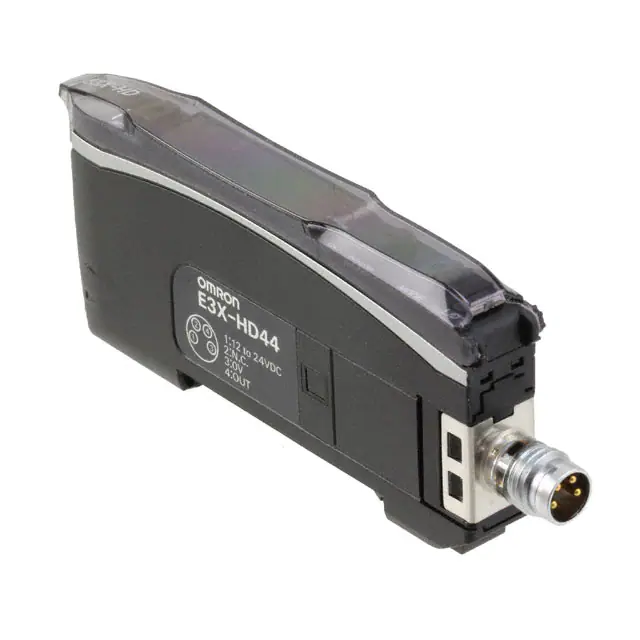
E3X-HD44
Omron Automation and Safety
-
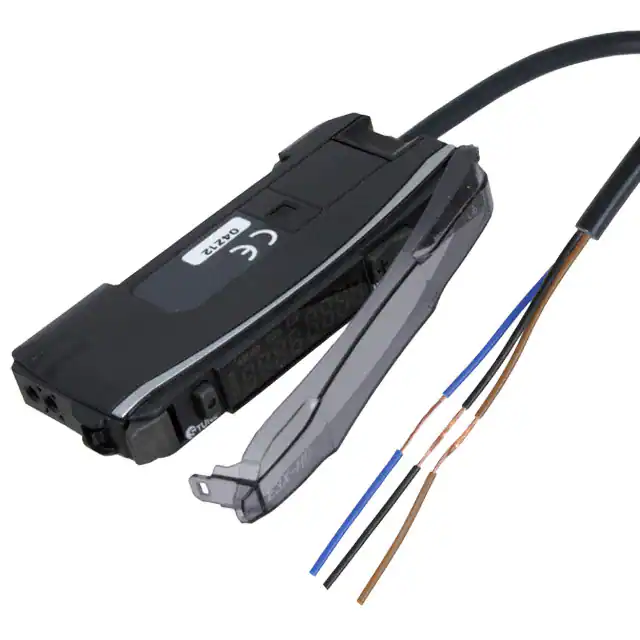
E3X-HD41 2M
Omron Automation and Safety
-
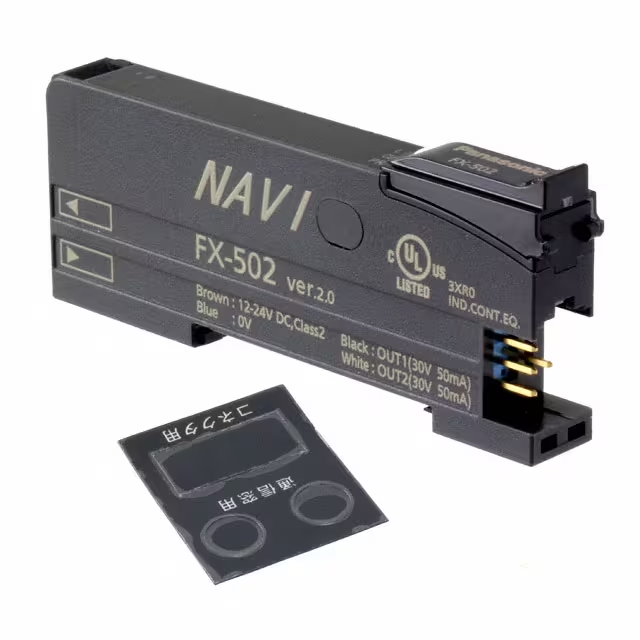
FX-502
Panasonic Industrial Automation Sales
-
ASTC0000
Red Lion Controls
-
E3X-HD11 2M
Omron Automation and Safety
-
E3NX-MA11
Omron Automation and Safety
-
ESPICO-ALL
PalmSens BV
Tech Hub

A practical engineering guide to 3.3V and 5V logic compatibility, input thresholds, resistor dividers, translator ICs, MOSFET level shifting, I2C pull-ups, timing limits and power-sequencing risks.

The 74HC595 uses push-pull logic outputs, while the TPIC6B595 uses 50 V open-drain DMOS sinks for higher-power loads. This guide compares timing, current limits, 3.3 V interfacing, load wiring, thermal…

The 74HC595 converts serial data into eight stable parallel outputs. This guide covers pin functions, shift and storage timing, OE and MR behavior, drive-current limits, cascading, voltage compatibilit…

A technical comparison of level-sensitive latches and edge-triggered flip-flops, covering timing windows, setup and hold limits, master–slave operation, time borrowing, race-through, HDL inference and…

A D latch stores one bit while Enable controls when data can pass. This reference covers gate-level operation, truth tables, transparency, setup and hold timing, LE versus OE, common ICs and practical …

An SR latch stores one bit through cross-coupled feedback. This engineering reference covers NOR and NAND implementations, truth tables, forbidden-state recovery, gated operation, switch debouncing, fa…

Latch circuits retain one bit through feedback. This technical reference covers SR and D latches, truth tables, transparency, timing limits, latch-versus-flip-flop behavior, applications and common log…

An engineering guide to LED driver operation, constant-current and constant-voltage outputs, linear and switching topologies, dimming, IC selection, calculations, replacement compatibility, and fault c…

Operational amplifier guide covering op amp basics, feedback, ideal vs real op amps, common configurations, buffer circuits, offset, bias current, gain-bandwidth, slew rate, rail-to-rail limits and sel…

Jumper cables guide covering safe connection order, red and black clamp placement, final ground connection, cable gauge, length, clamp quality, copper vs CCA cables, jump starter comparison and battery…


