
 My Inquiry
 My Account


Analog Devices Inc. 7B27-J-01-1

- Part No.:
- 7B27-J-01-1
- Manufacturer:
- Analog Devices Inc.
- Category:
- Sensor, Transducer Amplifiers
- Package:
- Datasheet:
-
 7B27-J-01-1.pdf
- Description:
- MODULE ISOL THERMO-IN NON-LIN
- Quantity:
- Payment:

- Shipping:

Inventory:2,573
Please send an inquiry. Send us your inquiry, and we will respond immediately.
Product details
Overview
7B27-J-01-1 from Analog Devices is a single-channel isolated thermocouple input signal conditioner for Type J thermocouples, providing factory-configured +1 V to +5 V output, ±0.01% initial accuracy, and 100 Vrms continuous input-to-output isolation. It operates over –40°C to +85°C and interfaces directly with industrial process control systems requiring cold junction compensation and open-circuit detection.
For engineers reviewing the 7B27-J-01-1 datasheet, 7B27-J-01-1 pinout, 7B27-J-01-1 application, or 7B27-J-01-1 equivalent, key selection criteria include thermocouple type (J), input range (–100°C to +100°C), output scaling (+1 V to +5 V), isolation rating (100 Vrms), and compatibility with 7B Series backplanes (AC1363) using universal 6-pin screw-terminal interface.
Technical Context
The 7B27-J-01-1 implements transformer-based amplitude modulation for galvanic isolation, with internal DC/DC conversion powering the isolated front-end. Cold junction compensation uses an embedded thermistor on the backplane, not on-module, and is accurate to ±1.0°C over +5°C to +45°C ambient.
Signal conditioning includes a one-pole 3 Hz input filter, low-drift amplifier, two-pole 3 Hz output low-pass filter, and upscale open-circuit indication via current source. Input protection covers ±30 Vdc continuous and meets ANSI/IEEE C37.90.1-1989 transient standards.
Key Specifications
| Parameter | Value and Actual Design Meaning |
|---|---|
| Input Type | Type J thermocouple, –100°C to +100°C range |
| Output Range | +1 V to +5 V, linear with input, drives ≥2 kΩ loads |
| Accuracy | ±0.01% span initial @ +25°C (±0.1% max) |
| Isolation Rating | 100 Vrms continuous input-to-output common-mode voltage |
| Bandwidth | –3 dB at 3 Hz, supports slow-varying temperature signals |
| Cold Junction Comp. | ±1.0°C error over +5°C to +45°C ambient, requires 7B backplane sensor |
| Power Supply | +14 Vdc to +35 Vdc, nominal +24 Vdc, max 25 mA |
Pinout & Package
Package: 1.663" × 2.11" × 0.563" (42.24 mm × 53.6 mm × 14.3 mm) module with gold-plated 6-pin socket interface for 7B Series backplanes (e.g., AC1363). Mounts via DIN rail or panel bracket.
| Pin/Terminal | Circuit Role | Design Meaning |
|---|---|---|
| 0 | SENSOR INPUT | Thermocouple sensing node; connects directly to Type J thermocouple wires |
| 1 | INPUT HIGH | Positive thermocouple lead terminal; referenced to Pin 2 |
| 2 | INPUT LOW | Negative thermocouple lead terminal; returns to backplane common |
| 3 | POWER SUPPLY (DC) | +14 Vdc to +35 Vdc input; powers both isolated sections via internal DC/DC |
| 4 | OUTPUT VOLTAGE | +1 V to +5 V analog output; low-impedance (<1 Ω), buffered |
| 5 | OUTPUT & POWER COMMON | Reference return for output and supply; tied to backplane common plane |
Key Features
| Feature | Design Value |
|---|---|
| Hot-swappable module | Insert/remove under full power without disrupting field wiring or backplane operation |
| Factory-configured output | +1 V to +5 V scaling fixed at manufacture; no user adjustment required |
| Upscale open-circuit detection | Current-source-driven output above +5 V indicates broken thermocouple wire |
| Backplane-integrated CJC | Relies on thermistor in 7B Series backplane (not onboard); eliminates module-level calibration drift |
| EMI-hardened design | 60 dB normal-mode rejection @ 50/60 Hz; ±0.5% span error under 400 MHz, 5 W RF field |
Applications
| Industrial Process Monitoring | Factory Floor Temperature Control |
|---|---|
Use Scenario: Continuous monitoring of furnace or reactor temperature using Type J thermocouples in harsh environments with high EMI and ground potential differences. IC Role / Device Role / Timing Role: Isolated signal conditioner converting thermocouple EMF to standardized +1 V to +5 V output for PLC analog inputs. Use Value: 100 Vrms isolation prevents ground-loop errors; ±0.01% accuracy ensures precise setpoint tracking across –100°C to +100°C range. | Use Scenario: Retrofitting legacy temperature loops with modern DCS systems where field wiring must remain intact and hot-swap capability reduces downtime. IC Role / Device Role / Timing Role: Plug-in module in AC1363 backplane providing isolated, filtered, and linearized thermocouple output compatible with existing 0–5 V ADC subsystems. Use Value: Universal 6-pin pinout enables mix-and-match with other 7B modules; 3 Hz bandwidth suppresses 50/60 Hz noise without phase lag in control feedback paths. |
| Thermocouple-Based QA Testing | Energy-Efficient HVAC Sensor Interface |
Use Scenario: Calibration lab environment verifying thermocouple probe accuracy across defined temperature points using traceable reference sources. IC Role / Device Role / Timing Role: Precision interface delivering stable, low-drift output for digitization by calibrated benchtop DMMs or data loggers. Use Value: ±0.5 µV/°C input offset drift and 0.6 µV peak noise (0.1–10 Hz) enable sub-0.1°C resolution in static measurements. | Use Scenario: Distributed air-handling unit (AHU) temperature sensing where long thermocouple runs introduce noise and common-mode interference. IC Role / Device Role / Timing Role: Local signal conditioning at sensor point, eliminating noise pickup before transmission to central BMS controller. Use Value: 160 dB CMR @ 50/60 Hz rejects induced noise from nearby motors or lighting ballasts; <1 Ω output impedance drives 2 kΩ BMS inputs without loading error. |
Equivalent & Alternatives
The following parts are listed as comparable options for similar thermocouple signal conditioning applications.
| Alternative Part | Technical Difference | Application Difference | Selection Advice |
|---|---|---|---|
| ADAM-4018 (Advantech) | 8-channel, Ethernet-connected, software-configurable output ranges; no onboard CJC-requires external sensor or algorithm | Designed for networked SCADA systems; lacks hot-swap mechanical interface and backplane integration | Choose for distributed, IP-based monitoring; avoid when retrofitting existing 7B rack infrastructure |
| OMEGA iDRN-TC (OMEGA Engineering) | Single-channel, DIN-rail mount, +10 V output only; ±0.1% accuracy; 1500 Vrms isolation | Higher isolation rating but fixed 0–10 V output; no upscale open-circuit indication or backplane compatibility | Choose for higher isolation needs and standalone deployment; avoid when +1 V to +5 V scaling or 7B ecosystem interoperability is required |
Compared with ADAM-4018 and OMEGA iDRN-TC, the 7B27-J-01-1 delivers deterministic +1 V to +5 V scaling, seamless integration into AC1363 backplanes, and backplane-referenced cold junction compensation-critical for repeatable accuracy in multi-channel industrial racks without per-module calibration.
Availability
7B27-J-01-1 is available at Aetrix Electronics and suitable for industrial process monitoring, factory floor temperature control, and thermocouple-based QA testing requiring stable component supply, long-term lifecycle support, and compatibility with legacy 7B Series infrastructure.
Supply support for 7B27-J-01-1 includes scheduled delivery planning, volume procurement assistance, BOM continuity management, traceable sourcing, and lifecycle availability coordination for OEM customers, industrial embedded developers, connected-device designers, and electronics production programs.
Manufacturer
Analog Devices is a global semiconductor company specializing in high-performance analog, mixed-signal, and digital signal processing technologies for precision measurement and industrial applications.
The 7B Series was designed specifically for rugged, modular signal conditioning in process control and factory automation-emphasizing channel-to-channel isolation, hot-swap reliability, and direct transducer interfacing without external support circuitry.
FAQ
What thermocouple types does the 7B27-J-01-1 support?
The 7B27-J-01-1 is factory-configured exclusively for Type J thermocouples over the –100°C to +100°C range. It does not support K, T, E, R, S, or B types-those require distinct part numbers (e.g., 7B27-K-02-1). The module's internal linearization and cold junction compensation algorithms are calibrated specifically for Type J characteristics, and changing thermocouple type would invalidate accuracy specifications.
Does the 7B27-J-01-1 include onboard cold junction compensation?
No-the 7B27-J-01-1 relies on the thermistor-based cold junction compensation (CJC) sensor embedded in the 7B Series backplane (e.g., AC1363), not on the module itself. This architecture ensures consistent CJC across all channels and eliminates per-module calibration drift. Using the 7B27-J-01-1 outside a compatible 7B backplane voids the ±1.0°C CJC accuracy specification.
What is the meaning of "upscale open-circuit indication" in the 7B27-J-01-1?
Upscale open-circuit indication means that when the thermocouple loop is broken (open), the 7B27-J-01-1 outputs a voltage above its nominal full-scale range-specifically >+5 V for the +1 V to +5 V version. This is achieved via an internal current source driving the output stage, enabling immediate fault detection in PLC or DCS systems without additional diagnostics hardware.
Can the 7B27-J-01-1 be powered from a 12 VDC supply?
No-the 7B27-J-01-1 requires a minimum +14 VDC supply and operates up to +35 VDC. A 12 VDC source falls below the specified operating range and will prevent proper DC/DC converter operation in the isolated front-end, resulting in undefined output behavior or failure to meet accuracy and isolation specifications.
Is the 7B27-J-01-1 compatible with non-Analog Devices backplanes?
The 7B27-J-01-1 is mechanically and electrically designed for Analog Devices' 7B Series backplanes (e.g., AC1363) with gold-plated 6-pin sockets and integrated CJC sensors. While physical insertion may be possible in third-party carriers, cold junction compensation, hot-swap sequencing, and power distribution are not guaranteed-making full functional compatibility dependent on strict adherence to the original 7B ecosystem.
7B27-J-01-1 Specifications
- Product attributes
- Attribute value
- Manufacturer:
- Analog Devices Inc.
- Series:
- -
- Packaging:
- Bulk
- Product Status:
- Obsolete
- Amplifier Type:
- -
- Voltage - Supply:
- -
- Output Type:
- -
- Current - Supply:
- -
- Operating Temperature:
- -
- Mounting Type:
- -
7B27-J-01-1 FAQ
1.How can I place an order for 7B27-J-01-1 through Aetrix?
Please submit a Request for Quotation (RFQ) for 7B27-J-01-1 on Aetrix. Our sales agent will provide a competitive quotation and guide you through the order confirmation once you accept the terms.
2.Are the price and stock information for 7B27-J-01-1 reliable?
The price and inventory of 7B27-J-01-1 are updated periodically and may fluctuate due to market conditions. Stock and pricing data are typically refreshed every 24 hours. Quotation validity for 7B27-J-01-1 is usually 5 days.
3.What payment methods are accepted for 7B27-J-01-1?
We accept Wire Transfer, PayPal, Credit Card, Western Union, MoneyGram, and Escrow for 7B27-J-01-1 transactions.
Note: Certain payment methods may incur a processing fee.
4.How is shipping managed for 7B27-J-01-1?
7B27-J-01-1 orders can be shipped via leading logistics carriers, including DHL, UPS, FedEx, TNT, or Registered Mail.
Once your 7B27-J-01-1 order is processed, you will receive an email with the shipment details and tracking number.
Note: Tracking information may take up to 24 hours to appear. Express delivery typically takes 3–5 business days.
5.How can I obtain technical support or documentation for 7B27-J-01-1?
For technical support, including 7B27-J-01-1 datasheets, pinout diagrams, or application guidance, please contact our engineering support team. They can provide detailed documentation and assistance for your 7B27-J-01-1 requirements.
6.How does Aetrix verify that 7B27-J-01-1 is sourced from the original manufacturer or authorized distributors?
All 7B27-J-01-1 products on Aetrix are procured from qualified distributors and authorized channels. Our dedicated quality assurance team conducts strict verification, including traceability checks and, if necessary, third-party testing. This ensures that 7B27-J-01-1 meets industry standards.
7.What is the process for return or replacement of 7B27-J-01-1?
All 7B27-J-01-1 units undergo pre-shipment inspection (PSI). If there is an issue with 7B27-J-01-1, returns or replacements are accepted under the following conditions:
1.Quantity discrepancies, incorrect items, or visible external defects (such as breakage or corrosion), acknowledged by Aetrix.
2.The issue is reported within 90 days of delivery.
3.The 7B27-J-01-1 part is unused and in its original packaging.
Return procedure for 7B27-J-01-1:
1.Submit a request within 90 days.
2.Obtain a Return Material Authorization (RMA) from Aetrix.
7B27-J-01-1 Tags
-
SEN-13879
SparkFun Electronics
-
GA-311
Panasonic Industrial Automation Sales
-
E32-T11N 2M
Omron Automation and Safety
-
FX-501P
Panasonic Industrial Automation Sales
-
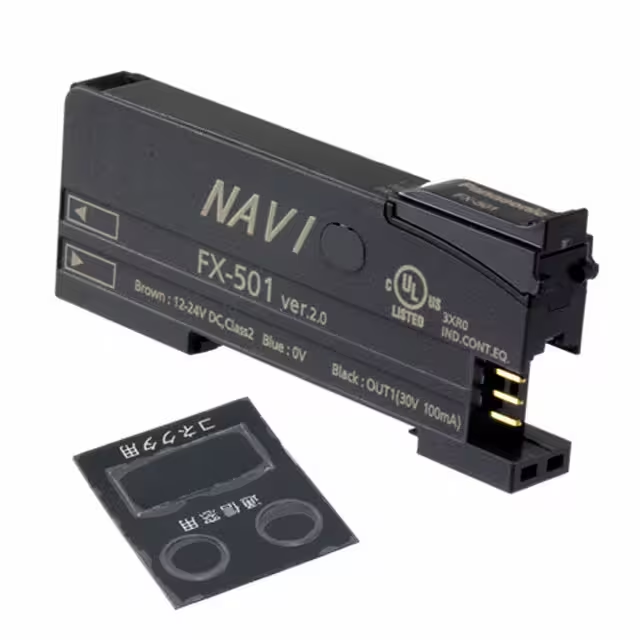
FX-501
Panasonic Industrial Automation Sales
-
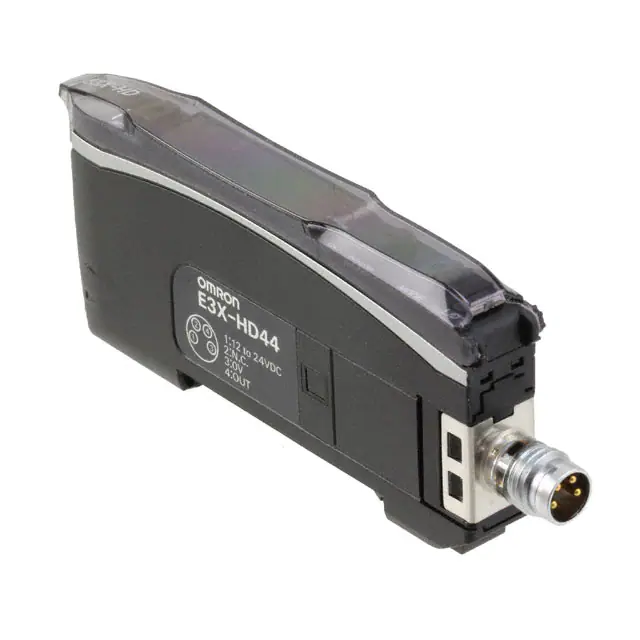
E3X-HD44
Omron Automation and Safety
-
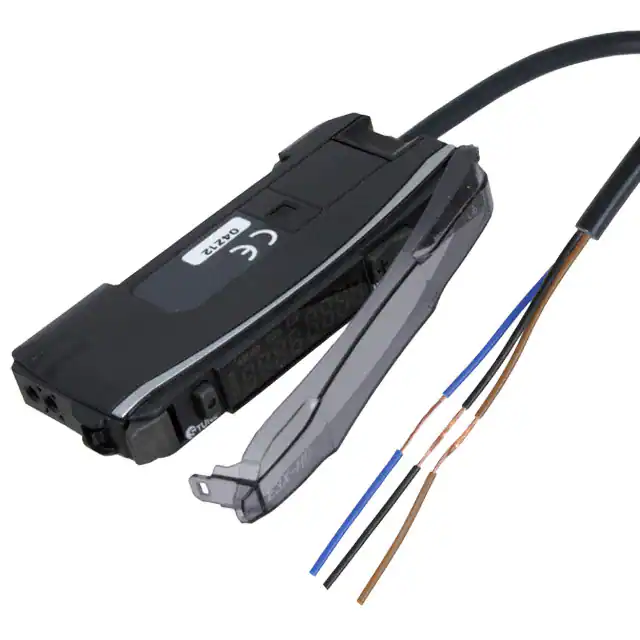
E3X-HD41 2M
Omron Automation and Safety
-
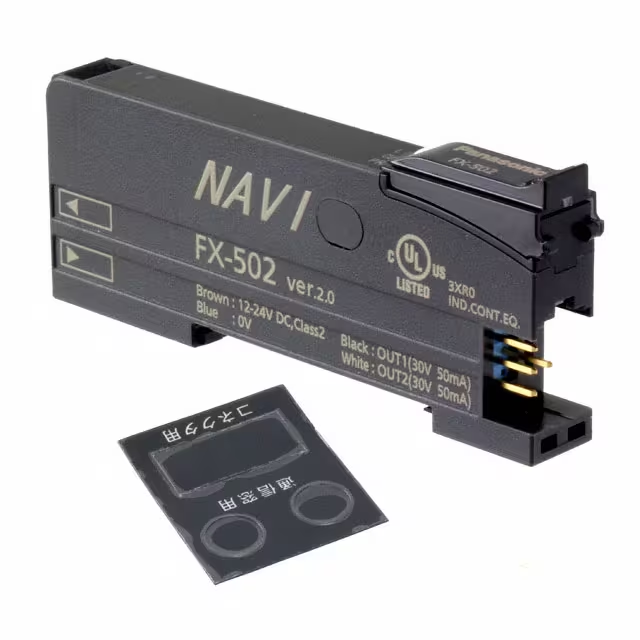
FX-502
Panasonic Industrial Automation Sales
-
ASTC0000
Red Lion Controls
-
E3X-HD11 2M
Omron Automation and Safety
-
E3NX-MA11
Omron Automation and Safety
-
ESPICO-ALL
PalmSens BV
Tech Hub

A practical engineering guide to 3.3V and 5V logic compatibility, input thresholds, resistor dividers, translator ICs, MOSFET level shifting, I2C pull-ups, timing limits and power-sequencing risks.

The 74HC595 uses push-pull logic outputs, while the TPIC6B595 uses 50 V open-drain DMOS sinks for higher-power loads. This guide compares timing, current limits, 3.3 V interfacing, load wiring, thermal…

The 74HC595 converts serial data into eight stable parallel outputs. This guide covers pin functions, shift and storage timing, OE and MR behavior, drive-current limits, cascading, voltage compatibilit…

A technical comparison of level-sensitive latches and edge-triggered flip-flops, covering timing windows, setup and hold limits, master–slave operation, time borrowing, race-through, HDL inference and…

A D latch stores one bit while Enable controls when data can pass. This reference covers gate-level operation, truth tables, transparency, setup and hold timing, LE versus OE, common ICs and practical …

An SR latch stores one bit through cross-coupled feedback. This engineering reference covers NOR and NAND implementations, truth tables, forbidden-state recovery, gated operation, switch debouncing, fa…

Latch circuits retain one bit through feedback. This technical reference covers SR and D latches, truth tables, transparency, timing limits, latch-versus-flip-flop behavior, applications and common log…

An engineering guide to LED driver operation, constant-current and constant-voltage outputs, linear and switching topologies, dimming, IC selection, calculations, replacement compatibility, and fault c…

Operational amplifier guide covering op amp basics, feedback, ideal vs real op amps, common configurations, buffer circuits, offset, bias current, gain-bandwidth, slew rate, rail-to-rail limits and sel…

Jumper cables guide covering safe connection order, red and black clamp placement, final ground connection, cable gauge, length, clamp quality, copper vs CCA cables, jump starter comparison and battery…


